Applied Geochemistry xxx (2017) 1e7
Contents lists available at ScienceDirect journal homepage: www.elsevier.com/locate/apgeochem
Seyedardalan Ashrafzadeh a, Niklas J. Lehto a, Gareth Oddy b, Ron G. McLaren a, Lingfen Kang a, c, Nicholas M. Dickinson d, Johannes Welsch d, Brett H. Robinson a, *
a Department of Soil Science, Faculty of Agricultural and Life Sciences, Lincoln University, PO Box 7647, Lincoln 7647, New Zealand b ENGEO, 124 Montreal Street, Sydenham, Christchurch 8023, New Zealand c Lanzhou City University, Lanzhou, China
d Department of Ecology, Faculty of Agricultural and Life Sciences, Lincoln University, PO Box 7647, Lincoln 7647, New Zealand
1Introduction引言
Heavy Metals (HMs), comprising metal(loids) with a density >5, can be toxic to organisms at relatively low concentrations (Robinson et al., 2009). The total HM concentration in soil is a function of the background concentration (Guagliardi et al., 2012) plus anthropogenic contributions, which include past and current application of soil conditioners (composts, manures and fertilisers), metal-containing agrichemicals, paints, vehicle emissions, local industries, and coal and fuel combustion (Paramashivam et al., 2016; Simmler et al., 2013; Szolnoki and Farsang, 2013).
重金属(HMs)是指密度 >5 的金属(类金属),在相对较低的浓度下即可对生物产生毒性(Robinson et al., 2009)。土壤中重金属的总浓度取决于背景浓度(Guagliardi et al., 2012)与人为输入,后者包括过去和当前施用的土壤调理剂(堆肥、粪肥和化肥)、含金属农用化学品、涂料、机动车排放、当地工业以及煤炭和燃料燃烧(Paramashivam et al., 2016; Simmler et al., 2013; Szolnoki and Farsang, 2013)。
Even small increases in concentrations of HMs such as cadmium (Cd) and lead (Pb) in soils may endanger the environment and human health (Ajmone-Marsan and Biasioli, 2010). Humans may ingest soil-borne HMs by direct consumption of soil or consumption of plants that either take up HMs into the edible portions or have HMs attached to the surfaces of the edible portions (Robinson et al., 2009). Exposure can also occur through inhalation of suspended soil particulates, and dermal contact (De Miguel et al.,1999; Kachenko and Singh, 2006). Children are particularly vulnerable because they have greater hand-to-mouth activities and gastrointestinal absorption (Calabrese et al., 1997). Childhood Pb poisoning remains a major environmental health concern in cities with Pbcontaminated soils (Ikem et al., 2008).
土壤中镉(Cd)和铅(Pb)等重金属浓度即使小幅升高,也可能危及环境和人体健康(Ajmone-Marsan and Biasioli, 2010)。人类可通过直接摄入土壤,或食用可食部分吸收了重金属或表面附着重金属的植物而摄入土源重金属(Robinson et al., 2009)。暴露途径还包括吸入悬浮土壤颗粒物及皮肤接触(De Miguel et al.,1999; Kachenko and Singh, 2006)。儿童尤为易感,因为其手-口行为更频繁,且胃肠道吸收率更高(Calabrese et al., 1997)。在土壤受Pb污染的城市中,儿童铅中毒仍是一项重大的环境健康问题(Ikem et al., 2008)。
* Corresponding author.
E-mail address: brett.robinson@lincoln.ac.nz (B.H. Robinson).
Urban and suburban soils are more likely than rural soils to become contaminated with HMs because they are more affected by human activities (Hough et al., 2004). Elevated HM concentrations occur in urban soils worldwide (Ajmone-Marsan and Biasioli,
与农村土壤相比,城市和郊区土壤受人类活动影响更大,因而更易受到重金属污染(Hough et al., 2004)。世界各地的城市土壤中均存在重金属浓度升高的现象(Ajmone-Marsan and Biasioli,
http://dx.doi.org/10.1016/j.apgeochem.2017.04.009
http://dx.doi.org/10.1016/j.apgeochem.2017.04.009
0883-2927/© 2017 Published by Elsevier Ltd.
0883-2927/© 2017 Elsevier Ltd. 出版
Please cite this article in press as: Ashrafzadeh, S., et al., Heavy metals in suburban gardens and the implications of land-use change following a major earthquake, Applied Geochemistry (2017), http://dx.doi.org/10.1016/j.apgeochem.2017.04.009
请按如下格式引用本文(在印):Ashrafzadeh, S., et al., Heavy metals in suburban gardens and the implications of land-use change following a major earthquake, Applied Geochemistry (2017), http://dx.doi.org/10.1016/j.apgeochem.2017.04.009
2010). Table 1 shows common heavy metal(loid)s that may be found at elevated concentrations in urban and suburban soils, along with their anthropogenic source.
2010)。表1列出了城市和郊区土壤中可能以较高浓度存在的常见重金属(类金属)及其人为来源。
El Khalil et al. (2013) showed that concentrations of copper (Cu), Pb and zinc (Zn) in soils from Marrakesh city, Morocco could be used as indicators of industrialisation. Similarly, areas of Annabeh city centre (Algeria) contained Pb, up to 823 mg kg�1 (Maas et al., 2010). Garden soils in Nantes, France, also revealed high arsenic (As) and Pb concentrations, and suggested human activities as the main origin (Jean-Soro et al., 2015). Analysis of soil samples from Madrid showed concentrations of Cd, Cu, Pb and Zn were inversely correlated with distance from the city centre (Vazquez de la Cueva� et al., 2014).
El Khalil et al.(2013)表明,摩洛哥马拉喀什市土壤中铜(Cu)、Pb和锌(Zn)的浓度可作为工业化程度的指标。同样,阿尔及利亚安纳巴市中心部分区域土壤Pb含量高达823 mg kg−1(Maas et al., 2010)。法国南特的园地土壤同样显示出较高的砷(As)和Pb浓度,且研究认为人类活动是其主要来源(Jean-Soro et al., 2015)。对马德里土壤样品的分析表明,Cd、Cu、Pb和Zn浓度与距市中心的距离呈负相关(Vazquez de la Cueva et al., 2014)。
Christchurch is New Zealand's third largest city with a population of some 390,000 (Statistics New Zealand, 2014). It was founded some 150 years ago and has vast tracts of suburban land (Wilson, 2005) where humans may be exposed to metals through home grown fruits and vegetables as well as direct ingestion of soil by children playing in backyard gardens. Major earthquakes in 2010 and 2011 have resulted in some 630 ha of the city being demolished with redevelopment of the affected land prohibited due to land stability issues (Scott and Carville, 2016). Potentially, this affected land may be used for agriculture, recreation, or community gardens, which may exacerbate human exposure to soil-borne HMs. A single study on a Christchurch residential red zone, Avon-Otakaro, showed that Pb was the only element, among As, Cd, Cu and Pb, exceeding the residential land use standard (260 mg kg�1) (Gilmour, 2013).
基督城是新西兰第三大城市,人口约39万(Statistics New Zealand, 2014)。该市建城约150年,拥有大面积郊区用地(Wilson, 2005),当地居民可能通过自家种植的水果和蔬菜,以及儿童在后院花园玩耍时直接摄入土壤而暴露于金属。2010年和2011年的大地震导致该市约630 ha区域被拆除,且因土地稳定性问题,受影响土地禁止重新开发(Scott and Carville, 2016)。这些受影响土地今后可能用于农业、休闲或社区菜园,从而可能加剧人类对土源重金属的暴露。一项针对基督城Avon-Otakaro住宅红区的研究表明,在As、Cd、Cu和Pb中,仅Pb超过了住宅用地标准(260 mg kg−1)(Gilmour, 2013)。
This study aimed to determine the nature and extent of soil HM contamination in suburban and rural garden soils in an around the city of Christchurch as a function of the age of the district, with a view to identifying potential risks associated with home or community gardens. We sought to compare HM concentrations in Christchurch suburban soils with background concentrations in Canterbury soils (Tonkin and Taylor, 2007), as well as the New Zealand Soil Contaminant Standards for health (SCSs) for inorganic substances (Ministry for the Environment, 2012) and Dutch Standards.
本研究旨在查明基督城市内及周边郊区和农村园地土壤重金属污染的性质与程度及其与街区建成年代的关系,以识别家庭菜园或社区菜园可能存在的风险。我们将基督城郊区土壤的重金属浓度与坎特伯雷土壤背景浓度(Tonkin and Taylor, 2007)、新西兰无机物质健康土壤污染物标准(SCSs)(Ministry for the Environment, 2012)以及荷兰标准进行了比较。
2Materials and methods材料与方法
2.1. Soil sampling: suburban gardens2.1. 土壤采样:郊区园地
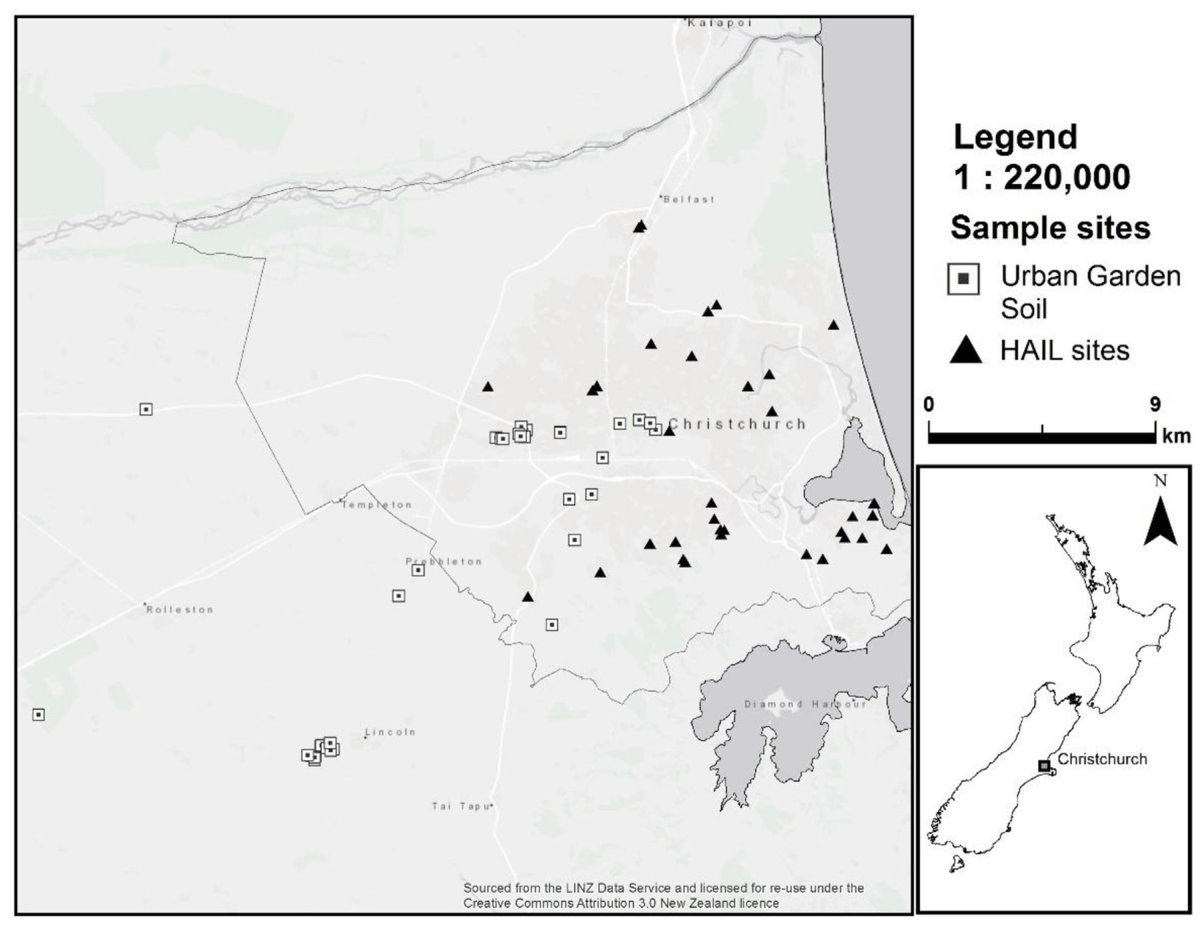
Crowd sourcing was used to obtain soils from 31 vegetable gardens in Christchurch city and surrounding areas in 2009e2010. Following advertisements in local newspapers, participants were sent labelled and sealable plastic bags along with instructions on soil collection. After removal of any surface litter or vegetation, ca. 250 g samples were collected from the top 10 cm of soil, representing the ‘A’ horizon in most soils, and certainly within the rootzones of most vegetable plants. For each garden, up to six samples were collected from different locations and individually analysed. Fig. 1 shows the sampling locations of the vegetable garden soils.
2009–2010年,采用众包方式从基督城市区及周边地区的31个菜园获取土壤。在当地报纸刊登广告后,向参与者寄送了贴有标签的可密封塑料袋及土壤采集说明。清除地表凋落物或植被后,采集0~10 cm表层土壤样品约250 g,该层在大多数土壤中代表A层,且必然处于大多数蔬菜植物的根区范围内。每个菜园在不同位置最多采集6个样品,并分别进行分析。图1显示了菜园土壤的采样位置。
2.2. Soil sampling: suspected contaminated sites2.2. 土壤采样:疑似污染场地
The Canterbury Regional Council (CRC) is responsible for investigating land for the purposes of identifying and monitoring contamination. In conducting its regulatory duties, CRC created the Listed Land Use Register (LLUR) of sites it considers are potentially contaminated or known to be contaminated. A site will be classed as potentially contaminated if it previously or currently had an activity or land use occurring at the site which is present on the Ministry for the Environment (MfE) Hazardous Activities and Industries List (HAIL), which are activities it considers to be hazardous (MfE, 2016). HAIL sites include fuel storage sites, orchards, timber treatment yards, landfills, sheep dips and any other activities where hazardous substances could cause land and water contamination.
坎特伯雷地区议会(CRC)负责开展土地调查,以识别和监测污染。在履行监管职责过程中,CRC建立了土地利用登记册(LLUR),收录其认为潜在污染或已知污染的场地。如果某场地过去或目前存在列入环境部(MfE)《危险活动与行业清单》(HAIL)的活动或土地利用方式(即环境部认定为具有危险性的活动),则该场地将被划为潜在污染场地(MfE, 2016)。HAIL场地包括燃料储存场地、果园、木材处理场、垃圾填埋场、羊只药浴场,以及危险物质可能造成土地和水体污染的其他任何活动场所。
Soils from 99 sites where the residential buildings had suffered earthquake damage were sampled between 2012 and 2015. The sites were assessed as they were listed on the LLUR as potentially contaminated due to the land having been used previously for horticulture. The site investigation focused on the house rebuild footprint (within 1 m of the house) on ‘easily accessed areas’ (in other words, exposed or vegetated soils e not paved or otherwise covered). For each site, four separate soil samples (250 g) were collected from 0 to 0.3 m below ground level within or around the house footprint. The samples were collected using a stainless steel spade or hand auger, and placed directly into sample jars supplied by Hills Laboratories. The sampling equipment was decontaminated between samples. Fig. 1 shows the locations of the HAIL sites.
2012年至2015年间,对99个住宅建筑遭受地震破坏的场地进行了土壤采样。这些场地因曾用于园艺生产而被LLUR列为潜在污染场地,故纳入评估。场地调查聚焦于房屋重建占地范围(距房屋1 m以内)内的“易接触区域”(即裸露或有植被覆盖的土壤,而非铺装或以其他方式覆盖的地面)。每个场地在房屋占地范围内或周边采集4个独立土壤样品(250 g),采样深度为地面以下0~0.3 m。样品用不锈钢铲或手动土钻采集,并直接装入Hills Laboratories提供的样品瓶中。各样品采集之间对采样工具进行去污处理。图1显示了HAIL场地的位置。
2.3. Soil analysis2.3. 土壤分析
Garden soils were dried at 105 �C and sieved to <2 mm using a Nylon sieve. Pseudo-total elemental analysis was carried out using microwave digestion in 8 mL of Aristar nitric acid (±69%), filtered using Whatman 52 filter paper (pore site 7 mm), and diluted with milliQ water to a volume of 25 mL and stored for chemical analyses. Concentrations of aluminium (Al), As, boron (B), Cd, Cr, Cu, iron (Fe), potassium (K), manganese (Mn), nickel (Ni), phosphorus (P), Pb, and Zn were determined using inductively coupled plasma optical emission spectrometry (ICP-OES Varian 720 ES). Mercury (Hg) was analysed using hydride generation coupled with the aforementioned ICP-OES. Wageningen reference soil (ISE 921) material was analysed for quality assurance. Recoverable concentrations were 91%e108% of the certified values. The HAIL soil samples were analysed by Hill Laboratories. Hill laboratories are an accredited laboratory (IANZ, 2017) and therefore have rigorous quality assurance procedures. Briefly, soils were air dried at 35 �C and sieved to <2 mm. These dried and sieved samples were then composited and
园地土壤于105 °C下烘干,用尼龙筛过 <2 mm筛。准全量元素分析采用微波消解法,以8 mL Aristar硝酸(±69%)消解,经Whatman 52滤纸(孔径7 μm)过滤,用milliQ水定容至25 mL后保存待测。采用电感耦合等离子体发射光谱仪(ICP-OES Varian 720 ES)测定铝(Al)、As、硼(B)、Cd、Cr、Cu、铁(Fe)、钾(K)、锰(Mn)、镍(Ni)、磷(P)、Pb和Zn的浓度。汞(Hg)采用氢化物发生法结合上述ICP-OES测定。以Wageningen参考土壤(ISE 921)进行质量控制,其回收率为认证值的91%~108%。HAIL土壤样品由Hill Laboratories分析。Hill Laboratories为认证实验室(IANZ, 2017),具有严格的质量保证程序。简言之,土壤于35 °C下风干,过 <2 mm筛。随后将干燥过筛后的样品混合,
Common heavy metal contaminants that may occur in urban or suburban soils (LaCoste et al., 2001; Mills et al., 2005; Robinson et al., 2006, 2009).
城市或郊区土壤中可能出现的常见重金属污染物(LaCoste et al., 2001; Mills et al., 2005; Robinson et al., 2006, 2009)。
| Heavy Metal(loid)重金属(类金属) | Source来源 |
|---|---|
| Arsenic (As) | As-based insecticides used in horticulture, treated timber, or former sheep-dip sites |
| Cadmium (Cd) | Cd-rich phosphate fertilisers, sludges, industrial emissions, runoff from roads |
| Chromium (Cr) | Fixative in treated timber, industrial emissions |
| Copper (Cu) | Cu-based fungicide, Cu used for roofing |
| Mercury (Hg) | Industrial emissions, crematoria |
| Nickel (Ni) | Industrial emissions |
| Lead (Pb) | Historic use of leaded petrol, Pb-based paints, historic use of Pb-based pesticides. Pb flashings on roofs |
| Thallium (Tl) | Coal combustion |
| Zinc (Zn) | Galvanised metal |
The concentrations of selected heavy metals in the Christchurch urban and rural gardens, and HAIL sites.
基督城城市和农村园地以及HAIL场地中若干重金属的浓度。
| Element元素 | Land Use土地利用 | Number of Samples样品数 | Concentrati浓度 | on (mg/kg) | |||
|---|---|---|---|---|---|---|---|
| Median | Mean | Range | Backgrounda | National Standardb | Dutch Standardd | ||
| As | Rural | 15 | 4.05 | 4.54 | 2.46e12.9 | 0.9e36.9 | 17 |
| Urban | 50 | 16 | 12.1 | 4.34e72.2 | 3.3e13.2 | 20 | 55 |
| HAIL | 99 | 6 | 6.24 | 2e31 | |||
| Cd | Rural | 15 | 0.58 | 0.86 | 0.27e9.69 | 0.01e0.34 | 0.8 |
| Urban | 50 | 1.54 | 1.20 | 0.33e10.7 | 0.01e0.15 | 3 | 12 |
| HAIL | 99 | 0.11 | 0.11 | <0.1e4.3 | |||
| Cu | Rural | 15 | 9.25 | 9.50 | 4.32e22.9 | 2.1e27.3 | >10,000 |
| Urban | 50 | 36.3 | 34.6 | 11.7e118 | 3.1e13.3 | >10,000 | 190 |
| HAIL | 99 | 14 | 15.8 | 3e2000 | |||
| Pb | Rural | 15 | 15.7 | 18.8 | 7.96e77.6 | 3.63e44.4 | 160 |
| Urban | 50 | 123 | 137 | 22.6e2615 | 9.48e57.3 | 210 | 530 |
| HAIL | 99 | 36 | 40.4 | 8.6e380 | |||
| Zn | Rural | 15 | 68.4 | 67.3 | 42.1e120 | 12.1e116 | e |
| Urban | 50 | 216 | 189 | 67.5e799 | 26.6e91.7 | 400c | 720 |
| HAIL | 99 | 87 | 97.8 | 32e3700 | |||
| Hg | Rural | 15 | 0.03 | 0.04 | 0.006e0.50 | 0.01e0.6 | 200 |
| Urban | 35 | 0.22 | 0.29 | 0.03e308 | 0.02e0.18 | 310 | 10 |
| HAIL | 11 | 0.05 | 0.05 | <0.1e0.25 | |||
| Cr | Rural | 15 | 16.4 | 17.1 | 11.4e24.2 | 4.6e26.4 | 290 |
| Urban | 50 | 20.5 | 22.7 | 14.1e133 | 8.2e22.1 | 460 | 380 |
| HAIL | 99 | 16 | 16.5 | 9e132 | |||
| Ni | Rural | 15 | 8.6 | 9.69 | 6.64e18.1 | 2.9e20.7 | e |
| Urban | 50 | 11 | 11.4 | 8.77e18.2 | 6.3e15.6 | 105c | 210 |
| HAIL | 99 | 11 | 11.3 | 6e21 |
a Background concentrations (level 1) of selected heavy metals in Canterbury soils reported by Environment Canterbury in 2007. b New Zealand Soil Contaminant Standards for health (SCSs) for inorganic substances reported by Ministry for the Environment in 2012. c Soil contaminant standards reported by Auckland Regional Council in 2010 (used where national standards are not available). d Dutch soil pollutant standards (intervention values).
a Environment Canterbury于2007年报道的坎特伯雷土壤中若干重金属的背景浓度(1级)。b 新西兰环境部于2012年发布的无机物质健康土壤污染物标准(SCSs)。c 奥克兰地区议会于2010年发布的土壤污染物标准(在无国家标准时采用)。d 荷兰土壤污染物标准(干预值)。
Please cite this article in press as: Ashrafzadeh, S., et al., Heavy metals in suburban gardens and the implications of land-use change following a major earthquake, Applied Geochemistry (2017), http://dx.doi.org/10.1016/j.apgeochem.2017.04.009
请按如下格式引用本文(在印):Ashrafzadeh, S., et al., Heavy metals in suburban gardens and the implications of land-use change following a major earthquake, Applied Geochemistry (2017), http://dx.doi.org/10.1016/j.apgeochem.2017.04.009
analysed for ‘total’ heavy metals using a conc. HNO3/HCl digestion and analysed using ICP-MS. While the detection limits for individual elements in dried soil were <0.05 mg/kg, we used a quantifiable limit of 0.1 mg kg�1 for all elements because concentrations below this value are unlikely to be biologically relevant.
采用浓HNO3/HCl消解后以ICP-MS测定“全量”重金属。尽管干土中各元素的检出限均 <0.05 mg/kg,但本研究对所有元素采用0.1 mg kg−1的定量限,因为低于该值的浓度不太可能具有生物学意义。
2.4. Statistical treatment and analysis2.4. 统计处理与分析
Data that were log-normally distributed were log-transformed for statistical analyses. Data were considered lognormal when the geometric mean was closer to the median than the arithmetic mean. Statistical analyses were conducted using IBM SPSS 23 software. The significance of differences among the parameters was tested by one-way analysis of variance (ANOVA) followed by Tukey's test, at the 95% confidence level (p < 0.05). Correlations between concentrations of selected HMs were determined using Pearson correlation coefficient.
呈对数正态分布的数据经对数转换后进行统计分析。当几何均值较算术均值更接近中位数时,即认为数据呈对数正态分布。统计分析采用IBM SPSS 23软件进行。各参数间差异的显著性采用单因素方差分析(ANOVA)及Tukey检验,置信水平为95%(p < 0.05)。若干重金属浓度之间的相关性采用Pearson相关系数确定。
3Results and discussion结果与讨论
3.1. HM concentrations in suburban and rural soils3.1. 郊区和农村土壤中的重金属浓度
Table 2 shows that suburban garden soils from Christchurch have significantly higher HM concentrations than rural soils, which is consistent with reports (Wong et al., 2006) that elevated HM concentrations are generally associated with urbanization. Specifically, concentrations of As, Cu, Pb, Zn and Hg were significantly higher in the urban garden soils than in soils of the rural gardens (Table 2). Mercury and Pb mean concentrations were >7 times greater, followed by Cu, As and Zn mean values some threefold greater. Wei and Yang (2010) also reported the largest ratios of urban-to-rural concentrations for Pb, Cu, Zn as well as Cd in soils of different areas of China. Here, mean concentrations of selected HMs in the urban garden soils were also higher than those in the HAIL sites. Mean Cd, Hg, and Pb concentrations were respectively 10, 5 and 3 times higher in the urban garden soils than in the HAIL sites (Table 2). This may be due to the fact that activities listed in the HAIL do not include common practices that contaminate soils, such as the widespread use of lead-based paint, the use of galvanised steer, or Cu-based pesticides (Ministry for the Environment, 2013).
表2表明,基督城郊区园地土壤的重金属浓度显著高于农村土壤,这与重金属浓度升高通常与城市化相关的报道(Wong et al., 2006)一致。具体而言,城市园地土壤中As、Cu、Pb、Zn和Hg的浓度显著高于农村园地土壤(表2)。Hg和Pb的平均浓度高出7倍以上,其次为Cu、As和Zn,其平均值约高出3倍。Wei and Yang(2010)在中国不同地区的土壤中同样发现,Pb、Cu、Zn以及Cd的城乡浓度比最大。本研究中,城市园地土壤中若干重金属的平均浓度也高于HAIL场地。城市园地土壤中Cd、Hg和Pb的平均浓度分别为HAIL场地的10倍、5倍和3倍(表2)。这可能是由于HAIL所列活动并未涵盖一些会污染土壤的常见做法,如广泛使用含铅涂料、使用镀锌钢材或铜基农药(Ministry for the Environment, 2013)。
Concentrations of Cu, Zn, Hg, Cr and Ni in all samples taken from the rural gardens were within the natural background ranges, whereas the Cd concentrations in 20% of these samples exceeded the rural national Cd standard (0.8 mg kg�1) with the maximum value of 9.7 mg kg�1 (Table 2). Cadmium concentration in eight urban garden soil samples also exceeded the urban national Cd standard (3 mg kg�1). While we did not measure mobility in this study, Li et al. (2017) reported that Cd was the most mobile element in urban soils from Lianyungang, China and that this element posed the greatest ecological risk.
农村园地所有样品中Cu、Zn、Hg、Cr和Ni的浓度均处于自然背景范围内,而20%的样品Cd浓度超过了国家农村Cd标准(0.8 mg kg−1),最高值为9.7 mg kg−1(表2)。8个城市园地土壤样品的Cd浓度也超过了国家城市Cd标准(3 mg kg−1)。尽管本研究未测定迁移性,但Li et al.(2017)报道,在中国连云港城市土壤中,Cd是迁移性最强的元素,且具有最大的生态风险。
The maximum concentrations of all other HMs were significantly higher than their respective background values in all the three land categories (rural garden, urban garden and HAIL). One urban garden contained a Hg concentration of 308 mg kg�1, compared to its respective background concentration of 0.18 mg kg�1. This concentration is thirtyfold higher than the Dutch Standard for Hg (10 mg kg�1). Similarly, there were two HAIL sites containing high concentrations of Cu (2000 mg kg�1) or Cd (4.3 mg kg�1) compared to the Dutch and New Zealand Standards, respectively (Table 2).
在全部三类土地(农村园地、城市园地和HAIL场地)中,其他所有重金属的最高浓度均显著高于各自的背景值。一处城市园地的Hg浓度达308 mg kg−1,而其背景浓度仅为0.18 mg kg−1。该浓度为荷兰Hg标准(10 mg kg−1)的30倍。同样,有两处HAIL场地的Cu(2000 mg kg−1)或Cd(4.3 mg kg−1)浓度分别高于荷兰标准和新西兰标准(表2)。
Some 46% of the urban garden samples had Pb concentrations higher than the national standard of 210 mg kg�1. The maximum Pb concentration (2615 mg kg�1) found was 40 times higher than its background concentration, and more than 12 and 5 times greater than the national Pb standard (210 mg kg�1) and Dutch Standard for Pb (530 mg kg�1), respectively. Seven HAIL sites also exceeded the national standard for Pb. Moreover, 20% of the urban garden samples and 5 percent of the HAIL site samples exceeded the national standard for both As and Zn. The highest As concentration (72 mg kg�1) in the urban garden samples was higher than both the national and Dutch Standard concentrations (20 and 55 mg kg�1 respectively). Similarly, the highest Zn concentrations among the HAIL and urban garden soil samples exceeded the Zn standard by 9 and 2 times, respectively. Most concentrations of HMs in rural gardens were within their respective background concentration ranges. However, the rural gardens contained significantly elevated Cd concentrations, with some samples in the range of 10 mg kg�1, which is well above the New Zealand Cd standard. This is most likely due to extensive application of Cd-rich phosphate fertilisers in rural areas.
约46%的城市园地样品Pb浓度高于210 mg kg−1的国家标准。所测得的最高Pb浓度(2615 mg kg−1)为其背景浓度的40倍,分别为国家Pb标准(210 mg kg−1)和荷兰Pb标准(530 mg kg−1)的12倍和5倍以上。另有7处HAIL场地超过了国家Pb标准。此外,20%的城市园地样品和5%的HAIL场地样品的As和Zn均超过国家标准。城市园地样品中最高As浓度(72 mg kg−1)同时高于国家标准和荷兰标准(分别为20和55 mg kg−1)。同样,HAIL场地和城市园地土壤样品中的最高Zn浓度分别为Zn标准的9倍和2倍。农村园地中大多数重金属浓度处于各自背景浓度范围内。然而,农村园地的Cd浓度显著升高,部分样品达10 mg kg−1左右,远高于新西兰Cd标准。这很可能是农村地区大量施用富Cd磷肥所致。
3.2. Correlation between HM concentrations3.2. 重金属浓度之间的相关性
Correlation between HM concentrations across all samples showed that Zn was positively correlated with Cu and Cd concentrations in both the garden soils and HAIL sites (Table 3). This may be associated with the application of fertilisers, which can contain these three HMs (Romi�c et al., 2004) or more generally, represent the influence of human activity on soil contamination. Likewise, significant positive correlations between Ni-As, Ni-Cd and Cr-Pb occurred at the HAIL sites. In the garden soils, only Cr and Hg as well as Cd and Cr, Hg or As contents were not significantly correlated (Table 3) Gulan et al. (2017) also reported significant positive correlations between Zn and Pb for urban soils in Pristina, Kosovo. However, unlike our findings, this study also reported positive correlations between As and Cd. This difference is likely due to contrasting provenances of HMs in Christchurch and Pristina.
对全部样品重金属浓度的相关分析表明,在园地土壤和HAIL场地中,Zn均与Cu和Cd浓度呈正相关(表3)。这可能与施用同时含有这三种重金属的肥料有关(Romić et al., 2004),或更广泛地反映了人类活动对土壤污染的影响。同样,HAIL场地中Ni-As、Ni-Cd和Cr-Pb之间存在显著正相关。在园地土壤中,仅Cr与Hg之间以及Cd与Cr、Hg或As含量之间无显著相关性(表3)。Gulan et al.(2017)亦报道了科索沃普里什蒂纳城市土壤中Zn与Pb之间存在显著正相关。然而,与本研究结果不同,该研究还报道了As与Cd之间的正相关。这一差异可能源于基督城与普里什蒂纳重金属来源的不同。
3.3. HM concentration as a function of neighbourhood age3.3. 重金属浓度与街区建成年代的关系
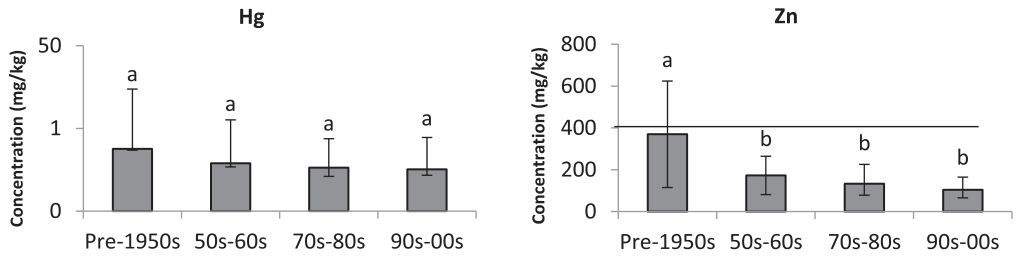
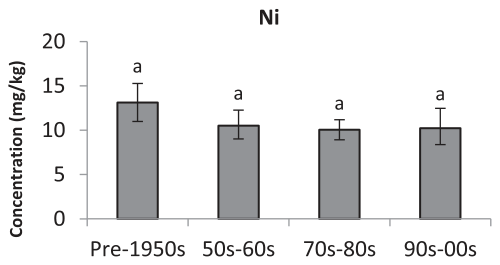
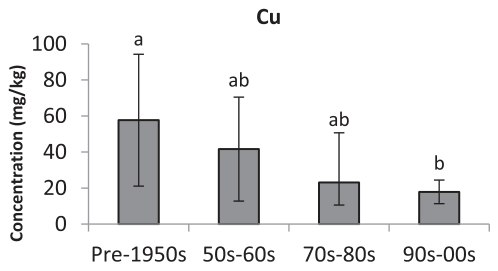
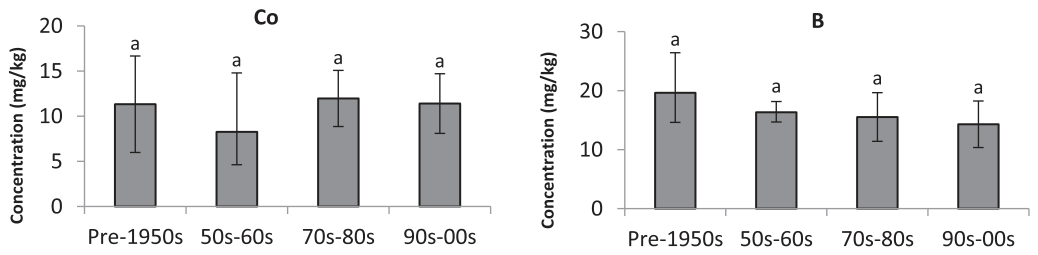
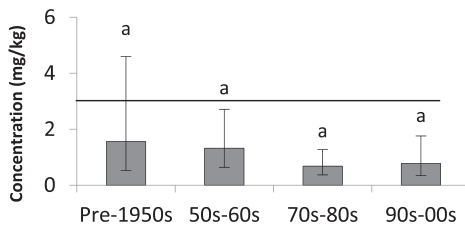
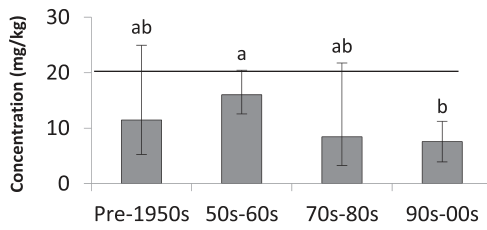
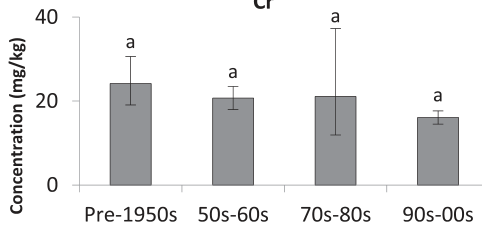
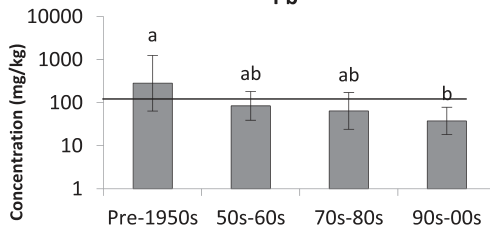
HMs of anthropogenic origin would be expected to accumulate in soil over time (Hough et al., 2004), due to the activities listed in Table 1. Our data are consistent with this hypothesis because in general, soils from older neighbourhoods had significantly higher concentrations of HMs (specifically As, Cu, Pb and Zn) than those in younger neighbourhoods (Fig. 2). Of particular note is the significantly higher Pb concentrations in the pre-50s gardens, where the mean concentration (282 mg kg�1) was well above the New Zealand Pb guideline (210 mg kg�1). These soil Pb concentrations are similar to those found in Baltimore, Boston, and Chicago in the USA, and Naples, Palermo, and Rome in Italy (Ajmone-Marsan and Biasioli, 2010). Leaded gasoline and Pb-based paint were reported as the two main historical sources of the soil Pb contamination in the Boston gardens (Clark et al., 2006).
由于表1所列的各类活动,人为来源的重金属预计会随时间在土壤中累积(Hough et al., 2004)。本研究数据与这一假设相符,总体而言,较老街区土壤的重金属(特别是As、Cu、Pb和Zn)浓度显著高于较新街区(图2)。尤其值得注意的是,20世纪50年代以前建成的园地Pb浓度显著较高,其平均浓度(282 mg kg−1)远高于新西兰Pb指导值(210 mg kg−1)。这些土壤Pb浓度与美国巴尔的摩、波士顿和芝加哥以及意大利那不勒斯、巴勒莫和罗马的报道值相近(Ajmone-Marsan and Biasioli, 2010)。据报道,含铅汽油和含铅涂料是波士顿园地土壤Pb污染的两大历史来源(Clark et al., 2006)。
The correlation between concentrations of selected heavy metals in the HAIL and garden soil samples.
HAIL场地和园地土壤样品中若干重金属浓度之间的相关性。
| G | HAILHAIL | ||||||||
|---|---|---|---|---|---|---|---|---|---|
| a | |||||||||
| r | As | Cd | Cu | Pb | Zn | Hg | Cr | Ni | |
| d | As | 0.21* | 0.02 | 0.02 | 0.15 | �0.09 | 0.03 | 0.62 | |
| e | Cd | 0.11 | �0.02 | �0.08 | 0.94 | �0.12 | �0.01 | 0.23* | |
| n | Cu | 0.61 | 0.16* | �0.04 | 0.18* | �0.05 | �0.02 | 0.04 | |
| Pb | 0.51 | 0.32 | 0.55* | �0.08 | �0.41 | 0.81 | �0.03 | ||
| Zn | 0.50 | 0.34 | 0.67 | 0.88 | �0.14 | �0.03 | 0.14 | ||
| Hg | 0.22 | 0.07 | 0.17* | 0.22 | 0.28 | �0.20 | �0.19 | ||
| Cr | 0.82 | 0.04 | 0.59 | 0.65 | 0.54 | 0.12 | �0.02 | ||
| Ni | 0.20 | 0.31 | 0.33 | 0.30 | 0.36 | 0.18* | 0.26 |
**,*: Correlations are significant at 0.01 and 0.05 levels, respectively.
**、*:分别表示在0.01和0.05水平上相关性显著。
3.4. Implications of soil HM concentrations in Christchurch suburban soils3.4. 基督城郊区土壤重金属浓度的意义
As with other cities, a significant number of suburban soils from Christchurch gardens were above the national standards for HM concentrations, particularly soils from older neighbourhoods. Unlike some other cities, many suburban soils are used for food production. While we did not test food crops from suburban gardens in this study, there is clearly an increased risk that such crops may contain HM concentrations above food safety standards, which may result from plant uptake or attached soil particles. Vegetable HM contamination was found in vegetables grown in a Pbcontaminated community garden in Omaha, Nebraska (USA) (Sangster et al., 2012). Lead concentrations in samples of leafy greens, eggplant, okra, and tomato grown in soils containing more than 100 mg Pb kg�1 exceeded a limit of 0.5 mg kg�1 established by the U.S. Food and Drug Administration (FDA) for Pb. While the most concerning contaminants, As, Hg and Pb are not readily taken up by
与其他城市一样,基督城相当数量的郊区园地土壤重金属浓度超过国家标准,尤其是较老街区的土壤。与某些城市不同的是,这里许多郊区土壤被用于粮食生产。尽管本研究未检测郊区园地的粮食作物,但此类作物重金属浓度超过食品安全标准的风险显然有所增加,这可能源于植物吸收或附着的土壤颗粒。美国内布拉斯加州奥马哈一处受Pb污染的社区菜园中所种植的蔬菜即发现了重金属污染(Sangster et al., 2012)。在Pb含量超过100 mg Pb kg−1的土壤中种植的叶菜、茄子、秋葵和番茄样品,其Pb浓度超过了美国食品药品监督管理局(FDA)规定的Pb限值0.5 mg kg−1。虽然最受关注的污染物As、Hg和Pb不易被
plants into their aerial tissues (Robinson et al., 2009), contaminated dust may be attached to edible portions, which is difficult to remove, even by repeated washing (Hinton et al., 1995). Root vegetables may accumulate significant concentrations of HMs (Alexander et al., 2006).
植物吸收并转运至地上部组织(Robinson et al., 2009),但受污染的粉尘可能附着于可食部分,即使反复清洗也难以去除(Hinton et al., 1995)。根茎类蔬菜可能累积相当浓度的重金属(Alexander et al., 2006)。
High soil HM concentrations may present a risk to local populations through the entry of dust indoors and its subsequent inhalation and ingestion (Laidlaw et al., 2005). Tong (1998) found elevated concentrations of Pb and Cu in both indoor and outdoor dust among residential properties in Cincinnati (Ohio, U.S.A.). She did not find a significant relationship between indoor and outdoor dust concentrations across the 121 sites analysed; however, these concentrations were higher than the background soil concentrations and were related, among other things, to the age of the building and the neighbourhood. Subsequent review by Laidlaw and Filippelli (2008) suggested that elevated blood Pb levels in children may be linked to soil transported into residences as dust; they also highlighted the importance of variables that influence the likelihood of wind erosion (e.g. soil moisture and ground cover) contributing to indoor dust levels.
土壤重金属浓度较高时,可能通过粉尘进入室内并随后被吸入和摄入,而对当地人群构成风险(Laidlaw et al., 2005)。Tong(1998)发现,美国俄亥俄州辛辛那提住宅的室内和室外粉尘中Pb和Cu浓度均有升高。在所分析的121个点位中,她未发现室内与室外粉尘浓度之间存在显著关系;但这些浓度高于土壤背景浓度,且与建筑物及街区的建成年代等因素相关。Laidlaw and Filippelli(2008)随后的综述指出,儿童血铅水平升高可能与以粉尘形式带入住宅的土壤有关;他们还强调了影响风蚀可能性的变量(如土壤湿度和地表覆盖)对室内粉尘水平的重要作用。
Christchurch is regularly subject to strong seasonal winds and low levels of precipitation, which promote the formation of airborne soil particles. Moreover, there has been considerable demolition and reconstruction work in the Christchurch area subsequent to the earthquakes, which may have contributed to additional dust generation in some neighbourhoods. We did not analyse indoor dust samples, so we cannot comment on whether this may have increased the risk posed by high HM concentrations in household dust; however, this should be investigated further.
基督城经常受到强烈的季节性大风影响且降水量较少,这促进了空气中土壤颗粒的形成。此外,地震后基督城地区开展了大量拆除和重建工作,这可能导致部分街区产生额外的粉尘。本研究未分析室内粉尘样品,因此无法判断这是否增加了家庭粉尘中高浓度重金属带来的风险;但对此应作进一步研究。
Human exposure to soil borne HMs can be limited by using soil conditioners that reduce HM bioavailability (Al Mamun et al., 2016; Clarke et al., 2015; Mitchell et al., 2014) or by selecting plants where the edible portions are unlikely to contain significant concentrations of HMs. Tree borne fruits are unlikely to have significant amounts of attached soil, as are fruits or vegetables that are peeled or contained within a capsule or pod. The highest risks would be associated with low-growing leafy vegetables or unpeeled root vegetables.
可通过施用降低重金属生物有效性的土壤调理剂(Al Mamun et al., 2016; Clarke et al., 2015; Mitchell et al., 2014),或选择可食部分不太可能含有较高浓度重金属的植物,来限制人类对土源重金属的暴露。树上结的果实不太可能附着大量土壤,需去皮或包裹于荚壳内的水果或蔬菜亦是如此。风险最高的应是低矮生长的叶菜类或未去皮的根茎类蔬菜。
4Conclusions结论
Soil HM concentrations should be key criteria when determining the future land use of former residential areas that have been demolished because of the earthquakes in 2010 and 2011. Redeveloping these areas as parklands or forests would result in less human HM exposure than agriculture or community gardens where food is produced and bare soil is exposed. The likely risk of any soil being contaminated is higher for older neighbourhoods. Future research could investigate HM concentrations in fruits and vegetables grown in suburban gardens in Christchurch. Communication of the results of this and subsequent studies to the public should be done in a way to avoid unwarranted hysteria: there is no evidence that Christchurch residents are suffering more ill effects of HMs than the populations of other cities.
在确定因2010年和2011年地震而拆除的原住宅区的未来土地用途时,土壤重金属浓度应作为关键标准。与生产粮食且裸露土壤的农业或社区菜园相比,将这些区域重新开发为公园绿地或森林可减少人类的重金属暴露。较老街区土壤受污染的可能风险更高。今后的研究可调查基督城郊区园地所种植水果和蔬菜中的重金属浓度。向公众传达本研究及后续研究结果时,应避免引起不必要的恐慌:目前并无证据表明基督城居民遭受重金属不良影响的程度高于其他城市的人群。
Acknowledgements致谢
We gratefully acknowledge Karen Burton and Lynne Clucas for their technical help.
衷心感谢Karen Burton和Lynne Clucas提供的技术帮助。
References参考文献
Ajmone-Marsan, F., Biasioli, M., 2010. Trace elements in soils of urban areas. Water, Air, & Soil Pollut. 213, 121e143. Al Mamun, S., Chanson, G., Muliadi, Benyas, E., Aktar, M., Lehto, N., McDowell, R.,
Cavanagh, J., Kellermann, L., Clucas, L., Robinson, B., 2016. Municipal composts reduce the transfer of Cd from soil to vegetables. Environ. Pollut. 213, 8e15. Alexander, P.D., Alloway, B.J., Dourado, A.M., 2006. Genotypic variations in the accumulation of Cd, Cu, Pb and Zn exhibited by six commonly grown vegetables. Environ. Pollut. 144, 736e745.
Calabrese, E.J., Stanek, E.J., James, R.C., Roberts, S.M., 1997. Soil ingestion: a concern for acute toxicity in children. Environ. Health Perspect. 105, 1354e1358.
Clark, H.F., Brabander, D.J., Erdil, R.M., 2006. Sources, sinks, and exposure pathways of lead in urban garden soil. J. Environ. Qual. 35, 2066e2074.
Clarke, L.W., Jenerette, G.D., Bain, D.J., 2015. Urban legacies and soil management affect the concentration and speciation of trace metals in Los Angeles community garden soils. Environ. Pollut. 197, 1e12.
De Miguel, E., Llamas, J.F., Chacon, E., Mazadiego, L.F., 1999. Sources and pathways of� trace elements in urban environments: a multi-elemental qualitative approach. Sci. Total Environ. 235, 355e357.
El Khalil, H., Schwartz, C., El Hamiani, O., Kubiniok, J., Morel, J.L., Boularbah, A., 2013. Distribution of major elements and trace metals as indicators of technosolisation of urban and suburban soils. J. Soils Sediments 13, 519e530.
Gilmour, D., 2013. Community food resilience in the Avon-Otakaro residential redzone: christchurch and its future for community food security. Draft 1e33. Guagliardi, I., Buttafuoco, G., Cicchella, D., Rosa, R., 2012. A multivariate approach for anomaly separation of potentially toxic trace elements in urban and peri-urban soils: an application in a southern Italy area. J. Soils Sediments 13, 117e128.
Gulan, L., Milenkovic, B., Zeremski, T., Milic, G., Vuckovic, B., 2017. Persistent organic pollutants, heavy metals and radioactivity in the urban soil of Pristina City, Kosovo and Metohija. Chemosphere 171, 415e426.
Hinton, T.G., Kopp, P., Ibrahim, S., Bubryak, I., Syomov, A., Tobler, L., Bell, C., 1995. A comparison of techniques used to estimate the amount of resuspended soil on plant-surfaces. Health Phys. 68, 523e531.
Hough, R.L., Breward, N., Young, S.D., Tye, A.M., Moir, A.M., Thornton, I., 2004. Assessing potential risk of heavy metal exposure from consumption of homeproduced vegetables by urban populations. Environ. Health Perspect. 112, 215e221.
IANZ, 2017. International Accreditation New Zealand. http://www.ianz.govt.nz/.
Ikem, A., Campbell, M., Nyirakabibi, I., Garth, J., 2008. Baseline concentrations of trace elements in residential soils from Southeastern Missouri. Environ. Monit. Assess. 140, 69e81.
Jean-Soro, L., Le Guern, C., Bechet, B., Lebeau, T., Ringeard, M.-F., 2015. Origin of trace elements in an urban garden in Nantes, France. J. Soils Sediments 15, 1802e1812.
Kachenko, A.G., Singh, B., 2006. Heavy metals contamination in vegetables grown in urban and metal smelter contaminated sites in Australia. Water, Air, Soil Pollut. 169, 101e123.
LaCoste, C., Robinson, B., Brooks, R., 2001. Uptake of thallium by vegetables: its significance for human health, phytoremediation, and phytomining. J. Plant Nutr. 24, 1205e1215.
Laidlaw, M.A.S., Filippelli, G.M., 2008. Resuspension of urban soils as a persistent source of lead poisoning in children: a review and new directions. Appl. Geochem. 23, 2021e2039.
Laidlaw, M.A.S., Mielke, H.W., Filippelli, G.M., Johnson, D.L., Gonzales, C.R., 2005. Seasonality and children's blood lead levels: developing a predictive model using climatic variables and blood lead data from Indianapolis, Indiana, Syracuse, New York, and New Orleans, Louisiana (USA). Environ. Health Perspect. 113, 793e800.
Li, Y., Li, H.G., Liu, F.C., 2017. Pollution in the urban soils of Lianyungang, China, evaluated using a pollution index, mobility of heavy metals, and enzymatic activities. Environ. Monit. Assess. 189.
Maas, S., Scheifler, R., Benslama, M., Crini, N., Lucot, E., Brahmia, Z., Benyacoub, S., Giraudoux, P., 2010. Spatial distribution of heavy metal concentrations in urban, suburban and agricultural soils in a Mediterranean city of Algeria. Environ. Pollut. 158, 2294e2301.
MfE, M.f.t.e., 2016. Hazardous Activities and Industries List.
Mills, T.M., Robinson, B.H., Sivakumaran, S., Arnold, B., Clothier, B.E., Kim, N., 2005. Current practice and future land-use: the sustainabillity of productive sector environments. In: Drew, R. (Ed.), Proceedings of the International Symposium on Harnessing the Potential of Horticulture in the Asian-Pacific Region, pp. 159e164.
Ministry for the Environment, 2012. Users' Guide: National Environmental Standard for Assessing and Managing Contaminants in Soil to Protect Human Health. Ministry for the Environment, Wellington.
Ministry for the Environment, 2013. Hazardous Activities and Industries List (HAIL). Mitchell, R.G., Spliethoff, H.M., Ribaudo, L.N., Lopp, D.M., Shayler, H.A., Marquez- Bravo, L.G., Lambert, V.T., Ferenz, G.S., Russell-Anelli, J.M., Stone, E.B., McBride, M.B., 2014. Lead (Pb) and other metals in New York City community garden soils: factors influencing contaminant distributions. Environ. Pollut. 187, 162e169.
Paramashivam, D., Clough, T.J., Carlton, A., Gough, K., Dickinson, N., Horswell, J., Sherlock, R.R., Clucas, L., Robinson, B.H., 2016. The effect of lignite on nitrogen mobility in a low-fertility soil amended with biosolids and urea. Sci. Total Environ. 543, 601e608.
Robinson, B., Greven, M., Green, S., Sivakumaran, S., Davidson, P., Clothier, B., 2006. Leaching of copper, chromium and arsenic from treated vineyard posts in Marlborough, New Zealand. Sci. Total Environ. 364, 113e123.
Robinson, B.H., Banuelos, G., Conesa, H.M., Evangelou, M.W.H., Schulin, R., 2009. The phytomanagement of trace elements in soil. Crit. Rev. Plant Sci. 28, 240e266.
Romi�c, M., Romi�c, D., Ondra�sek, G., 2004. Heavy metals accumulation in topsoils from the wine-growing regions part 2. relationships between soil properties and extractable copper contents. Agric. Conspec. Sci. 69, 35e41.
Sangster, J.L., Nelson, A., Bartelt-Hunt, S.L., 2012. The occurrence of lead in soil and vegetables at a community garden in Omaha, Nebraska. Internatl. J. Serv. Learning Eng., Humanit. Eng. Soc. Entrepreneursh. 7, 62e68.
Scott, M., Carville, O., 2016. Christchurch Earthquake: Eerie Images of City's Redzone, Five Years on. NZ Herald.
Simmler, M., Ciadamidaro, L., Schulin, R., Madejon, P., Reiser, R., Clucas, L., Weber, P., Robinson, B., 2013. Lignite reduces the solubility and plant uptake of cadmium in pasturelands. Environ. Sci. Technol. 47, 4497e4504.
Statistics New Zealand, 2014. Census QuickStats about Greater Christchurch, 2013.
Szolnoki, Z., Farsang, A., 2013. Evaluation of metal mobility and bioaccessibility in soils of urban vegetable gardens using sequential extraction. Water, Air, & Soil
Pollut. 224, 1e16.
Tong, S.T.Y., 1998. Indoor and outdoor household dust contamination in Cincinnati, Ohio. USA. Environ. Geochem. Health 20, 123e133.
Tonkin, Taylor, 2007. Background Concentrations of Selected Trace Elements in Canterbury Soils, pp. 1e15.
Vazquez de la Cueva, A., Marchant, B.P., Quintana, J.R., de Santiago, A., Lafuente, A.L.,� Webster, R., 2014. Spatial variation of trace elements in the peri-urban soil of Madrid. J. Soils Sediments 14, 78e88.
Wei, B., Yang, L., 2010. A review of heavy metal contaminations in urban soils, urban road dusts and agricultural soils from China. Microchem. J. 94, 99e107.
Wilson, J., 2005. Christchurch city contextual history overview. Chapter 7, 72e128. Wong, C.S.C., Li, X., Thornton, I., 2006. Urban environmental geochemistry of trace metals. Environ. Pollut. 142, 1e16.