Contents lists available at ScienceDirect journal homepage: www.elsevier.com/locate/scitotenv
Review
Dezhan Liang a,1, Caibin Li b,1, Hanbo Chen c, Erlend Sørmo d,e, Gerard Cornelissen d,e, Yurong Gao a, Febelyn Reguyal f, Ajit Sarmah f, Jim Ippolito g, Claudia Kammann h, Fangbai Li i, Yerbolat Sailaukhanuly j, Heqing Cai b, Yan Hu b, Maoxian Wang b, Xiaofei Li a, Xinglan Cui k, Brett Robinson l, Eakalak Khan m, Jorg¨ Rinklebe n, Tingjin Ye o, Fengchang Wu p, Xiaokai Zhang q, Hailong Wang a,i,*
Dezhan Liang a,1, Caibin Li b,1, Hanbo Chen c, Erlend Sørmo d,e, Gerard Cornelissen d,e, Yurong Gao a, Febelyn Reguyal f, Ajit Sarmah f, Jim Ippolito g, Claudia Kammann h, Fangbai Li i, Yerbolat Sailaukhanuly j, Heqing Cai b, Yan Hu b, Maoxian Wang b, Xiaofei Li a, Xinglan Cui k, Brett Robinson l, Eakalak Khan m, Jorg¨ Rinklebe n, Tingjin Ye o, Fengchang Wu p, Xiaokai Zhang q, Hailong Wang a,i,*
a School of Environmental and Chemical Engineering, Foshan University, Foshan 528000, China
b Yancao Industry Biochar-Based Fertilizer Engineering Research Center of China, Bijie Yancao Company of Guizhou Province, Bijie, Guizhou 550700, China
c Key Laboratory of Recycling and Eco-treatment of Waste Biomass of Zhejiang Province, School of Environmental and Natural Resources, Zhejiang University of Science & Technology, Hangzhou 310023, China
d Norwegian Geotechnical Institute (NGI), 0484 Oslo, Norway
e Faculty of Environmental Sciences and Natural Resource Management, Norwegian University of Life Sciences (NMBU), 1430 Ås, Norway
f Department of Civil and Environmental Engineering, Faculty of Engineering, The University of Auckland, Private Bag 92019, Auckland 1142, New Zealand g School of Environment and Natural Resources, The Ohio State University, Columbus, OH 43210, USA
h Department of Applied Ecology, Geisenheim University, 65366 Geisenheim, Germany
i Guangdong Provincial Key Laboratory of Integrated Agro-environmental Pollution Control and Management, Institute of Eco-environmental and Soil Sciences, Guangdong Academy of Sciences, Guangzhou 510650, China
j Laboratory of Engineering Profile, Satbayev University, 22a Satpaev Str., Almaty 050013, Kazakhstan k National Engineering Research Center for Environment-friendly Metallurgy in Producing Premium Non-ferrous Metals, GRINM Resources and Environmental Technology Corporation Limited, Beijing 101407, China
j Satbayev大学工程概况实验室,Satpaev街22a号,阿拉木图 050013,哈萨克斯坦 k 高品质有色金属绿色特种冶金国家工程研究中心,有研资源环境技术研究院(北京)有限公司,北京 101407,中国
l School of Physical and Chemical Sciences, University of Canterbury, Christchurch, New Zealand
m Civil and Environmental Engineering and Construction Department, University of Nevada, Las Vegas, NV 89154-4015, USA
n University of Wuppertal, School of Architecture and Civil Engineering, Institute of Foundation Engineering, Water- and Waste-Management, Laboratory of Soil- and Groundwater-Management, Pauluskirchstraße 7, 42285 Wuppertal, Germany
o IronMan Environmental Technology Co., Ltd., Foshan 528041, China
p State Key Laboratory of Environmental Criteria and Risk Assessment, Chinese Research Academy of Environmental Sciences, Beijing 100012, China
q Institute of Environmental Processes and Pollution Control, School of Environment and Ecology, Jiangnan University, Wuxi 214122, China
* Corresponding author at: School of Environmental and Chemical Engineering, Foshan University, Foshan 528000, China. E-mail address: hailong.wang@fosu.edu.cn (H. Wang).
1 These authors contributed equally to this work and should be considered co-first authors.
https://doi.org/10.1016/j.scitotenv.2024.174962
Available online 25 July 2024
0048-9697/© 2024 Elsevier B.V. All rights are reserved, including those for text and data mining, AI training, and similar technologies.
H I G H L I G H T S
- A comprehensive coverage of the remediation of PFAS by biochar is presented.全面综述了生物炭对PFAS的修复。
- Biochar's PFAS sorption mechanisms and key influencing factors are elucidated.阐明了生物炭吸附PFAS的机制及关键影响因素。
- Cases for remediation of PFAS contamination by biochar are discussed in detail.详细讨论了生物炭修复PFAS污染的案例。
1Introduction引言
Per- and polyfluoroalkyl substances (PFAS) represent a class of organofluorochemicals that have been synthesized since the 1940s (Lyu et al., 2022). According to Evich et al. (2022), there are over 8000 distinct PFAS compounds. PFAS compounds are widely used across fields and industries, including firefighting foams, electronics manufacturing, and consumer goods like water-resistant clothing and electric vehicle batteries (Evich et al., 2022; Glüge et al., 2020; Zhang et al., 2024). The ubiquity, potential toxicity, and propensity for bioaccumulation of PFAS across diverse environmental matrices and biological organisms have garnered global attention due to their farreaching implications for environmental health and safety (Kemper et al., 2024; Liu et al., 2023a; Sonne et al., 2023).
全氟和多氟烷基物质(PFAS)是一类自20世纪40年代起即被人工合成的有机氟化合物(Lyu et al., 2022)。据Evich et al.(2022)统计,现有PFAS化合物超过8000种。PFAS化合物被广泛应用于多个领域和行业,包括消防泡沫、电子制造以及防水服装和电动汽车电池等消费品(Evich et al., 2022; Glüge et al., 2020; Zhang et al., 2024)。PFAS在各类环境介质和生物体中普遍存在,具有潜在毒性和生物累积倾向,对环境健康与安全影响深远,因而受到全球关注(Kemper et al., 2024; Liu et al., 2023a; Sonne et al., 2023)。
Environmental concerns regarding the utilization of PFAS emerged toward the end of the 20th century (Gaines, 2023). It was recognized that perfluorooctanesulfonic acid (PFOS) and perfluorooctanoic acid (PFOA)—among the most extensively employed PFAS compounds due to their exceptional resistance to biodegradation—were pervasive in diverse biological and environmental components (Wee and Aris, 2023). Furthermore, these compounds exhibited the potential for biomagnification in food webs (Miranda et al., 2023). The health impacts of many PFAS compounds remain the subject of ongoing research (Pelch et al., 2022; Wee and Aris, 2023). Establishing a definitive link between exposure to specific PFAS chemicals and the manifestation of adverse health effects can be a protracted process, particularly for recently identified PFAS compounds (Wee and Aris, 2023; U.S. HHS, 2016). The typical structure of PFAS is detailed in Table S1.
有关PFAS使用的环境问题于20世纪末开始显现(Gaines, 2023)。全氟辛烷磺酸(PFOS)和全氟辛酸(PFOA)因极难生物降解而成为应用最为广泛的PFAS化合物,人们认识到二者普遍存在于各类生物和环境组分中(Wee and Aris, 2023)。此外,这些化合物具有沿食物网生物放大的潜力(Miranda et al., 2023)。许多PFAS化合物的健康影响仍在研究之中(Pelch et al., 2022; Wee and Aris, 2023)。确立特定PFAS化学品暴露与不良健康效应之间的明确联系可能是一个漫长的过程,对于新近发现的PFAS化合物尤其如此(Wee and Aris, 2023; U.S. HHS, 2016)。PFAS的典型结构详见表S1。
Exposure to PFAS can occur through inhalation, oral ingestion, and dermal contact (ATSDR, 2021; U.S. EPA, 2023). The consumption of contaminated drinking water and food is recognized as a primary source of PFAS accumulation in the human body (U.S. EPA, 2023). PFAS has been found in human lungs, brain, liver, bone, and kidneys (Koelmel et al., 2023; Lin et al., 2023; P´erez et al., 2013; Zhao et al., 2023). Exposure to PFAS is linked to various health concerns (U.S. HHS, 2016). PFAS compounds have persistent, bioaccumulative, and toxic properties (Han et al., 2023), which are underscored by their unique ability to bind with proteins and cell membranes, forming hydrogen bonds—a characteristic not shared by all persistent organic pollutants (Zhao et al., 2023). Epidemiological studies have consistently demonstrated a correlation between exposure to PFAS and a spectrum of adverse health outcomes. These include increased serum lipid levels, elevated cholesterol, obesity, disruptions in hormonal regulation, heightened blood pressure, and a diminished immune response (U.S. EPA, 2023).
PFAS暴露可通过吸入、经口摄入和皮肤接触发生(ATSDR, 2021; U.S. EPA, 2023)。饮用受污染的饮用水和食用受污染的食物被认为是PFAS在人体内累积的主要来源(U.S. EPA, 2023)。已在人体肺、脑、肝、骨和肾中检出PFAS(Koelmel et al., 2023; Lin et al., 2023; P´erez et al., 2013; Zhao et al., 2023)。PFAS暴露与多种健康问题相关(U.S. HHS, 2016)。PFAS化合物具有持久性、生物累积性和毒性(Han et al., 2023),其能够与蛋白质和细胞膜结合并形成氢键的独特能力进一步凸显了这些特性,而并非所有持久性有机污染物都具备这一特征(Zhao et al., 2023)。流行病学研究一致表明,PFAS暴露与一系列不良健康结局相关,包括血清脂质水平升高、胆固醇升高、肥胖、激素调节紊乱、血压升高以及免疫应答减弱(U.S. EPA, 2023)。
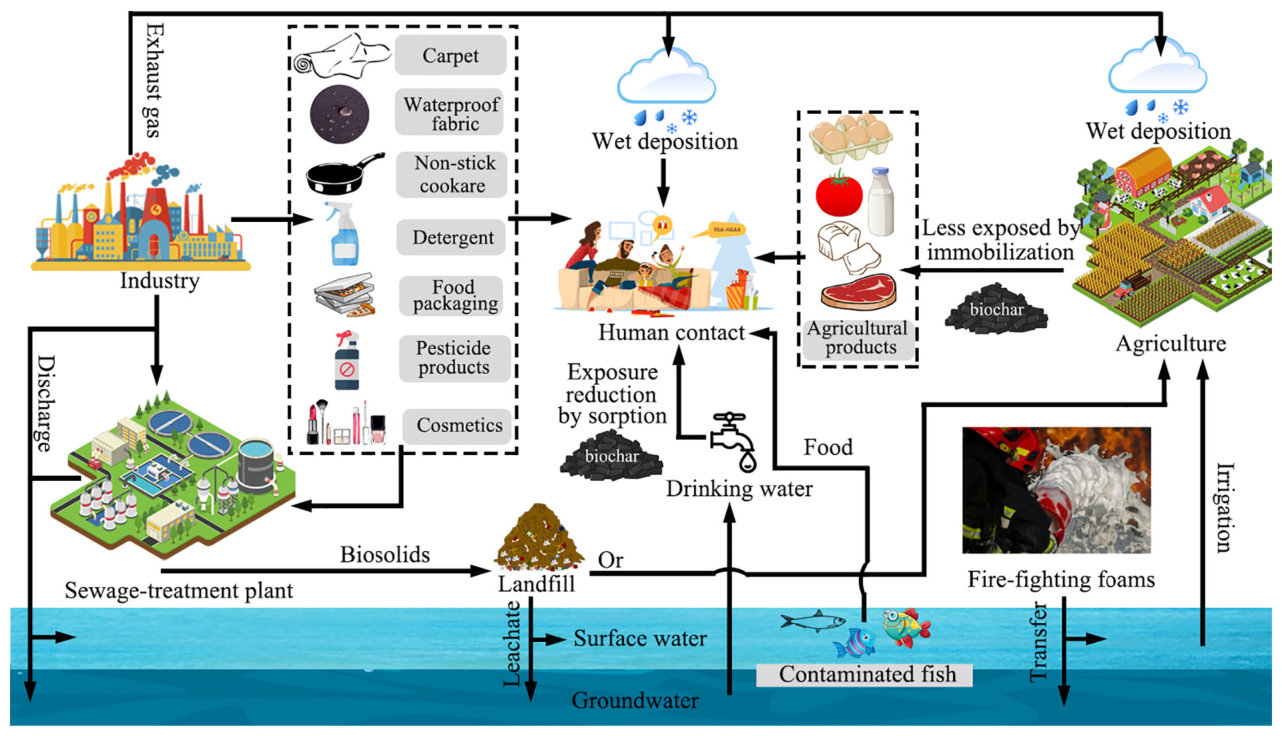
Exposure to PFAS typically occurs through contaminated soil and water, where the stable fluorocarbon bond enables persistent pollution (Abunada et al., 2020; Sørmo et al., 2023). Soil-borne PFAS stems from various sources, including firefighting foam use at training facilities, PFAS-containing biosolid application on farmland, irrigation with PFAS-contaminated water, and industrial emissions releasing PFAS-laden effluents (Abunada et al., 2020; Høisæter et al., 2019; Lee et al., 2014; Fig. 1). PFAS can persist in soil through processes such as sorption, partitioning, and various chemical reactions. Research has shown that PFAS toxicity can adversely affect soil enzyme activity, microorganism cellular structural integrity, and induce the mineralization of soil organic matter (Bolan et al., 2021; Li et al., 2024b; Cai et al., 2020, 2019; Qiao et al., 2018).
PFAS暴露通常经由受污染的土壤和水体发生,稳定的碳氟键使其造成持久性污染(Abunada et al., 2020; Sørmo et al., 2023)。土壤中的PFAS来源多样,包括训练设施使用的消防泡沫、农田施用含PFAS的生物固体(污泥)、使用受PFAS污染的水进行灌溉以及工业排放含PFAS的废水(Abunada et al., 2020; Høisæter et al., 2019; Lee et al., 2014;图1)。PFAS可通过吸附、分配及多种化学反应等过程在土壤中长期存留。研究表明,PFAS的毒性可对土壤酶活性和微生物细胞结构完整性产生不利影响,并诱导土壤有机质矿化(Bolan et al., 2021; Li et al., 2024b; Cai et al., 2020, 2019; Qiao et al., 2018)。
Certain PFAS compounds exhibit water solubility, making them prone to leaching and thus migrating into various aquatic environments, including groundwater and surface water, with some of them being drinking water sources (Robey et al., 2020; Abunada et al., 2020; Fig. 1). Survey data reported by Hu et al. (2016), revealed that approximately 6 million U.S. residents had PFAS levels in their drinking water exceeding the recommended values established by the U.S. Environmental Protection Agency (EPA). Up to 26,000 sites may be contaminated with PFAS (Darlington et al., 2018). If soil hot spots are not remediated, they can result in PFAS contamination of nearby water bodies to an extent that exceeds environmental quality thresholds for centuries (Ruyle et al., 2023).
部分PFAS化合物具有水溶性,易于淋溶并迁移至各类水环境,包括地下水和地表水,其中一些为饮用水水源(Robey et al., 2020; Abunada et al., 2020;图1)。Hu et al.(2016)报道的调查数据显示,约600万美国居民饮用水中的PFAS含量超过了美国环境保护署(EPA)制定的推荐值。多达26,000个场地可能受到PFAS污染(Darlington et al., 2018)。若土壤污染热点不加以修复,可导致邻近水体受到PFAS污染,其程度在数个世纪内超过环境质量阈值(Ruyle et al., 2023)。
In 2016, the U.S. EPA recommended that the concentration of combined PFOA and PFOS in drinking water should not exceed 70 ng L− 1 (U.S. EPA, 2016). However, in 2022, it revised these standards to more stringent levels, setting the Interim Updated Lifetime Health Advisory standards for PFOA and PFOS at 0.004 ng L− 1 and 0.02 ng L− 1, respectively (U.S. EPA, 2022). In April 2024, the U.S. EPA's newly released National Primary Drinking Water Regulation legally mandated enforcement of maximum contaminant concentrations of 4 ng L− 1 for PFOA and PFOS in drinking water and the completion of monitoring of public water systems within three years (by 2027) (U.S. EPA, 2024). These concentrations are exceedingly low, emphasizing the urgent need for effective measures to reduce current environmental PFAS concentrations and further PFAS release into the environment.
2016年,美国EPA建议饮用水中PFOA与PFOS的合计浓度不应超过70 ng L− 1(U.S. EPA, 2016)。然而,2022年该机构将上述标准修订得更为严格,将PFOA和PFOS的临时更新终生健康建议值分别设定为0.004 ng L− 1和0.02 ng L− 1(U.S. EPA, 2022)。2024年4月,美国EPA新发布的《国家一级饮用水法规》依法强制规定饮用水中PFOA和PFOS的最大污染物浓度为4 ng L− 1,并要求在三年内(即2027年前)完成对公共供水系统的监测(U.S. EPA, 2024)。这些浓度限值极低,凸显了采取有效措施降低当前环境PFAS浓度并防止PFAS进一步释放到环境中的紧迫性。
The introduction of PFAS compounds into the environment through non-point source pathways presents significant challenges to the cost-effectiveness of remediation and associated strategies due to the complex nature of the environmental matrices they inhabit (Naidu et al., 2020; Rafiei and Nejadhashemi, 2023). As a result, a proactive mitigation approach involves addressing PFAS-contaminated point sources, which include facilities such as factories, wastewater treatment plants, fire training facilities, and landfills (Andrews et al., 2021; Ehsan et al., 2023; Joerss et al., 2022). It is crucial to implement targeted measures in areas with elevated PFAS concentrations. For example, employing advanced treatment methodologies at wastewater treatment plants, such as adsorption, biological remediation technologies (e.g., aerobic/ anaerobic digestion, biofiltration), and other methods, can effectively reduce the emission of PFAS pollutants (Chen et al., 2012; Kibambe et al., 2020; Lenka et al., 2021).
PFAS化合物经非点源途径进入环境,由于其所处环境介质的复杂性,给修复及相关策略的成本效益带来了重大挑战(Naidu et al., 2020; Rafiei and Nejadhashemi, 2023)。因此,一种主动的减缓途径是治理受PFAS污染的点源,包括工厂、污水处理厂、消防训练设施和垃圾填埋场等设施(Andrews et al., 2021; Ehsan et al., 2023; Joerss et al., 2022)。在PFAS浓度较高的区域实施针对性措施至关重要。例如,在污水处理厂采用吸附、生物修复技术(如好氧/厌氧消化、生物过滤)等先进处理方法,可有效减少PFAS污染物的排放(Chen et al., 2012; Kibambe et al., 2020; Lenka et al., 2021)。
In addition to addressing PFAS point sources, remediating sites contaminated with PFAS compounds is crucial for mitigating associated risks. Effective methods for the remediation of PFAS from soil encompass soil washing (Høisæter et al., 2021), incineration (Kumar et al., 2023), smoldering (Duchesne et al., 2020), ball milling (Battye et al., 2024), and stabilization techniques (Bui et al., 2024). In practice, soil washing demands optimization based on soil types, soil-to-detergent ratios, and PFAS contact time to ensure cost-effectiveness (Bui et al., 2024; Nguyen et al., 2022). Incineration requires high destruction levels and minimal by-product generation, resulting in steep energy and operational costs (Garg et al., 2023; Zhang et al., 2023a). Recently, smoldering combustion has emerged as an effective method for remediating PFAS-contaminated soils (Duchesne et al., 2020; Fournie et al., 2023). However, it requires additional fuel, like granular activated carbon, to maintain temperatures for PFAS degradation and manage byproducts, including hydrogen fluoride (Duchesne et al., 2020; Fournie et al., 2023; Kang et al., 2023). Fournie et al. (2023) found that adding calcium oxide to the smoldering combustion process to promote calcium and fluorine mineralization offers a potential solution to this issue. Recent research has also demonstrated that pyrolysis at temperatures of 400 ◦C or above can effectively eliminate PFAS from sewage sludge (Huˇsek et al., 2024).
除治理PFAS点源外,修复受PFAS化合物污染的场地对于降低相关风险同样至关重要。土壤PFAS的有效修复方法包括土壤淋洗(Høisæter et al., 2021)、焚烧(Kumar et al., 2023)、阴燃(Duchesne et al., 2020)、球磨(Battye et al., 2024)以及稳定化技术(Bui et al., 2024)。实际应用中,土壤淋洗需要根据土壤类型、土壤与洗涤剂之比以及PFAS接触时间进行优化,以确保成本效益(Bui et al., 2024; Nguyen et al., 2022)。焚烧要求较高的破坏率和尽可能少的副产物生成,因而能源和运行成本高昂(Garg et al., 2023; Zhang et al., 2023a)。近年来,阴燃已成为修复PFAS污染土壤的一种有效方法(Duchesne et al., 2020; Fournie et al., 2023)。然而,该方法需要颗粒活性炭等额外燃料以维持PFAS降解所需温度,并需处理包括氟化氢在内的副产物(Duchesne et al., 2020; Fournie et al., 2023; Kang et al., 2023)。Fournie et al.(2023)发现,在阴燃过程中添加氧化钙以促进钙和氟的矿化,为解决这一问题提供了一种可能的途径。最新研究还表明,在400 ◦C及以上温度进行热解可有效去除污水污泥中的PFAS(Huˇsek et al., 2024)。
For combustion destruction, ball milling is a simple, reliable method suitable for on-site use (Battye et al., 2024; Turner et al., 2021). However, optimizing ball milling requires addressing challenges related to soil particle sizes, moisture content, and mixing ratios (Battye et al., 2024; Turner et al., 2021). Phytoremediation may partially mitigate the environmental risks of PFAS-contaminated soil (Evangelou and Robinson, 2022). Plants reduce PFAS mobility through hydraulic control, organic carbon addition, runoff and erosion reduction, and exclusion from aerial portions. However, PFAS persists due to its inherent stability (Gobelius et al., 2017; Lyu et al., 2022). Therefore, the research focuses on PFAS stabilization in soil.
在燃烧破坏之外,球磨是一种简单可靠、适于现场使用的方法(Battye et al., 2024; Turner et al., 2021)。然而,球磨的优化需要解决与土壤粒径、含水量和混合比例相关的问题(Battye et al., 2024; Turner et al., 2021)。植物修复可在一定程度上降低PFAS污染土壤的环境风险(Evangelou and Robinson, 2022)。植物可通过水力控制、增加有机碳、减少径流和侵蚀以及阻止PFAS向地上部分转运来降低PFAS的移动性。然而,由于PFAS固有的稳定性,其仍会持久存在(Gobelius et al., 2017; Lyu et al., 2022)。因此,研究重点在于土壤中PFAS的稳定化。
In recent years, numerous emerging treatment technologies have been employed to destroy or degrade PFAS in aqueous solutions. These methods primarily encompass ultrasonic decomposition (Singh Kalra et al., 2021), photochemical reactions (Verma et al., 2024), electrochemistry (Sharma et al., 2022), plasma degradation (Alam et al., 2023), and UV-activated sulfite-iodide degradation (Li et al., 2023). Despite these advances, many of these technologies remain in the laboratory research phase, predominantly due to concerns regarding potential byproducts, high energy consumption, and high costs (Singh et al., 2021; Yadav et al., 2022). Consequently, the widespread application of these technologies in the field remains limited (Singh et al., 2021). Adsorption is widely acknowledged as an efficacious technique for treating PFAS in water and soil to prevent human exposure (Du et al., 2014). Commonly utilized adsorbents for the elimination of PFAS compounds include ion-exchange resins, nanomaterials, activated carbon, and metal-organic frameworks (Gagliano et al., 2020; Pauletto and Bandosz, 2022; Verma et al., 2021; Yadav et al., 2022). However, in soil, the use of adsorbents is restricted to carbon-based materials (Bui et al., 2024; Zhang and Liang, 2022a). Nevertheless, these methods have inherent limitations, such as high material costs, stringent operational demands, and low maintenance cost-effectiveness (Wanninayake, 2021). Thus, there is a burgeoning interest in the exploration of cost-effective methods, including the application of biochar (Zhang et al., 2021).
近年来,众多新兴处理技术被用于破坏或降解水溶液中的PFAS,主要包括超声分解(Singh Kalra et al., 2021)、光化学反应(Verma et al., 2024)、电化学(Sharma et al., 2022)、等离子体降解(Alam et al., 2023)以及紫外活化亚硫酸盐-碘化物降解(Li et al., 2023)。尽管取得了这些进展,由于对潜在副产物、高能耗和高成本的顾虑,其中许多技术仍处于实验室研究阶段(Singh et al., 2021; Yadav et al., 2022)。因此,这些技术在现场的广泛应用仍然有限(Singh et al., 2021)。吸附被公认为处理水和土壤中PFAS、防止人体暴露的有效技术(Du et al., 2014)。常用于去除PFAS化合物的吸附剂包括离子交换树脂、纳米材料、活性炭和金属有机框架(Gagliano et al., 2020; Pauletto and Bandosz, 2022; Verma et al., 2021; Yadav et al., 2022)。然而,在土壤中,吸附剂的使用仅限于碳基材料(Bui et al., 2024; Zhang and Liang, 2022a)。此外,这些方法存在固有局限,如材料成本高、操作要求严格以及维护的成本效益低(Wanninayake, 2021)。因此,人们对探索具有成本效益的方法(包括施用生物炭)的兴趣日益增长(Zhang et al., 2021)。
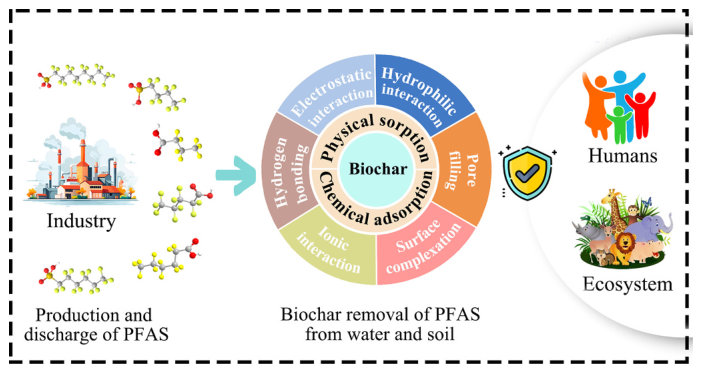
Biochar, an organic material rich in carbon derived from the pyrolysis of various biomass feedstocks (including agricultural and forest remnants, green wastes, biosolids, or manure) (Chen et al., 2024, 2023; Li et al., 2024a; Masud et al., 2023), has emerged as an intriguing option for PFAS remediation. Due to its highly porous structure, high ionic affinity, and significant surface area, biochar may serve as an effective adsorbent for PFAS compounds. Biochar may effectively reduce the mobility and bioavailability of PFAS in the environment through hydrophobic and electrostatic interactions (Hassan et al., 2020). The distinctive physicochemical attributes of biochar, including its relatively long-term stability and adsorption capacity (Wen et al., 2023) position biochar as an appealing alternative for PFAS remediation. Moreover, biochar holds potential for sustainable implementation as it can be derived from diverse sources of organic waste or agricultural residues (Van Nguyen et al., 2022), while removing CO2 removal due to its recalcitrance and associated environmental co-benefits such as reduced N2O emissions (Lehmann et al., 2021; Xie et al., 2024).
生物炭是由多种生物质原料(包括农林废弃物、绿色废弃物、生物固体(污泥)或粪肥)热解产生的富碳有机材料(Chen et al., 2024, 2023; Li et al., 2024a; Masud et al., 2023),已成为PFAS修复中一种颇具吸引力的选择。由于具有高度多孔的结构、较高的离子亲和力和较大的比表面积,生物炭可作为PFAS化合物的有效吸附剂。生物炭可通过疏水作用和静电作用有效降低PFAS在环境中的移动性和生物有效性(Hassan et al., 2020)。生物炭独特的物理化学属性,包括相对长期的稳定性和吸附能力(Wen et al., 2023),使其成为PFAS修复中颇具吸引力的替代方案。此外,生物炭可来源于各类有机废弃物或农业残余物(Van Nguyen et al., 2022),具有可持续应用的潜力;同时,由于其难降解性,生物炭还可去除CO2,并带来如减少N2O排放等环境协同效益(Lehmann et al., 2021; Xie et al., 2024)。
The C-sink services of biochar production and use can be certified (subtracting CO2eq emission expenditures along all transport, production, processing, and C-sink installation pathways), registered in a global C sink registry, and traded (EBC, 2012-2023; Schmidt et al., 2019) which would further reduce costs. An additional benefit, in terms of mitigation of PFAS contamination, can be achieved through pyrolysis and biochar production if the feedstock source itself is contaminated with PFAS. This is usually the case for biosolids and digestates, and hence, thermal destruction of the PFAS load within these feedstocks is possible if the pyrolysis is run at a sufficiently high temperature, i.e., ≥600 ◦C (Sørmo et al., 2023).
生物炭生产和施用的碳汇服务可以获得认证(扣除所有运输、生产、加工及碳汇安置环节的CO2当量排放支出),在全球碳汇登记系统中注册并进行交易(EBC, 2012-2023; Schmidt et al., 2019),从而进一步降低成本。若原料本身受到PFAS污染,热解和生物炭生产还可在减缓PFAS污染方面带来额外效益。生物固体(污泥)和消化残余物通常属于此类情况,因此,若热解在足够高的温度(即≥600 ◦C)下进行,即可热破坏这些原料中的PFAS负荷(Sørmo et al., 2023)。
By employing biochar as a remediating agent, a promising opportunity arises to mitigate the associated risks to human health and ecosystems by reducing PFAS concentrations in contaminated soils and water (Wang et al., 2023a). However, further research and optimization efforts are necessary to gain a comprehensive understanding of sorption mechanisms, assess their long-term effectiveness, and develop efficient application technologies for PFAS removal using biochar. The main aim of this review article is to focus on anionic PFAS and explore the following key aspects: (i) elucidating the nature and sorption mechanisms of PFAS in biochar; (ii) examining the factors influencing the sorption efficiency of biochar; (iii) presenting case studies and field applications; and (iv) discussing challenges and future directions to provide a comprehensive assessment of biochar's application in removing PFAS complexes.
以生物炭作为修复剂,可通过降低污染土壤和水体中的PFAS浓度来减轻其对人体健康和生态系统的相关风险,前景广阔(Wang et al., 2023a)。然而,仍需进一步研究和优化,以全面了解吸附机制、评估其长期有效性,并开发利用生物炭去除PFAS的高效应用技术。本综述的主要目的是聚焦阴离子型PFAS,探讨以下关键方面:(i)阐明PFAS的性质及其在生物炭中的吸附机制;(ii)考察影响生物炭吸附效率的因素;(iii)介绍案例研究和现场应用;(iv)讨论面临的挑战和未来方向,从而对生物炭在去除PFAS复合物中的应用进行全面评估。
2Properties and sorption mechanisms of biochar生物炭的性质与吸附机制
Different biochars can exhibit distinctive properties that contribute to their potential for effectively sorbing and immobilizing PFAS compounds. These properties include a high specific surface area, notable porosity, substantial ion exchange capacity, significant carbon content, and diverse functional groups (Krebsbach et al., 2023a; Park et al., 2020; Saeidi et al., 2020).
不同的生物炭可表现出独特的性质,这些性质使其具备有效吸附和固定PFAS化合物的潜力,包括较高的比表面积、显著的孔隙度、较大的离子交换容量、较高的碳含量以及多样的官能团(Krebsbach et al., 2023a; Park et al., 2020; Saeidi et al., 2020)。
2.1. Physical sorption2.1. 物理吸附
The specific surface area of biochar is influenced by the variety of raw materials and production conditions. Typically, biochar's specific surface area spans from 1.5 to 500 m2 g− 1, and its extensive porous structure offers a plethora of binding sites conducive to the adsorption of PFAS (Chen et al., 2019). PFAS molecules adhere to the surface of biochar through van der Waals forces, electrostatic interactions, and hydrogen bonding occurring within pores or on the exterior surface. Research by Karbassiyazdi et al. (2023) underscores the significant role of hydrogen bonding in PFAS adsorption onto activated charcoal, influenced by factors such as source, charcoal type, and functional groups. For instance, amide groups on perfluorooctane amido betaine (PFOAB) and perfluoroctaneamido ammonium iodide (PFOAAmS) act as hydrogen bonding acceptors, strengthening interactions with charcoal possessing hydrogen-donor biochar functionalities (-COOH or -OH) during sorption (Xing et al., 2011; Zhi and Liu, 2018).
生物炭的比表面积受原料种类和制备条件的影响。生物炭的比表面积通常在1.5至500 m2 g− 1之间,其发达的孔隙结构提供了大量有利于吸附PFAS的结合位点(Chen et al., 2019)。PFAS分子通过发生在孔隙内或外表面的范德华力、静电作用和氢键附着于生物炭表面。Karbassiyazdi et al.(2023)的研究强调了氢键在PFAS吸附于活性炭过程中的重要作用,该作用受来源、炭类型和官能团等因素影响。例如,全氟辛烷酰胺基甜菜碱(PFOAB)和全氟辛烷酰胺基碘化铵(PFOAAmS)上的酰胺基团可作为氢键受体,在吸附过程中增强其与具有氢供体官能团(-COOH或-OH)的生物炭之间的相互作用(Xing et al., 2011; Zhi and Liu, 2018)。
Oxygen-containing functional groups (C–O) on biochar facilitate hydrogen bond formation with PFAS, and notably, the introduction of iron promotes the protonation of C-O-C and C––O on biochar, enhancing hydrogen bond formation during PFAS sorption (Fang et al., 2014; Liu et al., 2023b). Certain cationic PFAS (e.g., PFOAAmS) possess positively charged quaternary ammonium groups that facilitate their adsorption onto the negatively charged surfaces of biochar through electrostatic attraction (Zhi and Liu, 2018). The surface charge of biochar, influenced by solution pH, results in a positively charged surface below the zero charge point (pHpzc), enabling the sorption of negatively charged PFAS (e.g., anionic PFAAs like PFOA and PFOS) via electrostatic interactions (Hassan et al., 2020; Lyu et al., 2022). Additionally, the presence of positively charged groups, such as nitrogen groups (amine groups) on the biochar surface, accelerates the rate of PFAS adsorption by enhancing electrostatic interactions (Hassan et al., 2020; Liu et al., 2022). The adsorption and rejection of PFAS by biochar depend on the solution pH, refer to Section 3.1 for more details.
生物炭上的含氧官能团(C–O)有助于与PFAS形成氢键;值得注意的是,引入铁可促进生物炭上C-O-C和C––O的质子化,从而增强PFAS吸附过程中氢键的形成(Fang et al., 2014; Liu et al., 2023b)。某些阳离子型PFAS(如PFOAAmS)带有正电荷的季铵基团,可通过静电吸引促进其吸附于带负电荷的生物炭表面(Zhi and Liu, 2018)。生物炭的表面电荷受溶液pH影响,在零电荷点(pHpzc)以下表面带正电荷,从而能够通过静电作用吸附带负电荷的PFAS(如PFOA和PFOS等阴离子型PFAAs)(Hassan et al., 2020; Lyu et al., 2022)。此外,生物炭表面存在的带正电荷基团,如含氮基团(胺基),可通过增强静电作用加快PFAS的吸附速率(Hassan et al., 2020; Liu et al., 2022)。生物炭对PFAS的吸附与排斥取决于溶液pH,详见3.1节。
2.2. Hydrophobic partitioning2.2. 疏水分配
Biochar adsorbs hydrophobic PFAS compounds by facilitating their partitioning between the aqueous phase and the carbon-rich biochar matrix (Saeidi et al., 2020). Hydrophobic interactions are the main adsorption mechanism controlling anionic PFAS binding to biochar (related studies in Table S3). This phenomenon relies on the inherent affinity of hydrophobic parts of the PFAS compounds for the organic carbon within biochar. Hydrophobic interactions can be qualitatively conceptualized as processes resulting in the aggregation of hydrophobic moieties, thereby generating attractive forces between hydrophobic entities (Zhang et al., 2019). Notably, hydrophobicity is crucial for the sorption of long-chain PFAS compounds such as PFOS (Deng et al., 2015;
生物炭通过促进疏水性PFAS化合物在水相与富碳生物炭基质之间的分配而将其吸附(Saeidi et al., 2020)。疏水作用是控制阴离子型PFAS与生物炭结合的主要吸附机制(相关研究见表S3)。这一现象依赖于PFAS化合物疏水部分对生物炭中有机碳的固有亲和力。疏水作用可在定性上理解为导致疏水基团聚集、从而在疏水实体之间产生吸引力的过程(Zhang et al., 2019)。值得注意的是,疏水性对于PFOS等长链PFAS化合物的吸附至关重要(Deng et al., 2015;
Militao et al., 2021; Nguyen et al., 2023).
Militao et al., 2021; Nguyen et al., 2023)。
The hydrophobicity of biochar is predominantly influenced by the amount of condensed aromatic “black carbon” in the matrix relative to the amount (or lack) of surface functional groups (Bostick et al., 2018; Goranov et al., 2020). These factors are determined by aspects such as feedstock type and pyrolysis conditions (Krebsbach et al., 2023; Wiersma et al., 2020). For example, the hydrophobicity of biochar is closely associated with specific surface functional groups, namely alkane, and olefin, with their prevalence influencing the material's hydrophobic characteristics (Fan et al., 2022). Biochar produced at lower temperatures exhibits a heightened presence of aliphatic compounds within its pores, resulting in increased hydrophobicity (Fan et al., 2022). Conversely, biochar generated at elevated temperatures manifests heightened hydrophobicity primarily due to the prevalence of aromatic, condensed moieties, characterized by functional groups such as =C-H, CH, and CC (Chen et al., 2016; Fan et al., 2022; Zimmerman and Mitra, 2017). Since aromatic surfaces are more planar than aliphatic ones (Ahmed et al., 2018; Cornelissen et al., 2004), PFAS can approach them much more closely, allowing stronger van der Waals dispersive interactions that weaken with the 6th power of separation distance (Dzyaloshinskii et al., 1961). The C/H ratio serves as a key indicator for evaluating the aromaticity of biochar, notably, an augmentation in the degree of aromatization of biochar correlates with enhanced hydrophobicity (Chen et al., 2016; Fan et al., 2022).
生物炭的疏水性主要取决于基质中缩合芳香“黑碳”的含量相对于表面官能团数量(或缺乏程度)的比例(Bostick et al., 2018; Goranov et al., 2020)。这些因素由原料类型和热解条件等方面决定(Krebsbach et al., 2023; Wiersma et al., 2020)。例如,生物炭的疏水性与特定表面官能团(即烷烃和烯烃)密切相关,其丰度影响材料的疏水特性(Fan et al., 2022)。较低温度下制备的生物炭孔隙中脂肪族化合物较多,因而疏水性增强(Fan et al., 2022)。相反,较高温度下制备的生物炭疏水性增强主要是由于缩合芳香结构占优势,其特征官能团包括=C-H、CH和CC等(Chen et al., 2016; Fan et al., 2022; Zimmerman and Mitra, 2017)。由于芳香表面比脂肪族表面更为平整(Ahmed et al., 2018; Cornelissen et al., 2004),PFAS可以更近距离地接近芳香表面,从而产生更强的范德华色散作用,而该作用随间距的6次方衰减(Dzyaloshinskii et al., 1961)。C/H比是评价生物炭芳香性的关键指标,值得注意的是,生物炭芳构化程度的提高与疏水性增强相关(Chen et al., 2016; Fan et al., 2022)。
Biochar facilitates the adsorption of PFAS compounds by effectively partitioning them between the aqueous phase and the organic carbon-rich matrix of biochar (Singh, 2022). The efficiency of adsorption is contingent not only upon the hydrophobicity of the adsorbent but also exhibits a correlation with the hydrophobicity of the adsorbent PFAS. For instance, Hakimabadi et al. (2023) observed that PFOS demonstrated a higher affinity for carbon adsorbents compared to 6:2 fluorotelomer sulfonic acid (6:2 FTS). This discrepancy was attributed to the increased hydrophobicity of the (-CF2-CF2-) moiety in PFOS when contrasted with the hydrogenated carbon structure (i.e., -CH2-CH2-). Furthermore, the presence of an additional -CF2- unit in perfluoropentanoic acid (PFPeA) compared to PFBA led to heightened sorption of PFPeA. This augmented adsorption can be rationalized by the enhanced hydrophobicity associated with the additional fluorinated moiety. In addition, the -SO3 headgroup of PFBS exhibited greater hydrophobicity than the -COO headgroup of PFPeA, resulting in a higher adsorption capacity for PFBS compared to PFPeA (Hakimabadi et al., 2023; Krafft and Riess, 2015; Parker et al., 2022). Biochar may also sorb PFOS compounds through hydrophobic interactions facilitated by C-O-C groups (Militao et al., 2023).
生物炭通过使PFAS化合物在水相与生物炭富含有机碳的基质之间有效分配,从而促进其吸附(Singh, 2022)。吸附效率不仅取决于吸附剂的疏水性,还与被吸附PFAS的疏水性相关。例如,Hakimabadi et al.(2023)观察到,与6:2氟调聚磺酸(6:2 FTS)相比,PFOS对碳质吸附剂表现出更高的亲和力。这一差异归因于PFOS中(-CF2-CF2-)基团的疏水性高于氢化碳结构(即-CH2-CH2-)。此外,与PFBA相比,全氟戊酸(PFPeA)多出一个-CF2-单元,导致PFPeA的吸附增强。这种吸附增强可由额外氟化基团带来的疏水性提高加以解释。另外,PFBS的-SO3头基比PFPeA的-COO头基疏水性更强,因此生物炭对PFBS的吸附容量高于PFPeA(Hakimabadi et al., 2023; Krafft and Riess, 2015; Parker et al., 2022)。生物炭还可能通过C-O-C基团介导的疏水作用吸附PFOS化合物(Militao et al., 2023)。
2.3. Surface complexation2.3. 表面络合
The surface of biochar usually hosts a variety of functional groups, including phenolic (-OH), aldehyde (-CHO), hydroxyl (-OH), carboxyl (-COOH), and ketone groups (C=O) (Khalid et al., 2020). These functional groups exhibit differing sensitivities to pyrolysis temperature (Keiluweit et al., 2010). Functional groups are more prevalent at lower and intermediate pyrolysis temperatures (300–450 ◦C) and decrease as the temperature rises, with a noticeable decrease above 600 ◦C and near absence at 750 ◦C (Janu et al., 2021). These functional groups play a crucial role in the interaction with PFAS compounds through surface complexation (Krebsbach et al., 2023). This mechanism involves the formation of chemical bonds or ion exchange reactions between biochar surface functional groups and PFAS molecules dissolved in the solution. The fluorine atom (F− ) in PFAS can displace the hydroxyl ion (OH− ) and subsequently form complexes on biochar surfaces. An analysis of the FTIR spectra of biochar before and after PFAS adsorption reveals that carboxylic ester functional groups may significantly contribute to electrostatic interaction and complex adsorption of PFAS substances (Wahab et al., 2010; Zhang et al., 2021).
生物炭表面通常含有多种官能团,包括酚基(-OH)、醛基(-CHO)、羟基(-OH)、羧基(-COOH)和酮基(C=O)(Khalid et al., 2020)。这些官能团对热解温度的敏感性各不相同(Keiluweit et al., 2010)。官能团在较低和中等热解温度(300–450 ◦C)下较为丰富,并随温度升高而减少,在600 ◦C以上明显减少,在750 ◦C时几乎消失(Janu et al., 2021)。这些官能团通过表面络合在与PFAS化合物的相互作用中发挥关键作用(Krebsbach et al., 2023)。该机制涉及生物炭表面官能团与溶液中溶解的PFAS分子之间形成化学键或发生离子交换反应。PFAS中的氟原子(F− )可取代羟基离子(OH− ),随后在生物炭表面形成络合物。对PFAS吸附前后生物炭FTIR光谱的分析表明,羧酸酯官能团可能对PFAS类物质的静电作用和络合吸附有重要贡献(Wahab et al., 2010; Zhang et al., 2021)。
3Factors affecting the sorption strength of biochar影响生物炭吸附强度的因素
Both the source material and the pyrolysis regime profoundly affect the properties of biochar. Consequently, their properties can vary considerably. However, biochar sorption of PFAS is generally controlled by two main factors: 1) physical characteristics (porosity), which determine the capacity (Fig. 2); and 2) chemical characteristics (matrix properties), which determine the affinity of biochar for the PFAS sorbate.
原料和热解工艺均会深刻影响生物炭的性质,因此其性质可能差异很大。然而,生物炭对PFAS的吸附一般受两个主要因素控制:1)物理特性(孔隙度),决定吸附容量(图2);2)化学特性(基质性质),决定生物炭对PFAS吸附质的亲和力。
Specific surface area and pore volume are important for a biochar sorbent's capacity as these parameters are related to the number of active adsorption sites and pore-filling capacity (Ahmad et al., 2014; Hale et al., 2016). For example, it has been found that pores in non-activated wood-based chars often are too narrow (<1.5 nm) to accommodate bulky PFAS molecules (Krahn et al., 2023; Sørmo et al., 2024). A general rule of thumb is that pores need to be 2–3 times molecular diameter to effectively capture a contaminant (Zimmerman et al., 2004). Maximal pore diameter Dmax = 0.96 nm for PFPeA, 1.54 nm for perfluorodecanoic acid (PFDA) (Krahn et al., 2023), where the pore volume (PV) of wood-based biochars was almost exclusively in the pore range < 3 nm, while the pore volume and surface area of wood-based biochars can result in too low of porosity suitable to accommodate relatively large PFAS compounds (Sørmo et al., 2024). The resulting effect is that most PFAS restricted from diffusing into and accessing sorption sites inside micropore structures due to size exclusion effects and steric hindrances. Sørmo et al. (2024) discovered that biochar exhibits a significant adsorptive capacity for PFAS molecules with diameters >1.02 to 2.20 nm, particularly when the biochar possesses high porosity and a pore size exceeding 1.5 nm.
比表面积和孔容对生物炭吸附剂的吸附容量十分重要,因为这些参数与活性吸附位点数量和孔填充能力有关(Ahmad et al., 2014; Hale et al., 2016)。例如,研究发现,未经活化的木质炭中的孔隙往往过窄(<1.5 nm),无法容纳体积较大的PFAS分子(Krahn et al., 2023; Sørmo et al., 2024)。一般经验是,孔径需为分子直径的2–3倍才能有效捕获污染物(Zimmerman et al., 2004)。PFPeA的最大孔径Dmax = 0.96 nm,全氟癸酸(PFDA)为1.54 nm(Krahn et al., 2023),而木质生物炭的孔容(PV)几乎全部位于< 3 nm的孔径范围内,木质生物炭的孔容和比表面积可能导致适于容纳较大PFAS化合物的孔隙度过低(Sørmo et al., 2024)。其结果是,由于尺寸排阻效应和空间位阻,大多数PFAS无法扩散进入微孔结构并接触其中的吸附位点。Sørmo et al.(2024)发现,生物炭对直径>1.02至2.20 nm的PFAS分子表现出显著的吸附能力,尤其是当生物炭具有高孔隙度且孔径超过1.5 nm时。
Total carbon and black carbon contents have previously been used as a general predictor for the sorption strength of charcoals and soils to both PFAS and halogenated organic compounds (Cornelissen et al., 2005; Fabregat-Palau et al., 2021; Hale et al., 2016; Kupryianchyk et al., 2016; Zareitalabad et al., 2013). The amount of condensed aromatic carbon (ConAC) in a biochar is likely linked to the biochar's surface hydrophobicity and could thus be considered a factor describing the affinity of a biochar sorbent for a PFAS sorbate bound by hydrophobic interactions (Goranov et al., 2024). When predicting sorbent effectiveness, ConAC and SSA/PV should be considered jointly, as ConAC reflects sorption affinity (hydrophobic effects between sorbate and biochar surface), while SSA/PV determines sorption capacity (available sites and pore filling). These indicators are correlated, as a high SSA is usually produced at the same high temperatures that favor the formation of biochars with high contents of condensed aromatic carbon (Hale et al., 2016; Zimmerman and Ouyang, 2019). High-temperature pyrolysis (>700 ◦C) is often preferred for producing effective biochar sorbents for PFAS.
总碳和黑碳含量以往曾被用作预测木炭和土壤对PFAS及卤代有机化合物吸附强度的一般指标(Cornelissen et al., 2005; Fabregat-Palau et al., 2021; Hale et al., 2016; Kupryianchyk et al., 2016; Zareitalabad et al., 2013)。生物炭中缩合芳香碳(ConAC)的含量可能与其表面疏水性相关,因而可视为描述生物炭吸附剂对通过疏水作用结合的PFAS吸附质亲和力的一个因素(Goranov et al., 2024)。在预测吸附剂效能时,应综合考虑ConAC和SSA/PV:ConAC反映吸附亲和力(吸附质与生物炭表面之间的疏水效应),而SSA/PV决定吸附容量(可用位点和孔填充)。这些指标相互关联,因为高SSA通常在同样有利于形成高缩合芳香碳含量生物炭的高温下产生(Hale et al., 2016; Zimmerman and Ouyang, 2019)。制备用于PFAS的高效生物炭吸附剂通常优选高温热解(>700 ◦C)。
The presence of positively charged mineral surfaces in biochar is another key factor influencing its affinity for PFAS. Previous studies have shown that PFAS that contain negatively charged head groups can bind to positively charged surfaces of iron oxides through ionic interactions (Lu et al., 2016). Zhang et al. (2022) also observed indications of this effect in iron-enriched charcoal from metal smelting processes. Biochar surfaces typically exhibit a low point of zero charge (PZC), resulting in a negative charge due to the deprotonation of surface functional groups at the alkaline pH of the biochar (Ahmad et al., 2014). Mineral phases have variable PZCs and might create niches with positive charges that could be involved in the electrostatic attraction of the PFAS functional groups. Biochar modification with specific minerals or metal salts to enhance sorption, particularly through electrostatic interactions, has been thoroughly investigated for heavy metals. However, similar research on polar organic contaminants and surfactants remains limited (Liu et al., 2023b; Xu et al., 2017).
生物炭中存在带正电荷的矿物表面是影响其对PFAS亲和力的另一个关键因素。已有研究表明,含带负电荷头基的PFAS可通过离子作用与铁氧化物带正电荷的表面结合(Lu et al., 2016)。Zhang et al.(2022)在金属冶炼过程产生的富铁木炭中也观察到这一效应的迹象。生物炭表面通常具有较低的零电荷点(PZC),在生物炭的碱性pH下,表面官能团去质子化而使表面带负电荷(Ahmad et al., 2014)。矿物相的PZC各不相同,可能形成带正电荷的微区,参与对PFAS官能团的静电吸引。利用特定矿物或金属盐对生物炭进行改性以增强吸附(特别是通过静电作用)的研究在重金属方面已相当深入,然而针对极性有机污染物和表面活性剂的类似研究仍然有限(Liu et al., 2023b; Xu et al., 2017)。
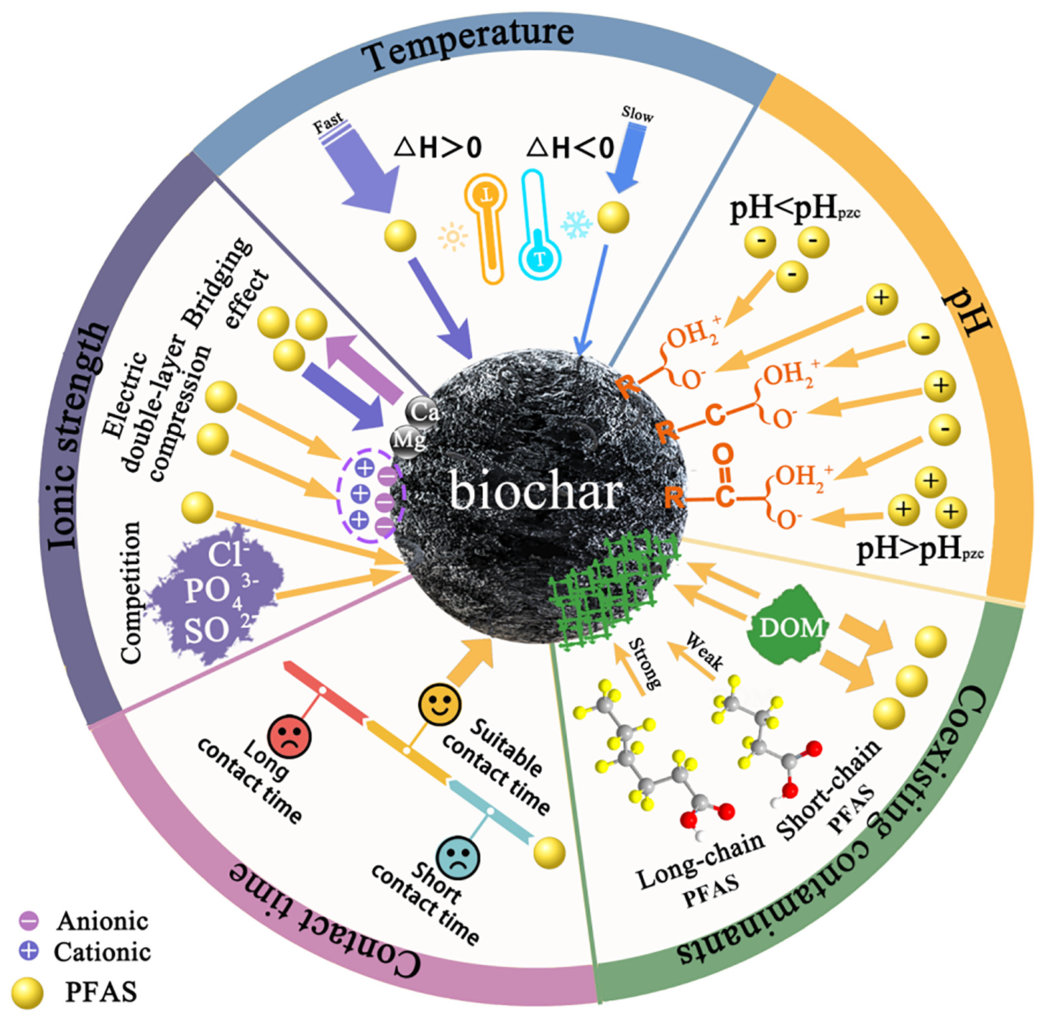
Various factors influencing biochar adsorption efficiency for PFAS, including pH, ionic strength, temperature, contact time, and co-existing contaminants, are outlined by Zhang et al. (2023b) and depicted in
影响生物炭对PFAS吸附效率的多种因素,包括pH、离子强度、温度、接触时间和共存污染物,已由Zhang et al.(2023b)进行了概述,并示于
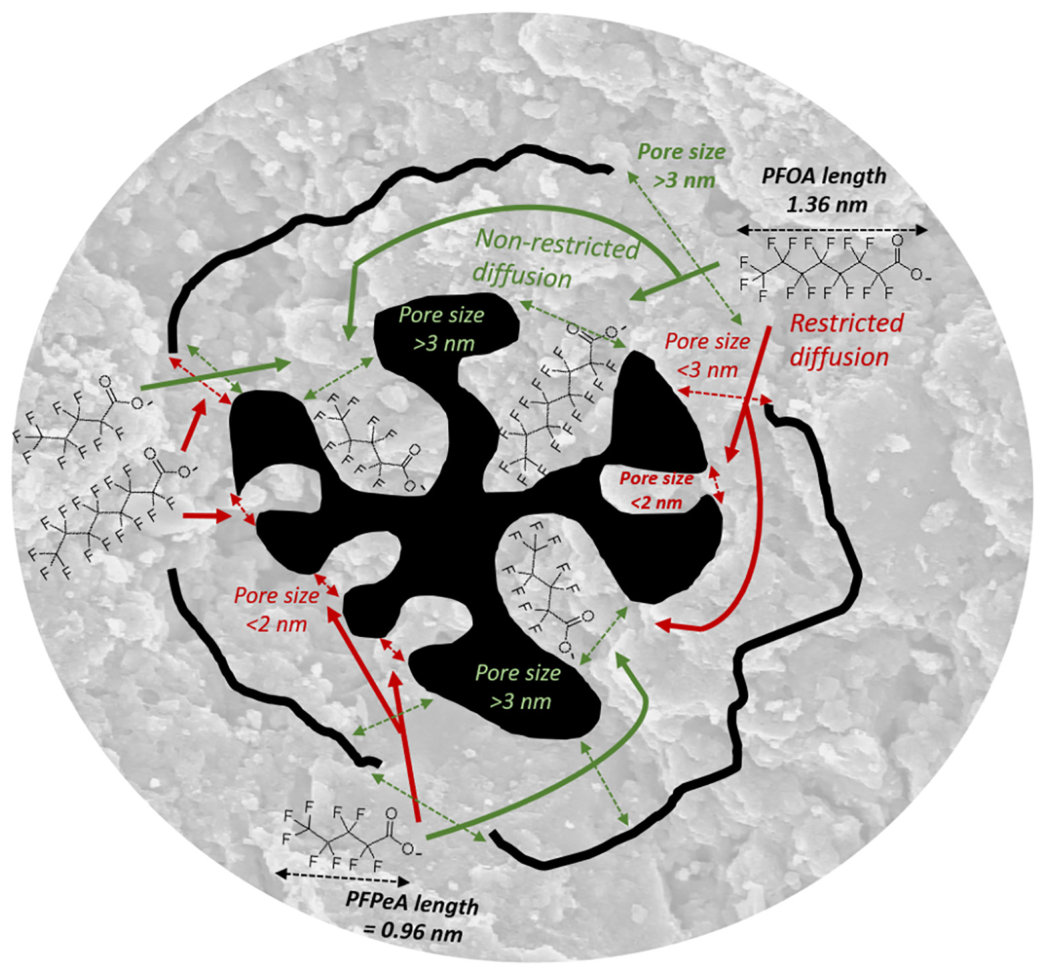
Fig. 3. The significance of comprehending and optimizing these factors in achieving efficient biochar remediation for PFAS-contaminated systems is outlined below.图3。下文概述了理解和优化这些因素对于实现生物炭高效修复PFAS污染体系的重要意义。
3.1. pH
biochar sorption efficiency of PFAS was significantly greater at a solution pH of 4.3 compared to a solution pH of 7.85. Lower pH values intensified electrostatic adsorption due to the positively charged surface of the biochar at a lower pH, enhancing the interaction with the negatively charged PFAS.
生物炭对PFAS的吸附效率在溶液pH为4.3时显著高于pH为7.85时。较低pH下生物炭表面带正电荷,静电吸附增强,从而强化了其与带负电荷PFAS之间的相互作用。
The pH of the liquid phase, in both soil and water, critically influences the electrical charge on the biochar surface and the formation of PFAS complexes. Solution pH impacts the biochar surface charge of functional groups, the ionization of solutes, and the generation of other substances (Gao et al., 2017; Zhang et al., 2021). The pH at the point of zero charge (pHpzc) is particularly significant, as it determines the net charge of the biochar surface. Above the pHpzc, the surface tends to bear a net negative charge, whereas below it, a net positive charge is observed (Fabregat-Palau et al., 2022). At pH values below the point of pHpzc, the functional groups on the biochar surface, including carboxyl, aldehyde, and hydroxyl groups, are readily protonated, resulting in a positive charge. This protonation process facilitates the removal of PFOS through ion exchange reactions and electrostatic interactions (Hassan et al., 2020). In their experimental investigation on the adsorption of PFOA and PFBA by biochar, Liu et al. (2023b) observed a pH in the solution ranging from 3 to 11. They observed systematic deprotonation of functional groups on the surface of the biochar with increasing pH. This chemical transformation resulted in a notable weakening of electrostatic interactions. Furthermore, as the pH continued to rise, it induced electrostatic repulsion of anionic PFOA and PFBA by the biochar, consequently, a discernible decrease in the adsorption was observed (Liu et al., 2023b). Kundu et al. (2021) investigated the adsorption of PFAS by biochar derived from biosolids, finding that the
土壤和水体中液相的pH对生物炭表面电荷及PFAS络合物的形成具有决定性影响。溶液pH影响生物炭表面官能团的电荷、溶质的电离以及其他物质的生成(Gao et al., 2017; Zhang et al., 2021)。零电荷点pH(pHpzc)尤为重要,它决定了生物炭表面的净电荷。pH高于pHpzc时,表面倾向于带净负电荷;低于pHpzc时则带净正电荷(Fabregat-Palau et al., 2022)。当pH低于pHpzc时,生物炭表面的官能团(包括羧基、醛基和羟基)易于质子化而带正电荷。这一质子化过程有助于通过离子交换反应和静电作用去除PFOS(Hassan et al., 2020)。Liu et al.(2023b)在生物炭吸附PFOA和PFBA的实验研究中,考察了3至11的溶液pH范围。他们观察到,随着pH升高,生物炭表面官能团系统性地去质子化。这一化学转变导致静电作用明显减弱。此外,随着pH进一步升高,生物炭对阴离子型PFOA和PFBA产生静电排斥,因而吸附量明显下降(Liu et al., 2023b)。Kundu et al.(2021)研究了生物固体(污泥)来源生物炭对PFAS的吸附,发现
3.2. Ionic strength3.2. 离子强度
The presence of salts or other ions in solution, commonly known as ionic strength, can influence the adsorption of PFAS onto biochar through competition for adsorption sites, electrostatic interactions, and pH buffering (Rodrigo et al., 2022). Saeidi et al. (2020) found that elevated sulfate concentrations significantly decreased the adsorption affinity of activated carbon for PFOA and PFOS. This finding suggests that biochars may exhibit a similar response, given their structural similarities to activated carbon. Sulfate ions and chloride ions can also compete with PFOS anions for adsorption sites. A salting-out effect may occur with high inorganic ion concentrations, leading to PFOA precipitation (Wu et al., 2022). It is also important to note that pH variation influences the surface charge of PFOS and PFOA, altering electrostatic attraction. PFOS exhibits greater pH sensitivity, likely due to changes in ionic strength (Cheng et al., 2009; Deng et al., 2015). Conversely, as an increase in pH could alter the biochar surface charge to negative and hence electrostatic attraction to repulsion, the presence of cations can increase biochar PFAS sorption through electrical double-layer compression (Du et al., 2014).
溶液中盐类或其他离子的存在(通常称为离子强度)可通过竞争吸附位点、静电作用和pH缓冲影响PFAS在生物炭上的吸附(Rodrigo et al., 2022)。Saeidi et al.(2020)发现,硫酸盐浓度升高显著降低了活性炭对PFOA和PFOS的吸附亲和力。鉴于生物炭与活性炭结构相似,这一发现表明生物炭可能表现出类似的响应。硫酸根离子和氯离子也可与PFOS阴离子竞争吸附位点。高浓度无机离子条件下可能发生盐析效应,导致PFOA沉淀(Wu et al., 2022)。同样值得注意的是,pH变化会影响PFOS和PFOA的表面电荷,从而改变静电吸引。PFOS对pH更为敏感,这可能是由于离子强度的变化所致(Cheng et al., 2009; Deng et al., 2015)。另一方面,pH升高可能使生物炭表面电荷转为负电,静电吸引随之转为排斥,此时阳离子的存在可通过压缩双电层增加生物炭对PFAS的吸附(Du et al., 2014)。
Marzeddu et al. (2022) investigated the influence of calcium and magnesium ions on the adsorption of PFOS by waste coffee biochar, observing a 24 % increase in the adsorption rate. This enhancement can be attributed to the cation bridging effect, wherein the positively charged calcium and magnesium ions interact with the negatively charged surface of the adsorbent and the anionic headgroup of PFOS, thereby enhancing the overall removal efficiency (Steigerwald and Ray, 2021). Wang et al. (2023b) demonstrated that the presence of phosphate ions influences the adsorption behavior of perfluorobutanesulfonate (PFBS) and PFPeA on biochar, possibly through the preferential ion exchange between phosphate ions and biochar or their competitive adsorption with PFBS and PFPeA (Wang et al., 2020).
Marzeddu et al.(2022)研究了钙、镁离子对废咖啡渣生物炭吸附PFOS的影响,发现吸附率提高了24 %。这种增强可归因于阳离子架桥效应,即带正电荷的钙、镁离子与吸附剂带负电荷的表面以及PFOS的阴离子头基相互作用,从而提高了整体去除效率(Steigerwald and Ray, 2021)。Wang et al.(2023b)证明,磷酸根离子的存在会影响全氟丁烷磺酸盐(PFBS)和PFPeA在生物炭上的吸附行为,其原因可能是磷酸根离子与生物炭之间的优先离子交换,或磷酸根与PFBS和PFPeA之间的竞争吸附(Wang et al., 2020)。
3.3. Coexisting contaminants3.3. 共存污染物
The coexistence of other contaminants within the soil or water matrix can compete with PFAS for biochar adsorption sites (Krahn et al., 2023; Zhang et al., 2021). Understanding the interactions between these co-existing contaminants and PFAS for sorption onto biochars is essential for accurately predicting and optimizing the efficacy of biochar-based remediation strategies. Comparing single solution and mixed PFAS experiments reveals a reduction in PFAS removal ranging from 32.8 % to 57.9 % in a mixed solution compared to a single solution scenario (Zhang et al., 2021). This decline in PFAS removal is attributed to the competitive adsorption of PFAS with coexisting pollutants, vying for available adsorption sites on biochar surfaces (Krahn et al., 2023). A reduction in PFAS sorption may also be attributed to pore clogging and thus a reduction in diffusion processes (Inyang and Dickenson, 2017; Zhang et al., 2021).
土壤或水体基质中共存的其他污染物可与PFAS竞争生物炭吸附位点(Krahn et al., 2023; Zhang et al., 2021)。了解这些共存污染物与PFAS在生物炭吸附过程中的相互作用,对于准确预测和优化基于生物炭的修复策略的效果至关重要。单一溶液与PFAS混合溶液实验的比较表明,与单一溶液相比,混合溶液中PFAS的去除率降低了32.8 %至57.9 %(Zhang et al., 2021)。PFAS去除率的下降归因于PFAS与共存污染物争夺生物炭表面可用吸附位点的竞争吸附(Krahn et al., 2023)。PFAS吸附量的降低也可能归因于孔隙堵塞及由此导致的扩散过程减弱(Inyang and Dickenson, 2017; Zhang et al., 2021)。
In the presence of coexisting pollutants, long-chain PFAS tend to exhibit a preferential adsorption tendency on the biochar surface compared to short-chain PFAS, owing to the greater hydrophobicity of long-chain PFAS (Du et al., 2015; Murray et al., 2019; Sorengård et al.,¨ 2020). The presence of dissolved organic matter (DOM) may hinder the removal of PFAS by obstructing adsorption sites or interfering with the adsorption mechanism; short-chain PFAS, however, appeared to be less affected by DOM as compared to long-chain PFAS (Liu et al., 2021; Sørmo et al., 2021). According to Inyang and Dickenson (2017), the presence of dissolved organic carbon (DOC) and humic substances in wastewater can lead to the occupation of high-energy biochar pore sites by organic matter. This occupation results in the blockage of adsorption sites essential for PFOA adsorption onto biochar, thereby reducing overall adsorption efficiency (Militao et al., 2021; Qi et al., 2022). Moreover, certain organic compounds such as humic acid, 1-naphthol, benzoic acid, and phenol have been found to diminish the adsorption of PFOA by 17 % to 34 %. These organic compounds likely impede PFOA adsorption processes through mechanisms involving electrostatic repulsion and pore blockage (Gagliano et al., 2020; Nguyen et al., 2023).
在共存污染物存在的情况下,由于长链PFAS疏水性更强,与短链PFAS相比,其更倾向于优先吸附于生物炭表面(Du et al., 2015; Murray et al., 2019; Sorengård et al.,¨ 2020)。溶解性有机质(DOM)的存在可能通过占据吸附位点或干扰吸附机制而阻碍PFAS的去除;然而,与长链PFAS相比,短链PFAS受DOM的影响似乎较小(Liu et al., 2021; Sørmo et al., 2021)。据Inyang and Dickenson(2017)报道,废水中溶解性有机碳(DOC)和腐殖质的存在可导致有机质占据生物炭的高能孔隙位点。这种占据会堵塞PFOA吸附于生物炭所必需的吸附位点,从而降低整体吸附效率(Militao et al., 2021; Qi et al., 2022)。此外,研究发现腐殖酸、1-萘酚、苯甲酸和苯酚等某些有机化合物可使PFOA的吸附量降低17 %至34 %。这些有机化合物可能通过静电排斥和孔隙堵塞等机制阻碍PFOA的吸附过程(Gagliano et al., 2020; Nguyen et al., 2023)。
3.4. Contact time3.4. 接触时间
The temporal interaction between biochar and PFAS-contaminated media plays a pivotal role in governing adsorption kinetics and equilibrium capacity. While prolonged contact times facilitate heightened adsorption surpassing an optimal contact duration may lead to diminishing returns (Liu et al., 2021; Park et al., 2020). This phenomenon arises from the potential emergence and exacerbation of competitive adsorption effects among solutes, coupled with the risk of desorption (Militao et al., 2023). Furthermore, the adsorption of PFAS substances onto biochar initiates a phase of rapid adsorption, driven by the initial abundance of PFAS molecules, resulting in elevated adsorption efficiencies. Rapid adsorption typically involves the transfer of molecules from the liquid phase to the adsorbent surface. Subsequently, a phase of slow kinetics ensues, where the time required to attain equilibrium is intricately linked to the microporous properties of the adsorbent (Militao et al., 2023; Zhang et al., 2019). In practical terms, manipulating the duration of adsorption contact time in experiments, such as through its reduction, curtails the diffusion of PFAA into the interior or sub-pores of the adsorbent and consequently diminishes adsorption efficiency (Liu et al., 2021). Understanding the distinct phases of fast, slow, and equilibrium adsorption times during PFAS adsorption by biochar requires scrutinizing the adsorption kinetics of biochar and identifying the optimal adsorption contact time.
生物炭与PFAS污染介质之间的接触时间对吸附动力学和平衡吸附容量起着关键作用。延长接触时间虽可提高吸附量,但超过最佳接触时间后收益可能递减(Liu et al., 2021; Park et al., 2020)。这一现象源于溶质之间竞争吸附效应可能出现并加剧,以及存在解吸风险(Militao et al., 2023)。此外,PFAS类物质在生物炭上的吸附首先经历一个快速吸附阶段,该阶段由初始时大量的PFAS分子驱动,吸附效率较高。快速吸附通常涉及分子从液相向吸附剂表面的迁移。随后进入慢速动力学阶段,达到平衡所需的时间与吸附剂的微孔特性密切相关(Militao et al., 2023; Zhang et al., 2019)。实际上,在实验中调控吸附接触时间(如缩短接触时间)会限制PFAA向吸附剂内部或次级孔隙的扩散,从而降低吸附效率(Liu et al., 2021)。要明确生物炭吸附PFAS过程中快速、慢速和平衡吸附各阶段的时间,需要深入研究生物炭的吸附动力学并确定最佳吸附接触时间。
3.5. Temperature3.5. 温度
The adsorption capacity of PFAS is influenced by temperature variations, a critical factor governing the interaction between PFAS substances and the adsorbent (Zhang et al., 2019). Owing to the spontaneous nature of adsorption, a temperature rise generally leads to a reduction in adsorption (Fontecha-Camara´ et al., 2006). However, exceptions exist, such as in the adsorption of PFOS by corn stover biochar, where a reported spontaneous heat absorption process led to an increased adsorption capacity with rising temperature (Guo et al., 2017). This phenomenon was likely attributed to the comprehensive influence of interactions in solution, encompassing adsorbentadsorbate, solvent-adsorbent, and solvent-adsorbate interactions (Fontecha-Camara´ et al., 2006; Zhang et al., 2019). In an experiment conducted by Rodrigo et al. (2022), the adsorption capacity of biochar for PFOA and PFOS was found to be higher at 10 ◦C compared to that at 25 ◦C. This observation may be attributed to the impact of temperature on PFAS aggregation, which tends to be more pronounced at lower temperatures, facilitating increased partitioning or adsorption on the biochar surface. Conversely, reduced aggregation occurs at higher temperatures.
PFAS的吸附容量受温度变化的影响,温度是控制PFAS类物质与吸附剂之间相互作用的关键因素(Zhang et al., 2019)。由于吸附过程的自发性,温度升高通常导致吸附量降低(Fontecha-Camara´ et al., 2006)。然而也存在例外,例如玉米秸秆生物炭对PFOS的吸附被报道为自发吸热过程,吸附容量随温度升高而增加(Guo et al., 2017)。这一现象可能归因于溶液中各种相互作用的综合影响,包括吸附剂-吸附质、溶剂-吸附剂以及溶剂-吸附质之间的相互作用(Fontecha-Camara´ et al., 2006; Zhang et al., 2019)。在Rodrigo et al.(2022)开展的实验中,生物炭对PFOA和PFOS的吸附容量在10 ◦C时高于25 ◦C。这一现象可能归因于温度对PFAS聚集的影响:低温下PFAS聚集往往更为明显,有利于其在生物炭表面的分配或吸附增加;相反,高温下聚集程度降低。
4Case studies and field applications案例研究与现场应用
Multiple case studies have demonstrated the successful implementation of biochar for remediating PFAS contamination across various soil and water matrices. The studies outlined below underscore the efficacy of biochar-based systems for reducing PFAS concentrations and highlight their adaptability in diverse contaminated environments.
多项案例研究证明了生物炭在修复各类土壤和水体基质中PFAS污染方面的成功应用。下文概述的研究凸显了基于生物炭的体系在降低PFAS浓度方面的效能,以及其在不同污染环境中的适应性。
4.1. Soil remediation4.1. 土壤修复
as dissolution, desorption, and complexation reactions. Biochar has emerged as a promising and sustainable adsorbent capable of immobilizing PFAS substances through sorption, thus mitigating their leaching in soil and uptake by plants. Notably, widespread soil contamination is caused by large amounts of PFAS compounds in conventional aqueous film-forming foam formulations, with end products such as PFOA and PFHxA converted from precursors widely remaining in the soil environment (Bolan et al., 2021; Sørmo et al., 2021). As depicted in Table 1, the addition of biochar has proven effective in immobilizing PFAS in soil.
如溶解、解吸和络合反应。生物炭已成为一种有前景的可持续吸附剂,能够通过吸附固定PFAS类物质,从而减轻其在土壤中的淋溶及植物吸收。值得注意的是,传统水成膜泡沫配方中大量的PFAS化合物造成了广泛的土壤污染,由前体物转化而来的PFOA和PFHxA等终产物广泛残留于土壤环境中(Bolan et al., 2021; Sørmo et al., 2021)。如表1所示,添加生物炭已被证明可有效固定土壤中的PFAS。
For instance, Askeland et al. (2020) investigated the long-term treatment of soil contaminated with PFAS substances using pine biochar. They found that the desorption of PFOS, PFOA, and PFHxA in biochar-amended soil was significantly lower compared to untreated soil. Moreover, the sorption quantity of PFOS in a sandy clay loam was greater than in a loam (Askeland et al., 2020). These findings suggest that the adsorption efficiency of PFOS in different soils may be influenced by the physicochemical properties of the soil and its homologues. This effect could be attributed to various factors, such as hydrophobic interactions, electrostatic interactions, and changes in mobility. Therefore, the efficacy of biochar as a soil amendment is likely closely intertwined with the inherent characteristics of the soil (Milinovic et al., 2015; Oliver et al., 2019).
例如,Askeland et al.(2020)研究了利用松木生物炭对PFAS污染土壤进行长期处理的效果。他们发现,与未处理土壤相比,添加生物炭土壤中PFOS、PFOA和PFHxA的解吸显著降低。此外,砂质黏壤土对PFOS的吸附量高于壤土(Askeland et al., 2020)。这些结果表明,不同土壤中PFOS的吸附效率可能受土壤理化性质及其同系物的影响。这一效应可能归因于多种因素,如疏水作用、静电作用和移动性变化。因此,生物炭作为土壤改良剂的效果很可能与土壤的固有特性密切相关(Milinovic et al., 2015; Oliver et al., 2019)。
The impact of varying total organic carbon (TOC) contents in soil on the immobilization of PFAS compounds using biochar was investigated by Sørmo et al. (2021). The authors found that the PFAS immobilization efficacy of biochar, at an application rate of 1 % (w/w), was significantly greater in soils with low TOC content (1.6 %) compared to those with high TOC content (34.2 %). This suggests that the presence of high organic matter concentrations in soil may increase competition for biochar adsorption sites and pore walls, thereby impeding the immobilization process (Sørmo et al., 2021). The sorption strength of the soil itself is higher in high TOC soils. Less PFAS are released from the soil and can partition into biochar compared to soils with low TOC. Moreover, increasing the biochar dosage by up to 5 % resulted in a complete reduction (up to 100 %) of soil PFAS leaching (Sørmo et al., 2021). However, while higher biochar application rates can effectively eliminate PFAS leaching, it is important to consider the practical economic implications associated with such application rates.
Sørmo et al.(2021)研究了土壤中不同总有机碳(TOC)含量对生物炭固定PFAS化合物的影响。作者发现,在1 %(w/w)施用量下,生物炭在低TOC含量(1.6 %)土壤中对PFAS的固定效果显著优于高TOC含量(34.2 %)土壤。这表明土壤中高浓度有机质的存在可能加剧对生物炭吸附位点和孔壁的竞争,从而阻碍固定过程(Sørmo et al., 2021)。高TOC土壤本身的吸附强度较高,与低TOC土壤相比,从土壤中释放并可分配到生物炭中的PFAS较少。此外,将生物炭用量提高至5 %可使土壤PFAS淋溶完全降低(最高达100 %)(Sørmo et al., 2021)。然而,尽管较高的生物炭施用量可有效消除PFAS淋溶,但仍需考虑此类施用量在实际中的经济影响。
Zhang and Liang (2022b) examined whether biochar aging would influence the desorption of PFAS compounds. Their results revealed that after a 52-day aging period, the leaching rates of PFOS, PFOA, PFHxS, and PFHxA were significantly lower compared to untreated samples (24.5 %, 42.8 %, 43.5 %, and 64.6 %, respectively). Moreover, biochar aging did not result in any additional release of PFAS compounds. Furthermore, extending the immobilization period (Day 21 to Day 105) can enhance the adsorption efficiency of short-chain PFAS.
Zhang and Liang(2022b)考察了生物炭老化是否会影响PFAS化合物的解吸。结果表明,经过52天老化后,PFOS、PFOA、PFHxS和PFHxA的淋溶率显著低于未处理样品(分别为24.5 %、42.8 %、43.5 %和64.6 %)。此外,生物炭老化并未导致PFAS化合物的额外释放。而且,延长固定时间(第21天至第105天)可提高短链PFAS的吸附效率。
Sørmo et al. (2024) investigated the effects of waste-based biochars
Sørmo et al.(2024)研究了废弃物基生物炭
In soil environments, pollutants migrate through mechanisms such on the leaching of PFAS from sandy soil (TOC of 0.57 %) in up-flow column percolation tests (15 days, 16 pore volumes replaced). Amendment with 1 % biochar retained PFOS by up to 99.9 % for an activated waste timber biochar, followed by three sludge-based chars (92–99 % reduction). Non-activated wood-based biochars, on the other hand, reduced leaching by <43 %. This was explained by the dominance of pores <1.5 nm in the latter chars; these pores are too narrow to accommodate most PFAS molecules. Effects were less strong for short-chain PFAS, with e.g., PFOA leaching (95 %) being reduced by 95 % vs. 67 % for PFHxA.
在土壤环境中,污染物通过诸如对砂质土壤(TOC为0.57 %)中PFAS淋溶的影响,采用上流式柱渗滤试验(15天,置换16个孔隙体积)。添加1 %生物炭时,活化废木材生物炭对PFOS的截留率高达99.9 %,其次为三种污泥基炭(降低92–99 %)。相比之下,未经活化的木质生物炭使淋溶降低<43 %。这可以用后者以<1.5 nm的孔隙为主来解释;这些孔隙过窄,无法容纳大多数PFAS分子。对短链PFAS的效果较弱,例如PFOA淋溶(95 %)降低了95 %,而PFHxA仅降低67 %。
A summary of cases on PFAS immobilization by biochar.
生物炭固定PFAS的案例汇总。
| Types of biochar生物炭类型 | Soil土壤 | TOC contentTOC含量 | Add scale (%w/添加比例(%w/ | PFAS lePFAS淋 | aching loss溶损失 | reduction降低 | (%) | References参考文献 |
|---|---|---|---|---|---|---|---|---|
| (%) | w) | PFOS | PFOA | PFHxS | PFHxA | |||
| Pine biochar | Loamy sand soil | – | 5 | 20.1 | 41.6 | 28.3 | 19.3 | (Askeland et al., 2020) |
| Sandy clay loam | – | 5 | 42.7 | 58.9 | 26.8 | 45.4 | ||
| Waste timber biochar | Moraine soil | 1.6 | 1 | 93 | 72 | 81 | 61 | (Sørmo et al., 2021) |
| 1.6 | 5 | 100 | 100 | 100 | 100 | |||
| 34.2 | 1 | 59 | 21 | 17 | 22 | |||
| 34.2 | 5 | 78 | 51 | 59 | 38 | |||
| Shredded timber waste biochar | Eluvial and illuvial mineral horizons | 1.6 | 20 | 86 | 70 | 72 | 31 | (Silvani et al., 2019) |
| Forest wood waste biochar | Sandy loam soil | – | 2 | 9.8 | 22.1 | 32.5 | 50.9 | (Zhang and Liang, 2022a) |
| Forest wood waste biochar | Sandy loam texture | 1.6 | 2 | 24.5 | 42.8 | 43.5 | 64.6 | (Zhang and Liang, 2022b) |
| Sludge biochars | Sandy soil | 0.57 | 1 | 92–99 | 80–85 | 75–79 | 35–40 | (Sørmo et al., 2024) |
4.2. Water treatment4.2. 水处理
Biochars can also be used for the removal of PFAS from contaminated water. Dalahmeh et al. (2019) demonstrated that biochar-based filtration systems involving filter cartridges effectively reduced PFAS concentrations in water. Four different cartridges were compared: 1) biochar without biofilm (BC-no biofilm); 2) biochar with active biofilm (BC-active biofilm); 3) biochar with inactive biofilm (BC-inactive biofilm); and 4) sand with active biofilm (sand-active biofilm). Over 22 weeks of continuous monitoring, simulated field loading rates were employed to assess the concentrations of 13 PFAS substances removed by the cartridges. Results showed that all three types of biochar cartridges (BC-no biofilm, BC-active biofilm, and BC-inactive biofilm) exhibited significant PFAS removal capabilities. Interestingly, the removal efficiencies of PFAS by BC-active biofilm showed no significant differences compared to those of BC-no biofilm. BC-no biofilm demonstrated high removal efficiency (90–99 %) for C7-C11 PFCA, C6 and C8 PFSA, and FOSA (C8). However, it exhibited relatively lower removal efficiency (20–60 %) for short-chain PFCAs (C3-C6) and PFSA (C4). In contrast, sand-active biofilm demonstrated low removal efficiency (0–70 %) for all PFAS compounds. This study underscores the promising potential of biochar for treating and removing certain PFAS compounds from water sources.
生物炭还可用于去除污染水体中的PFAS。Dalahmeh et al. (2019) 证明,采用过滤滤芯的生物炭基过滤系统可有效降低水中PFAS浓度。该研究比较了4种不同滤芯:1)无生物膜生物炭(BC-no biofilm);2)含活性生物膜生物炭(BC-active biofilm);3)含失活生物膜生物炭(BC-inactive biofilm);4)含活性生物膜砂(sand-active biofilm)。在22周的连续监测中,采用模拟田间负荷速率评估各滤芯对13种PFAS物质的去除浓度。结果表明,3种生物炭滤芯(BC-no biofilm、BC-active biofilm和BC-inactive biofilm)均表现出显著的PFAS去除能力。值得注意的是,BC-active biofilm对PFAS的去除效率与BC-no biofilm相比无显著差异。BC-no biofilm对C7-C11 PFCA、C6和C8 PFSA以及FOSA(C8)表现出较高的去除效率(90–99 %),但对短链PFCA(C3-C6)和PFSA(C4)的去除效率相对较低(20–60 %)。相比之下,sand-active biofilm对所有PFAS化合物的去除效率均较低(0–70 %)。该研究凸显了生物炭在处理和去除水源中某些PFAS化合物方面的良好应用潜力。
Liu et al. (2021) evaluated the performance of a reed straw biochar filter for removing PFAS compounds from groundwater. To simulate real-world conditions, four different groundwater samples were used as background solutions to encompass variations in flow rate and the presence of other substances alongside PFAS compounds. The investigation focused on six representative PFCAs and PFSAs, considering various chain lengths and functional groups, to assess their removal efficiencies in biochar microfilters. The results indicated that the reed straw biochar filter exhibited average removal efficiencies of 56 % for PFBA, 61 % for PFBS, 63 % for PFHxA, 73 % for PFHxS, 73 % for PFOA, and 83 % for PFOS. Furthermore, the study examined the impact of varying concentrations of DOC under simulated conditions. Groundwater samples with high DOC concentrations exhibited an average removal efficiency reduction of 29 % for PFBA, 19 % for PFBS, and 26 % for PFHxA, particularly for short-chain PFAA. However, the impact was comparatively minimal for long-chain PFAA, and PFOS remained largely unaffected by changes in DOC concentration (Liu et al., 2021). For further details on the adsorption kinetics and capacities of biochar adsorbents within aqueous systems, please refer to Table S4.
Liu et al. (2021) 评估了芦苇秸秆生物炭过滤器去除地下水中PFAS化合物的性能。为模拟实际条件,研究采用4种不同地下水样品作为背景溶液,以涵盖流速的变化以及PFAS化合物之外其他物质的存在。研究聚焦于6种具有代表性的PFCA和PFSA,兼顾不同链长和官能团,以评估其在生物炭微滤器中的去除效率。结果表明,芦苇秸秆生物炭过滤器对PFBA、PFBS、PFHxA、PFHxS、PFOA和PFOS的平均去除效率分别为56 %、61 %、63 %、73 %、73 %和83 %。此外,该研究还考察了模拟条件下不同溶解性有机碳(DOC)浓度的影响。高DOC浓度地下水样品中,PFBA、PFBS和PFHxA的平均去除效率分别降低29 %、19 %和26 %,这一影响在短链PFAA中尤为明显;而对长链PFAA的影响相对较小,PFOS则基本不受DOC浓度变化的影响(Liu et al., 2021)。有关生物炭吸附剂在水体系中吸附动力学和吸附容量的更多详细信息,请参阅表S4。
4.3. Sediment remediation4.3. 沉积物修复
Biochar has shown efficacy in remediating PFAS-contaminated sediments. Guo et al. (2019) found that corn stover biochar at 2 % and 5 % (w/w) concentrations reduced free PFAS by 1.7–3.5 times compared to untreated sediments. Biochar also tripled the sediment's water partition coefficient, enhancing PFOS affinity and reducing its mobility in the water-sediment system. Guo et al. (2017) confirmed biochar's ability to reduce PFAS concentrations in sediments. Sørmo et al. (2021) reported similar reductions in PFAS leaching from contaminated soil treated with activated biochar. Krahn et al. (2023) further validated biochar's effectiveness, particularly sewage sludge-derived biochar, in sorbing PFAS from water.
生物炭已被证明可有效修复PFAS污染沉积物。Guo et al. (2019) 发现,与未处理沉积物相比,添加2 %和5 %(w/w)玉米秸秆生物炭可使游离态PFAS降低1.7–3.5倍。生物炭还使沉积物-水分配系数提高了3倍,增强了对PFOS的亲和力,并降低了其在水-沉积物体系中的迁移性。Guo et al. (2017) 证实了生物炭降低沉积物中PFAS浓度的能力。Sørmo et al. (2021) 报道,经活化生物炭处理的污染土壤中PFAS淋溶量也出现类似程度的降低。Krahn et al. (2023) 进一步验证了生物炭,尤其是污水污泥衍生生物炭,对水中PFAS的吸附效果。
However, research on using biochar for sediment remediation is limited, necessitating further investigation. Future studies should explore biochar's efficacy across diverse aquatic environments, considering the influence of ionic strength and pH on PFAS sorption. Mahinroosta and Senevirathna (2020) support this need, identifying carbonaceous sorbents like biochar as promising for PFAS-contaminated soil remediation.
然而,利用生物炭修复沉积物的研究仍较为有限,有待进一步探究。未来研究应考察生物炭在不同水环境中的修复效果,并考虑离子强度和pH对PFAS吸附的影响。Mahinroosta and Senevirathna (2020) 亦支持这一需求,认为生物炭等碳质吸附剂在PFAS污染土壤修复中具有良好前景。
5Challenges and future directions挑战与未来方向
When scaling up biochar-based remediation techniques, numerous challenges emerge, such as devising effective regeneration strategies and addressing potential long-term impacts. These challenges underscore the urgency for further research, particularly in biochar modification, refining production methods, and conducting thorough evaluations of biochar efficacy at field scale to ensure success.
在扩大生物炭修复技术规模时,会出现诸多挑战,例如制定有效的再生策略以及应对潜在的长期影响。这些挑战凸显了进一步研究的紧迫性,尤其是在生物炭改性、优化制备方法以及在田间尺度上全面评估生物炭修复效果等方面,以确保修复成功。
5.1. Costs and availability5.1. 成本与可获得性
Table S5 compares the adsorption capacities of various materials, including biochar, and highlights their cost-effectiveness in removing PFAS substances. Notably, the cost of anion exchange resin is three times higher than that of activated carbon, making biochar a potentially more economically viable option for PFAS remediation (Yadav et al., 2022). Biochar is priced at US$246 per ton, significantly lower than commercial activated carbon, which is approximately six times more expensive than biochar (Premarathna et al., 2019). Biochar's economic advantage makes it a potential alternative to activated carbon in sorption applications (Alhashimi and Aktas, 2017; O'Connor et al., 2022). However, large-scale biochar production can entail significant costs, depending on the availability of local biomass resources. According to Homagain et al. (2016), the pyrolysis process constitutes approximately 36 % of the total production costs, while land use, feedstock collection, and transportation account for 14 %, 12 %, and 9 %, respectively. Efficient and optimized pyrolysis is therefore crucial for cost reduction, highlighting the significance of identifying cost-effective production methods and diversifying feedstock sources for wider biochar utilization. In addition, biochar remediation is more sustainable than conventional activated carbon from a life cycle assessment perspective, as demonstrated by the sediment remediation of polychlorinated dibenzo-p-dioxins and furans (Sparrevik et al., 2011).
表S5比较了包括生物炭在内的多种材料的吸附容量,并突出了其去除PFAS物质的成本效益。值得注意的是,阴离子交换树脂的成本是活性炭的3倍,这使生物炭成为PFAS修复中可能更具经济可行性的选择(Yadav et al., 2022)。生物炭价格为每吨246美元,显著低于商业活性炭,后者价格约为生物炭的6倍(Premarathna et al., 2019)。生物炭的经济优势使其有望在吸附应用中替代活性炭(Alhashimi and Aktas, 2017; O'Connor et al., 2022)。然而,大规模生产生物炭可能产生可观的成本,这取决于当地生物质资源的可获得性。根据Homagain et al. (2016),热解过程约占总生产成本的36 %,而土地利用、原料收集和运输分别占14 %、12 %和9 %。因此,高效且优化的热解对于降低成本至关重要,这凸显了寻找具有成本效益的生产方法及拓展原料来源对于扩大生物炭利用的重要性。此外,从生命周期评价的角度来看,生物炭修复比传统活性炭更具可持续性,这已在多氯代二苯并对二噁英和呋喃的沉积物修复中得到证实(Sparrevik et al., 2011)。
5.2. Biochar modification5.2. 生物炭改性
Most past studies have shown that activated carbon seems to be more effective than biochar for PFAS (Kabiri et al., 2023; Zhang et al., 2019), but the adsorption efficiency of biochar is greatly affected by different biomass species, and its performance can be greatly improved by modification. For example, Liu et al. (2021) found that the adsorption efficiency of reed straw biochar for PFBA at 900 ◦C was higher than that of GAC. With further research on biochar in recent years, the effect of biochar on PFAS was gradually seen (refer to Tables S2 and S3). For example, Rodrigo et al. (2022) modified Douglas fir biochar with magnetic Fe3O4, and the maximum adsorption capacity of PFOA increased from 9 mg g− 1 to an astonishing 652 mg g− 1 after the modification compared with the original biochar. In addition, Zhou et al. (2021) modified microporous biochar with liquid-alkali treatment, and the adsorption capacity of PFOA in an aqueous solution could be as astonishingly high as 1269 mg g− 1. The plasticity of biochar demonstrates the great development potential of biochar for PFAS remediation.
以往大多数研究表明,活性炭对PFAS的去除似乎比生物炭更有效(Kabiri et al., 2023; Zhang et al., 2019),但生物炭的吸附效率受生物质种类影响很大,且其性能可通过改性大幅提升。例如,Liu et al. (2021) 发现,900 ◦C制备的芦苇秸秆生物炭对PFBA的吸附效率高于颗粒活性炭(GAC)。随着近年来对生物炭研究的深入,生物炭对PFAS的作用效果逐渐显现(参见表S2和表S3)。例如,Rodrigo et al. (2022) 采用磁性Fe3O4对花旗松生物炭进行改性,与原始生物炭相比,改性后PFOA的最大吸附容量由9 mg g− 1提高至惊人的652 mg g− 1。此外,Zhou et al. (2021) 采用液碱处理对微孔生物炭进行改性,其对水溶液中PFOA的吸附容量高达1269 mg g− 1。生物炭的可塑性表明其在PFAS修复方面具有巨大的发展潜力。
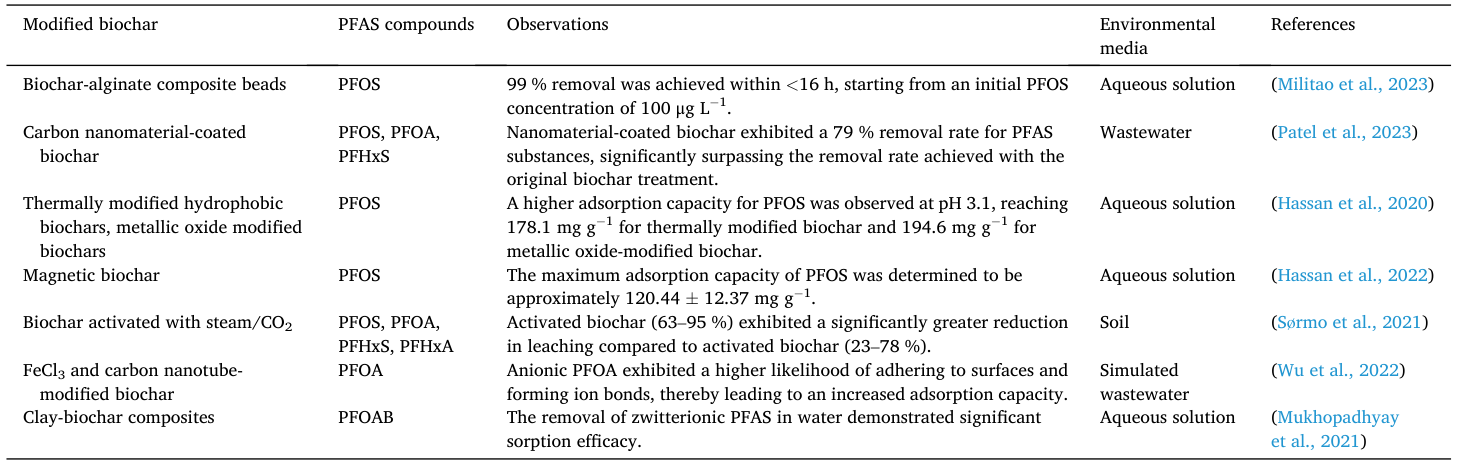
Biochar modification techniques encompass physical, chemical, and biological approaches, with chemical modification being widely regarded as the primary choice and future direction for biochar modification (Chen et al., 2022; Lu et al., 2022). Modifying biochar enhances its functionality (Table 2). Modified biochar alginate beads exhibit consistent efficacy in PFOS removal, remaining largely unaffected by factors such as natural organic matter, pH, and ionic strength, typically found in natural water bodies (Militao et al., 2023). The incorporation of carbon nanotubes and FeCl3 into biochar has significantly enhanced adsorption efficiency, by increasing the specific surface area, porosity, and pore volume of the biochar (Wu et al., 2022). Modifying the physical properties (SSA and PV) of biochars through activation with steam or CO2 has also been documented to improve biochar PFAS sorption in soil. Activation expands the volume and surface area of mesopores (>1.5 nm), providing the biochars with better capacities for entrapping and sorbing PFAS, and making biochars less prone to clogging and competitive sorption from DOM (Sørmo et al., 2021). Furthermore, physical activation increases the amount of ConAC in the biochars, which results in a higher affinity for binding sorbates through hydrophobic interactions, i.e., long-chain PFAS (Goranov et al., 2024). Nevertheless, it is worth noting that the application of biochar modification is mostly confined to laboratory research, necessitating additional investments in upscaling to reduce process costs and production time. Additional research should delineate how the modification of biochar properties can enhance its adsorption capacity and selectivity for various PFAS compounds.
生物炭改性技术包括物理、化学和生物方法,其中化学改性被普遍视为生物炭改性的首选途径和未来方向(Chen et al., 2022; Lu et al., 2022)。改性可增强生物炭的功能(表2)。改性生物炭-海藻酸盐微球对PFOS的去除效果稳定,基本不受天然水体中常见的天然有机质、pH和离子强度等因素的影响(Militao et al., 2023)。在生物炭中引入碳纳米管和FeCl3可增大其比表面积、孔隙率和孔容,从而显著提高吸附效率(Wu et al., 2022)。已有文献报道,通过蒸汽或CO2活化改变生物炭的物理性质(SSA和PV),也可提高生物炭在土壤中对PFAS的吸附。活化可扩大介孔(>1.5 nm)的体积和表面积,使生物炭具有更强的截留和吸附PFAS的能力,并降低其发生孔道堵塞以及溶解性有机质(DOM)竞争吸附的倾向(Sørmo et al., 2021)。此外,物理活化可增加生物炭中ConAC的含量,从而通过疏水相互作用增强其对吸附质(即长链PFAS)的结合亲和力(Goranov et al., 2024)。然而值得注意的是,生物炭改性的应用目前大多局限于实验室研究,需要进一步投入以实现规模化,从而降低工艺成本并缩短生产时间。今后的研究应阐明生物炭性质的改变如何提高其对不同PFAS化合物的吸附容量和选择性。
Cases on the adsorption of PFAS by modified biochars.
改性生物炭吸附PFAS的案例。
5.3. Regeneration strategies5.3. 再生策略
Over time, biochar may undergo saturation with PFAS, necessitating regeneration, treatment to restore its adsorption capacity, or removal and incineration to ensure the PFAS compounds are fully destroyed and not released in the off-gas fraction. However, the existing regeneration strategy is only effective for the biochar that has been used for water or waste gas treatment. In soil and sediment remediation, one will not be able to remove the biochar after application. If the applied biochar becomes saturated, one needs to apply more biochar. The benefit of this approach is the biochar carbon storage effect in the soil/sediment (Lehmann et al., 2021).
随着时间推移,生物炭可能被PFAS吸附饱和,因而需要再生、进行处理以恢复其吸附容量,或将其移除并焚烧,以确保PFAS化合物被彻底破坏且不会随废气排放。然而,现有再生策略仅适用于已用于水处理或废气处理的生物炭。在土壤和沉积物修复中,生物炭施用后无法移除。若施用的生物炭达到饱和,则需补充施用生物炭。该方法的优点在于生物炭在土壤/沉积物中具有碳封存效应(Lehmann et al., 2021)。
Typically, the regeneration process of biochar involves removing PFAS substances from the adsorbent, using methanol to strip PFAS from biochar, followed by repeating the regeneration process by drying cycles in an oven (Liu et al., 2023b; Rodrigo et al., 2022). Associated studies showed that after regeneration, the ability of biochar to sorb PFAS fluctuated. For example, Liu et al. (2023b) found that the sorption capacity of biochar for hexafluoropropyleneoxide dimeric acid (HFPODA, also known as GenX) decreased by 10.1 % after one regeneration cycle. Additionally, a marginal loss in the weight of the adsorbent was noted (Rodrigo et al., 2022). However, it is commonly practiced that the chemical regeneration of saturated adsorbents is performed in situ during full-scale processing to address concerns regarding transportation and the utilization of consumables in the treatment process (Gagliano et al., 2020). During thermal regeneration, several factors, including the complete decomposition of PFAS compounds at elevated temperatures, the formation of by-products such as volatile organic fluorine (VOF) or short-chain compounds, and the alteration of adsorbent performance, need to be considered (Watanabe et al., 2018, 2016). Spent activated carbon has been efficiently regenerated on a labscale system, and a wide range of VOF compounds were detected in the flue gas (Xiao et al., 2020). However, biochar regeneration faces significant challenges as this simply has not been attempted frequently enough in the past to draw definitive conclusions on efficacy. Therefore, developing effective regeneration strategies is crucial to ensuring the long-term efficiency and sustainability of biochar-based systems.
通常,生物炭的再生过程包括从吸附剂中去除PFAS物质,即用甲醇从生物炭上洗脱PFAS,随后在烘箱中干燥,并循环重复这一再生过程(Liu et al., 2023b; Rodrigo et al., 2022)。相关研究表明,再生后生物炭吸附PFAS的能力存在波动。例如,Liu et al. (2023b) 发现,经过一次再生循环后,生物炭对六氟环氧丙烷二聚酸(HFPODA,又称GenX)的吸附容量下降了10.1 %。此外,吸附剂质量也出现轻微损失(Rodrigo et al., 2022)。然而,在实际规模处理中,饱和吸附剂的化学再生通常在原位进行,以解决运输及处理过程中耗材使用等方面的问题(Gagliano et al., 2020)。热再生过程中需考虑以下几个因素:高温下PFAS化合物的完全分解、挥发性有机氟(VOF)或短链化合物等副产物的形成,以及吸附剂性能的改变(Watanabe et al., 2018, 2016)。废活性炭已在实验室规模系统中实现高效再生,并在烟气中检测到多种VOF化合物(Xiao et al., 2020)。然而,生物炭再生面临重大挑战,因为以往相关尝试太少,尚不足以对其效果得出明确结论。因此,制定有效的再生策略对于确保生物炭基系统的长期效率和可持续性至关重要。
5.4. Site-scale performance and long-term impacts5.4. 场地尺度性能与长期影响
Although laboratory studies have shown promising results, further research is needed to assess the performance of biochar in real-world, site-scale locations with diverse conditions and contaminants. During the treatment of PFAA substances at pilot-scale sites, it has been observed that prolonged flushing and backwashing of biochar media can generate fine particulate matter due to physical abrasion. This particulate matter, in turn, has an impact on the backwashing and filtration processes, necessitating an evaluation of the biochar's service life to determine the appropriate timing for replacement (Inyang and Dickenson, 2017). Biochar granules and biochar filter cartridges can be used to overcome the issues resulting from the breakdown of biochar (Li et al., 2016). Biochar filters can be employed for the treatment of PFAS-contaminated wastewater at a site where the surface adsorption capacity of the biochar becomes depleted over time and desorption takes place due to prolonged exposure to the contaminants (Dalahmeh et al., 2019). The long-term fate and potential release of adsorbed PFAS into the environment require meticulous consideration.
尽管实验室研究已显示出良好结果,但仍需进一步研究以评估生物炭在条件和污染物各异的实际场地尺度上的性能。在中试规模场地处理PFAA物质的过程中观察到,生物炭介质长时间冲洗和反冲洗会因物理磨损而产生细颗粒物。这些颗粒物进而影响反冲洗和过滤过程,因此需要评估生物炭的使用寿命,以确定适当的更换时机(Inyang and Dickenson, 2017)。生物炭颗粒和生物炭过滤滤芯可用于解决生物炭破碎所带来的问题(Li et al., 2016)。生物炭过滤器可用于场地内PFAS污染废水的处理,但随着时间推移,生物炭的表面吸附容量会逐渐耗尽,且由于长期接触污染物而发生解吸(Dalahmeh et al., 2019)。被吸附PFAS的长期归趋及其向环境中的潜在释放需要审慎考虑。
Following adsorption onto biochar, PFAS compounds can undergo various transformation pathways (Zhi and Liu, 2018). They may persist as physically adsorbed species on the biochar surface, exhibiting reduced mobility and bioavailability (Zhi and Liu, 2018). However, under specific conditions, desorption or re-solubilization of certain PFAS compounds may occur, potentially leading to their release back into the environment. Research indicates that biochar undergoes aging processes in soil, including physical fragmentation and ash dissolution (Bolan et al., 2023; Wang et al., 2022), which can weaken electrostatic interactions and induce alterations in biochar's functional groups (Bolan et al., 2023; Mia et al., 2017). Additionally, there is a tendency for preferential microbial metabolism and the decomposition of select unstable carbons within the biochar matrix (Bolan et al., 2023).
PFAS化合物被生物炭吸附后,可经历多种转化途径(Zhi and Liu, 2018)。它们可能以物理吸附态持续存在于生物炭表面,其迁移性和生物有效性降低(Zhi and Liu, 2018)。然而,在特定条件下,某些PFAS化合物可能发生解吸或重新溶解,从而可能重新释放到环境中。研究表明,生物炭在土壤中会发生老化过程,包括物理破碎和灰分溶解(Bolan et al., 2023; Wang et al., 2022),这可能削弱静电相互作用并引起生物炭官能团的改变(Bolan et al., 2023; Mia et al., 2017)。此外,生物炭基质中部分不稳定碳倾向于被微生物优先代谢和分解(Bolan et al., 2023)。
Collectively, these transformations may influence the efficacy of PFAS substances' immobilization on biochar, potentially leading to their rerelease into the environment. Further investigations are essential to comprehend the stability of PFAS adsorption on biochar under diverse environmental conditions and to evaluate any potential leaching or desorption over time. Conducting field-scale demonstrations is imperative to assess factors such as sorption attenuation, longevity, site-specific interactions, and potential impacts on the surrounding ecosystem.
总体而言,这些转化可能影响生物炭对PFAS物质的固定效果,进而可能导致其重新释放到环境中。有必要进一步研究,以了解不同环境条件下生物炭对PFAS吸附的稳定性,并评估随时间推移可能发生的淋溶或解吸。开展田间尺度示范对于评估吸附衰减、持久性、场地特异性相互作用以及对周边生态系统的潜在影响等因素至关重要。
6Conclusions and outlook结论与展望
This review provides a comprehensive overview of the adsorption mechanisms by which biochar interacts with PFAS, the various factors that influence sorption efficacy, and the application of biochar for the remediation of contaminated sites and aquatic environments. Moving forward, the sorption capacity of biochar for anionic PFAS can be optimized by tailoring the pore size of the biochar, enhancing the presence of positively charged functional groups on biochar surfaces, and augmenting biochar's hydrophobic characteristics. In practical remediation efforts, it is crucial to account for the influence of ionic strength and DOM across different media. Furthermore, when employing biochar for soil remediation, factors such as soil texture, TOC content, and the optimal dosage of biochar must be meticulously considered to ensure effective immobilization and remediation outcomes. The potential for biochar aging in soil and the associated microbial activities that could lead to the desorption of PFAS immobilized by biochar are also considerations that warrant attention.
本综述全面概述了生物炭与PFAS相互作用的吸附机制、影响吸附效果的各种因素,以及生物炭在污染场地和水环境修复中的应用。今后,可通过调控生物炭孔径、增加生物炭表面带正电荷官能团的数量以及增强生物炭的疏水特性,优化其对阴离子型PFAS的吸附容量。在实际修复中,必须考虑不同介质中离子强度和溶解性有机质(DOM)的影响。此外,在利用生物炭修复土壤时,必须审慎考虑土壤质地、总有机碳(TOC)含量以及生物炭最佳施用量等因素,以确保取得有效的固定和修复效果。生物炭在土壤中的潜在老化以及可能导致被生物炭固定的PFAS发生解吸的相关微生物活动,也是值得关注的问题。
The traits of certain plants that take up short-chain PFAS may enable the eventual remediation of contaminated soils. These challenging-toremove PFAS are first accumulated through phytoremediation and subsequently transformed into biochar via pyrolysis of the contaminated plant biomass. This biochar can then be deployed for the immobilization of long-chain PFAS. Analogously, biosolids biochar, derived from the pyrolysis of PFAS-laden biosolids, can be repurposed within the same biosolids treatment process to treat contaminated wastewater, thus enhancing the circular utility of biochar applications.
某些植物吸收短链PFAS的特性可能最终实现污染土壤的修复。这些难以去除的PFAS首先通过植物修复进行富集,随后通过热解受污染的植物生物质将其转化为生物炭。该生物炭继而可用于固定长链PFAS。类似地,由含PFAS的生物固体(污泥)热解制得的生物固体生物炭可在同一生物固体处理工艺中重新利用,以处理污染废水,从而增强生物炭应用的循环利用价值。
Given the current state of knowledge regarding the use of biochar for remediating PFAS-contaminated soils and waters, we propose the following future research priorities:
基于目前关于利用生物炭修复PFAS污染土壤和水体的认识,我们提出以下未来研究重点:
- The adsorption rate of short-chain PFAS may be comparatively lower than that of long-chain PFAS due to the weaker hydrophobic interaction and limited presence of positively charged surface functional groups. Consequently, the removal of short-chain PFAS poses greater challenges in practical applications, necessitating the development of modified and/or compound biochars. • Although modified biochar presents a promising avenue for future development, current research is predominantly centered around laboratory-based studies. To assess its practical applicability, conducting field experiments with modified biochar is essential.由于疏水相互作用较弱且表面带正电荷的官能团有限,短链PFAS的吸附率可能相对低于长链PFAS。因此,在实际应用中去除短链PFAS面临更大挑战,需要开发改性和/或复合生物炭。• 尽管改性生物炭是未来发展的一个有前景的方向,但目前的研究主要集中于实验室研究。为评估其实际适用性,开展改性生物炭的田间试验必不可少。
- Further field applications are required to validate the effectiveness of multiple biochars derived from diverse feedstock materials in actual soil, sediment, water, and wastewater treatment scenarios. • Environmental field assessments are essential to investigating potential leaching following remediation, assessing soil bioavailability and potential alterations of microbial communities, and monitoring plant growth and toxicity. These investigations are crucial for determining the efficacy of biochar for on-site PFAS remediation.需要开展更多田间应用,以验证不同原料制备的多种生物炭在实际土壤、沉积物、水体和废水处理场景中的效果。• 环境田间评估对于研究修复后的潜在淋溶、评估土壤生物有效性及微生物群落的潜在变化,以及监测植物生长和毒性至关重要。这些研究对于确定生物炭用于PFAS原位修复的效果至关重要。
- Developing innovative strategies for regenerating biochar once it has reached its adsorption capacity. Technologies like microwave radiation show promise in this context, offering advantages over traditional thermal regeneration methods.开发生物炭达到吸附容量后的创新再生策略。微波辐射等技术在这方面前景良好,与传统热再生方法相比具有优势。
- It is crucial to develop technologies for sustainable management of PFAS-saturated spent biochar and the recovery of residual PFAS from this spent biochar.开发PFAS饱和废生物炭的可持续管理技术,以及从废生物炭中回收残留PFAS的技术至关重要。
Funding and acknowledgments基金与致谢
This work was supported by the National Natural Science Foundation of China (22276031), the China National Tobacco Corporation Guizhou Provincial Company Science and Technology Program (2022XM11), the Guangdong Foundation for Program of Science and Technology Research, China (2023B1212060044), and the Research Council of Norway (VOW Project, Grant 299070).
本研究得到国家自然科学基金(22276031)、中国烟草总公司贵州省公司科技项目(2022XM11)、广东省科技计划项目(2023B1212060044)以及挪威研究理事会(VOW项目,Grant 299070)的资助。
CRediT authorship contribution statementCRediT作者贡献声明
Dezhan Liang: Writing – original draft, Investigation, Data curation, Conceptualization. Caibin Li: Writing – original draft, Investigation, Data curation. Hanbo Chen: Writing – original draft, Conceptualization. Erlend Sørmo: Writing – review & editing, Writing – original draft, Investigation, Data curation, Conceptualization. Gerard Cornelissen: Writing – review & editing, Writing – original draft, Investigation, Conceptualization. Yurong Gao: Writing – original draft, Investigation, Data curation. Febelyn Reguyal: Writing – review & editing. Ajit Sarmah: Writing – review & editing. Jim Ippolito: Writing – review & editing. Claudia Kammann: Writing – review & editing. Fangbai Li: Writing – review & editing. Yerbolat Sailaukhanuly: Writing – review & editing. Heqing Cai: Investigation, Data curation. Yan Hu: Investigation, Data curation. Maoxian Wang: Investigation, Data curation. Xiaofei Li: Writing – review & editing. Xinglan Cui: Writing – review & editing. Brett Robinson: Writing – review & editing. Eakalak Khan: Writing – review & editing. Jorg Rinklebe:¨ Writing – review & editing. Tingjin Ye: Writing – review & editing, Data curation. Fengchang Wu: Writing – review & editing. Xiaokai Zhang: Writing – review & editing. Hailong Wang: Writing – review & editing, Supervision, Funding acquisition, Conceptualization.
Dezhan Liang: 撰写–初稿、调查研究、数据整理、构思。Caibin Li: 撰写–初稿、调查研究、数据整理。Hanbo Chen: 撰写–初稿、构思。Erlend Sørmo: 撰写–审阅与编辑、撰写–初稿、调查研究、数据整理、构思。Gerard Cornelissen: 撰写–审阅与编辑、撰写–初稿、调查研究、构思。Yurong Gao: 撰写–初稿、调查研究、数据整理。Febelyn Reguyal: 撰写–审阅与编辑。Ajit Sarmah: 撰写–审阅与编辑。Jim Ippolito: 撰写–审阅与编辑。Claudia Kammann: 撰写–审阅与编辑。Fangbai Li: 撰写–审阅与编辑。Yerbolat Sailaukhanuly: 撰写–审阅与编辑。Heqing Cai: 调查研究、数据整理。Yan Hu: 调查研究、数据整理。Maoxian Wang: 调查研究、数据整理。Xiaofei Li: 撰写–审阅与编辑。Xinglan Cui: 撰写–审阅与编辑。Brett Robinson: 撰写–审阅与编辑。Eakalak Khan: 撰写–审阅与编辑。Jorg Rinklebe:¨ 撰写–审阅与编辑。Tingjin Ye: 撰写–审阅与编辑、数据整理。Fengchang Wu: 撰写–审阅与编辑。Xiaokai Zhang: 撰写–审阅与编辑。Hailong Wang: 撰写–审阅与编辑、指导、获取资助、构思。
Declaration of competing interest利益冲突声明
The authors have no conflicts of interest to disclose, financial or otherwise.
作者声明不存在任何经济或其他方面的利益冲突。
Availability of data and materials数据与材料的可获得性
The datasets generated during and/or analyzed during the current study are available from the corresponding author upon reasonable request.
本研究生成和/或分析的数据集可在合理请求下向通讯作者索取。
Appendix A. Supplementary data附录A. 补充数据
Supplementary data to this article can be found online at https://doi. org/10.1016/j.scitotenv.2024.174962.
本文补充数据可在线获取:https://doi. org/10.1016/j.scitotenv.2024.174962。
References参考文献
Abunada, Z., Alazaiza, M.Y.D., Bashir, M.J.K., 2020. An overview of per- and polyfluoroalkyl substances (PFAS) in the environment: source, fate, risk and regulations. Water 12, 3590. https://doi.org/10.3390/w12123590.
Ahmad, M., Rajapaksha, A.U., Lim, J.E., Zhang, M., Bolan, N., Mohan, D., Vithanage, M., Lee, S.S., Ok, Y.S., 2014. Biochar as a sorbent for contaminant management in soil and water: a review. Chemosphere 99, 19–33. https://doi.org/10.1016/j. chemosphere.2013.10.071.
Ahmed, M.B., Zhou, J.L., Ngo, H.H., Johir, Md.A.H., Sun, L., Asadullah, M., Belhaj, D., 2018. Sorption of hydrophobic organic contaminants on functionalized biochar: protagonist role of π-π electron-donor-acceptor interactions and hydrogen bonds. J. Hazard. Mater. 360, 270–278. https://doi.org/10.1016/j.jhazmat.2018.08.005.
Alam, D., Lee, S., Hong, J., Fletcher, D.F., McClure, D., Cook, D., Cullen, P., Kavanagh, J. M., 2023. Experimental investigations of per- and poly-fluoroalkyl substances (PFAS) degradation by non-thermal plasma in aqueous solutions. J. Environ. Chem. Eng. 11, 111588 https://doi.org/10.1016/j.jece.2023.111588.
Alhashimi, H.A., Aktas, C.B., 2017. Life cycle environmental and economic performance of biochar compared with activated carbon: a meta-analysis. Resour. Conserv. Recycl. 118, 13–26. https://doi.org/10.1016/j.resconrec.2016.11.016.
Andrews, D.Q., Hayes, J., Stoiber, T., Brewer, B., Campbell, C., Naidenko, O.V., 2021. Identification of point source dischargers of per- and polyfluoroalkyl substances in the United States. AWWA Water Sci. 3, e1252 https://doi.org/10.1002/aws2.1252.
Askeland, M., Clarke, B.O., Cheema, S.A., Mendez, A., Gasco, G., Paz-Ferreiro, J., 2020. Biochar sorption of PFOS, PFOA, PFHxS and PFHxA in two soils with contrasting texture. Chemosphere 249, 126072. https://doi.org/10.1016/j. chemosphere.2020.126072.
ATSDR, 2021. Toxicological profile for perfluoroalkyls. Retrieved February 12, 2024, from. https://www.atsdr.cdc.gov/toxprofiles/tp200.pdf.
Battye, N., Patch, D., Koch, I., Monteith, R., Roberts, D., O’Connor, N., Kueper, B., Hulley, M., Weber, K., 2024. Mechanochemical degradation of per- and polyfluoroalkyl substances in soil using an industrial-scale horizontal ball mill with comparisons of key operational metrics. Sci. Total Environ. 928, 172274 https://doi. org/10.1016/j.scitotenv.2024.172274.
Bolan, N., Sarkar, B., Yan, Y., Li, Q., Wijesekara, H., Kannan, K., Tsang, D.C.W., Schauerte, M., Bosch, J., Noll, H., Ok, Y.S., Scheckel, K., Kumpiene, J., Gobindlal, K., Kah, M., Sperry, J., Kirkham, M.B., Wang, H., Tsang, Y.F., Hou, D., Rinklebe, J., 2021. Remediation of poly- and perfluoroalkyl substances (PFAS) contaminated soils – to mobilize or to immobilize or to degrade? J. Hazard. Mater. 401, 123892 https:// doi.org/10.1016/j.jhazmat.2020.123892.
Bolan, S., Hou, D., Wang, L., Hale, L., Egamberdieva, D., Tammeorg, P., Li, R., Wang, B., Xu, J., Wang, T., Sun, H., Padhye, L.P., Wang, H., Siddique, K.H.M., Rinklebe, J., Kirkham, M.B., Bolan, N., 2023. The potential of biochar as a microbial carrier for agricultural and environmental applications. Sci. Total Environ. 886, 163968 https://doi.org/10.1016/j.scitotenv.2023.163968.
Bostick, K.W., Zimmerman, A.R., Wozniak, Andrew S., Mitra, S., Hatcher, P.G., 2018. Production and composition of pyrogenic dissolved organic matter from a logical series of laboratory-generated chars. Front. Earth Sci. 6 https://doi.org/10.3389/ feart.2018.00043.
Bui, T.H., Zuverza-Mena, N., Dimkpa, C.O., Nason, S.L., Thomas, S., White, J.C., 2024. PFAS remediation in soil: an evaluation of carbon-based materials for contaminant sequestration. Environ. Pollut. 344, 123335 https://doi.org/10.1016/j. envpol.2024.123335.
Cai, Y., Chen, H., Yuan, R., Wang, F., Chen, Z., Zhou, B., 2019. Toxicity of perfluorinated compounds to soil microbial activity: effect of carbon chain length, functional group and soil properties. Sci. Total Environ. 690, 1162–1169. https://doi.org/10.1016/j. scitotenv.2019.06.440.
Cai, Y., Chen, H., Yuan, R., Wang, F., Chen, Z., Zhou, B., 2020. Metagenomic analysis of soil microbial community under PFOA and PFOS stress. Environ. Res. 188, 109838 https://doi.org/10.1016/j.envres.2020.109838.
Chen, H., Zhang, C., Han, J., Yu, Y., Zhang, P., 2012. PFOS and PFOA in influents, effluents, and biosolids of Chinese wastewater treatment plants and effluentreceiving marine environments. Environ. Pollut. 170, 26–31. https://doi.org/ 10.1016/j.envpol.2012.06.016.
Chen, D., Yu, X., Song, C., Pang, X., Huang, J., Li, Y., 2016. Effect of pyrolysis temperature on the chemical oxidation stability of bamboo biochar. Bioresour. Technol. 218, 1303–1306. https://doi.org/10.1016/j.biortech.2016.07.112.
Chen, W., Meng, J., Han, X., Lan, Y., Zhang, W., 2019. Past, present, and future of biochar. Biochar 1, 75–87. https://doi.org/10.1007/s42773-019-00008-3.
Chen, H., Gao, Y., Li, J., Fang, Z., Bolan, N., Bhatnagar, A., Gao, B., Hou, D., Wang, S., Song, H., Yang, X., Shaheen, S.M., Meng, J., Chen, W., Rinklebe, J., Wang, H., 2022. Engineered biochar for environmental decontamination in aquatic and soil systems: a review. Carbon Res. 1, 4. https://doi.org/10.1007/s44246-022-00005-5.
Chen, H., Gao, Y., Dong, H., Sarkar, B., Song, H., Li, J., Bolan, N., Quin, B.F., Yang, X., Li, F., Wu, F., Meng, J., Wang, H., Chen, W., 2023. Chitin and crawfish shell biochar composite decreased heavy metal bioavailability and shifted rhizosphere bacterial community in an arsenic/lead co-contaminated soil. Environ. Int. 176, 107989 https://doi.org/10.1016/j.envint.2023.107989.
Chen, H., Gao, Y., Fang, Z., Li, J., Pillai, S.C., Song, H., Sun, C., Bolan, N., Yang, X., Vithanage, M., Shan, S., Wang, H., 2024. Investigating the electron-scale adsorption mechanisms using DFT calculations and experimental studies in self-assembly magnetic biochar gel incorporated with graphene nanosheets for enhanced Sb(III) removal. Chem. Eng. J. 150740 https://doi.org/10.1016/j.cej.2024.150740. Cheng, J., Psillakis, E., Hoffmann, M.R., Colussi, A.J., 2009. Acid dissociation versus molecular association of perfluoroalkyl oxoacids: environmental mplications. J. Phys. Chem. A 113, 8152–8156. https://doi.org/10.1021/jp9051352.
Cornelissen, G., Elmquist, M., Groth, I., Gustafsson, O.,¨ 2004. Effect of sorbate planarity on environmental black carbon sorption. Environ. Sci. Technol. 38, 3574–3580. https://doi.org/10.1021/es049862g.
Cornelissen, G., Gustafsson, O.,¨ Bucheli, T.D., Jonker, M.T.O., Koelmans, A.A., van Noort, P.C.M., 2005. Extensive sorption of organic compounds to black carbon, coal, and kerogen in sediments and soils: mechanisms and consequences for distribution, bioaccumulation, and biodegradation. Environ. Sci. Technol. 39, 6881–6895. https://doi.org/10.1021/es050191b.
Dalahmeh, S.S., Alziq, N., Ahrens, L., 2019. Potential of biochar filters for onsite wastewater treatment: effects of active and inactive biofilms on adsorption of perand polyfluoroalkyl substances in laboratory column experiments. Environ. Pollut. 247, 155–164. https://doi.org/10.1016/j.envpol.2019.01.032.
Darlington, R., Barth, E., McKernan, J., 2018. The challenges of PFAS remediation. Mil. Eng. 110, 58–60.
Deng, S., Nie, Y., Du, Z., Huang, Q., Meng, P., Wang, B., Huang, J., Yu, G., 2015. Enhanced adsorption of perfluorooctane sulfonate and perfluorooctanoate by bamboo-derived granular activated carbon. J. Hazard. Mater. 282, 150–157. https:// doi.org/10.1016/j.jhazmat.2014.03.045.
Du, Z., Deng, S., Bei, Y., Huang, Q., Wang, B., Huang, J., Yu, G., 2014. Adsorption behavior and mechanism of perfluorinated compounds on various adsorbents—a review. J. Hazard. Mater. 274, 443–454. https://doi.org/10.1016/j. jhazmat.2014.04.038.
Du, Z., Deng, S., Chen, Y., Wang, B., Huang, J., Wang, Y., Yu, G., 2015. Removal of perfluorinated carboxylates from washing wastewater of perfluorooctanesulfonyl fluoride using activated carbons and resins. J. Hazard. Mater. 286, 136–143. https:// doi.org/10.1016/j.jhazmat.2014.12.037.
Duchesne, A.L., Brown, J.K., Patch, D.J., Major, D., Weber, K.P., Gerhard, J.I., 2020. Remediation of PFAS-contaminated soil and granular activated carbon by smoldering combustion. Environ. Sci. Technol. 54, 12631–12640. https://doi.org/ 10.1021/acs.est.0c03058.
Dzyaloshinskii, I.E., Lifshitz, E.M., Pitaevskii, L.P., 1961. The general theory of van der Waals forces. Adv. Phys. https://doi.org/10.1080/00018736100101281.
EBC, 2012-2023. European biochar certificate - guidelines for a sustainable production of biochar. In: Carbon Standards International (CSI), Frick, Switzerland. http://europe an-biochar.org (Version 10.3 from 5th Apr 2022).
Ehsan, M.N., Riza, M., Pervez, Md.N., Khyum, M.M.O., Liang, Y., Naddeo, V., 2023. Environmental and health impacts of PFAS: sources, distribution and sustainable management in North Carolina (USA). Sci. Total Environ. 878, 163123 https://doi. org/10.1016/j.scitotenv.2023.163123.
Evangelou, M.W.H., Robinson, B.H., 2022. The Phytomanagement of PFAS-contaminated land. Int. J. Environ. Res. Public Health 19, 6817. https://doi.org/10.3390/ ijerph19116817.
Evich, M.G., Davis, M.J.B., McCord, J.P., Acrey, B., Awkerman, J.A., Knappe, D.R.U., Lindstrom, A.B., Speth, T.F., Tebes-Stevens, C., Strynar, M.J., Wang, Z., Weber, E.J., Henderson, W.M., Washington, J.W., 2022. Per- and polyfluoroalkyl substances in the environment. Science 375, 6580. https://doi.org/10.1126/science.abg9065. Fabregat-Palau, J., Vidal, M., Rigol, A., 2021. Modelling the sorption behaviour of perfluoroalkyl carboxylates and perfluoroalkane sulfonates in soils. Sci. Total Environ. 801, 149343 https://doi.org/10.1016/j.scitotenv.2021.149343.
Fabregat-Palau, J., Vidal, M., Rigol, A., 2022. Examining sorption of perfluoroalkyl
substances (PFAS) in biochars and other carbon-rich materials. Chemosphere 302, 134733. https://doi.org/10.1016/j.chemosphere.2022.134733.
Fan, M., Li, C., Shao, Y., Zhang, S., Gholizadeh, M., Hu, X., 2022. Pyrolysis of cellulose: correlation of hydrophilicity with evolution of functionality of biochar. Sci. Total Environ. 825, 153959 https://doi.org/10.1016/j.scitotenv.2022.153959.
Fang, Q., Chen, B., Lin, Y., Guan, Y., 2014. Aromatic and hydrophobic surfaces of woodderived biochar enhance perchlorate adsorption via hydrogen bonding to oxygen-containing organic groups. Environ. Sci. Technol. 48, 279–288. https://doi.org/ 10.1021/es403711y.
Fontecha-C´amara, M.A., Lopez-Ram´on, M.V.,´ Alvarez-Merino, M.A., Moreno-Castilla, C.,´ 2006. About the endothermic nature of the adsorption of the herbicide diuron from aqueous solutions on activated carbon fiber. Carbon 44, 2335–2338. https://doi. org/10.1016/j.carbon.2006.05.031.
Fournie, T., Rashwan, T.L., Switzer, C., Gerhard, J.I., 2023. Smouldering to treat PFAS in sewage sludge. Waste Manag. 164, 219–227. https://doi.org/10.1016/j. wasman.2023.04.008.
Gagliano, E., Sgroi, M., Falciglia, P.P., Vagliasindi, F.G.A., Roccaro, P., 2020. Removal of poly- and perfluoroalkyl substances (PFAS) from water by adsorption: role of PFAS chain length, effect of organic matter and challenges in adsorbent regeneration. Water Res. 171, 115381 https://doi.org/10.1016/j.watres.2019.115381.
Gaines, L.G.T., 2023. Historical and current usage of per- and polyfluoroalkyl substances (PFAS): a literature review. Am. J. Ind. Med. 66, 353–378. https://doi.org/10.1002/ ajim.23362.
Gao, Y., Deng, S., Du, Z., Liu, K., Yu, G., 2017. Adsorptive removal of emerging polyfluoroalky substances F-53B and PFOS by anion-exchange resin: a comparative study. J. Hazard. Mater. 323, 550–557. https://doi.org/10.1016/j. jhazmat.2016.04.069 (Special Issue on Emerging Contaminants in Engineered and Natural Environment).
Garg, A., Shetti, N.P., Basu, S., Nadagouda, M.N., Aminabhavi, T.M., 2023. Treatment technologies for removal of per- and polyfluoroalkyl substances (PFAS) in biosolids. Chem. Eng. J. 453, 139964 https://doi.org/10.1016/j.cej.2022.139964.
Glüge, J., Scheringer, M., Cousins, I.T., Dewitt, J.C., Goldenman, G., Herzke, D., Lohmann, R., Ng, C.A., Trier, X., Wang, Z., 2020. An overview of the uses of per- and polyfluoroalkyl substances (PFAS). Environ Sci Process Impacts 22, 2345–2373. https://doi.org/10.1039/D0EM00291G.
Gobelius, L., Lewis, J., Ahrens, L., 2017. Plant uptake of per- and polyfluoroalkyl substances at a contaminated fire training facility to evaluate the phytoremediation potential of various plant species. Environ. Sci. Technol. 51, 12602–12610. https:// doi.org/10.1021/acs.est.7b02926.
Goranov, A.I., Wozniak, A.S., Bostick, K.W., Zimmerman, A.R., Mitra, S., Hatcher, P.G., 2020. Photochemistry after fire: structural transformations of pyrogenic dissolved organic matter elucidated by advanced analytical techniques. Geochim. Cosmochim. Acta 290, 271–292. https://doi.org/10.1016/j.gca.2020.08.030.
Goranov, A.I., Sørmo, E., Hagemann, N., Cornelissen, G., Zimmerman, A.R., Hatcher, P. G., 2024. Using the benzenepolycarboxylic acid (BPCA) method to assess activated biochars and their PFAS sorption abilities. Chemosphere 355, 141750. https://doi. org/10.1016/j.chemosphere.2024.141750.
Guo, W., Huo, S., Feng, J., Lu, X., 2017. Adsorption of perfluorooctane sulfonate (PFOS) on corn straw-derived biochar prepared at different pyrolytic temperatures. J. Taiwan Inst. Chem. Eng. 78, 265–271. https://doi.org/10.1016/j. jtice.2017.06.013.
Guo, W., Lu, S., Shi, J., Zhao, X., 2019. Effect of corn straw biochar application to sediments on the adsorption of 17α-ethinyl estradiol and perfluorooctane sulfonate at sediment-water interface. Ecotoxicol. Environ. Saf. 174, 363–369. https://doi. org/10.1016/j.ecoenv.2019.01.128.
Hakimabadi, S.G., Taylor, A., Pham, A.L.-T., 2023. Factors affecting the adsorption of per- and polyfluoroalkyl substances (PFAS) by colloidal activated carbon. Water Res. 242, 120212 https://doi.org/10.1016/j.watres.2023.120212.
Hale, S.E., Arp, H.P.H., Kupryianchyk, D., Cornelissen, G., 2016. A synthesis of parameters related to the binding of neutral organic compounds to charcoal. Chemosphere 144, 65–74. https://doi.org/10.1016/j.chemosphere.2015.08.047. Han, B.-C., Liu, J.-S., Bizimana, A., Zhang, B.-X., Kateryna, S., Zhao, Z., Yu, L.-P., Shen, Z.-Z., Meng, X.-Z., 2023. Identifying priority PBT-like compounds from emerging PFAS by nontargeted analysis and machine learning models. Environ. Pollut. 338, 122663 https://doi.org/10.1016/j.envpol.2023.122663. Hassan, M., Liu, Y., Naidu, R., Du, J., Qi, F., 2020. Adsorption of perfluorooctane sulfonate (PFOS) onto metal oxides modified biochar. Environ. Technol. Innov. 19, 100816 https://doi.org/10.1016/j.eti.2020.100816. Hassan, M., Du, J., Liu, Y., Naidu, R., Zhang, J., Ahsan, M.A., Qi, F., 2022. Magnetic biochar for removal of perfluorooctane sulphonate (PFOS): interfacial interaction and adsorption mechanism. Environ. Technol. Innov. 28, 102593 https://doi.org/ 10.1016/j.eti.2022.102593. Høisæter, Å., Pfaff, A., Breedveld, G.D., 2019. Leaching and transport of PFAS from aqueous film-forming foam (AFFF) in the unsaturated soil at a firefighting training facility under cold climatic conditions. J. Contam. Hydrol. 222, 112–122. https:// doi.org/10.1016/j.jconhyd.2019.02.010. Høisæter, Å., Arp, H.P.H., Slinde, G., Knutsen, H., Hale, S.E., Breedveld, G.D., Hansen, M. C., 2021. Excavated vs novel in situ soil washing as a remediation strategy for sandy soils impacted with per- and polyfluoroalkyl substances from aqueous film forming foams. Sci. Total Environ. 794, 148763 https://doi.org/10.1016/j. scitotenv.2021.148763.
Homagain, K., Shahi, C., Luckai, N., Sharma, M., 2016. Life cycle cost and economic assessment of biochar-based bioenergy production and biochar land application in northwestern Ontario, Canada. For. Ecosyst. 3, 21. https://doi.org/10.1186/s40663- 016-0081-8. Hu, X.C., Andrews, D.Q., Lindstrom, A.B., Bruton, T.A., Schaider, L.A., Grandjean, P., Lohmann, R., Carignan, C.C., Blum, A., Balan, S.A., Higgins, C.P., Sunderland, E.M., 2016. Detection of poly- and perfluoroalkyl substances (PFASs) in U.S. drinking water linked to industrial sites, military fire training areas, and wastewater treatment plants. Environ. Sci. Technol. Lett. 3, 344–350. https://doi.org/10.1021/ acs.estlett.6b00260. Huˇsek, M., Semerad,´ J., Skoblia, S., Moˇsko, J., Kukla, J., Beno,ˇ Z., Jeremia´ˇs, M., Cajthaml, T., Komarek, M., Poho´ˇrelý, M., 2024. Removal of per- and polyfluoroalkyl substances and organic fluorine from sewage sludge and sea sand by pyrolysis. Biochar 6, 31. https://doi.org/10.1007/s42773-024-00322-5. Inyang, M., Dickenson, E.R.V., 2017. The use of carbon adsorbents for the removal of perfluoroalkyl acids from potable reuse systems. Chemosphere 184, 168–175. https://doi.org/10.1016/j.chemosphere.2017.05.161. Janu, R., Mrlik, V., Ribitsch, D., Hofman, J., Sedla´ˇcek, P., Bielsk´a, L., Soja, G., 2021. Biochar surface functional groups as affected by biomass feedstock, biochar composition and pyrolysis temperature. Carbon Resour. Convers. 4, 36–46. https:// doi.org/10.1016/j.crcon.2021.01.003. Joerss, H., Menger, F., Tang, J., Ebinghaus, R., Ahrens, L., 2022. Beyond the tip of the iceberg: suspect screening reveals point source-specific patterns of emerging and novel per- and polyfluoroalkyl substances in german and chinese rivers. Environ. Sci. Technol. 56, 5456–5465. https://doi.org/10.1021/acs.est.1c07987.
Kabiri, S., Navarro, D.A., Hamad, S.A., Grimison, C., Higgins, C.P., Mueller, J.F., Kookana, R.S., McLaughlin, M.J., 2023. Physical and chemical properties of carbon-based sorbents that affect the removal of per- and polyfluoroalkyl substances from solution and soil. Sci. Total Environ. 875, 162653 https://doi.org/10.1016/j. scitotenv.2023.162653.
Kang, Y.-G., Birch, Q.T., Nadagouda, M.N., Dionysiou, D.D., 2023. Advanced destruction technologies for PFAS in soils: progress and challenges. Curr. Opin. Environ. Sci. Health 33, 100459. https://doi.org/10.1016/j.coesh.2023.100459.
Karbassiyazdi, E., Kasula, M., Modak, S., Pala, J., Kalantari, M., Altaee, A., Esfahani, M. R., Razmjou, A., 2023. A juxtaposed review on adsorptive removal of PFAS by metal-organic frameworks (MOFs) with carbon-based materials, ion exchange resins, and polymer adsorbents. Chemosphere 311, 136933. https://doi.org/10.1016/j. chemosphere.2022.136933.
Keiluweit, M., Nico, P.S., Johnson, M.G., Kleber, M., 2010. Dynamic molecular structure of plant biomass-derived black carbon (biochar). Environ. Sci. Technol. 44, 1247–1253. https://doi.org/10.1021/es9031419.
Kemper, J.A., Sharp, E., Yi, S., Leitao, E.M., Padhye, L.P., Kah, M., Chen, J.L.-Y., Gobindlal, K., 2024. Public perceptions of per- and polyfluoroalkyl substances (PFAS): psycho-demographic characteristics differentiating PFAS knowledge and concern. J. Clean. Prod. 442, 140866 https://doi.org/10.1016/j. jclepro.2024.140866.
Khalid, S., Shahid, M., Murtaza, B., Bibi, I., Natasha, Asif Naeem, M., Niazi, N.K., 2020. A critical review of different factors governing the fate of pesticides in soil under biochar application. Sci. Total Environ. 711, 134645 https://doi.org/10.1016/j. scitotenv.2019.134645.
Kibambe, M.G., Momba, M.N.B., Daso, A.P., Coetzee, M.A.A., 2020. Evaluation of the efficiency of selected wastewater treatment processes in removing selected perfluoroalkyl substances (PFASs). J. Environ. Manag. 255, 109945 https://doi.org/ 10.1016/j.jenvman.2019.109945.
Koelmel, J.P., Lin, E.Z., Parry, E., Stelben, P., Rennie, E.E., Godri Pollitt, K.J., 2023. Novel perfluoroalkyl substances (PFAS) discovered in whole blood using automated non-targeted analysis of dried blood spots. Sci. Total Environ. 883, 163579 https:// doi.org/10.1016/j.scitotenv.2023.163579.
Krafft, M.P., Riess, J.G., 2015. Selected physicochemical aspects of poly- and perfluoroalkylated substances relevant to performance, environment and sustainability—part one. Chemosphere 129, 4–19. https://doi.org/10.1016/j. chemosphere.2014.08.039.
Krahn, K.M., Cornelissen, G., Castro, G., Arp, H.P.H., Asimakopoulos, A.G., Wolf, R., Holmstad, R., Zimmerman, A.R., Sørmo, E., 2023. Sewage sludge biochars as effective PFAS-sorbents. J. Hazard. Mater. 445, 130449 https://doi.org/10.1016/j. jhazmat.2022.130449.
Krebsbach, S., He, J., Adhikari, S., Olshansky, Y., Feyzbar, F., Davis, L.C., Oh, T.-S., Wang, D., 2023. Mechanistic understanding of perfluorooctane sulfonate (PFOS) sorption by biochars. Chemosphere 330, 138661. https://doi.org/10.1016/j. chemosphere.2023.138661.
Kumar, R., Dada, T.K., Whelan, A., Cannon, P., Sheehan, M., Reeves, L., Antunes, E., 2023. Microbial and thermal treatment techniques for degradation of PFAS in biosolids: a focus on degradation mechanisms and pathways. J. Hazard. Mater. 452, 131212 https://doi.org/10.1016/j.jhazmat.2023.131212.
Kundu, S., Patel, S., Halder, P., Patel, T., Hedayati Marzbali, M., Pramanik, B.K., Paz- Ferreiro, J., De Figueiredo, C.C., Bergmann, D., Surapaneni, A., Megharaj, M., Shah, K., 2021. Removal of PFASs from biosolids using a semi-pilot scale pyrolysis reactor and the application of biosolids derived biochar for the removal of PFASs from contaminated water. Environ. Sci.: Water Res. Technol. 7, 638–649. https:// doi.org/10.1039/D0EW00763C.
Kupryianchyk, D., Hale, S.E., Breedveld, G.D., Cornelissen, G., 2016. Treatment of sites contaminated with perfluorinated compounds using biochar amendment. Chemosphere 142, 35–40. https://doi.org/10.1016/j.chemosphere.2015.04.085. Lee, H., Tevlin, A.G., Mabury, Scotia A., Mabury, Scott A., 2014. Fate of polyfluoroalkyl phosphate diesters and their metabolites in biosolids-applied soil: biodegradation and plant uptake in greenhouse and field experiments. Environ. Sci. Technol. 48, 340–349. https://doi.org/10.1021/es403949z.
Lehmann, J., Cowie, A., Masiello, C.A., Kammann, C., Woolf, D., Amonette, J.E., Cayuela, M.L., Camps-Arbestain, M., Whitman, T., 2021. Biochar in climate change mitigation. Nat. Geosci. 14, 883–892. https://doi.org/10.1038/s41561-021-00852- 8. Lenka, S.P., Kah, M., Padhye, L.P., 2021. A review of the occurrence, transformation, and removal of poly- and perfluoroalkyl substances (PFAS) in wastewater treatment plants. Water Res. 199, 117187 https://doi.org/10.1016/j.watres.2021.117187. Li, D.-C., Ding, J.-W., Qian, T.-T., Zhang, S., Jiang, H., 2016. Preparation of high adsorption performance and stable biochar granules by FeCl3-catalyzed fast pyrolysis. RSC Adv. 6, 12226–12234. https://doi.org/10.1039/C5RA22870K. Li, Y., Lv, L., Yang, L., He, L., Chen, Y., Wu, L., Zhang, Z., 2023. Boosting degradation and defluorination efficiencies of PFBS in a vacuum-ultraviolet/S(IV) process with iodide involvement. Chemosphere 313, 137531. https://doi.org/10.1016/j. chemosphere.2022.137531.
Li, J., Gao, Y., Li, C., Wang, F., Chen, H., Yang, X., Jeyakumar, P., Sarkar, B., Luo, Z., Bolan, N., Li, X., Meng, J., Wang, H., 2024a. Pristine and Fe-functionalized biochar for the simultaneous immobilization of arsenic and antimony in a contaminated mining soil. J. Hazard. Mater. 469, 133937 https://doi.org/10.1016/j. jhazmat.2024.133937.
Li, Y., Lv, B., Chen, Z., Xue, J., Wu, L., He, X., Yang, L., 2024b. PFOA and PFOS induces mineralization of soil organic carbon by accelerating the consumption of dissolved organic carbon. Carbon Res. 3, 16. https://doi.org/10.1007/s44246-023-00088-8.
Lin, E.Z., Nason, S.L., Zhong, A., Fortner, J., Godri Pollitt, K.J., 2023. Trace analysis of per- and polyfluorinated alkyl substances (PFAS) in dried blood spots – demonstration of reproducibility and comparability to venous blood samples. Sci. Total Environ. 883, 163530 https://doi.org/10.1016/j.scitotenv.2023.163530.
Liu, N., Wu, C., Lyu, G., Li, M., 2021. Efficient adsorptive removal of short-chain perfluoroalkyl acids using reed straw-derived biochar (RESCA). Sci. Total Environ. 798, 149191 https://doi.org/10.1016/j.scitotenv.2021.149191.
Liu, G., Wei, X., Luo, P., Dai, S., Zhang, W., Zhang, Y., 2022. Novel fluorinated nitrogenrich porous organic polymer for efficient removal of perfluorooctanoic acid from water. Water 14, 1010. https://doi.org/10.3390/w14071010.
Liu, M., Qadeer, A., Anis, M., Ajmal, Z., Bekele, T.G., Wang, S., Jiang, X., Leung, K.M.Y., 2023a. Occurrence of per- and polyfluoroalkyl substances (PFAS): a special reference to their monitoring, distribution, and environmental fate. In: Emerging Aquatic Contaminants: One Health Framework for Risk Assessment and Remediation in the Post COVID-19 Anthropocene. Elsevier, pp. 173–202. https://doi.org/10.1016/ B978-0-323-96002-1.00001-8.
Liu, Z., Zhang, P., Wei, Z., Xiao, F., Liu, S., Guo, H., Qu, C., Xiong, J., Sun, H., Tan, W., 2023b. Porous Fe-doped graphitized biochar: an innovative approach for coremoving per-/polyfluoroalkyl substances with different chain lengths from natural waters and wastewater. Chem. Eng. J. 476, 146888 https://doi.org/10.1016/j. cej.2023.146888.
Lu, X., Deng, S., Wang, B., Huang, J., Wang, Y., Yu, G., 2016. Adsorption behavior and mechanism of perfluorooctane sulfonate on nanosized inorganic oxides. J. Colloid Interface Sci. 474, 199–205. https://doi.org/10.1016/j.jcis.2016.04.032.
Lu, Y., Cai, Y., Zhang, S., Zhuang, L., Hu, B., Wang, S., Chen, J., Wang, X., 2022. Application of biochar-based photocatalysts for adsorption-(photo)degradation/ reduction of environmental contaminants: mechanism, challenges and perspective. Biochar 4, 45. https://doi.org/10.1007/s42773-022-00173-y.
Lyu, X., Xiao, F., Shen, C., Chen, J., Park, C.M., Sun, Y., Flury, M., Wang, D., 2022. Perand polyfluoroalkyl substances (PFAS) in subsurface environments: occurrence, fate, transport, and research prospect. Rev. Geophys. 60, e2021RG000765 https://doi. org/10.1029/2021RG000765.
Mahinroosta, R., Senevirathna, L., 2020. A review of the emerging treatment technologies for PFAS contaminated soils. J. Environ. Manag. 255, 109896 https:// doi.org/10.1016/j.jenvman.2019.109896.
Marzeddu, S., Decima, M.A., Camilli, L., Bracciale, M.P., Genova, V., Paglia, L., Marra, F., Damizia, M., Stoller, M., Chiavola, A., Boni, M.R., 2022. Physical-chemical characterization of different carbon-based sorbents for environmental applications. Materials 15, 7162. https://doi.org/10.3390/ma15207162.
Masud, M.A.A., Shin, W.S., Sarker, A., Septian, A., Das, K., Deepo, D.M., Iqbal, M.A., Islam, A.R.M.T., Malafaia, G., 2023. A critical review of sustainable application of biochar for green remediation: research uncertainty and future directions. Sci. Total Environ. 904, 166813 https://doi.org/10.1016/j.scitotenv.2023.166813.
Mia, S., Dijkstra, F.A., Singh, B., 2017. Long-term aging of biochar. In: Advances in Agronomy. Elsevier, pp. 1–51. https://doi.org/10.1016/bs.agron.2016.10.001.
Milinovic, J., Lacorte, S., Vidal, M., Rigol, A., 2015. Sorption behaviour of perfluoroalkyl substances in soils. Sci. Total Environ. 511, 63–71. https://doi.org/10.1016/j. scitotenv.2014.12.017.
Militao, I.M., Roddick, F.A., Bergamasco, R., Fan, L., 2021. Removing PFAS from aquatic systems using natural and renewable material-based adsorbents: a review. J. Environ. Chem. Eng. 9, 105271 https://doi.org/10.1016/j.jece.2021.105271.
Militao, I.M., Roddick, F., Fan, L., Zepeda, L.C., Parthasarathy, R., Bergamasco, R., 2023. PFAS removal from water by adsorption with alginate-encapsulated plant albumin and rice straw-derived biochar. J. Water Process Eng. 53, 103616 https://doi.org/ 10.1016/j.jwpe.2023.103616.
Miranda, D.A., Zachritz, A.M., Whitehead, H.D., Cressman, S.R., Peaslee, G.F., Lamberti, G.A., 2023. Occurrence and biomagnification of perfluoroalkyl substances (PFAS) in Lake Michigan fishes. Sci. Total Environ. 895, 164903 https://doi.org/ 10.1016/j.scitotenv.2023.164903.
Mukhopadhyay, R., Sarkar, B., Palansooriya, K.N., Dar, J.Y., Bolan, N.S., Parikh, S.J., Sonne, C., Ok, Y.S., 2021. Natural and engineered clays and clay minerals for the removal of poly- and perfluoroalkyl substances from water: state-of-the-art and future perspectives. Adv. Colloid Interf. Sci. 297, 102537 https://doi.org/10.1016/j. cis.2021.102537.
Murray, C.C., Vatankhah, H., McDonough, C.A., Nickerson, A., Hedtke, T.T., Cath, T.Y., Higgins, C.P., Bellona, C.L., 2019. Removal of per- and polyfluoroalkyl substances using super-fine powder activated carbon and ceramic membrane filtration. J. Hazard. Mater. 366, 160–168. https://doi.org/10.1016/j.jhazmat.2018.11.050.
Naidu, R., Nadebaum, P., Fang, C., Cousins, I., Pennell, K., Conder, J., Newell, C.J., Longpr´e, D., Warner, S., Crosbie, N.D., Surapaneni, A., Bekele, D., Spiese, R., Bradshaw, T., Slee, D., Liu, Y., Qi, F., Mallavarapu, M., Duan, L., McLeod, L., Bowman, M., Richmond, B., Srivastava, P., Chadalavada, S., Umeh, A., Biswas, B., Barclay, A., Simon, J., Nathanail, P., 2020. Per- and poly-fluoroalkyl substances (PFAS): current status and research needs. Environ. Technol. Innov. 19, 100915 https://doi.org/10.1016/j.eti.2020.100915.
Nguyen, T.M.H., Br¨aunig, J., Kookana, R.S., Kaserzon, S.L., Knight, E.R., Vo, H.N.P., Kabiri, S., Navarro, D.A., Grimison, C., Riddell, N., Higgins, C.P., McLaughlin, M.J., Mueller, J.F., 2022. Assessment of mobilization potential of per- and polyfluoroalkyl substances for soil remediation. Environ. Sci. Technol. 56, 10030–10041. https:// doi.org/10.1021/acs.est.2c00401.
Nguyen, M.D., Sivaram, A.K., Megharaj, M., Webb, L., Adhikari, S., Thomas, M., Surapaneni, A., Moon, E.M., Milne, N.A., 2023. Investigation on removal of perfluorooctanoic acid (PFOA), perfluorooctane sulfonate (PFOS), perfluorohexane sulfonate (PFHxS) using water treatment sludge and biochar. Chemosphere 338, 139412. https://doi.org/10.1016/j.chemosphere.2023.139412.
O’Connor, J., Bolan, N.S., Kumar, M., Nitai, A.S., Ahmed, M.B., Bolan, S.S., Vithanage, M., Rinklebe, J., Mukhopadhyay, R., Srivastava, P., Sarkar, B., Bhatnagar, A., Wang, H., Siddique, K.H.M., Kirkham, M.B., 2022. Distribution, transformation and remediation of poly- and per-fluoroalkyl substances (PFAS) in wastewater sources. Process. Saf. Environ. Prot. 164, 91–108. https://doi.org/ 10.1016/j.psep.2022.06.002.
Oliver, D.P., Li, Y., Orr, R., Nelson, P., Barnes, M., McLaughlin, M.J., Kookana, R.S., 2019. The role of surface charge and pH changes in tropical soils on sorption behaviour of per- and polyfluoroalkyl substances (PFASs). Sci. Total Environ. 673, 197–206. https://doi.org/10.1016/j.scitotenv.2019.04.055.
Park, M., Wu, S., Lopez, I.J., Chang, J.Y., Karanfil, T., Snyder, S.A., 2020. Adsorption of perfluoroalkyl substances (PFAS) in groundwater by granular activated carbons: roles of hydrophobicity of PFAS and carbon characteristics. Water Res. 170, 115364 https://doi.org/10.1016/j.watres.2019.115364.
Parker, B.A., Knappe, D.R.U., Titaley, I.A., Wanzek, T.A., Field, J.A., 2022. Tools for understanding and predicting the affinity of per- and polyfluoroalkyl substances for anion-exchange sorbents. Environ. Sci. Technol. 56, 15470–15477. https://doi.org/ 10.1021/acs.est.1c08345.
Patel, S., Hedayati Marzbali, M., Hakeem, I.G., Veluswamy, G., Rathnayake, N., Nahar, K., Agnihotri, S., Bergmann, D., Surapaneni, A., Gupta, R., Sharma, A., Shah, K., 2023. Production of H2 and CNM from biogas decomposition using biosolids-derived biochar and the application of the CNM-coated biochar for PFAS adsorption. Waste Manag. 159, 146–153. https://doi.org/10.1016/j. wasman.2023.01.037.
Pauletto, P.S., Bandosz, T.J., 2022. Activated carbon versus metal-organic frameworks: a review of their PFAS adsorption performance. J. Hazard. Mater. 425, 127810 https://doi.org/10.1016/j.jhazmat.2021.127810.
Pelch, K.E., Reade, A., Kwiatkowski, C.F., Merced-Nieves, F.M., Cavalier, H., Schultz, K., Wolffe, T., Varshavsky, J., 2022. The PFAS-Tox database: a systematic evidence map of health studies on 29 per- and polyfluoroalkyl substances. Environ. Int. 167, 107408 https://doi.org/10.1016/j.envint.2022.107408.
P´erez, F., Nadal, M., Navarro-Ortega, A., Fabrega,` F., Domingo, J.L., Barcelo,´ D., Farr´e, M., 2013. Accumulation of perfluoroalkyl substances in human tissues. Environ. Int. 59, 354–362. https://doi.org/10.1016/j.envint.2013.06.004.
Premarathna, K.S.D., Rajapaksha, A.U., Sarkar, B., Kwon, E.E., Bhatnagar, A., Ok, Y.S., Vithanage, M., 2019. Biochar-based engineered composites for sorptive decontamination of water: a review. Chem. Eng. J. 372, 536–550. https://doi.org/ 10.1016/j.cej.2019.04.097.
Qi, Y., Cao, H., Pan, W., Wang, C., Liang, Y., 2022. The role of dissolved organic matter during per- and polyfluorinated substance (PFAS) adsorption, degradation, and plant
uptake: a review. J. Hazard. Mater. 436, 129139 https://doi.org/10.1016/j. jhazmat.2022.129139.
Qiao, W., Xie, Z., Zhang, Y., Liu, X., Xie, S., Huang, J., Yu, L., 2018. Perfluoroalkyl substances (PFASs) influence the structure and function of soil bacterial community: greenhouse experiment. Sci. Total Environ. 642, 1118–1126. https://doi.org/ 10.1016/j.scitotenv.2018.06.113.
Rafiei, V., Nejadhashemi, A.P., 2023. Watershed scale PFAS fate and transport model for source identification and management implications. Water Res. 240, 120073 https://doi.org/10.1016/j.watres.2023.120073.
Robey, N.M., da Silva, B.F., Annable, M.D., Townsend, T.G., Bowden, J.A., 2020. Concentrating per- and polyfluoroalkyl substances (PFAS) in municipal solid waste landfill leachate using foam separation. Environ. Sci. Technol. 54, 12550–12559. https://doi.org/10.1021/acs.est.0c01266.
Rodrigo, P.M., Navarathna, C., Pham, M.T.H., McClain, S.J., Stokes, S., Zhang, X., Perez, F., Gunatilake, S.R., Karunanayake, A.G., Anderson, R., Thirumalai, R.V.K.G., Mohan, D., Pittman, C.U., Mlsna, T.E., 2022. Batch and fixed bed sorption of low to moderate concentrations of aqueous per- and poly-fluoroalkyl substances (PFAS) on Douglas fir biochar and its Fe3O4 hybrids. Chemosphere 308, 136155. https://doi. org/10.1016/j.chemosphere.2022.136155.
Ruyle, B.J., Thackray, C.P., Butt, C.M., LeBlanc, D.R., Tokranov, A.K., Vecitis, C.D., Sunderland, E.M., 2023. Centurial persistence of forever chemicals at military fire training sites. Environ. Sci. Technol. 57, 8096–8106. https://doi.org/10.1021/acs. est.3c00675. Saeidi, N., Kopinke, F.-D., Georgi, A., 2020. Understanding the effect of carbon surface chemistry on adsorption of perfluorinated alkyl substances. Chem. Eng. J. 381, 122689 https://doi.org/10.1016/j.cej.2019.122689.
Schmidt, H., Anca-Couce, A., Hagemann, N., Werner, C., Gerten, D., Lucht, W., Kammann, C., 2019. Pyrogenic carbon capture and storage. GCB Bioenergy 11, 573–591. https://doi.org/10.1111/gcbb.12553. Sharma, S., Shetti, N.P., Basu, S., Nadagouda, M.N., Aminabhavi, T.M., 2022. Remediation of per- and polyfluoroalkyls (PFAS) via electrochemical methods. Chem. Eng. J. 430, 132895 https://doi.org/10.1016/j.cej.2021.132895.
Silvani, L., Cornelissen, G., Botnen Smebye, A., Zhang, Y., Okkenhaug, G., Zimmerman, A.R., Thune, G., Sævarsson, H., Hale, S.E., 2019. Can biochar and designer biochar be used to remediate per- and polyfluorinated alkyl substances (PFAS) and lead and antimony contaminated soils? Sci. Total Environ. 694, 133693 https://doi.org/10.1016/j.scitotenv.2019.133693.
Singh, A.K., 2022. Engineered biochar for oil/water separation: processing and mechanism. Bioresour. Technol. Rep. 20, 101269 https://doi.org/10.1016/j. biteb.2022.101269.
Singh Kalra, S., Cranmer, B., Dooley, G., Hanson, A.J., Maraviov, S., Mohanty, S.K., Blotevogel, J., Mahendra, S., 2021. Sonolytic destruction of per- and polyfluoroalkyl substances in groundwater, aqueous film-forming foams, and investigation derived waste. Chem. Eng. J. 425, 131778 https://doi.org/10.1016/j.cej.2021.131778. Singh, R.K., Brown, E., Mededovic Thagard, S., Holsen, T.M., 2021. Treatment of PFAS-containing landfill leachate using an enhanced contact plasma reactor. J. Hazard. Mater. 408, 124452 https://doi.org/10.1016/j.jhazmat.2020.124452.
Sonne, C., Bank, M.S., Jenssen, B.M., Cieseielski, T.M., Rinklebe, J., Lam, S.S., Hansen, M., Bossi, R., Gustavson, K., Dietz, R., 2023. PFAS pollution threatens ecosystems worldwide. Science. https://doi.org/10.1126/science.adh0934.
Sorengård, M.,¨ Ostblom, E., K¨ ohler, S., Ahrens, L., 2020. Adsorption behavior of per- and¨ polyfluoralkyl substances (PFASs) to 44 inorganic and organic sorbents and use of dyes as proxies for PFAS sorption. J. Environ. Chem. Eng. 8, 103744 https://doi.org/ 10.1016/j.jece.2020.103744.
Sørmo, E., Silvani, L., Bjerkli, N., Hagemann, N., Zimmerman, A.R., Hale, S.E., Hansen, C. B., Hartnik, T., Cornelissen, G., 2021. Stabilization of PFAS-contaminated soil with activated biochar. Sci. Total Environ. 763, 144034 https://doi.org/10.1016/j. scitotenv.2020.144034.
Sørmo, E., Castro, G., Hubert, M., Licul-Kucera, V., Quintanilla, M., Asimakopoulos, A.G., Cornelissen, G., Arp, H.P.H., 2023. The decomposition and emission factors of a wide range of PFAS in diverse, contaminated organic waste fractions undergoing dry pyrolysis. J. Hazard. Mater. 454, 131447 https://doi.org/10.1016/j. jhazmat.2023.131447.
Sørmo, E., Lade, C.B.M., Zhang, J., Asimakopoulos, A.G., Åsli, G.W., Hubert, M., Goranov, A.I., Arp, H.P.H., Cornelissen, G., 2024. Stabilization of PFAS-contaminated soil with sewage sludge- and wood-based biochar sorbents. Sci. Total Environ. 922, 170971 https://doi.org/10.1016/j.scitotenv.2024.170971.
Sparrevik, M., Saloranta, T., Cornelissen, G., Eek, E., Fet, A.M., Breedveld, G.D., Linkov, I., 2011. Use of life cycle assessments to evaluate the environmental footprint of contaminated sediment remediation. Environ. Sci. Technol. 45, 4235–4241. https://doi.org/10.1021/es103925u.
Steigerwald, J.M., Ray, J.R., 2021. Adsorption behavior of perfluorooctanesulfonate (PFOS) onto activated spent coffee grounds biochar in synthetic wastewater effluent. J. Hazard. Mater. Lett. 2, 100025 https://doi.org/10.1016/j.hazl.2021.100025.
Turner, L.P., Kueper, B.H., Jaansalu, K.M., Patch, D.J., Battye, N., El-Sharnouby, O., Mumford, K.G., Weber, K.P., 2021. Mechanochemical remediation of perfluorooctanesulfonic acid (PFOS) and perfluorooctanoic acid (PFOA) amended sand and aqueous film-forming foam (AFFF) impacted soil by planetary ball milling. Sci. Total Environ. 765, 142722 https://doi.org/10.1016/j.scitotenv.2020.142722. U.S. EPA, 2022. Technical Fact Sheet: drinking water health advisories for four PFAS (PFOA, PFOS, GenX chemicals, and PFBS). https://www.epa.gov/system/files/do cuments/2022-06/technical-factsheet-four-PFAS.pdf.
U.S. EPA, 2023. Our current understanding of the human health and environmental risks of PFAS. Retrieved February 12, 2024, from. https://www.epa.gov/pfas/our-current -understanding-human-health-and-environmental-risks-pfas.
U.S. EPA, 2024. Per- and polyfluoroalkyl substances (PFAS) final PFAS National Primary Drinking Water Regulation. https://www.epa.gov/sdwa/and-polyfluoroalkyl-substa nces-pfas. U.S. HHS, 2016. NTP monograph immunotoxicity associated with exposure to perfluorooctanoic acid or perfluorooctane sulfonate. Retrieved February 12, 2024, from. https://ntp.niehs.nih.gov/sites/default/files/ntp/ohat/pfoa_pfos/pfoa_pf osmonograph_508.pdf. US EPA, 2016. Drinking water health advisories for PFOA and PFOS, 2016. US EPA, 800- F-16-003. https://www.epa.gov/sites/default/files/2016-06/documents/ drinkingwaterhealthadvisories_pfoa_pfos_updated_5.31.16.pdf. Van Nguyen, T.T., Phan, A.N., Nguyen, T.-A., Nguyen, T.K., Nguyen, S.T., Pugazhendhi, A., Ky Phuong, H.H., 2022. Valorization of agriculture waste biomass as biochar: as first-rate biosorbent for remediation of contaminated soil. Chemosphere 307, 135834. https://doi.org/10.1016/j.chemosphere.2022.135834. Verma, S., Varma, R.S., Nadagouda, M.N., 2021. Remediation and mineralization processes for per- and polyfluoroalkyl substances (PFAS) in water: a review. Sci. Total Environ. 794, 148987 https://doi.org/10.1016/j.scitotenv.2021.148987. Verma, S., Mezgebe, B., Hejase, C.A., Sahle-Demessie, E., Nadagouda, M.N., 2024. Photodegradation and photocatalysis of per- and polyfluoroalkyl substances (PFAS): a review of recent progress. Mater 2, 100077. https://doi.org/10.1016/j. nxmate.2023.100077.
Wahab, M.A., Jellali, S., Jedidi, N., 2010. Ammonium biosorption onto sawdust: FTIR analysis, kinetics and adsorption isotherms modeling. Bioresour. Technol. 101, 5070–5075. https://doi.org/10.1016/j.biortech.2010.01.121. Wang, Z., Bakshi, S., Li, C., Parikh, S.J., Hsieh, H.-S., Pignatello, J.J., 2020. Modification of pyrogenic carbons for phosphate sorption through binding of a cationic polymer. J. Colloid Interface Sci. 579, 258–268. https://doi.org/10.1016/j.jcis.2020.06.054. Wang, L., Huang, J., Li, G., Luo, J., Bolan, N.S., Hou, D., 2022. Long-term immobilization of soil metalloids under simulated aging: experimental and modeling approach. Sci. Total Environ. 806, 150501 https://doi.org/10.1016/j.scitotenv.2021.150501. Wang, Y., Munir, U., Huang, Q., 2023a. Occurrence of per- and polyfluoroalkyl substances (PFAS) in soil: sources, fate, and remediation. Soil Environ. Health 1, 100004. https://doi.org/10.1016/j.seh.2023.100004. Wang, Z., Alinezhad, A., Nason, S., Xiao, F., Pignatello, J.J., 2023b. Enhancement of perand polyfluoroalkyl substances removal from water by pyrogenic carbons: tailoring carbon surface chemistry and pore properties. Water Res. 229, 119467 https://doi. org/10.1016/j.watres.2022.119467.
Wanninayake, D.M., 2021. Comparison of currently available PFAS remediation technologies in water: a review. J. Environ. Manag. 283, 111977 https://doi.org/ 10.1016/j.jenvman.2021.111977.
Watanabe, N., Takemine, S., Yamamoto, K., Haga, Y., Takata, M., 2016. Residual organic fluorinated compounds from thermal treatment of PFOA, PFHxA and PFOS adsorbed onto granular activated carbon (GAC). J. Mater. Cycles Waste Manag. 18, 625–630. https://doi.org/10.1007/s10163-016-0532-x.
Watanabe, N., Takata, M., Takemine, S., Yamamoto, K., 2018. Thermal mineralization behavior of PFOA, PFHxA, and PFOS during reactivation of granular activated carbon (GAC) in nitrogen atmosphere. Environ. Sci. Pollut. Res. 25, 7200–7205. https://doi.org/10.1007/s11356-015-5353-2.
Wee, S.Y., Aris, A.Z., 2023. Environmental impacts, exposure pathways, and health effects of PFOA and PFOS. Ecotoxicol. Environ. Saf. 267, 115663 https://doi.org/ 10.1016/j.ecoenv.2023.115663.
Wen, C., Liu, T., Wang, D., Wang, Y., Chen, H., Luo, G., Zhou, Z., Li, C., Xu, M., 2023. Biochar as the effective adsorbent to combustion gaseous pollutants: preparation, activation, functionalization and the adsorption mechanisms. Prog. Energy Combust. Sci. 99, 101098 https://doi.org/10.1016/j.pecs.2023.101098.
Wiersma, W., van der Ploeg, M.J., Sauren, I.J.M.H., Stoof, C.R., 2020. No effect of pyrolysis temperature and feedstock type on hydraulic properties of biochar and amended sandy soil. Geoderma 364, 114209. https://doi.org/10.1016/j. geoderma.2020.114209.
Wu, Y., Qi, L., Chen, G., 2022. A mechanical investigation of perfluorooctane acid adsorption by engineered biochar. J. Clean. Prod. 340, 130742 https://doi.org/ 10.1016/j.jclepro.2022.130742.
Xiao, F., Sasi, P.C., Yao, B., Kub´atov´a, A., Golovko, S.A., Golovko, M.Y., Soli, D., 2020. Thermal stability and decomposition of perfluoroalkyl substances on spent granular activated carbon. Environ. Sci. Technol. Lett. 7, 343–350. https://doi.org/10.1021/ acs.estlett.0c00114.
Xie, Y., Li, C., Chen, H., Gao, Y., Vancov, T., Keen, B., Van Zwieten, L., Fang, Y., Sun, X., He, Y., Li, X., Bolan, N., Yang, X., Wang, H., 2024. Methods for quantification of biochar in soils: a critical review. CATENA 241, 108082. https://doi.org/10.1016/j. catena.2024.108082.
Xing, B., Senesi, N., Huang, P.M. (Eds.), 2011. Biophysico-chemical Processes of Anthropogenic Organic Compounds in Environmental Systems, 1st ed. Wiley. https://doi.org/10.1002/9780470944479.
Xu, X., Zhao, Y., Sima, J., Zhao, L., Maˇsek, O., Cao, X., 2017. Indispensable role of biochar-inherent mineral constituents in its environmental applications: a review. Bioresour. Technol. 241, 887–899. https://doi.org/10.1016/j.biortech.2017.06.023.
Yadav, S., Ibrar, I., Al-Juboori, R.A., Singh, L., Ganbat, N., Kazwini, T., Karbassiyazdi, E., Samal, A.K., Subbiah, S., Altaee, A., 2022. Updated review on emerging technologies for PFAS contaminated water treatment. Chem. Eng. Res. Des. 182, 667–700. https://doi.org/10.1016/j.cherd.2022.04.009.
Zareitalabad, P., Siemens, J., Hamer, M., Amelung, W., 2013. Perfluorooctanoic acid (PFOA) and perfluorooctanesulfonic acid (PFOS) in surface waters, sediments, soils and wastewater – a review on concentrations and distribution coefficients. Chemosphere 91, 725–732. https://doi.org/10.1016/j.chemosphere.2013.02.024. Zhang, W., Liang, Y., 2022a. Changing bioavailability of per- and polyfluoroalkyl substances (PFAS) to plant in biosolids amended soil through stabilization or mobilization. Environ. Pollut. 308, 119724 https://doi.org/10.1016/j. envpol.2022.119724.
Zhang, W., Liang, Y., 2022b. Performance of different sorbents toward stabilizing perand polyfluoroalkyl substances (PFAS) in soil. Environ Adv 8, 100217. https://doi. org/10.1016/j.envadv.2022.100217.
Zhang, D.Q., Zhang, W.L., Liang, Y.N., 2019. Adsorption of perfluoroalkyl and polyfluoroalkyl substances (PFASs) from aqueous solution - a review. Sci. Total Environ. 694, 133606 https://doi.org/10.1016/j.scitotenv.2019.133606.
Zhang, D., He, Q., Wang, M., Zhang, W., Liang, Y., 2021. Sorption of perfluoroalkylated substances (PFASs) onto granular activated carbon and biochar. Environ. Technol. 42, 1798–1809. https://doi.org/10.1080/09593330.2019.1680744.
Zhang, Y., Cornelissen, G., Silvani, L., Zivanovic, V., Smebye, A.B., Sørmo, E., Thune, G., Okkenhaug, G., 2022. Industrial byproducts for the soil stabilization of trace elements and per- and polyfluorinated alkyl substances (PFASs). Sci. Total Environ. 820, 153188 https://doi.org/10.1016/j.scitotenv.2022.153188. Zhang, J., Gao, L., Bergmann, D., Bulatovic, T., Surapaneni, A., Gray, S., 2023a. Review of influence of critical operation conditions on by-product/intermediate formation during thermal destruction of PFAS in solid/biosolids. Sci. Total Environ. 854, 158796 https://doi.org/10.1016/j.scitotenv.2022.158796.
Zhang, W., Chen, R., Li, J., Huang, T., Wu, B., Ma, J., Wen, Q., Tan, J., Huang, W., 2023b. Synthesis optimization and adsorption modeling of biochar for pollutant removal via machine learning. BIOCHAR 5, 25. https://doi.org/10.1007/s42773-023-00225-x. Zhang, Y., Zhou, Y., Dong, R., Song, N., Hong, M., Li, J., Yu, J., Kong, D., 2024. Emerging and legacy per- and polyfluoroalkyl substances (PFAS) in fluorochemical wastewater along full-scale treatment processes: source, fate, and ecological risk. J. Hazard. Mater. 465, 133270 https://doi.org/10.1016/j.jhazmat.2023.133270.
Zhao, L., Teng, M., Zhao, X., Li, Y., Sun, J., Zhao, W., Ruan, Y., Leung, K.M.Y., Wu, F., 2023. Insight into the binding model of per- and polyfluoroalkyl substances to proteins and membranes. Environ. Int. 175, 107951 https://doi.org/10.1016/j. envint.2023.107951.
Zhi, Y., Liu, J., 2018. Sorption and desorption of anionic, cationic and zwitterionic polyfluoroalkyl substances by soil organic matter and pyrogenic carbonaceous materials. Chem. Eng. J. 346, 682–691. https://doi.org/10.1016/j.cej.2018.04.042.
Zhou, Y., Xu, M., Huang, D., Xu, L., Yu, M., Zhu, Y., Niu, J., 2021. Modulating hierarchically microporous biochar via molten alkali treatment for efficient adsorption removal of perfluorinated carboxylic acids from wastewater. Sci. Total Environ. 757, 143719 https://doi.org/10.1016/j.scitotenv.2020.143719. Zimmerman, A.R., Mitra, S., 2017. Trial by fire: on the terminology and methods used in pyrogenic organic carbon research. Front. Earth Sci. 5, 95. https://doi.org/10.3389/ feart.2017.00095.
Zimmerman, A.R., Ouyang, L., 2019. Priming of pyrogenic C (biochar) mineralization by dissolved organic matter and vice versa. Soil Biol. Biochem. 130, 105–112. https:// doi.org/10.1016/j.soilbio.2018.12.011.
Zimmerman, A.R., Goyne, K.W., Chorover, J., Komarneni, S., Brantley, S.L., 2004. Mineral mesopore effects on nitrogenous organic matter adsorption. Org. Geochem. 35, 355–375. https://doi.org/10.1016/j.orggeochem.2003.10.009 (Selected papers from the Eleventh International Humic Substances Society Conference).