Research Article
Open Access
Helena Ruffell1 , Olga Pantos2 , Brett Robinson1 , Sally Gaw1
1School of Physical and Chemical Sciences, University of Canterbury, Christchurch 8041, New Zealand. 2Institute of Environmental Science and Research, Christchurch 8041, New Zealand.
Correspondence to: Dr. Helena Ruffell, School of Physical and Chemical Sciences, University of Canterbury, 20 Kirkwood Avenue, Ilam, Christchurch 8041, New Zealand. E-mail: hcr38@uclive.ac.nz
Received: 27 Sep 2024 First Decision: 8 Nov 2024 Revised: 29 Nov 2024 Accepted: 19 Dec 2024 Published: 14 Jan 2025
Academic Editors: Joana C Prata, Jing Sun Copy Editor: Ping Zhang Production Editor: Ping Zhang
1Abstract摘要
The land application of biowastes, including biosolids and compost, is a significant source of microplastics (MP) to terrestrial environments, yet global data on contamination levels are limited. We determined the concentrations of microplastics in biowastes destined for land application in Aotearoa New Zealand. Microplastics were extracted from biosolids, vermicompost, bulk compost, and bagged compost via wet peroxide oxidation digestion and density separations using a modified sediment-microplastics isolation (SMI) unit. The polymer type of each suspected microplastic was confirmed by micro-Fourier-transform infrared (µ-FTIR) spectroscopy, with a minimum detection size of 18 µm. Microplastic concentrations > 0.48 MP/g were identified in every sample, with the highest average abundances in biosolids (2.71 MP/g) and vermicompost (2.69 MP/g), followed by bulk compost (1.94 MP/g) and bagged compost (1.1 MP/g). Fragments (62.7%) were the most frequently detected microplastic morphotype, followed by films (24.7%), fibers (12.2%), and beads (0.4%). Common polymers detected were polypropylene (37.9%), polyethylene (28.6%), and polymethyl methacrylate (PMMA) (11.7%). Identifiable morphotypes included polyurethane foam sponge fragments, polyethylene terephthalate glitter, and PMMA multicolored films. Biodegradable polymers were identified, and their presence in mature compost suggests that compost facilities were unable to provide optimal conditions to support the complete biodegradation of polymers. Annual microplastic contamination in soils from the application of biowaste amendments is projected to be between 1.10 × 10⁷ to 2.71 × 10⁷ MP/ha. The product origin of most microplastics could not be identified, highlighting the ubiquity of microplastics and the urgent need to reduce plastic at the source to reduce instances of pollution in valuable biowastes.
生物废弃物(包括生物固体(污泥)和堆肥)的土地施用是陆地环境中微塑料(MP)的重要来源,但全球范围内有关其污染水平的数据仍然有限。本研究测定了新西兰(Aotearoa New Zealand)拟用于土地施用的生物废弃物中的微塑料浓度。采用湿式过氧化氢氧化消解法,并利用改进的沉积物-微塑料分离(SMI)装置进行密度分离,从生物固体、蚯蚓堆肥、散装堆肥和袋装堆肥中提取微塑料。采用显微傅里叶变换红外(µ-FTIR)光谱确认每个疑似微塑料的聚合物类型,最小检测粒径为18 µm。所有样品中均检出微塑料,浓度 > 0.48 MP/g,其中平均丰度以生物固体(2.71 MP/g)和蚯蚓堆肥(2.69 MP/g)最高,其次为散装堆肥(1.94 MP/g)和袋装堆肥(1.1 MP/g)。碎片(62.7%)是检出频率最高的微塑料形态类型,其次为薄膜(24.7%)、纤维(12.2%)和微珠(0.4%)。常见的聚合物为聚丙烯(37.9%)、聚乙烯(28.6%)和聚甲基丙烯酸甲酯(PMMA)(11.7%)。可辨识的形态类型包括聚氨酯泡沫海绵碎片、聚对苯二甲酸乙二醇酯亮片以及PMMA多彩薄膜。研究中检出了可生物降解聚合物,其在成熟堆肥中的存在表明堆肥设施未能提供支持聚合物完全生物降解的最佳条件。预计每年施用生物废弃物改良剂向土壤带入的微塑料污染量为1.10 × 107至2.71 × 10⁷ MP/ha。大多数微塑料的产品来源无法确定,这凸显了微塑料的普遍存在性,以及从源头减少塑料使用、以降低宝贵生物废弃物受污染情况的紧迫性。
© The Author(s) 2025. Open Access This article is licensed under a Creative Commons Attribution 4.0 International License (https://creativecommons.org/licenses/by/4.0/), which permits unrestricted use, sharing, adaptation, distribution and reproduction in any medium or format, for any purpose, even commercially, as long as you give appropriate credit to the original author(s) and the source, provide a link to the Creative Commons license, and indicate if changes were made.
© The Author(s) 2025. 开放获取 本文采用知识共享署名4.0国际许可协议(https://creativecommons.org/licenses/by/4.0/)进行许可,该协议允许以任何媒介或格式、出于任何目的(包括商业目的)不受限制地使用、共享、改编、分发和复制本文,前提是须适当注明原作者及来源,提供知识共享许可协议的链接,并说明是否作了修改。
Keywords: Microplastics, biosolids, compost, vermicompost, biowaste, µ-FTIR关键词:微塑料,生物固体,堆肥,蚯蚓堆肥,生物废弃物,µ-FTIR
2INTRODUCTION引言
Since the 1950s, the widespread production and use of plastic has led to a global crisis of plastic pollution contaminating all areas of Earth. Microplastics (MP, particles < 5 mm) are smaller plastic particles produced purposefully for a particular function (i.e., microbeads, glitter, resin pellets), or those that arise from the fragmentation of larger plastic items during manufacturing, use, or environmental weathering[1]. The continued fragmentation of plastics in the environment concerns regulators due to microplastics persistence, chemical and physical toxicity, and ubiquity across environmental matrices and biological systems[2].
自20世纪50年代以来,塑料的大规模生产和广泛使用引发了一场全球性的塑料污染危机,污染已遍及地球的各个区域。微塑料(MP,粒径 < 5 mm 的颗粒)是指为特定功能而有意生产的较小塑料颗粒(如微珠、亮片、树脂颗粒),或较大塑料制品在生产、使用或环境风化过程中破碎而产生的颗粒[1]。由于微塑料具有持久性、化学和物理毒性,且普遍存在于各类环境介质和生物系统中,塑料在环境中的持续破碎引起了监管机构的关注[2]。
While attention has been focused on the marine environment, there is a lack of knowledge concerning microplastics in the terrestrial environment, with only 7% of microplastics-related literature from 2006-2021 dedicated to the terrestrial environment[3]. Quantification studies are limited, in part due to the challenges associated with separating microplastics from solid matrices for polymer confirmation analysis, particularly organic-rich samples such as biosolids and composts[4].
尽管以往的关注主要集中于海洋环境,但对陆地环境中微塑料的认识仍然不足,2006—2021年间与微塑料相关的文献中仅有7%涉及陆地环境[3]。定量研究较为有限,部分原因在于从固体基质中分离微塑料以进行聚合物确认分析存在困难,尤其是对于生物固体和堆肥等富含有机质的样品[4]。
Wastewater treatment plants (WWTPs) are a significant pathway for microplastics to enter the terrestrial environment by applying sewage sludge/biosolids and wastewaters to land as a source of irrigation water and nutrients[5,6]. Plastic particles and fibers released from products used in domestic, commercial, and industrial applications are subsequently discharged into sewerage networks and, ultimately, WWTPs[7,8]. The abundance of microplastics can decrease from the incoming influent to the final effluent by > 99%[9,10], but a significant number of microplastics are released into the receiving environment daily via the final effluent[11]. The decrease in microplastic abundance in the aqueous phase during wastewater treatment can be attributed to their retention in the solid phase, with concentrations of microplastics ranging from 2.2 to 1,353 MP/g (dry weight) previously reported for sludge and biosolids [Supplementary Table 1][5,12].
污水处理厂(WWTPs)将污水污泥/生物固体(污泥)和废水作为灌溉水源和养分来源施用于土地,是微塑料进入陆地环境的重要途径[5,6]。家庭、商业和工业用途产品释放的塑料颗粒和纤维随后被排入污水管网,并最终进入污水处理厂[7,8]。从进水到最终出水,微塑料丰度可降低 > 99%[9,10],但每天仍有大量微塑料随最终出水排入受纳环境[11]。污水处理过程中水相微塑料丰度的降低可归因于其在固相中的截留,已有报道的污泥和生物固体中微塑料浓度为2.2至1,353 MP/g(干重)[补充表1][5,12]。
Compost, a significant municipal biowaste, can be a major source of microplastics in terrestrial environments[13,14]; however, limited research has been conducted [Supplementary Table 2]. Compost is produced from a varied range of feedstocks including food waste, green waste (garden and arbor waste), and livestock manures. Feedstocks may also include commercial and industrial animal and food processing wastes and generally exclude human excrement/biosolids, but this depends on the intended land use. An alternative processing method of composting biowastes, including biosolids, involves composting with earthworms (known as vermicomposting), which effectively removes microbial pathogens[15]. The reported abundance of microplastics in composts ranges from 0.012 to 62 MP/g [Supplementary Table 2][16,17]. Sources of microplastics to compost have not been well characterized. The introduction of larger plastics to organic waste may occur due to a lack of education surrounding the separation of wastes and instances of misleading packaging information or “greenwashing” which falsely suggests that the product is compostable[18]. To date, microplastics of biodegradable polymers have not been previously identified in composts or biosolids.
堆肥作为一种重要的城市生物废弃物,可能是陆地环境中微塑料的主要来源[13,14];然而,相关研究仍然有限[补充表2]。堆肥由多种原料制成,包括食物垃圾、绿色废弃物(园林和树木修剪废弃物)以及畜禽粪便。原料还可能包括商业和工业动物及食品加工废弃物,通常不包括人类排泄物/生物固体,但这取决于预期的土地用途。生物废弃物(包括生物固体)的另一种堆肥处理方式是利用蚯蚓进行堆肥(即蚯蚓堆肥),该方法可有效去除微生物病原体[15]。已报道的堆肥中微塑料丰度为0.012至62 MP/g[补充表2][16,17]。堆肥中微塑料的来源尚未得到充分表征。较大塑料进入有机废弃物,可能是由于缺乏有关垃圾分类的宣传教育,以及存在误导性包装信息或“漂绿”现象,即虚假暗示产品可堆肥[18]。迄今为止,尚未在堆肥或生物固体中发现可生物降解聚合物的微塑料。
The reuse of biowastes provides a beneficial source of carbon and nutrients to the soil, as well as supporting the circular economy by diverting these wastes from landfills, which in turn reduces greenhouse gas emissions and the reliance on chemical fertilizers[19-21]. Although benefits of soil application of biowastes include improved plant growth and soil quality[22-25], the presence of microplastics in soil can cause deleterious and toxic effects to plants and soil organisms[26-29], as well as changes in microorganism community structure[30,31].
生物废弃物的再利用可为土壤提供有益的碳和养分来源,同时通过将这些废弃物从填埋场分流来支持循环经济,进而减少温室气体排放和对化学肥料的依赖[19-21]。尽管生物废弃物土壤施用的益处包括促进植物生长和改善土壤质量[22-25],但土壤中微塑料的存在可对植物和土壤生物产生有害和毒性效应[26-29],并改变微生物群落结构[30,31]。
As no standard methods exist for the extraction and analysis of microplastics, a comprehensive comparison of the microplastic content between multiple biowaste types using the same extraction method is absent in the literature. There is also a lack of published data for microplastics in vermicompost, with only one previous study reporting the abundance of microplastics in sewage sludge increased after vermicomposting in a laboratory-based setting[32]. To address this global knowledge gap, this study is the first to analyze solid biowaste samples of biosolids, vermicompost, bulk compost, and bagged compost from five facilities/brands of each sample type around Aotearoa New Zealand to characterize the microplastic content and to estimate the microplastic loading to land from the application of biowaste amendments based on nitrogen requirements.
由于目前尚无微塑料提取和分析的标准方法,文献中缺乏采用同一提取方法对多种生物废弃物类型微塑料含量进行的全面比较。蚯蚓堆肥中微塑料的公开数据同样匮乏,仅有一项先前研究报道了在实验室条件下污水污泥经蚯蚓堆肥处理后微塑料丰度增加[32]。为填补这一全球性知识空白,本研究首次对新西兰各地生物固体(污泥)、蚯蚓堆肥、散装堆肥和袋装堆肥的固体生物废弃物样品(每种样品类型各来自五个设施/品牌)进行分析,以表征其微塑料含量,并基于氮需求量估算施用生物废弃物改良剂向土地输入的微塑料负荷。
3MATERIALS AND METHODS材料与方法
Sampling facilities/brands采样设施/品牌
The final mature product of biowaste samples was collected between June 2021 and September 2022. Biosolids, vermicompost, and bulk compost were collected from five processing facilities per biowaste type (a total of 15 facilities) across Aotearoa New Zealand by a staff member from each facility. Each facility services varying population sizes, feedstocks, and volumes of incoming waste, as determined by a questionnaire (approved by the University of Canterbury Human Ethics Committee, reference number HCE 2021/17/LR-PS). For reasons of confidentiality, limited information about each facility is presented in the Supplementary Materials [Supplementary Section 1]. Bulk compost facilities all processed some degree of food waste. Some vermicompost facilities accepted municipal biosolids from WWTPs as a feedstock. Five brands of bagged composts were purchased in triplicate from local garden centers (a total of 15 bags).
生物废弃物样品的最终成熟产品于2021年6月至2022年9月间采集。生物固体(污泥)、蚯蚓堆肥和散装堆肥分别从新西兰各地每种生物废弃物类型的五个处理设施(共15个设施)采集,由各设施的一名工作人员完成采样。根据问卷调查(经坎特伯雷大学人类伦理委员会批准,编号HCE 2021/17/LR-PS),各设施服务的人口规模、原料及进料废弃物量各不相同。出于保密原因,补充材料中仅提供了各设施的有限信息[补充第1节]。所有散装堆肥设施均处理一定量的食物垃圾。部分蚯蚓堆肥设施接收来自污水处理厂的城市生物固体作为原料。另从当地园艺中心购买五个品牌的袋装堆肥,每个品牌各三份(共15袋)。
Sample collection样品采集
A detailed sampling procedure, along with health and safety measures, are presented in the Supplementary Materials [Supplementary Section 2]. Sample collection kits were sent to each facility, with the contents presented in Supplementary Section 2. Briefly, triplicate samples of each biowaste at each facility/brand were collected by scooping the product with a stainless-steel spoon into individual 1L glass jars, filling to the top of the jar. Biosolids were collected by filling each jar with samples from different sections of the same pile, as generally, only a single pile of biosolids was available. Bulk compost and vermicompost samples were collected by filling each jar with a sample from different sections of the same windrow or pile. Bagged compost samples were collected by filling each jar with a sample from each bag. Once collected, sample jar lids were screwed on tight and the samples were shipped back to the University of Canterbury, where upon arrival, they were stored at 4 °C.
详细的采样程序及健康与安全措施见补充材料[补充第2节]。向各设施寄送了样品采集套件,其内容见补充第2节。简言之,在每个设施/品牌对每种生物废弃物采集三份平行样品,用不锈钢勺将产品舀入独立的1 L玻璃罐中,装至罐口。由于通常只有一个生物固体(污泥)堆可用,生物固体样品通过从同一堆体的不同部位取样装满各罐来采集。散装堆肥和蚯蚓堆肥样品通过从同一条垛或堆体的不同部位取样装满各罐来采集。袋装堆肥样品则从每袋中取样装满各罐。采集完成后,拧紧样品罐盖,将样品运回坎特伯雷大学,到达后于4 °C下保存。
Chemicals and materials化学试剂与材料
High-performance liquid chromatography (HPLC) grade ethanol and acetone, iron (II) sulfate heptahydrate (FeSO4·7H2O), sulfuric acid, and Decon 90 detergent were purchased from Thermofisher Scientific Inc. (Massachusetts, United States). Hydrogen peroxide (H2O2, 30%) was purchased from Jasol New Zealand Ltd. (Auckland, New Zealand). Sodium iodide (NaI) was purchased from Livestock Supplies New Zealand (Gore, New Zealand). Ultra-pure water (ASTM type I water, > 18.2 MΩ) was sourced from a Sartorius Arium® pro filtration system fitted with a 0.45 µm filter (Sartorius AG, Göttingen, Germany). Whatman grade GF/C glass microfiber filters (1.2 µm pore, 47 mm diameter) were purchased from Merck KGaA (Darmstadt, Germany). Calcium fluoride (CaF2) windows (13 mm diameter, 1 mm thickness) were purchased from Crystran Ltd. (Poole, United Kingdom). Plastic reference fragments used in the spiked recoveries were 500-1000 µm in length and were purchased from Clariant [polypropylene (PP), high-density polyethylene (HDPE), high impact polystyrene (HIPS), polyamide (PA), polyethylene terephthalate (PET)], Chi Mei Corp. (acrylonitrile-butadiene-styrene, ABS), and Marley (polyvinyl chloride, PVC). Polyethylene (PE) microbeads (between 100-500 µm) were sourced from a facial cleanser; polymethyl methacrylate (PMMA) fibers (approximately 1 mm in length) were created by cutting from a ball of yarn purchased from a craft store. The polymer type of all plastic reference fragments was confirmed by FTIR spectroscopy (Bruker Alpha II).
高效液相色谱(HPLC)级乙醇和丙酮、七水合硫酸亚铁(FeSO4·7H2O)、硫酸及Decon 90洗涤剂购自Thermofisher Scientific Inc.(美国马萨诸塞州)。过氧化氢(H2O2,30%)购自Jasol New Zealand Ltd.(新西兰奥克兰)。碘化钠(NaI)购自Livestock Supplies New Zealand(新西兰Gore)。超纯水(ASTM I型水,> 18.2 MΩ)由配备0.45 µm滤膜的Sartorius Arium® pro过滤系统(Sartorius AG,德国哥廷根)制备。Whatman GF/C级玻璃微纤维滤膜(孔径1.2 µm,直径47 mm)购自Merck KGaA(德国达姆施塔特)。氟化钙(CaF2)窗片(直径13 mm,厚度1 mm)购自Crystran Ltd.(英国Poole)。加标回收试验所用塑料参比碎片长度为500-1000 µm,分别购自Clariant[聚丙烯(PP)、高密度聚乙烯(HDPE)、高抗冲聚苯乙烯(HIPS)、聚酰胺(PA)、聚对苯二甲酸乙二醇酯(PET)]、Chi Mei Corp.(丙烯腈-丁二烯-苯乙烯,ABS)和Marley(聚氯乙烯,PVC)。聚乙烯(PE)微珠(100-500 µm)取自一种洗面奶;聚甲基丙烯酸甲酯(PMMA)纤维(长约1 mm)由从手工艺品店购买的毛线团剪切制得。所有塑料参比碎片的聚合物类型均经FTIR光谱(Bruker Alpha II)确认。
Extraction method提取方法
The extraction of microplastics from biowastes followed the procedure described by Ruffell et al. (2024)[4] and is briefly outlined below. Biowaste samples were dried in an oven at 75 °C for four days to reduce the risk of exposure to Legionella species [Supplementary Section 2]. No spectral changes were observed in reference plastics before and after heating [Supplementary Section 3]. Bulk and bagged composts were sieved < 2 mm using a stainless-steel sieve. Biosolid and vermicompost samples were not sieved due to the presence of aggregates in which microplastics may have been encased. Samples were extracted separately in triplicate, where 30 g of dried sample in glass beakers were digested via wet peroxide oxidation (WPO) with Fenton’s reagent[33]. Approximately 50 mL each of ultra-pure water, 0.05 M iron (II) sulfate [Fe(II)] solution, and 30% H2O2 were added to the sample, and the resulting mixture was left at room temperature for 4-6 h, with the temperature monitored to ensure it remained below 45 °C. The samples were then placed on a hotplate at 35 °C and left overnight. The following morning, 20 mL of H2O2 was added, and the temperature increased to 40 °C. Further additions of H2O2 were added twice daily until the digest was deemed complete, as indicated when all digested organic material had settled, the solution was opaque and not turbid, and no bubbles evolved after gently moving the solution beaker[4]. The duration of the digestions ranged from 2 days to 14 days, depending on the sample. Additional care was taken with compost samples, which often tended to be more reactive, by lowering the initial volume of H2O2 added. The digested samples were transferred to a modified sediment-microplastics isolation (SMI) unit[34], with modifications as described by Ruffell et al. (2024)[4]. The SMI unit was topped up with ultra-pure water and stirred with a glass rod to release any trapped microplastics, covered with aluminum foil and left to settle overnight with the valve open. The valve was closed the following morning, and the supernatant was filtered onto a GF/C filter under vacuum, rinsing out the top section thoroughly. The filter was dried under vacuum and stored in a covered petri dish until analysis. A density separation with NaI was then undertaken by opening the valve and adding a corresponding volume (to the bottom half of the SMI unit, approximately 340 mL) of 2.6 g cm-3 NaI. The digest solution was stirred and the NaI was diluted by approximately half upon mixing to a density of ~1.8 g cm-3. The SMI unit was covered with aluminum foil and left to settle out overnight, and collection of the supernatant followed the same process as the first density separation, with the supernatant filtered onto a new GF/C membrane.
生物废弃物中微塑料的提取按照Ruffell et al. (2024)[4]所述程序进行,简述如下。为降低接触Legionella属细菌的风险,生物废弃物样品在75 °C烘箱中干燥四天[补充第2节]。参比塑料在加热前后未观察到光谱变化[补充第3节]。散装和袋装堆肥用不锈钢筛过 < 2 mm筛。生物固体和蚯蚓堆肥样品因含有可能包裹微塑料的团聚体而未过筛。样品分别进行三次平行提取,将30 g干燥样品置于玻璃烧杯中,采用Fenton试剂进行湿式过氧化氢氧化(WPO)消解[33]。向样品中分别加入约50 mL超纯水、0.05 M硫酸亚铁[Fe(II)]溶液和30% H2O2,混合物在室温下放置4-6 h,期间监测温度以确保其低于45 °C。随后将样品置于35 °C电热板上过夜。次日上午加入20 mL H2O2,并将温度升至40 °C。此后每天加入两次H2O2,直至消解完成,判断依据为所有消解后的有机物已沉降、溶液不透明但不浑浊,且轻轻晃动烧杯后无气泡产生[4]。根据样品不同,消解时间为2至14天。由于堆肥样品通常反应更为剧烈,对其格外谨慎,降低了H2O2的初始加入量。消解后的样品转移至改进的沉积物-微塑料分离(SMI)装置[34],改进方式如Ruffell et al. (2024)[4]所述。向SMI装置中补加超纯水,用玻璃棒搅拌以释放被截留的微塑料,用铝箔覆盖,在阀门打开状态下静置沉降过夜。次日上午关闭阀门,将上清液真空抽滤至GF/C滤膜上,并彻底冲洗上部腔体。滤膜经真空干燥后保存于加盖培养皿中待分析。随后打开阀门,加入相应体积(与SMI装置下半部分相当,约340 mL)的2.6 g cm-3 NaI进行NaI密度分离。搅拌消解液,混合后NaI被稀释约一半,密度约为1.8 g cm-3。SMI装置用铝箔覆盖并静置沉降过夜,上清液的收集过程与第一次密度分离相同,上清液抽滤至新的GF/C滤膜上。
Microplastic identification and analysis微塑料鉴定与分析
All filters were first visually analyzed under a stereomicroscope (Nikon SMZ1270, magnification 12.7x) to identify suspected microplastics, following the criteria from Rochman et al. (2019)[35] as a guide [Supplementary Section 4]. All suspected microplastics > 18 µm in the longest dimension were transferred with tweezers onto a new GF/C filter inside a glass petri dish (with a glass lid) and photographed, and the longest dimension recorded. In general, more microplastics were present in the NaI density separation. Photographs of example microplastics are presented in the supplementary information [Supplementary Section 4]. Suspected microplastics were then transferred onto a CaF2 disc (13 mm diameter, 1 mm thickness) with tweezers, aided by a drop of HPLC-grade ethanol, which was left to evaporate. Particles were spread out on the disc to avoid overlapping or clumping. Larger films and fibers prone to blowing away were held in place on the disc with the aid of adhesive putty on the particle tip, ensuring no interference of the sticky tack with the IR beam. All suspected particles identified under stereomicroscope (100%) were analyzed by micro-Fourier-transform infrared (µ-FTIR) [Bruker Hyperion 2000 (coupled to a Vertex 70 spectrometer), equipped with a mercury cadmium telluride (MCT) detector and potassium bromide (KBr) beamsplitter, OPUS software version 7.8]. All particles were scanned 32 times each in transmission mode with a 15x infrared objective, with a resolution of 4 cm-1, within the spectral range of 4000-1000 cm-1. Background measurements were taken against the CaF2 disc. Spectra obtained were matched against several commercial polymer reference libraries [Supplementary Section 5] within the Wiley KnowItAll Informatics System spectral library database (Version 20.1.210.0). Polymer assignment criteria included a match greater than 70% with the spectral library, and a thorough assessment of the characteristic peaks of each spectrum to confirm the polymer type.
所有滤膜首先在体视显微镜(Nikon SMZ1270,放大倍数12.7x)下进行目视分析,以Rochman et al. (2019)[35]的标准为指导识别疑似微塑料[补充第4节]。所有最长尺寸 > 18 µm的疑似微塑料均用镊子转移至玻璃培养皿(带玻璃盖)内的新GF/C滤膜上,拍照并记录其最长尺寸。总体而言,NaI密度分离中存在的微塑料更多。微塑料示例照片见补充信息[补充第4节]。随后借助一滴HPLC级乙醇,用镊子将疑似微塑料转移至CaF2圆片(直径13 mm,厚度1 mm)上,待乙醇蒸发。颗粒在圆片上分散放置,避免重叠或聚集。对于易被吹走的较大薄膜和纤维,在颗粒末端使用粘性胶泥将其固定于圆片上,并确保胶泥不干扰红外光束。体视显微镜下识别出的所有疑似颗粒(100%)均采用显微傅里叶变换红外光谱(µ-FTIR)进行分析[Bruker Hyperion 2000(与Vertex 70光谱仪联用),配备碲镉汞(MCT)检测器和溴化钾(KBr)分束器,OPUS软件7.8版]。所有颗粒均在透射模式下使用15x红外物镜扫描32次,分辨率为4 cm-1,光谱范围为4000-1000 cm-1。以CaF2圆片为背景进行测量。所得光谱与Wiley KnowItAll Informatics System光谱库数据库(20.1.210.0版)中的多个商业聚合物参比谱库[补充第5节]进行匹配。聚合物判定标准包括与光谱库的匹配度大于70%,并对每条光谱的特征峰进行全面评估以确认聚合物类型。
Quality control/quality assurance质量控制/质量保证
As microplastics are a common contaminant, appropriate quality control/quality assurance measures were incorporated into all aspects of equipment and glassware cleaning, field sampling, method development, sample extraction and analysis to minimize contamination by ambient microplastics. Equipment used in this project was made of glass or metal where possible to avoid contamination by plastic products. All equipment and glassware were thoroughly pre-cleaned with detergent (Decon 90) and were rinsed three times with ultra-pure water and once with solvent-grade acetone to remove any loose plastic fragments. Stainless steel sieves were cleaned in between samples with Decon 90 and were rinsed three times with ultra-pure water and once with solvent-grade acetone. Equipment and glassware openings were sealed with a lid or covered tightly with aluminum foil to prevent contamination by airborne microplastics. During field sampling, the sample collector avoided wearing synthetic shedding clothing, while maintaining appropriate personal protective equipment (PPE) requirements for their facility. During sample processing, cotton laboratory coats were always worn, with clothing underneath chosen to be non-shedding and of natural fibers. All sample processing and extractions occurred in an aluminum foil-lined fume hood. Workspaces and fume hoods were sprayed with 70% ethanol and wiped with a paper towel prior to starting and after completing laboratory work each day.
由于微塑料是一种常见污染物,在设备和玻璃器皿清洗、野外采样、方法开发、样品提取与分析的各个环节均采取了适当的质量控制/质量保证措施,以尽量减少环境中微塑料造成的污染。本项目所用设备尽可能采用玻璃或金属材质,以避免塑料制品带来的污染。所有设备和玻璃器皿均预先用洗涤剂(Decon 90)彻底清洗,并用超纯水冲洗三次、溶剂级丙酮冲洗一次,以去除任何松散的塑料碎片。不锈钢筛在样品之间用Decon 90清洗,并用超纯水冲洗三次、溶剂级丙酮冲洗一次。设备和玻璃器皿的开口用盖子密封或用铝箔紧密覆盖,以防止空气中微塑料的污染。野外采样期间,采样人员在满足其所在设施个人防护装备(PPE)要求的同时,避免穿着易脱落纤维的合成纤维衣物。样品处理期间始终穿着棉质实验服,内部衣物选用不易脱落纤维的天然纤维材质。所有样品处理和提取均在内衬铝箔的通风橱中进行。每天开始和完成实验工作前后,均用70%乙醇喷洒工作区和通风橱并用纸巾擦拭。
Appropriate field and laboratory controls were implemented as follows. A pre-cleaned sealed jar was opened during field sampling at each facility to account for ambient microplastics. Once collected, samples were covered with a lid or aluminum foil to reduce exposure to airborne microplastics. Laboratory controls included an empty pre-cleaned beaker with no sample, which was processed using the same method as each sample in the laboratory. Field controls were processed by rinsing the jar out thoroughly with ultra-pure water and vacuum-filtering onto a GF/C membrane. A microscope slide with exposed double-sided tape was placed at the back of the fume hood and workspaces when processing samples to account for ambient microplastic particles. Laboratory, field, and fume hood controls were analyzed by picking off each suspected microplastic under stereomicroscope and analyzing each particle by µ-FTIR following the same method used for the biowaste samples.
设置了以下野外和实验室对照。在各设施野外采样期间打开一个预先清洗并密封的罐子,以考察环境中的微塑料。样品采集后用盖子或铝箔覆盖,以减少与空气中微塑料的接触。实验室对照包括一个不含样品的预清洗空烧杯,其在实验室中按与各样品相同的方法处理。野外对照的处理方法为用超纯水彻底冲洗罐子,并真空抽滤至GF/C滤膜上。处理样品时,在通风橱后部和工作区放置一块贴有外露双面胶带的显微镜载玻片,以考察环境中的微塑料颗粒。实验室、野外和通风橱对照的分析方法为在体视显微镜下挑出每个疑似微塑料,并按与生物废弃物样品相同的方法采用µ-FTIR分析每个颗粒。
All reagent solutions were pre-filtered through a GF/C filter before use, with the exception of NaI (2.6 g cm-3) due to clogging of the GF/C filter. However, 1 L of 1.8 g cm-3 NaI from each batch was filtered through a GF/C and checked for contamination under stereomicroscope, and no suspected particles were detected. The use of a method blank also accounted for any possible contamination introduction from any solutions used. This work was undertaken by a single analyst to ensure consistency and reduce bias in results.
除NaI(2.6 g cm-3)因会堵塞GF/C滤膜外,所有试剂溶液在使用前均经GF/C滤膜预过滤。不过,每批次取1 L 1.8 g cm-3 NaI经GF/C过滤,并在体视显微镜下检查污染情况,未检出疑似颗粒。方法空白的使用也考虑了所用溶液可能引入的污染。本研究工作由同一名分析人员完成,以确保一致性并减少结果偏差。
Spectral tests of reference fragments (PET, PVC, HIPS, PP, ABS, HDPE, PA) before and after digestion were undertaken with a Bruker Alpha II attenuated total reflectance-Fourier-transform infrared (ATR-FTIR) [Supplementary Section 6]. Spiked recoveries of this method are presented in detail in the Supplementary Materials [Supplementary Section 7], but briefly, spiked recoveries were performed in triplicate for samples of biosolids, compost, and soil. Each sample was spiked with: 1x each reference fragment of PET, PVC, HIPS, PP, ABS, HDPE, and PA, 10x PE microbeads, and 10x PMMA fibers.
采用Bruker Alpha II衰减全反射-傅里叶变换红外光谱(ATR-FTIR)对参比碎片(PET、PVC、HIPS、PP、ABS、HDPE、PA)在消解前后的光谱进行了测试[补充第6节]。本方法的加标回收详见补充材料[补充第7节],简言之,对生物固体(污泥)、堆肥和土壤样品分别进行了三次平行加标回收试验。每个样品加标:PET、PVC、HIPS、PP、ABS、HDPE和PA参比碎片各1个,PE微珠10个,PMMA纤维10根。
Data analysis数据分析
All (100%) suspected microplastic particles > 18 µm in the longest dimension were analyzed by µ-FTIR. Only confirmed plastic polymers were included in the results. Spectra that were of a non-plastic or natural origin, unable to be determined, and of a match lower than 70% were excluded. Example spectra of common polymer types are presented in the Supplementary Materials [Supplementary Section 8]. As each replicate underwent two density separations (ultra-pure water and NaI), each separation was filtered onto a new GF/C filter membrane. These filters were analyzed separately, and the results of each filter were combined for each sample replicate. Results are reported as the average of the three replicates for each facility and were standardized to microplastic particles per gram (MP/g, dry weight) by dividing the microplastic number per sample by the mass of the sample (30 g dry weight). The results are reported as mean ± standard error.
所有(100%)最长尺寸 > 18 µm的疑似微塑料颗粒均采用µ-FTIR进行分析。结果中仅纳入经确认的塑料聚合物。非塑料或天然来源、无法确定以及匹配度低于70%的光谱均被排除。常见聚合物类型的示例光谱见补充材料[补充第8节]。由于每个平行样经过两次密度分离(超纯水和NaI),每次分离均抽滤至一张新的GF/C滤膜上。这些滤膜分别进行分析,并将每个平行样各滤膜的结果合并。结果以各设施三个平行样的平均值表示,并通过将每个样品的微塑料数量除以样品质量(30 g干重)标准化为每克微塑料颗粒数(MP/g,干重)。结果以平均值 ± 标准误表示。
Estimation of soil microplastic contamination from amendment application施用改良剂所致土壤微塑料污染的估算
Estimates of microplastic contamination to soil are based on the following assumptions of 2% nitrogen (N) concentration in biosolids and compost[21,36], and a maximum annual application of N as 200 kg of N per hectare (ha), at an annual application rate of 10 tonnes of amendment per ha[21,36]. Soil loading estimates were based on a soil depth of 0.15 m and soil density of 1.3 kg/m3. The average abundance of microplastics per sample type (dry weight) was used for calculations. The equations for the estimation of microplastic contamination to soil from amendment application are presented in the Supplementary Materials [Supplementary Section 9].
土壤微塑料污染的估算基于以下假设:生物固体(污泥)和堆肥中氮(N)浓度为2%[21,36],每年最大施氮量为每公顷(ha)200 kg N,每年改良剂施用量为每公顷10吨[21,36]。土壤负荷估算基于0.15 m的土层深度和1.3 kg/m3的土壤密度。计算采用各样品类型微塑料的平均丰度(干重)。施用改良剂所致土壤微塑料污染的估算公式见补充材料[补充第9节]。
4RESULTS AND DISCUSSION结果与讨论
Quality control质量控制
Average spiked recoveries were 92%, 95% and 98% for bagged compost, biosolids, and soil, respectively [Supplementary Section 7]. This method was highly effective at recovering a range of polymer types, with all reference fragments recovered in all sample types, which included higher-density polymers such as PVC and PET. Previous recovery trials of microbeads and fibers yielded lower recoveries (50%-90%). This variation was attributed to the beads and fibers being blown off the filter paper by air flow in the fume hood during the transfer of the filter from the filtering apparatus to the petri dish for storage. To minimize this effect, the filter transfer occurred on the laboratory bench instead of within the fume hood. This increased the recovery of microbeads and fibers to rates ranging from 80% to 100%. Possible contamination was accounted for by transferring the fume hood control (double-sided tape) to the laboratory bench during this process. Additionally, residual organic material consisting of undigested plant material (leaves, seeds, sticks) obstructed the identification of fibers under stereomicroscope. The effect of this was minimized by carefully inspecting residual organic material on the filters with tweezers under stereomicroscope to identify any potentially buried or hidden microplastics. Municipal biowastes are complex matrices from which to extract microplastics, and further optimization of extraction methods is required to increase recovery rates and reduce non-target organic material. All suspected microplastics in the laboratory and field controls were analyzed by µ-FTIR. Confirmed plastic particles in the controls were found at a fifth of the facilities, with a total of 8 particles classed as contamination. Microplastics in the controls were of the same polymer type, morphotype, and color as the microplastics present in the samples. All contaminant particles were from the field controls collected during the sampling of bagged compost and biosolids. Sample results were corrected by subtracting the contaminant microplastic from the total microplastic abundance, morphotype, polymer type, and color for each facility.
袋装堆肥、生物固体(污泥)和土壤的平均加标回收率分别为92%、95%和98%[补充第7节]。该方法对多种聚合物类型均具有很高的回收效果,所有样品类型中的全部参比碎片均被回收,其中包括PVC和PET等较高密度的聚合物。此前对微珠和纤维的回收试验回收率较低(50%-90%)。这一差异归因于在将滤膜从过滤装置转移至培养皿保存的过程中,微珠和纤维被通风橱内的气流吹离滤纸。为尽量减小这一影响,滤膜转移改在实验台上而非通风橱内进行。由此微珠和纤维的回收率提高至80%至100%。在此过程中,将通风橱对照(双面胶带)一并转移至实验台,以考察可能的污染。此外,由未消解植物材料(叶片、种子、枝条)构成的残余有机物妨碍了在体视显微镜下对纤维的识别。通过在体视显微镜下用镊子仔细检查滤膜上的残余有机物,以识别任何可能被掩埋或隐藏的微塑料,从而将这一影响降至最低。城市生物废弃物是提取微塑料的复杂基质,需要进一步优化提取方法,以提高回收率并减少非目标有机物。实验室和野外对照中的所有疑似微塑料均采用µ-FTIR进行分析。五分之一的设施的对照中发现了经确认的塑料颗粒,共有8个颗粒被归为污染。对照中的微塑料与样品中存在的微塑料具有相同的聚合物类型、形态类型和颜色。所有污染颗粒均来自袋装堆肥和生物固体采样期间采集的野外对照。样品结果通过从各设施的微塑料总丰度、形态类型、聚合物类型和颜色中扣除污染微塑料进行校正。
Microplastics abundance微塑料丰度
All suspected microplastics (n = 4419) were analyzed by µ-FTIR and a total of 3,798 particles were confirmed to be synthetic plastic polymers (equivalent to 86%). Based on these results, polymer confirmation is recommended, as visual analysis alone may result in overestimation. However, residual organic matter, paint coatings, and weathering on the surface of microplastics may also hinder µ-FTIR transmission, leading to inconclusive spectra and, thus, an underestimation of plastics detected. Microplastics > 0.48 MP/g were detected in all samples. The average abundance of microplastics at each sample type and facility/brand is presented in the Supplementary Materials [Supplementary Figures 1 and 2, Supplementary Table 3]. Microplastics were typically highest in biosolids (2.71 ± 0.08 MP/g, range of 0.90 ± 0.06 to 4.94 ± 0.33 MP/g) and vermicompost (2.69 ± 1.12 MP/g, range of 0.52 ± 0.05 to 6.92 ± 1.70 MP/g), followed by bulk compost (1.94 ± 0.33 MP/g, range of 1.06 ± 0.04 to 2.99 ± 0.28 MP/g) and bagged compost (1.1 ± 0.06 MP/g, range of 0.48 ± 0.10 to 2.61 ± 0.29 MP/g).
所有疑似微塑料(n = 4419)均采用µ-FTIR进行分析,共有3,798个颗粒被确认为合成塑料聚合物(相当于86%)。基于上述结果,建议进行聚合物确认,因为仅靠目视分析可能导致高估。然而,微塑料表面的残余有机质、涂料涂层和风化作用也可能妨碍µ-FTIR透射,导致光谱无法判定,从而低估检出的塑料。所有样品中均检出微塑料,浓度 > 0.48 MP/g。各样品类型和设施/品牌的微塑料平均丰度见补充材料[补充图1和图2,补充表3]。微塑料丰度通常以生物固体(污泥)(2.71 ± 0.08 MP/g,范围为0.90 ± 0.06至4.94 ± 0.33 MP/g)和蚯蚓堆肥(2.69 ± 1.12 MP/g,范围为0.52 ± 0.05至6.92 ± 1.70 MP/g)最高,其次为散装堆肥(1.94 ± 0.33 MP/g,范围为1.06 ± 0.04至2.99 ± 0.28 MP/g)和袋装堆肥(1.1 ± 0.06 MP/g,范围为0.48 ± 0.10至2.61 ± 0.29 MP/g)。
Microplastic abundance within biosolids in this study is within the lower range of those previously reported [Supplementary Table 1][5,37,38]. Generally, the abundance of microplastics in biosolids was under 100 MP/g; however, a study from Canada found microplastics at much higher abundances, with a median abundance of 636 MP/g, ranging from 228-1,353 MP/g[12]. In this study, the biosolids from larger WWTPs (facilities 2, 4, 5, which service populations of >100,000 people) had higher average abundances of microplastics from 2.81 ± 0.24 to 4.94 ± 0.33 MP/g, compared to the lower abundances detected in facilities 1 and 3, which service populations of < 10,000 people (1.73 ± 0.18 and 0.90 ± 0.06 MP/g, respectively). Further work is needed to determine if there is a correlation between the abundance of microplastics in biosolids and population.
本研究中生物固体(污泥)的微塑料丰度处于先前报道范围的较低区间[补充表1][5,37,38]。一般而言,生物固体中的微塑料丰度低于100 MP/g;然而,加拿大的一项研究发现微塑料丰度远高于此,中位丰度为636 MP/g,范围为228-1,353 MP/g[12]。本研究中,来自较大污水处理厂(设施2、4、5,服务人口 >100,000人)的生物固体微塑料平均丰度较高,为2.81 ± 0.24至4.94 ± 0.33 MP/g;而服务人口 < 10,000人的设施1和3检出的丰度较低(分别为1.73 ± 0.18和0.90 ± 0.06 MP/g)。生物固体中微塑料丰度与人口之间是否存在相关性,尚需进一步研究确定。
This study is the first to quantify microplastics in vermicompost produced from a diverse range of feedstocks, including food scraps, green waste, biosolids, and industry processing wastes. The highest average abundance of microplastics in vermicompost was from facility 4, with 6.92 ± 1.70 MP/g, and this was also the facility with the highest average abundance of microplastics across all sample types in this study. The other four vermicompost facilities ranged in abundance from 0.52 ± 0.05 to 2.43 ± 0.29 MP/g. The vermicompost in this study are from commercial facilities that accept different feedstocks; however, there is some degree of overlap. The particle number and size of microplastics in vermicompost may be influenced by earthworms fragmenting macro- and microplastics into smaller micro- and nanoplastics during ingestion and excretion. Two laboratory studies have shown that fragmented microplastics present in the gut and feces of earthworms were smaller than the particles initially introduced in the trial[39,40]. Further, suspected depolymerization of polylactic acid (PLA) and polybutylene adipate terephthalate (PBAT) microplastics was observed in the gut of earthworms during a laboratory-based study, but not in the test soil[39].
本研究首次对以多种原料(包括食物残渣、绿色废弃物、生物固体(污泥)及工业加工废弃物)生产的蚯蚓堆肥中的微塑料进行了定量。蚯蚓堆肥中微塑料平均丰度最高的是设施4,为6.92 ± 1.70 MP/g,该设施也是本研究所有样品类型中微塑料平均丰度最高的设施。其余四个蚯蚓堆肥设施的丰度为0.52 ± 0.05至2.43 ± 0.29 MP/g。本研究中的蚯蚓堆肥来自接收不同原料的商业设施,但原料存在一定程度的重叠。蚯蚓在摄食和排泄过程中将大塑料和微塑料破碎成更小的微塑料和纳米塑料,可能会影响蚯蚓堆肥中微塑料的颗粒数量和粒径。两项实验室研究表明,蚯蚓肠道和粪便中破碎的微塑料小于试验最初引入的颗粒[39,40]。此外,一项实验室研究在蚯蚓肠道中观察到聚乳酸(PLA)和聚己二酸/对苯二甲酸丁二醇酯(PBAT)微塑料的疑似解聚现象,而在试验土壤中则未观察到[39]。
The abundance of microplastic in composts in this study is within the lower range of previous studies, which range from 0.012 to 62 MP/g (dry weight) [Supplementary Table 2][41-43]. It is likely that the number of microplastics present in compost depends on the feedstocks. The feedstocks in this study varied [Supplementary Section 1] and the contribution of microplastics from each feedstock is unknown. Bulk compost samples from facilities 1 and 3 contained similar concentrations of microplastics (1.64 ± 0.08 MP/g and 1.77 ± 0.09 MP/g, respectively) and were collected from large centralized commercial facilities compared to facilities 2, 4, and 5 that varied in the abundance of microplastics (1.06 ± 0.04, 2.27 ± 0.08, and 2.99 ± 0.28 MP/g, respectively) which may be due to their decentralized nature. It is otherwise unknown if there are any differences in microplastic abundance between centralized and decentralized composting facilities. Of the bagged composts in this study, brand 3 contained the highest average abundance of microplastics (2.61 ± 0.29 MP/g) compared to the other bagged composts (range from 0.48 ± 0.10 to 1.14 ± 0.16 MP/g). This brand is made solely from green waste from municipal drop-off points, which may result in more plastic contamination compared to the other brands that contain varying types of livestock manure and bark mulch as feedstocks. There is a lack of knowledge surrounding microplastic contamination of single feedstocks in the literature. Similar to this study, compost produced from food waste was higher in microplastic abundance than that made solely of green waste in a previous study[17]. In addition, the composting process can fragment microplastics, increasing particle number and subsequently decreasing particle sizes, making it difficult to identify the sources of microplastics in composts[44].
本研究中堆肥的微塑料丰度处于先前研究报道范围(0.012至62 MP/g(干重))的较低区间[补充表2][41-43]。堆肥中微塑料的数量很可能取决于原料。本研究中的原料各不相同[补充第1节],各原料对微塑料的贡献尚不清楚。设施1和3的散装堆肥样品微塑料浓度相近(分别为1.64 ± 0.08 MP/g和1.77 ± 0.09 MP/g),均采自大型集中式商业设施;而设施2、4和5的微塑料丰度差异较大(分别为1.06 ± 0.04、2.27 ± 0.08和2.99 ± 0.28 MP/g),这可能与其分散式特性有关。除此之外,集中式与分散式堆肥设施之间的微塑料丰度是否存在差异尚不清楚。在本研究的袋装堆肥中,品牌3的微塑料平均丰度最高(2.61 ± 0.29 MP/g),而其他袋装堆肥的范围为0.48 ± 0.10至1.14 ± 0.16 MP/g。该品牌完全由市政收集点的绿色废弃物制成,与以不同类型畜禽粪便和树皮覆盖物为原料的其他品牌相比,可能导致更多的塑料污染。文献中对单一原料微塑料污染的认识仍然不足。与本研究类似,一项先前研究发现,以食物垃圾生产的堆肥的微塑料丰度高于完全由绿色废弃物制成的堆肥[17]。此外,堆肥过程可使微塑料破碎,增加颗粒数量并随之减小粒径,从而使堆肥中微塑料来源的识别更加困难[44]。
Morphotype of microplastics微塑料形态类型
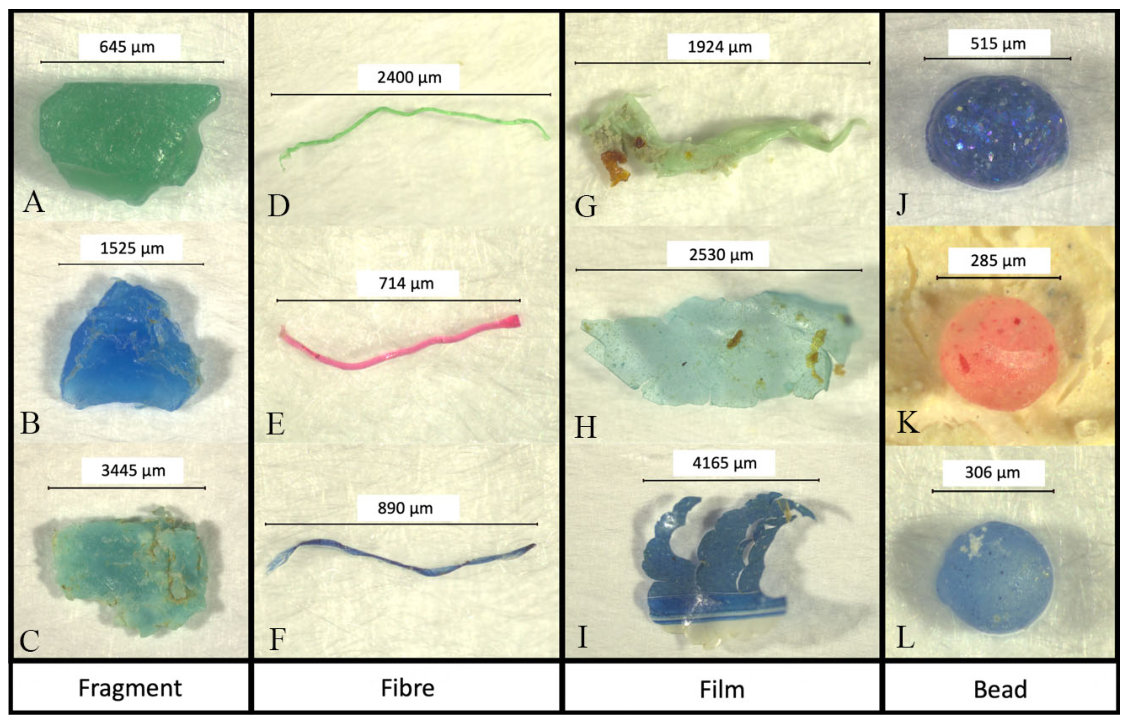
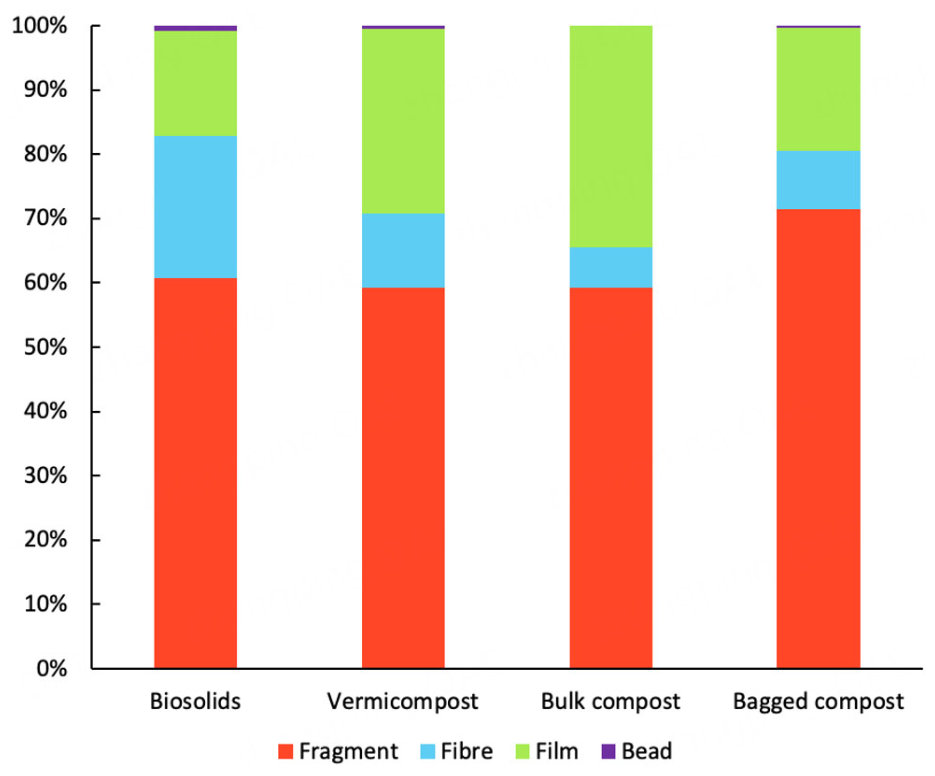
Microplastics were categorized into their morphotypes, namely fragments, fibers, films, and beads [Figure 1]. The average morphotype proportion by sample type is presented in Figure 2, and the average morphotype proportion between facilities in the Supplementary Materials [Supplementary Figure 3, Supplementary Table 3]. On average, fragments were the most frequently detected morphotype (62.7%), followed by films (24.7%), fibers (12.2%), and beads (0.4%). This was consistent across sample types, except for biosolids, where fibers were the second-most abundant (22.1%) on average, followed by films (16.4%). Fragments were present in a similar proportion, with around 60% majority in biosolids, vermicompost, and bulk compost, compared to a higher proportion in bagged composts of just over 70%. Fragments were the most abundant morphotype in biowaste at all facilities/bagged compost brands apart from a vermicompost and bulk compost facility where films dominated (59.4% and 52.9%, respectively). Bulk compost samples from one processing facility contained a near-equal split of fragments (49.5%) and films (47.4%). The higher proportion of fragments in this study contrasts with previous studies of biosolids where fibers were highly abundant, ranging from over 60%-90% [Supplementary Table 1]. Differences in extraction methods and compost feedstocks may explain the higher recovery of fragments in this study compared to previous studies. On average, films were highly abundant in bulk compost (34.5%), vermicompost (28.9%), and bagged compost (19.0%) in this study, but the sources of these films are unknown. In this study, fibers were the second most abundant morphotype in the biosolids from two processing facilities, comprising 34.6%- 39.8% of morphotypes on average within those facilities. Fibers in biosolids arise from the shedding of synthetic clothing, blankets, and other textiles during laundering[45]. Films, the predominant morphotype in two previous compost studies, were attributed to food scrap disposal bags and food packaging mistakenly placed in compost[17] and packaging from fertilizers and woven bags[41].
微塑料按形态类型分为碎片、纤维、薄膜和微珠[图1]。各样品类型的平均形态类型比例见图2,各设施间的平均形态类型比例见补充材料[补充图3,补充表3]。平均而言,碎片是检出频率最高的形态类型(62.7%),其次为薄膜(24.7%)、纤维(12.2%)和微珠(0.4%)。这一规律在各样品类型中基本一致,但生物固体(污泥)除外,其中纤维平均丰度居第二位(22.1%),其次为薄膜(16.4%)。碎片在生物固体、蚯蚓堆肥和散装堆肥中的比例相近,约占60%,而在袋装堆肥中比例更高,略超过70%。除一个蚯蚓堆肥设施和一个散装堆肥设施以薄膜为主(分别为59.4%和52.9%)外,碎片是所有设施/袋装堆肥品牌生物废弃物中最丰富的形态类型。某一处理设施的散装堆肥样品中碎片(49.5%)和薄膜(47.4%)比例几乎相当。本研究中碎片比例较高,这与先前生物固体研究中纤维高度丰富(占60%以上至90%)的结果形成对比[补充表1]。提取方法和堆肥原料的差异可能解释了本研究与先前研究相比碎片回收率较高的原因。平均而言,本研究中薄膜在散装堆肥(34.5%)、蚯蚓堆肥(28.9%)和袋装堆肥(19.0%)中含量较高,但这些薄膜的来源尚不清楚。本研究中,在两个处理设施的生物固体中纤维是第二丰富的形态类型,平均占这些设施形态类型的34.6%-39.8%。生物固体中的纤维来源于合成纤维衣物、毛毯及其他纺织品在洗涤过程中的脱落[45]。在两项先前的堆肥研究中,薄膜为主要形态类型,其来源被归因于被误投入堆肥的食物残渣收集袋和食品包装[17],以及肥料包装和编织袋[41]。
For the majority of microplastics detected, it was not possible to determine their product origin due to a lack of distinctive identifiable features and small size. Primary microplastics, however, may be recognizable, such as microbeads and glitter, but the actual origin and exact use remain speculative as they are variable in application. Beads, microbeads or ‘spheres’ were detected in all sample types in this study except in bulk compost. Microbeads are often reported as their own morphotype category in microplastics analysis as they gained attention worldwide as a source of unnecessary plastic litter as abrasives in cleaning products, industrial applications, and rinse-off personal care products[46,47]. Since 2017, several countries have banned the sale of microbead-containing products[46], and in June 2018, Aotearoa New Zealand also prohibited the manufacture and sale of wash-off products, including facial cleansers[48]. Despite the ban, microbeads were detected in this study, indicating the continued use of microbead-containing rinse-off personal care cleansers, or their presence from other sources unrelated to municipal wastewater where they could enter bagged compost. Beads have been previously found in the literature in higher proportions in biosolids from
对于检出的大多数微塑料,由于缺乏可辨识的显著特征且粒径较小,无法确定其产品来源。不过,微珠和亮片等初级微塑料可能是可辨识的,但由于其用途多样,其实际来源和确切用途仍属推测。本研究中除散装堆肥外,所有样品类型中均检出了微珠(或称“球体”)。在微塑料分析中,微珠通常被单独列为一个形态类型类别,因为作为清洁产品、工业应用和冲洗型个人护理产品中的磨料,它作为一种不必要的塑料垃圾来源在全球范围内受到关注[46,47]。自2017年以来,已有多个国家禁止销售含微珠的产品[46];2018年6月,新西兰也禁止了包括洗面奶在内的冲洗型产品的生产和销售[48]。尽管有此禁令,本研究中仍检出了微珠,表明含微珠的冲洗型个人护理清洁产品仍在使用,或微珠来自与城市污水无关、可能进入袋装堆肥的其他来源。文献中此前在生物固体中发现微珠所占比例较高,为
1.3%-17.1%[37,49] and in compost at 6.6%[17] of the total morphotypes in those studies.1.3%-17.1%[37,49],在堆肥中为6.6%[17](占这些研究中形态类型总数的比例)。
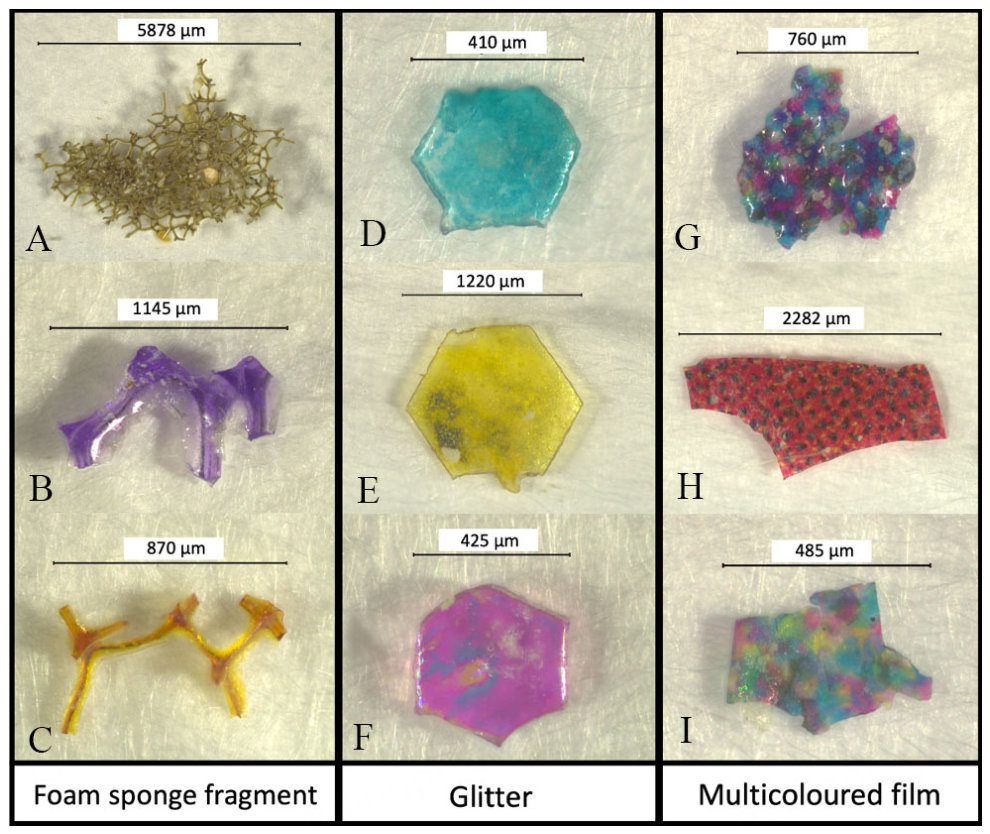
Fragments of polyurethane (PU) foam sponge used as packing insulation and cleaning sponges are a distinctive morphotype [Figure 3A-C] and were present in every biowaste sample type in this study, comprising 1.8% of all microplastics, with 82% of that present in biosolids samples, suggesting origin from household cleaning sponges. Polyurethane foam sponge fragments have been reported only once before in the literature in coastal soil from China[50], and this study is the first to report it in biowastes.
用作包装隔热材料和清洁海绵的聚氨酯(PU)泡沫海绵碎片是一种独特的形态类型[图3A-C],在本研究的所有生物废弃物样品类型中均有检出,占全部微塑料的1.8%,其中82%存在于生物固体(污泥)样品中,提示其来源于家用清洁海绵。聚氨酯泡沫海绵碎片此前在文献中仅有一次报道,见于中国滨海土壤[50],本研究首次在生物废弃物中报道该类颗粒。
Polyethylene terephthalate glitter [Figure 3D-F] was also present in every sample type and comprised 2.3% of total morphotypes, with 51% in vermicompost and 37% in biosolids samples. Suspected glitter particles have previously been observed in biosolids samples from Canada[12] and waste-activated sludge from Australia[51]. To the best of our knowledge, glitter has not been previously detected in composts. Glitter is widely reported in the literature as also being a primary microplastic, which is an unnecessary source of litter present in personal care products, cosmetics, homewares (art, crafts, toys, festive décor, kitchenware), and clothing and should receive comparable attention in terms of product bans as microbeads have[52,53]. Due to the prevalence of glitter in this study, it is necessary to consider it as an official morphotype.
聚对苯二甲酸乙二醇酯亮片[图3D-F]同样在所有样品类型中均有检出,占形态类型总数的2.3%,其中51%存在于蚯蚓堆肥样品中,37%存在于生物固体(污泥)样品中。此前在加拿大的生物固体样品[12]和澳大利亚的剩余活性污泥[51]中曾观察到疑似亮片颗粒。据我们所知,此前尚未在堆肥中检出亮片。文献中普遍认为亮片也是一种初级微塑料,是存在于个人护理产品、化妆品、家居用品(艺术品、手工艺品、玩具、节日装饰品、厨具)和服装中的一种不必要的垃圾来源,应在产品禁令方面受到与微珠同等的关注[52,53]。鉴于亮片在本研究中的普遍存在,有必要将其视为一种正式的形态类型。
Polymethyl methacrylate multicolored films [Figure 3G-I] comprised 8.2% of total microplastics in this study and were present in biosolids, vermicompost, and bulk compost. While these multicolored films are used in a variety of applications, they are most commonly used in packaging[54]. Multicolored films were highly abundant in a single vermicompost facility (facility 4), with a total of 220 items detected from the three replicate jars of that facility, comprising 70% of all multicolored films detected across all sample types. Multicolored microplastics in environmental samples are not as widely reported in the literature, but were detected in table salt from Italy[55], in 0.2% of surface water samples from a river in Taiwan[56], and in 22% of samples of European intertidal snails[57]. To the best of our knowledge, multicolored films have not been detected previously in biosolid or compost samples. These films tended to be brittle, probably due to the processing methods, and fragmented easily when touched with tweezers.
聚甲基丙烯酸甲酯多彩薄膜[图3G-I]占本研究微塑料总量的8.2%,存在于生物固体(污泥)、蚯蚓堆肥和散装堆肥中。尽管这类多彩薄膜应用广泛,但最常用于包装[54]。多彩薄膜在一个蚯蚓堆肥设施(设施4)中含量极高,从该设施的三个平行样品罐中共检出220个,占所有样品类型中检出多彩薄膜总数的70%。环境样品中多彩微塑料在文献中的报道并不多见,但曾在意大利的食盐[55]、台湾某河流0.2%的地表水样品[56]以及22%的欧洲潮间带螺类样品[57]中检出。据我们所知,此前尚未在生物固体或堆肥样品中检出多彩薄膜。这些薄膜往往较脆,可能与处理方法有关,用镊子触碰时容易破碎。
Microplastics polymer type微塑料聚合物类型
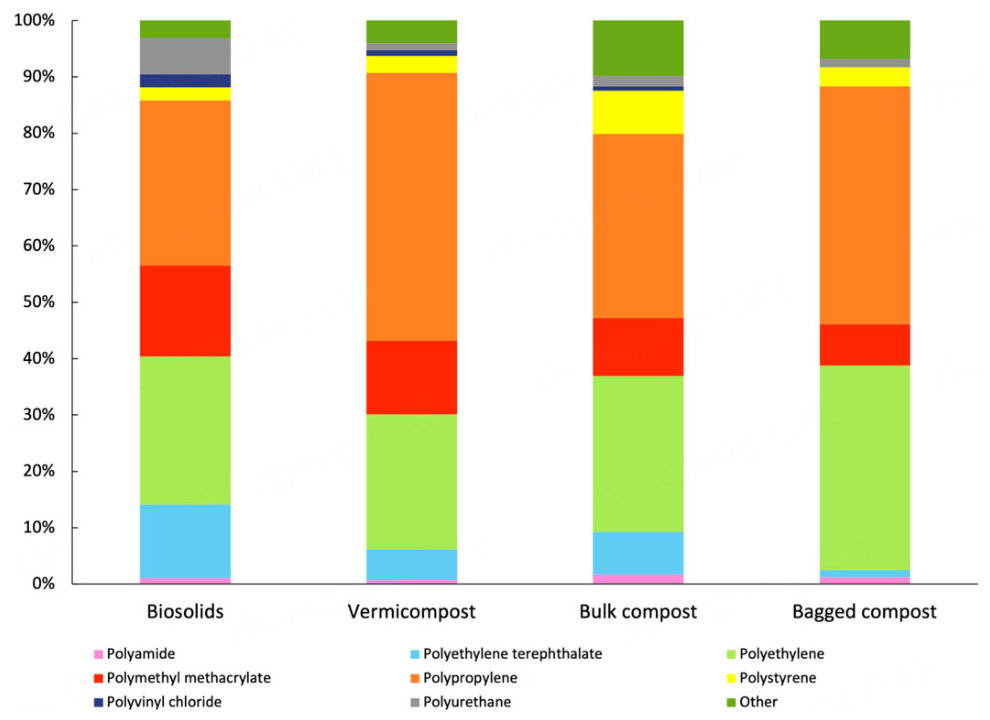
Overall, PP (37.9%) and PE (28.6%) were the most frequently detected polymer types, followed by PMMA (11.7%), PET (6.8%), Polystyrene (PS) (4.1%), PU (2.7%), PA (1.2%), and PVC (1.0%). The remaining 6.0% (grouped as "other") comprised Polycarbonate (PC), Polytetrafluoroethylene (PTFE), silicone, epoxy resin, co-polymers, and polymers considered to be biodegradable. Co-polymers were identified in 90% of biowastes and made up 3.4% of all polymer types. Co-polymers detected included ABS, styrene-acrylonitrile (SAN), ethylene-propylene (EPM), ethylene-vinyl alcohol (EVOH), styrene-butadiene rubber (SBR), acrylonitrile-butadiene (NBR).
总体而言,PP(37.9%)和PE(28.6%)是检出频率最高的聚合物类型,其次为PMMA(11.7%)、PET(6.8%)、聚苯乙烯(PS)(4.1%)、PU(2.7%)、PA(1.2%)和PVC(1.0%)。其余6.0%(归为“其他”)包括聚碳酸酯(PC)、聚四氟乙烯(PTFE)、硅橡胶、环氧树脂、共聚物以及被认为可生物降解的聚合物。90%的生物废弃物中检出了共聚物,共聚物占全部聚合物类型的3.4%。检出的共聚物包括ABS、苯乙烯-丙烯腈(SAN)、乙烯-丙烯(EPM)、乙烯-乙烯醇(EVOH)、丁苯橡胶(SBR)和丙烯腈-丁二烯(NBR)。
Polymers regarded as readily biodegradable were detected in 7/20 biowastes, with PLA detected in one vermicompost facility and two bulk compost facilities, PBAT detected in three bulk compost facilities, polycaprolactone (PCL) detected in one biosolid facility, and poly(methyl vinyl ether-co-maleic anhydride) (PVM/MA) in one biosolid facility. Polybutylene adipate terephthalate comprised 2.7% of polymers in bulk compost. Biodegradable polymers were not detected in bagged compost. To the best of our knowledge, this is the first study to have identified biodegradable polymers in mature biosolids and compost destined for land application. The presence of biodegradable plastics (particularly PLA and PBAT in vermicompost and bulk compost facilities) of the mature finished product in this study suggests that the composting processes employed at the commercial facilities and decentralized community initiatives investigated were not sufficient to support the complete biodegradation of these compostable polymers. There is little evidence of complete biodegradation of biodegradable polymers in soil, and therefore, it is likely they will have similar environmental fates to conventional polymers and accumulate[58,59]. More research into the suitability and use of these products is required before compostable plastics can be considered viable solutions to assist in reducing plastic pollution.
在7/20种生物废弃物中检出了被视为易生物降解的聚合物,其中PLA见于一个蚯蚓堆肥设施和两个散装堆肥设施,PBAT见于三个散装堆肥设施,聚己内酯(PCL)见于一个生物固体(污泥)设施,聚(甲基乙烯基醚-马来酸酐)(PVM/MA)见于一个生物固体设施。聚己二酸/对苯二甲酸丁二醇酯占散装堆肥中聚合物的2.7%。袋装堆肥中未检出可生物降解聚合物。据我们所知,本研究首次在拟用于土地施用的成熟生物固体和堆肥中鉴定出可生物降解聚合物。本研究中成熟终产品中存在可生物降解塑料(尤其是蚯蚓堆肥和散装堆肥设施中的PLA和PBAT),表明所调查的商业设施和分散式社区项目所采用的堆肥工艺不足以支持这些可堆肥聚合物的完全生物降解。几乎没有证据表明可生物降解聚合物能在土壤中完全生物降解,因此它们很可能与传统聚合物具有相似的环境归趋并发生累积[58,59]。在将可堆肥塑料视为协助减少塑料污染的可行方案之前,需要对这些产品的适用性和使用开展更多研究。
Polypropylene was the main polymer type across biowaste sample types [Figure 4], comprising 47.5% in vermicompost, 42.2% in bagged compost, 32.7% in bulk compost, and 29.3% in biosolids. The average polymer type proportions at each facility/bagged compost brand are presented in the Supplementary Materials [Supplementary Figure 4, Supplementary Table 4]. Polypropylene was the most predominant polymer in 15/20 biowastes, with PE (3/20) and PMMA (2/20) the most abundant at the remaining. In this study, PET and PU were present in higher proportions (13.1% and 6.3%, respectively) in biosolids compared to the other biowaste sample types. The high proportion of PE in biosolids in this study is comparable to two previous biosolids studies where PE was dominant; however, in four other studies, PET was the most abundant polymer type detected in biosolids [Table 1]. The dominant proportions of PE and PP in the composts of this study are comparable to those of a previous study, where PE was the most abundant polymer in compost (42.7%), followed by PP (31%)[17]. Polystyrene was found to be more abundant in bulk compost than in other biowaste types in this study, and was particularly highly abundant in composts from Spain and Germany[60,61].
聚丙烯是各生物废弃物样品类型中的主要聚合物类型[图4],在蚯蚓堆肥中占47.5%,袋装堆肥中占42.2%,散装堆肥中占32.7%,生物固体(污泥)中占29.3%。各设施/袋装堆肥品牌的平均聚合物类型比例见补充材料[补充图4,补充表4]。聚丙烯在15/20种生物废弃物中为最主要的聚合物,其余生物废弃物中含量最高的分别为PE(3/20)和PMMA(2/20)。本研究中,PET和PU在生物固体中的比例(分别为13.1%和6.3%)高于其他生物废弃物样品类型。本研究生物固体中PE比例较高,这与两项先前以PE为主的生物固体研究结果相当;然而,另有四项研究中PET是生物固体中检出最多的聚合物类型[表1]。本研究堆肥中PE和PP占主导地位,这与一项先前研究的结果相当,该研究中PE是堆肥中最丰富的聚合物(42.7%),其次为PP(31%)[17]。本研究发现聚苯乙烯在散装堆肥中的丰度高于其他生物废弃物类型,且在西班牙和德国的堆肥中丰度尤其高[60,61]。
Microplastics size微塑料粒径
The majority of microplastics were in the size range of 100-300 µm (33.5%) and 500-1,000 µm (21.0%) [Supplementary Figure 5, Supplementary Table 5]. Approximately 18.7% of all microplastics were > 1,000 µm, with the largest microplastic detected at 26,540 µm in its longest dimension. Only 6.1% of the total microplastics were < 100 µm, and the smallest microplastic detected was 18 µm in the longest dimension. Bulk compost contained, on average, a higher proportion of microplastics < 100 µm (11.3%) compared to other biowaste sample types, which ranged from 1.9% to 6.3%. Several previous studies reported similar findings, with the majority of microplastics in biosolids and composts < 500 µm in the longest dimension[17,62,63]. Comparison between studies is difficult due to variable extraction and analysis methods, particularly for spectroscopic methods limited by microplastic particle size.
大多数微塑料的粒径范围为100-300 µm(33.5%)和500-1,000 µm(21.0%)[补充图5,补充表5]。约18.7%的微塑料 > 1,000 µm,检出的最大微塑料最长尺寸为26,540 µm。仅6.1%的微塑料 < 100 µm,检出的最小微塑料最长尺寸为18 µm。平均而言,散装堆肥中 < 100 µm微塑料的比例(11.3%)高于其他生物废弃物样品类型(1.9%至6.3%)。多项先前研究报道了类似结果,即生物固体和堆肥中的大多数微塑料最长尺寸 < 500 µm[17,62,63]。由于提取和分析方法各异,尤其是光谱方法受微塑料粒径的限制,不同研究之间难以进行比较。
| Sample type样品类型 | Biosolids 生物固体 | Vermicompost蚯蚓堆肥 | Bulk compost 散装堆肥 | Bagged compost袋装堆肥 |
|---|---|---|---|---|
| MP abundance in amendment (particles/g) | 2.71 | 2.69 | 1.94 | 1.10 |
| MP loading in amendment (particles/ha) | 2.71×10 7 | 2.69×10 7 | 1.94×10 7 | 1.10×10 7 |
| [MP in topsoil] increase per application of amendment (particles/kg) | 13.9 | 13.8 | 9.9 | 5.6 |
MP: Microplastics.
Microplastic color微塑料颜色
A wide range of colors were identified in varying abundances: blue (36.3%), green (22.9%), and colorless (12.9%), followed by pink (6.8%), black (4.6%), multicolored (4.5%), red (4.4%), grey (3.0%), yellow (2.3%), white (2.2%), orange (1.4%), purple (1.0%), and brown (0.1%). Within biowaste sample types, blue was the most abundant color of microplastic on average, except in bulk compost, where green was most abundant (36.3%) [Supplementary Figure 6, Supplementary Table 6]. Multicolored microplastics were detected in all sample types in percentages from 2.3%-8.2%, except for bagged compost, where none were detected. Similar to the results of this study, green, blue, and red were the most common colors in biosolids from the United Kingdom[62] and compost from China[43]. It must be noted that color is subjective and can be difficult to distinguish between hues, and color may not be discernible for particles of decreasing size.
鉴定出的微塑料颜色多样,丰度各异:蓝色(36.3%)、绿色(22.9%)和无色(12.9%),其次为粉色(6.8%)、黑色(4.6%)、多彩(4.5%)、红色(4.4%)、灰色(3.0%)、黄色(2.3%)、白色(2.2%)、橙色(1.4%)、紫色(1.0%)和棕色(0.1%)。在各生物废弃物样品类型中,蓝色平均是最丰富的微塑料颜色,但散装堆肥除外,其中绿色最丰富(36.3%)[补充图6,补充表6]。除袋装堆肥未检出外,所有样品类型中均检出了多彩微塑料,比例为2.3%-8.2%。与本研究结果类似,英国的生物固体(污泥)[62]和中国的堆肥[43]中最常见的颜色也是绿色、蓝色和红色。需要指出的是,颜色判断具有主观性,不同色调之间可能难以区分,且随着颗粒粒径减小,颜色可能无法辨别。
Estimation of microplastics applied onto land from biowastes生物废弃物施用向土地输入微塑料的估算
This study found a diverse array of microplastics, including both conventional and biodegradable polymers of varying sizes and morphotypes, in the mature finished products of biowastes, highlighting that the conditions during the treatment processes were not sufficient to biodegrade those polymers. All biowaste sampled as part of this study were destined for land application in Aotearoa New Zealand. The impact of microplastics in biowastes applied onto land will be specific to the designated land use; in this study, these include land rehabilitation, agriculture, horticulture, landscaping, and residential use [Supplementary Section 1]. Using the average abundance (MP/g) of microplastics in each biowaste type along with the parameters described in Section 2.8, between 1.10 × 10⁷ to 2.71 × 10⁷ microplastic particles are estimated to be applied onto the soil with the biowaste per hectare annually [Table 1]. The concentration of microplastics in the top 15 cm of soil is expected to increase by 5.6 to 13.9 MP/kg with each application of biowaste amendment [Table 1].
本研究在生物废弃物的成熟终产品中发现了种类多样的微塑料,包括不同粒径和形态类型的传统聚合物与可生物降解聚合物,表明处理过程中的条件不足以使这些聚合物发生生物降解。本研究所采集的全部生物废弃物均用于新西兰(Aotearoa New Zealand)的土地施用。施用于土地的生物废弃物中微塑料的影响将因具体土地用途而异;在本研究中,这些用途包括土地复垦、农业、园艺、景观绿化和住宅用途[补充材料第1节]。根据各类生物废弃物中微塑料的平均丰度(MP/g)以及2.8节所述参数,估计每年随生物废弃物施入每公顷土壤的微塑料颗粒数为1.10 × 107至2.71 × 10⁷个[表1]。每施用一次生物废弃物改良剂,表层15 cm土壤中的微塑料浓度预计将增加5.6至13.9 MP/kg[表1]。
Previous studies have identified microplastic contamination in soils historically amended with compost (0.064-0.89 MP/g)[42,64-66] and biosolids (0.05-5.19 MP/g)[67-75]. Microplastic abundance in soils increased with successive compost and biosolid applications[65,67,75]. The persistence of microplastics in soil is of particular concern, with microplastics detected in soils 12 years after final compost application[65], and a North American and German study identified microplastics in soils 15 and 34 years after the last amendment with biosolids, respectively[71,72]. These observations prompt questions into the fate and behavior of microplastics in biowastes applied onto land, as relatively little is known. Microplastics are incorporated into soil through plowing, rain/irrigation percolation, and bioturbation by organisms and plants[70,72,76-78]. While most previous studies focused on the top 30 cm of soil, in a German study, microplastics were present at depths of 60-90 cm in soils amended with biosolids, and microplastic abundance and size decreased significantly from the 0-30 cm fraction[72]. Microplastics from amendments applied onto soils may be translocated between areas through surface and subsurface water movement and aeolian transport[79,80]. A field study undertaken in North America suggested microplastics collected from the runoff of biosolids- and manure-amended soils after natural precipitation events accounted for 0.4% and 0.3% of the total microplastics in those amendments, respectively[81].
已有研究在历史上施用过堆肥(0.064-0.89 MP/g)[42,64-66]和生物固体(污泥)(0.05-5.19 MP/g)[67-75]的土壤中发现了微塑料污染。土壤中的微塑料丰度随堆肥和生物固体施用次数的增加而升高[65,67,75]。微塑料在土壤中的持久性尤其令人关注:在最后一次施用堆肥12年后仍可在土壤中检出微塑料[65],北美和德国的研究分别在最后一次施用生物固体15年和34年后的土壤中检出了微塑料[71,72]。由于目前对施用于土地的生物废弃物中微塑料的归趋与行为知之甚少,上述观察结果引发了相关问题。微塑料通过耕作、降雨/灌溉渗滤以及生物和植物的生物扰动作用进入土壤[70,72,76-78]。以往大多数研究集中于表层30 cm土壤,而一项德国研究发现,在施用生物固体的土壤中,60-90 cm深度处也存在微塑料,且微塑料的丰度和粒径较0-30 cm土层显著降低[72]。施用于土壤的改良剂中的微塑料可能通过地表水和地下水运动以及风力输送在不同区域间迁移[79,80]。北美的一项田间研究表明,自然降水事件后,从施用生物固体和粪肥的土壤径流中收集到的微塑料分别占这些改良剂中微塑料总量的0.4%和0.3%[81]。
Environmental microplastics carry both inherent and acquired chemical and pathogenic contaminant loads, along with different degrees of weathering. These factors can further influence additive leaching and particle toxicity[35,82,83], which must be taken into account when predicting toxicity. The impacts of microplastics from biowastes in the terrestrial environment are unknown. Previous ecotoxicological studies can serve as a guide to predict environmental impacts, but these are limited in terms of polymer type, particle size, additives, and degree of weathering and are not representative of environmental microplastics[84].
环境中的微塑料既携带固有的也携带后天获得的化学污染物和病原体负荷,并具有不同程度的老化。这些因素会进一步影响添加剂的淋溶和颗粒毒性[35,82,83],在预测毒性时必须予以考虑。生物废弃物中的微塑料对陆地环境的影响尚不清楚。以往的生态毒理学研究可作为预测环境影响的参考,但这些研究在聚合物类型、颗粒粒径、添加剂和老化程度方面存在局限,不能代表环境中的微塑料[84]。
5CONCLUSIONS结论
This study used a newly developed method to optimize the extraction and isolation of microplastics in complex solid organic matrices using the same extraction method, enabling, for the first time, the direct comparison of microplastics content of different solid biowastes destined for land application. In addition, vermicompost with variable feedstocks, including biosolids and industry processing wastes, were analyzed for microplastics for the first time. Microplastics contaminate valuable biowastes of biosolids, vermicompost, bulk compost, and bagged compost and were found in all samples. Distinguishable microplastics detected in biowastes included microbeads, glitter, PU foam sponge fragments, and multicolored films of remnants of packaging and embellishments, all of which have not been previously widely reported in biowastes. However, the majority of microplastics in biowastes were fragments, films, and fibers of indiscernible origin. The most frequently detected polymer types were PP and PE, consistent with previous research. Biodegradable polymers including PLA and PBAT were detected for the first time in mature compost samples, suggesting the composting process was inadequate to allow complete biodegradation of these polymers. While the terrestrial fate and behavior of microplastics are relatively uncharacterized, previous research has demonstrated the application of biowastes is a long-term source of microplastic pollution in the terrestrial environment. From the results of this study, approximately 1.10 × 10⁷ to 2.71 × 10⁷ microplastics are applied annually per ha of productive soils from biowaste amendments in Aotearoa New Zealand. Mechanisms to prevent microplastics contamination of biowastes from residential, commercial, and industrial sources are urgently needed to ensure that these valuable resources can continue to be used without contributing to plastic pollution in the environment.
本研究采用一种新建立的方法,以同一提取方法优化了复杂固体有机基质中微塑料的提取与分离,首次实现了对用于土地施用的不同固体生物废弃物中微塑料含量的直接比较。此外,本研究首次对以生物固体和工业加工废弃物等不同原料生产的蚯蚓堆肥进行了微塑料分析。微塑料污染了生物固体、蚯蚓堆肥、散装堆肥和袋装堆肥等有价值的生物废弃物,且在所有样品中均有检出。在生物废弃物中检出的可辨识微塑料包括微珠、闪粉、聚氨酯(PU)泡沫海绵碎片以及包装和装饰物残留的多彩薄膜,这些此前在生物废弃物中均未见广泛报道。然而,生物废弃物中的大部分微塑料为来源无法辨别的碎片、薄膜和纤维。最常检出的聚合物类型为PP和PE,与以往研究一致。首次在成熟堆肥样品中检出了PLA和PBAT等可生物降解聚合物,表明堆肥过程不足以使这些聚合物完全生物降解。尽管微塑料在陆地环境中的归趋与行为尚缺乏充分表征,但已有研究表明,生物废弃物的施用是陆地环境中微塑料污染的长期来源。根据本研究结果,在新西兰(Aotearoa New Zealand),每年随生物废弃物改良剂施入每公顷生产性土壤的微塑料约为1.10 × 10⁷至2.71 × 10⁷个。亟需建立相应机制,防止来自居民、商业和工业源的微塑料污染生物废弃物,以确保这些宝贵资源能够继续得到利用,而不致加剧环境中的塑料污染。
6DECLARATIONS声明
7Acknowledgments致谢
The authors would like to express their gratitude to the sampling facilities and to Debbie Breckon, Nick Oliver, Kylie Smith, Laurie Anderson, Louise Weaver, Sujani Aridayasa, Stephen Chambers, Bridget Armstrong, Alex Aves, Hayden Masterton, Jamie Bridson, David Conder, Matt Polson, Alex Nichols, Paula Brooksby, Jamie Ataria, and Tina Ngata for their assistance and advice with this project.
作者衷心感谢各采样单位以及Debbie Breckon、Nick Oliver、Kylie Smith、Laurie Anderson、Louise Weaver、Sujani Aridayasa、Stephen Chambers、Bridget Armstrong、Alex Aves、Hayden Masterton、Jamie Bridson、David Conder、Matt Polson、Alex Nichols、Paula Brooksby、Jamie Ataria和Tina Ngata对本项目给予的帮助和建议。
Authors’ contributions作者贡献
Conceptualization, methodology, validation, investigation, writing - original draft, writing - review and editing, visualization: Ruffell, H.
概念构思、方法设计、验证、调查研究、写作——初稿、写作——审阅与编辑、可视化:Ruffell, H.
Conceptualization, supervision, writing - review and editing, project administration, funding acquisition: Pantos, O.
概念构思、指导、写作——审阅与编辑、项目管理、经费获取:Pantos, O.
Supervision, writing - review and editing: Robinson, B.
指导、写作——审阅与编辑:Robinson, B.
Conceptualization, supervision, writing - review and editing, project administration, funding acquisition: Gaw, S.
概念构思、指导、写作——审阅与编辑、项目管理、经费获取:Gaw, S.
Availability of data and materials数据与材料的可获得性
The raw data supporting the findings of this study are available within this article and its Supplementary Materials. Further data are available from the corresponding author upon reasonable request.
支持本研究结果的原始数据见本文及其补充材料。其他数据可在合理请求下向通讯作者索取。
Financial support and sponsorship资金支持与资助
This work was supported by the New Zealand Ministry of Business Innovation and Employment Endeavour Research Programmes fund [contract number C03X1802] as part of the Impact of microplastics on New Zealand's bioheritage systems, environment, and ecoservices research programme, Aotearoa Impacts and Mitigation of Microplastics (AIM2) project.
本研究由新西兰商业、创新与就业部(Ministry of Business Innovation and Employment)Endeavour研究计划基金资助[合同编号C03X1802],属于“微塑料对新西兰生物遗产系统、环境和生态服务的影响”研究计划中的新西兰微塑料影响与减缓(Aotearoa Impacts and Mitigation of Microplastics,AIM2)项目。
Conflicts of interest利益冲突
All authors declared that there are no conflicts of interest.
全体作者声明不存在利益冲突。
Ethical approval and consent to participate伦理批准与参与同意
Human ethics was provided by the University of Canterbury Human Ethics Committee, reference number HCE 2021/17/LR-PS.
人类伦理审批由坎特伯雷大学人类伦理委员会(University of Canterbury Human Ethics Committee)提供,批准编号HCE 2021/17/LR-PS。
Consent for publication发表同意
Not applicable.
Copyright版权
© The Author(s) 2025.© 作者 2025。
8REFERENCES参考文献
1. Frias, J. P. G. L.; Nash, R. Microplastics: Finding a consensus on the definition. Mar. Pollut. Bull. 2019, 138, 145-7. DOI PubMed
2. Wu, P.; Huang, J.; Zheng, Y.; et al. Environmental occurrences, fate, and impacts of microplastics. Ecotoxicol. Environ. Saf. 2019, 184, 109612. DOI
3. Ziajahromi, S.; Leusch, F. D. L. Systematic assessment of data quality and quality assurance/quality control (QA/QC) of current research on microplastics in biosolids and agricultural soils. Environ. Pollut. 2022, 294, 118629. DOI PubMed
4. Ruffell, H.; Pantos, O.; Robinson, B.; Gaw, S. A method for the extraction of microplastics from solid biowastes including biosolids, compost, and soil for analysis by µ-FTIR. MethodsX 2024, 12, 102761. DOI PubMed PMC
5. Ragoobur, D.; Huerta-Lwanga, E.; Somaroo, G. D. Microplastics in agricultural soils, wastewater effluents and sewage sludge in Mauritius. Sci. Total. Environ. 2021, 798, 149326. DOI PubMed
6. Pérez-Reverón, R.; González-Sálamo, J.; Hernández-Sánchez, C.; González-Pleiter, M.; Hernández-Borges, J.; Díaz-Peña, F. J. Recycled wastewater as a potential source of microplastics in irrigated soils from an arid-insular territory (Fuerteventura, Spain). Sci. Total. Environ. 2022, 817, 152830. DOI PubMed
7. Ruffell, H.; Pantos, O.; Northcott, G.; Gaw, S. Wastewater treatment plant effluents in New Zealand are a significant source of microplastics to the environment. New. Zealand. Journal. of. Marine. and. Freshwater. Research. 2023, 57, 336-52. DOI
8. Almroth BM, Åström L, Roslund S, Petersson H, Johansson M, Persson NK. Quantifying shedding of synthetic fibers from textiles; a source of microplastics released into the environment. Environ. Sci. Pollut. Res. Int. 2018, 25, 1191-9. DOI PubMed PMC
9. Kim, M. J.; Na, S. H.; Batool, R.; Byun, I. S.; Kim, E. J. Seasonal variation and spatial distribution of microplastics in tertiary wastewater treatment plant in South Korea. J. Hazard. Mater. 2022, 438, 129474. DOI
10. Le, T.; Truong, T.; Nguyen, P.; et al. Evaluation of microplastic removal efficiency of wastewater-treatment plants in a developing country, Vietnam. Environmental. Technology. &. Innovation. 2023, 29, 102994. DOI
11. Iyare, P. U.; Ouki, S. K.; Bond, T. Microplastics removal in wastewater treatment plants: a critical review. Environ. Sci. :. Water. Res. Technol. 2020, 6, 2664-75. DOI
12. Sivarajah, B.; Lapen, D. R.; Gewurtz, S. B.; Smyth, S. A.; Provencher, J. F.; Vermaire, J. C. How many microplastic particles are present in Canadian biosolids? J. Environ. Qual. 2023, 52, 1037-48. DOI PubMed
13. Bläsing, M.; Amelung, W. Plastics in soil: Analytical methods and possible sources. Sci. Total. Environ. 2018, 612, 422-35. DOI PubMed
14. Ng, E. L.; Huerta, L. E.; Eldridge, S. M.; et al. An overview of microplastic and nanoplastic pollution in agroecosystems. Sci. Total. Environ. 2018, 627, 1377-88. DOI
15. Soobhany, N.; Mohee, R.; Garg, V. K. Inactivation of bacterial pathogenic load in compost against vermicompost of organic solid waste aiming to achieve sanitation goals: a review. Waste. Manag. 2017, 64, 51-62. DOI PubMed
16. Braun, M.; Mail, M.; Heyse, R.; Amelung, W. Plastic in compost: prevalence and potential input into agricultural and horticultural soils. Sci. Total. Environ. 2021, 760, 143335. DOI PubMed
17. Sholokhova, A.; Ceponkus, J.; Sablinskas, V.; Denafas, G. Abundance and characteristics of microplastics in treated organic wastes of Kaunas and Alytus regional waste management centres, Lithuania. Environ. Sci. Pollut. Res. Int. 2022, 29, 20665-74. DOI PubMed
18. Nazareth, M. C.; Marques, M. R. C.; Pinheiro, L. M.; Castro, Í. B. Key issues for bio-based, biodegradable and compostable plastics governance. J. Environ. Manage. 2022, 322, 116074. DOI PubMed
19. Marchuk, S.; Tait, S.; Sinha, P.; Harris, P.; Antille, D. L.; McCabe, B. K. Biosolids-derived fertilisers: A review of challenges and opportunities. Sci. Total. Environ. 2023, 875, 162555. DOI PubMed
20. Sardarmehni, M.; Levis, J. W.; Barlaz, M. A. What is the best end use for compost derived from the organic fraction of municipal solid waste? Environ. Sci. Technol. 2021, 55, 73-81. DOI
21. Horrocks, A.; Curtin, D.; Tregurtha, C.; Meenken, E. Municipal compost as a nutrient source for organic crop production in New Zealand. Agronomy 2016, 6, 35. DOI
22. Gutiérrez-Ginés, M. J.; Robinson, B. H.; Esperschuetz, J.; Madejón, E.; Horswell, J.; McLenaghen, R. Potential use of biosolids to reforest degraded areas with New Zealand native vegetation. J. Environ. Qual. 2017, 46, 906-14. DOI PubMed
23. Scharenbroch, B. C.; Meza, E. N.; Catania, M.; Fite, K. Biochar and biosolids increase tree growth and improve soil quality for urban landscapes. J. Environ. Qual. 2013, 42, 1372-85. DOI PubMed
24. Milinković, M.; Lalević, B.; Jovičić-petrović, J.; Golubović-ćurguz, V.; Kljujev, I.; Raičević, V. Biopotential of compost and compost products derived from horticultural waste-effect on plant growth and plant pathogens' suppression. Process. Saf. Environ. Prot. 2019, 121, 299-306. DOI
25. Arancon, N. Q.; Edwards, C. A.; Bierman, P.; Metzger, J. D.; Lucht, C. Effects of vermicomposts produced from cattle manure, food waste and paper waste on the growth and yield of peppers in the field. Pedobiologia 2005, 49, 297-306. DOI
26. Lin, D.; Yang, G.; Dou, P.; et al. Microplastics negatively affect soil fauna but stimulate microbial activity: insights from a field-based microplastic addition experiment. Proc. Biol. Sci. 2020, 287, 20201268. DOI PubMed PMC
27. Colzi, I.; Renna, L.; Bianchi, E.; et al. Impact of microplastics on growth, photosynthesis and essential elements in cucurbita pepo L. J.
Hazard. Mater. 2022, 423, 127238. DOI
28. Lee, T. Y.; Kim, L.; Kim, D.; An, S.; An, Y. J. Microplastics from shoe sole fragments cause oxidative stress in a plant (vigna radiata) and impair soil environment. J. Hazard. Mater. 2022, 429, 128306. DOI
29. Lahive, E.; Walton, A.; Horton, A. A.; Spurgeon, D. J.; Svendsen, C. Microplastic particles reduce reproduction in the terrestrial worm enchytraeus crypticus in a soil exposure. Environ. Pollut. 2019, 255, 113174. DOI
30. Gao, B.; Yao, H.; Li, Y.; Zhu, Y. Microplastic addition alters the microbial community structure and stimulates soil carbon dioxide emissions in vegetable�growing soil. Environ. Toxicol. Chem. 2021, 40, 352-65. DOI
31. Huang, Y.; Zhao, Y.; Wang, J.; Zhang, M.; Jia, W.; Qin, X. LDPE microplastic films alter microbial community composition and enzymatic activities in soil. Environ. Pollut. 2019, 254, 112983. DOI
32. Cui, G.; Lü, F.; Hu, T.; Zhang, H.; Shao, L.; He, P. Vermicomposting leads to more abundant microplastics in the municipal excess sludge. Chemosphere 2022, 307, 136042. DOI PubMed
33. Masura, J.; Baker, J.; Foster, G.; Arthur, C. Laboratory methods for the analysis of microplastics in the marine environment: recommendations for quantifying synthetic particles in waters and sediments. In: Herring C, editor. NOAA: National Oceanic and Atmospheric Administration 2015. DOI
34. Coppock, R. L.; Cole, M.; Lindeque, P. K.; Queirós, A. M.; Galloway, T. S. A small-scale, portable method for extracting microplastics from marine sediments. Environ. Pollut. 2017, 230, 829-37. DOI PubMed
35. Rochman, C. M.; Brookson, C.; Bikker, J.; et al. Rethinking microplastics as a diverse contaminant suite. Environ. Toxicol. Chem. 2019, 38, 703-11. DOI
36. New Zealand Water & Wastes Association (NZWWA). Guidelines for the safe application of biosolids to land in New Zealand. Wellington; 2003. Available from: https://www.waternz.org.nz/Folder?Action=View%20File&Folder_id=101&File=biosolids_ guidelines.pdf. [Last accessed on 23 Dec 2024].
37. Li, X.; Chen, L.; Mei, Q.; et al. Microplastics in sewage sludge from the wastewater treatment plants in China. Water. Res. 2018, 142, 75-85. DOI
38. Gies, E. A.; LeNoble, J. L.; Noël, M.; et al. Retention of microplastics in a major secondary wastewater treatment plant in Vancouver, Canada. Mar. Pollut. Bull. 2018, 133, 553-61. DOI
39. Meng, K.; Lwanga, E. H.; van, Z. M.; Munhoz, D. R.; Geissen, V. Fragmentation and depolymerization of microplastics in the earthworm gut: a potential for microplastic bioremediation? J. Hazard. Mater. 2023, 447, 130765. DOI
40. Kwak, J. I.; An, Y. J. Microplastic digestion generates fragmented nanoplastics in soils and damages earthworm spermatogenesis and coelomocyte viability. J. Hazard. Mater. 2021, 402, 124034. DOI PubMed
41. Zhang, S.; Li, Y.; Chen, X.; et al. Occurrence and distribution of microplastics in organic fertilizers in China. Sci. Total. Environ. 2022, 844, 157061. DOI
42. Schothorst B, Beriot N, Huerta Lwanga E, Geissen V. Sources of light density microplastic related to two agricultural practices: the use of compost and plastic mulch. Environments 2021, 8, 36. DOI
43. Gui, J.; Sun, Y.; Wang, J.; Chen, X.; Zhang, S.; Wu, D. Microplastics in composting of rural domestic waste: abundance, characteristics, and release from the surface of macroplastics. Environ. Pollut. 2021, 274, 116553. DOI
44. Zafiu, C.; Binner, E.; Beigl, P.; Vay, B.; Ebmer, J.; Huber-Humer, M. The dynamics of macro- and microplastic quantity and size changes during the composting process. Waste. Manag. 2023, 162, 18-26. DOI PubMed
45. Napper, I. E.; Thompson, R. C. Release of synthetic microplastic plastic fibres from domestic washing machines: effects of fabric type and washing conditions. Mar. Pollut. Bull. 2016, 112, 39-45. DOI PubMed
46. Anagnosti, L.; Varvaresou, A.; Pavlou, P.; Protopapa, E.; Carayanni, V. Worldwide actions against plastic pollution from microbeads and microplastics in cosmetics focusing on European policies. Has the issue been handled effectively? Mar. Pollut. Bull. 2021, 162, 111883. DOI PubMed
47. Rochman, C. M.; Kross, S. M.; Armstrong, J. B.; et al. Scientific evidence supports a ban on microbeads. Environ. Sci. Technol. 2015, 49, 10759-61. DOI
48. New Zealand Government Te Kāwanatanga o Aotearoa. Waste minimisation (microbeads) regulations 2017. Ministry for the environment. Wellington; 2017. Available from: https://www.legislation.govt.nz/regulation/public/2017/0291/latest/DLM7490715. html. [Last accessed on 23 Dec 2024].
49. Liu, X.; Yuan, W.; Di, M.; Li, Z.; Wang, J. Transfer and fate of microplastics during the conventional activated sludge process in one wastewater treatment plant of China. Chem. Eng. J. 2019, 362, 176-82. DOI
50. Zhou, Q.; Zhang, H.; Fu, C.; et al. The distribution and morphology of microplastics in coastal soils adjacent to the Bohai Sea and the Yellow Sea. Geoderma 2018, 322, 201-8. DOI
51. Raju, S.; Carbery, M.; Kuttykattil, A.; et al. Improved methodology to determine the fate and transport of microplastics in a secondary wastewater treatment plant. Water. Res. 2020, 173, 115549. DOI
52. Tagg, A. S.; Ivar, S. J. A. Is this your glitter? An overlooked but potentially environmentally-valuable microplastic. Mar. Pollut. Bull. 2019, 146, 50-3. DOI PubMed
53. Yurtsever, M. Tiny, shiny, and colorful microplastics: are regular glitters a significant source of microplastics? Mar. Pollut. Bull. 2019, 146, 678-82. DOI PubMed
54. Pantos, O.; Masterton, H.; Ruffell, H. Sources of nanoplastic and microplastic pollution which are hidden in plain sight. Camb. prisms. Plast. 2024, 2, e25. DOI
Ruffell et al. Water Emerg. Contam. Nanoplastics 2025, 4, 1
55. Renzi, M.; Blašković, A. Litter & microplastics features in table salts from marine origin: italian versus Croatian brands. Mar. Pollut. Bull. 2018, 135, 62-8. DOI PubMed
56. Kunz, A.; Schneider, F.; Anthony, N.; Lin, H. T. Microplastics in rivers along an urban-rural gradient in an urban agglomeration: correlation with land use, potential sources and pathways. Environ. Pollut. 2023, 321, 121096. DOI
57. Ehlers, S. M.; Ellrich, J. A.; Koop, J. H. E. Microplastic load and polymer type composition in European rocky intertidal snails: consistency across locations, wave exposure and years. Environ. Pollut. 2022, 292, 118280. DOI PubMed
58. Courtene-Jones, W.; Burgevin, F.; Munns, L.; et al. Deterioration of bio-based polylactic acid plastic teabags under environmental conditions and their associated effects on earthworms. Sci. Total. Environ. 2024, 934, 172806. DOI
59. Liao, J.; Chen, Q. Biodegradable plastics in the air and soil environment: low degradation rate and high microplastics formation. J. Hazard. Mater. 2021, 418, 126329. DOI PubMed
60. Edo, C.; Fernández-Piñas, F.; Rosal, R. Microplastics identification and quantification in the composted organic fraction of municipal solid Waste. Sci. Total. Environ. 2022, 813, 151902. DOI PubMed
61. Weithmann, N.; Möller, J. N.; Löder, M. G. J.; Piehl, S.; Laforsch, C.; Freitag, R. Organic fertilizer as a vehicle for the entry of microplastic into the environment. Sci. Adv. 2018, 4, eaap8060. DOI PubMed PMC
62. Harley-Nyang, D.; Memon, F. A.; Jones, N.; Galloway, T. Investigation and analysis of microplastics in sewage sludge and biosolids: a case study from one wastewater treatment works in the UK. Sci. Total. Environ. 2022, 823, 153735. DOI PubMed
63. Magni, S.; Binelli, A.; Pittura, L.; et al. The fate of microplastics in an Italian wastewater treatment plant. Sci. Total. Environ. 2019, 652, 602-10. DOI
64. Cattle, S. R.; Robinson, C.; Whatmuff, M. The character and distribution of physical contaminants found in soil previously treated with mixed waste organic outputs and garden waste compost. Waste. Manag. 2020, 101, 94-105. DOI PubMed
65. Braun, M.; Mail, M.; Krupp, A. E.; Amelung, W. Microplastic contamination of soil: are input pathways by compost overridden by littering? Sci. Total. Environ. 2023, 855, 158889. DOI PubMed
66. Watteau, F.; Dignac, M.; Bouchard, A.; Revallier, A.; Houot, S. Microplastic detection in soil amended with municipal solid waste composts as revealed by transmission electronic microscopy and pyrolysis/GC/MS. Front. Sustain. Food. Syst. 2018, 2, 81. DOI 67. Tran, T. K. A.; Raju, S.; Singh, A.; et al. Occurrence and distribution of microplastics in long-term biosolid-applied rehabilitation land: an overlooked pathway for microplastic entry into terrestrial ecosystems in Australia. Environ. Pollut. 2023, 336, 122464. DOI 68. Rashti M, Hintz J, Esfandbod M, Bahadori M, Lan Z, Chen C. Detecting microplastics in organic-rich materials and their potential risks to earthworms in agroecosystems. Waste. Manag. 2023, 166, 96-103. DOI PubMed
69. Radford, F.; Horton, A.; Hudson, M.; Shaw, P.; Williams, I. Agricultural soils and microplastics: are biosolids the problem? Front. Soil. Sci. 2023, 2, 941837. DOI
70. Heerey, L.; O'Sullivan, J. J.; Bruen, M.; et al. Export pathways of biosolid derived microplastics in soil systems - findings from a temperate maritime climate. Sci. Total. Environ. 2023, 888, 164028. DOI
71. Zubris, K. A.; Richards, B. K. Synthetic fibers as an indicator of land application of sludge. Environ. Pollut. 2005, 138, 201-11. DOI
72. Weber, C. J.; Santowski, A.; Chifflard, P. Investigating the dispersal of macro- and microplastics on agricultural fields 30 years after sewage sludge application. Sci. Rep. 2022, 12, 6401. DOI PubMed PMC
73. den Berg P, Huerta-Lwanga E, Corradini F, Geissen V. Sewage sludge application as a vehicle for microplastics in eastern spanish agricultural soils. Environ. Pollut. 2020, 261, 114198. DOI PubMed
74. Crossman, J.; Hurley, R. R.; Futter, M.; Nizzetto, L. Transfer and transport of microplastics from biosolids to agricultural soils and the wider environment. Sci. Total. Environ. 2020, 724, 138334. DOI PubMed
75. Corradini, F.; Meza, P.; Eguiluz, R.; Casado, F.; Huerta-Lwanga, E.; Geissen, V. Evidence of microplastic accumulation in agricultural soils from sewage sludge disposal. Sci. Total. Environ. 2019, 671, 411-20. DOI PubMed
76. Rillig, M. C.; Ziersch, L.; Hempel, S. Microplastic transport in soil by earthworms. Sci. Rep. 2017, 7, 1362. DOI PubMed PMC
77. Li, J.; Song, Y.; Cai, Y. Focus topics on microplastics in soil: analytical methods, occurrence, transport, and ecological risks. Environ. Pollut. 2020, 257, 113570. DOI
78. Lwanga, E. H.; Beriot, N.; Corradini, F.; et al. Review of microplastic sources, transport pathways and correlations with other soil stressors: a journey from agricultural sites into the environment. Chem. Biol. Technol. Agric. 2022, 9, 20. DOI
79. Rezaei, M.; Abbasi, S.; Pourmahmood, H.; Oleszczuk, P.; Ritsema, C.; Turner, A. Microplastics in agricultural soils from a semi-arid region and their transport by wind erosion. Environ. Res. 2022, 212, 113213. DOI PubMed
80. Han, N.; Zhao, Q.; Ao, H.; Hu, H.; Wu, C. Horizontal transport of macro- and microplastics on soil surface by rainfall induced surface runoff as affected by vegetations. Sci. Total. Environ. 2022, 831, 154989. DOI PubMed
81. Beni N, Karimifard S, Gilley J, Messer T, Schmidt A, Bartelt-hunt S. Higher concentrations of microplastics in runoff from biosolidamended croplands than manure-amended croplands. Commun. Earth. Environ. 2023, 4, 42. DOI
82. Masterton, H.; Ruffell, H.; Gaw, S.; Pantos, O. The role of plastics in the accumulation and release of trace elements in the environment. Camb. prisms. Plast. 2023, 1, e15. DOI
83. Liu, P.; Zhan, X.; Wu, X.; Li, J.; Wang, H.; Gao, S. Effect of weathering on environmental behavior of microplastics: properties, sorption and potential risks. Chemosphere 2020, 242, 125193. DOI
84. Ullah, R.; Tsui, M. T.; Chen, H.; Chow, A.; Williams, C.; Ligaba-Osena, A. Microplastics interaction with terrestrial plants and their impacts on agriculture. J. Environ. Qual. 2021, 50, 1024-41. DOI