Brett Robinson1,2,3, Jos´e-Enrique Fern´andez2, Paula Madej´on2, Teodoro Marañ´on2, Jos´e M. Murillo2, Steve Green1 & Brent Clothier1
1HortResearch, Private Bag 11 030, Palmerston North, New Zealand. 2IRNAS. Avenida de Reina Mercedes 10, Apartado 1052, 41080 Sevilla, Spain. 3Corresponding author∗
Received 8 November 2001. Accepted in revised form 12 July 2002
Key words: decision support system, model, economic, phytoextraction, phytomining, phytoremediation
关键词:决策支持系统,模型,经济,植物提取,植物采矿,植物修复
1Abstract摘要
Phytoextraction describes the use of plants to remove metals and other contaminants from soils. This low-cost technology has potential for the in situ remediation of large areas of contaminated land. Despite more than 10 years of intensive research on the subject, very few commercial phytoextraction operations have been realised. Here, we investigate the viability of phytoextraction as an effective land-treatment technology. A Decision Support System (DSS) was developed to predict the effect of phytoextraction on soil metal concentration and distribution, as well as the economic feasibility of the process in comparison to either inaction or the best alternative technology. Changes in soil metal concentration are mechanistically predicted on the basis of plant water use, metal concentration in soil solution, soil density, plant root distribution and our so-called root-absorption factor. The root-absorption factor is a ‘lumped parameter’ describing the xylem/soil solution metal concentration quotient. Phytoextraction is considered to be a viable option if it can satisfy environmental regulations and simultaneously be shown to be the most cost-effective technology, either alone, or in combination with other remediation technologies. To date, commercial phytoextraction has been constrained by the expectation that site remediation should be achieved in a time comparable to other clean-up technologies. However, if phytoextraction could be combined with a profit making operation such as forestry, then this time constraint, which has often been considered to be the Achilles heel of phytoextraction, may be less important.
植物提取是指利用植物去除土壤中的金属及其他污染物。这一低成本技术在大面积污染土地的原位修复方面具有应用潜力。尽管针对该主题已开展了10余年的深入研究,但实现商业化运行的植物提取项目仍寥寥无几。本文探讨了植物提取作为一种有效土地治理技术的可行性。我们开发了一个决策支持系统(DSS),用于预测植物提取对土壤金属浓度及其分布的影响,并评估该过程相对于不采取行动或最佳替代技术的经济可行性。土壤金属浓度的变化基于植物耗水量、土壤溶液中金属浓度、土壤密度、植物根系分布以及我们所称的根系吸收系数进行机理性预测。根系吸收系数是一个描述木质部与土壤溶液金属浓度之比的“集总参数”。如果植物提取能够满足环境法规要求,同时被证明无论单独使用还是与其他修复技术联合使用均为最具成本效益的技术,则可视为一种可行的选择。迄今为止,商业化植物提取一直受制于这样一种预期,即场地修复应在与其他清理技术相当的时间内完成。然而,如果植物提取能够与林业等盈利性经营相结合,那么这一常被视为植物提取“阿喀琉斯之踵”的时间限制可能就不那么重要了。
2Introduction引言
Ever since pioneering studies on plants that hyperaccumulate heavy-metals (Brooks et al., 1977; Jaffré et al., 1976), their potential use for the extraction of heavy-metals from soils has been investigated. Studies by McGrath et al. (1993) and Baker et al. (1994) demonstrated that the hyperaccumulator Thlaspi caerulescens had potential use for the in situ remediation of zinc-contaminated soils. Since these initial reports, a whole suite of articles have appeared proposing the use of plants to remove heavy-metal contamination from soils. The technology, termed phytoextraction, involves the repeated cropping of plants on heavy-metal contaminated soils until the soils’ metal concentrations have reached acceptable levels. After each cropping, the plant biomass is removed from the area and may be burned to reduce its volume whereupon it can be stored in an appropriate area that does not pose a risk to the environment.
自对重金属超富集植物的开创性研究(Brooks et al., 1977; Jaffré et al., 1976)以来,人们一直在探究利用这类植物从土壤中提取重金属的潜力。McGrath et al.(1993)和Baker et al.(1994)的研究表明,超富集植物Thlaspi caerulescens在锌污染土壤的原位修复中具有应用潜力。自这些早期报道以来,大量文献相继发表,提出利用植物去除土壤中的重金属污染。这项被称为植物提取的技术,是在重金属污染土壤上反复种植植物,直至土壤金属浓度降至可接受水平。每次收获后,将植物生物量移出该区域,可通过焚烧减小其体积,然后将其贮存于不会对环境构成风险的适当场所。
∗ FAX No: +64(6)-3546731. E-mail: brobinson@hortresearch.co.nz
Nicks and Chambers (1994) reported a second potential use for hyperaccumulator plants: for economic gain in the mining industry. This operation, termed phytomining includes the generation of revenue by extracting saleable heavy-metals from otherwise subeconomic ore bodies.
Nicks and Chambers(1994)报道了超富集植物的第二种潜在用途:在采矿业中获取经济收益。这一被称为植物采矿的作业,是通过从原本不具开采经济价值的矿体中提取可出售的重金属来创造收益。
Phytoextraction has several advantages over other remediation and metal extraction technologies. First, and foremost, is the low cost of the operation. Competing technologies such as soil removal, capping and ex-situ cleansing can cost around $US 1 million per hectare, as compared to an estimated US$ 60 000 to 100 000 per hectare for phytoextraction (Salt et al., 1995a). Other benefits of phytoextraction include the ultimate fertility of the cleansed site and the high public appeal of ‘green’ technology.
与其他修复及金属提取技术相比,植物提取具有若干优势。首要的是其运行成本低。土壤移除、覆盖封顶和异位清洗等竞争性技术的成本约为每公顷100万美元,而植物提取的估算成本为每公顷6万至10万美元(Salt et al., 1995a)。植物提取的其他益处还包括修复后场地最终保持肥力,以及“绿色”技术对公众的高度吸引力。
Basic plant physiology, nonetheless, limits the scope of phytoextraction. Only surface contamination can be removed, and the clean-up is restricted to areas that are amenable to plant growth. Most importantly, it may take a long time for site remediation to be effective.
然而,基本的植物生理学特性限制了植物提取的适用范围。该技术只能去除表层污染,且修复仅限于适宜植物生长的区域。最重要的是,场地修复可能需要很长时间才能见效。
The mass of metal that can be removed by a single crop of plants sets a limit on the speed of any phytoextraction operation. Hyperaccumulator plants can achieve a high metal concentration in their biomass, yet their biomass production is usually inferior to non-hyperaccumulator plants. For some common metals, such as lead (Pb), there are no reliable reports of any hyperaccumulator species. A possible solution to these problems is the use of induced hyperaccumulation. Non-hyperaccumulator plants can be made to take up metals such as lead, or even gold, by the addition of solubilising agents to the substrate (Anderson et al., 1998). Such additions increase the mobility of the metal in the soil, allowing it to be taken up more easily by the plant. At the same time, however, there is the possibility that some of the metals might leach down the soil profile, possibly entering groundwater. Physical soil processes such as preferential flow may exacerbate metal leaching (Bundt et al., 2000), and these soil amendments may also persist in the environment creating additional and unforeseen problems. Environmental concerns may limit the use of induced hyperaccumulation to hydraulically isolated treatment sites where the connection to receiving waters has been ‘broken’.
单季作物所能去除的金属量限定了任何植物提取作业的速度。超富集植物的生物量中可达到较高的金属浓度,但其生物量产量通常低于非超富集植物。对于铅(Pb)等一些常见金属,尚无任何超富集物种的可靠报道。解决上述问题的一种可能途径是采用诱导超富集。通过向基质中添加增溶剂,可使非超富集植物吸收铅甚至金等金属(Anderson et al., 1998)。此类添加剂提高了金属在土壤中的迁移性,使其更易被植物吸收。然而与此同时,部分金属可能沿土壤剖面向下淋溶,并可能进入地下水。优先流等土壤物理过程可能加剧金属淋溶(Bundt et al., 2000),而且这些土壤改良剂还可能在环境中持久存在,引发额外的、难以预见的问题。出于环境方面的顾虑,诱导超富集的应用可能仅限于与受纳水体之间的联系已被“切断”的水文隔离处理场地。
More promising work is being conducted where high biomass plants are being genetically altered to extract larger amounts of metal from soils (Rugh et al., 1998), or where the potential biomass of smaller varieties of hyperaccumulator plants is being improved (Ow et al., 1998).
目前更有前景的研究包括:对高生物量植物进行遗传改良,使其从土壤中提取更多金属(Rugh et al., 1998);或者提高小型超富集植物品种的潜在生物量(Ow et al., 1998)。
To date, there are very few field demonstrations of the potential success of phytoextraction. Blaylock (2000) showed an impressive decrease in soil lead concentration over two years at two sites in the United States using a combination of Brassica juncea and EDTA to induce accumulation. Unfortunately, the mass balance of lead was not shown for that operation. It is therefore uncertain just how much lead the plants removed, and how much leached through the soil profile. It is well known that chelators such as EDTA can act as chemical ploughs, redistributing surface contamination down the soil profile thereby causing an observed reduction in concentration near the soil surface, but having little effect on the total amount of contaminant in the soil profile.
迄今为止,证明植物提取可能取得成功的田间示范极少。Blaylock(2000)在美国的两个场地联合使用Brassica juncea和EDTA诱导富集,结果表明两年内土壤铅浓度显著下降。遗憾的是,该研究未给出铅的质量平衡。因此,植物究竟去除了多少铅、又有多少铅通过土壤剖面淋溶,尚不确定。众所周知,EDTA等螯合剂可起到“化学犁”的作用,将表层污染物重新分布至土壤剖面深处,从而使近地表的浓度出现可观测的降低,但对土壤剖面中污染物总量影响甚微。
The aim of this study was to create a Decision Support System (DSS) that would use simple theory to quantify both biogeochemical and economic factors and which could be used to assess the viability of phytoextraction as a land treatment option under a range of soil contamination scenarios.
本研究旨在建立一个决策支持系统(DSS),利用简单的理论对生物地球化学因素和经济因素进行定量,并可用于评估在一系列土壤污染情景下植物提取作为土地治理方案的可行性。
3A simple model for phytoextraction biogeochemistry植物提取生物地球化学的简单模型
Metal accumulation as a function of transpiration and bioavailable metal
金属累积与蒸腾作用及生物有效态金属的关系
Fundamental to the success of phytoextraction technology is the ability of plants to accumulate metal in the above-ground portions of their biomass. Phytoextraction relies on plants working as solar-driven ‘biopumps’. The soil solution is drawn from the root zone through the plants’ roots and stems to the leaves, where it is lost via transpiration. Any metal taken up in the soil solution that enters the roots will accumulate in either the roots or the shoots of the plant. High metal concentrations in the roots can result from plant water uptake inducing metal migration, via mass flow, to the root surface where they are precipitated (Zhao et al., 2000). Not surprisingly, in the above-ground portions, the highest concentrations are often found in the leaves as they are the major water sink. It is well documented that metal translocation from the roots to the shoots is driven by plant water uptake (Hinchman et al., 1996; Salt et al., 1995b). For the purpose of modelling, we consider the amount of metal (M) removed by the plant is therefore proportional to the transpiration rate (T) over a given period of time (t).
植物提取技术成功的根本在于植物将金属累积于其地上部生物量中的能力。植物提取依赖于植物充当太阳能驱动的“生物泵”。土壤溶液从根区经植物根和茎被输送至叶片,并通过蒸腾作用散失。随土壤溶液被吸收并进入根系的任何金属,都将累积于植物的根或地上部。植物吸水可诱导金属通过质流迁移至根表并在此沉淀,从而导致根中金属浓度较高(Zhao et al., 2000)。不出所料,在地上部中,叶片往往具有最高的浓度,因为叶片是主要的水分汇。已有大量文献证明,金属从根向地上部的转运是由植物吸水驱动的(Hinchman et al., 1996; Salt et al., 1995b)。因此,出于建模目的,我们认为植物去除的金属量(M)与给定时段(t)内的蒸腾速率(T)成正比。

Any water that is taken up by the plants’ roots must first pass though the surrounding soil. During this time, only some fraction of the metal present in the bulk soil will be in solution (Echevarria et al., 1998; Gérard et al., 2000). The remainder is likely to be bound to mineral particles and the organic matter in the soil. So bound it is therefore unavailable for uptake. Hence, the total amount of metal that accumulates in the plant is related to the metal concentration that is in the soil solution (Robinson et al., 1997a,b, 1998, 2000), rather than the total metal concentration in the bulk soil. Thus, we consider M to be proportional to the metal concentration in soil solution (C).
植物根系吸收的任何水分都必须首先流经周围土壤。在此过程中,土体中的金属只有一部分处于溶液态(Echevarria et al., 1998; Gérard et al., 2000)。其余部分很可能与土壤中的矿物颗粒和有机质结合,因而不能被吸收。因此,植物中累积的金属总量与土壤溶液中的金属浓度相关(Robinson et al., 1997a,b, 1998, 2000),而非与土体中的金属总浓度相关。由此,我们认为M与土壤溶液中的金属浓度(C)成正比。

Root absorption factor根系吸收系数
The total amount of metal that accumulates in the plant does not usually equal the accumulated product of the soil-solution concentration times the volume of water transpired by the plant. For a metal to be translocated to the aerial parts of a plant, it has to enter the root, either via the symplastic or apoplastic (Marschner, 1995) pathways where some active or passive filtering may occur.
植物中累积的金属总量通常并不等于土壤溶液浓度与植物蒸腾水量之积的累计值。金属要转运至植物的地上部分,必须经由共质体或质外体(Marschner, 1995)途径进入根系,在此过程中可能发生某种主动或被动的过滤作用。
Here, we define the root absorption factor (φ) as a dimensionless lumped parameter that represents the root xylem/soil solution metal concentration quotient.
在此,我们将根系吸收系数(φ)定义为一个无量纲的集总参数,表示根木质部与土壤溶液中金属浓度之比。

where [C]r is the soluble metal concentration (mg L−1) in the root xylem and [C] is the soluble metal concentration (mg L−1) in the soil solution.
式中,[C]r为根木质部中的可溶性金属浓度(mg L−1),[C]为土壤溶液中的可溶性金属浓度(mg L−1)。
The parameter φ is a simple lumped parameter intended to remove the need to measure the plethora of complex, and often poorly understood, biogeochemical factors that influence the passage of metals from the soil into the roots. Rhizobiological activity, root exudates, temperature, moisture, pH and the concentration of competing ions will affect φ. The issue is further complicated by the fact that φ could change depending on the metal concentration in the soil solution. This would be particularly pronounced for essential elements such as iron, copper, zinc and manganese.
参数φ是一个简单的集总参数,旨在免除对影响金属从土壤进入根系的大量复杂且往往尚未充分认识的生物地球化学因素进行测定的需要。根际生物活性、根系分泌物、温度、湿度、pH以及竞争离子的浓度均会影响φ。更为复杂的是,φ可能随土壤溶液中金属浓度的不同而变化。对于铁、铜、锌和锰等必需元素,这一现象尤为明显。
Root absorption factor and plant responses to heavy metals根系吸收系数与植物对重金属的响应
Baker (1981) divided plants species into three groups according to their above-ground metal concentrations in relation to the metal concentration in the soil. These three groups are delineated in our model using φ. For non-essential elements such as cadmium, nickel and arsenic, plants having a very low φ (active exclusion)
Baker(1981)根据植物地上部金属浓度与土壤金属浓度的关系,将植物物种分为三类。在我们的模型中,这三类以φ加以划分。对于镉、镍和砷等非必需元素,φ极低(主动排斥)的植物
are termed as being ‘excluders’. Most plants that occur naturally on metalliferous soils are recognised as being excluders.
被称为“排斥型植物”。大多数自然生长于富含金属土壤上的植物被认为属于排斥型植物。
Plants that have a relatively constant φ over a wide range of metal concentrations in soil solution are known as ‘indicators’. In this case, the concentration in the plant has a near linear relationship to the metal concentration in soil solution. Plants that do not occur naturally on metalliferous soils usually behave as ‘indicators’ when grown in the presence of the non-essential elements.
在土壤溶液金属浓度的较大范围内φ保持相对恒定的植物被称为“指示型植物”。此时,植物体内浓度与土壤溶液中金属浓度之间呈近线性关系。非自然生长于富含金属土壤上的植物,在非必需元素存在的条件下生长时通常表现为“指示型植物”。
The third category of plants are those who tolerate very high concentrations of metal in their aerial parts or have an active uptake mechanism for the non-essential metal (high φ). These plants are known as ‘hyperaccumulators’.
第三类植物是那些地上部分能够耐受极高金属浓度、或对非必需金属具有主动吸收机制(高φ)的植物。这类植物被称为“超富集植物”。
For both excluders and hyperaccumulators, φ is constant over just a narrow concentration range. There can be a sudden increase in plant metal concentration at high soil-solution concentrations. At this point, the metal uptake control mechanisms break down, and metal ‘floods’ into the plant in the transpiration stream. The actual phenomenon may be an overload of the regulatory mechanism, or a break down of the plasma membrane at the apoplast/symplast interface. When this phenomenon occurs, the plants show toxicity symptoms and biomass production is reduced.
对于排斥型植物和超富集植物,φ仅在较窄的浓度范围内保持恒定。当土壤溶液浓度较高时,植物金属浓度可能骤然升高。此时,金属吸收调控机制失效,金属随蒸腾流“涌入”植物体内。其实际机理可能是调控机制过载,或质外体/共质体界面处质膜的破坏。发生这一现象时,植物会表现出毒害症状,生物量产量下降。
This change in φ over a concentration range can be modelled by adding a decay constant K where φ(C) equals root adsorption factor at soil solution concentration C (mg L−1), φ1 equals the measured root adsorption factor at concentration C1 (mg L−1), and K (0 ≤ K < 1) is the decay constant.
φ在一定浓度范围内的这种变化可通过引入衰减常数K进行模拟,其中φ(C)为土壤溶液浓度C(mg L−1)下的根系吸收系数,φ1为浓度C1(mg L−1)下实测的根系吸收系数,K (0 ≤ K < 1)为衰减常数。

Estimating the root absorption factor根系吸收系数的估算
The plant specific φ can be approximated using the plant’s total water use, above-ground dry biomass, and the metal concentration in soil solution. We assume the following relationship holds:
特定植物的φ可利用植物总耗水量、地上部干生物量以及土壤溶液中金属浓度进行近似估算。我们假设以下关系成立:

φ equals the Root Absorption Factor for the metal (dimensionless) M equals the metal concentration in the above-ground dry biomass (mg kg−1), B equals above-ground dry biomass (kg), T equals the total water use (L) and C equals the concentration of metal in soil solution (mg L−1).
φ为该金属的根系吸收系数(无量纲),M为地上部干生物量中的金属浓度(mg kg−1),B为地上部干生物量(kg),T为总耗水量(L),C为土壤溶液中的金属浓度(mg L−1)。
Metal uptake from a metalliferous soil植物从富含金属土壤中吸收金属
The distribution of metals in a contaminated soil is never uniform, and in most agricultural soils the highest concentrations are usually found near the soil surface. Urban and industrial soils are usually more heterogeneous with high metal concentrations ‘hot spots’ occurring at depth. For simplicity, our DSS considers the soil to be divided into three zones:
污染土壤中金属的分布从来都不是均匀的,在大多数农业土壤中,最高浓度通常出现在近地表处。城市和工业土壤通常异质性更强,高金属浓度的“热点”可出现在深层。为简便起见,本DSS将土壤划分为三个区域:
1. a ‘contaminated’ zone where the surface soil has the maximum metal concentration.
1. “污染”区,即金属浓度最高的表层土壤。
2. an ‘intermediate’ zone where there is a mixing of contaminated and uncontaminated soils.
2. “过渡”区,即污染土壤与未污染土壤相混合的区域。
3. an ‘uncontaminated’ zone where the soil is unaffected by contamination and assumed to have ‘background’ levels for the metals.
3. “未污染”区,即未受污染影响、假定金属处于“背景”水平的土壤。
Phytoextraction induced change in soil metal concentration over time植物提取引起的土壤金属浓度随时间的变化
The local concentration of metal in soil solution and hence the potential amount of metal entering the plant roots, will be depth-dependent. The plant-root density also varies with depth. Most of the plant roots are near the surface and root density decreases with increasing depth. We assume potential metal uptake depends on root density.
土壤溶液中金属的局部浓度,以及由此决定的可能进入植物根系的金属量,均与深度有关。植物根系密度也随深度而变化。大部分植物根系分布于近地表处,根系密度随深度增加而降低。我们假设潜在的金属吸收量取决于根系密度。
Plant metal-uptake causes a change in soil metal concentration (mg kg−1) at depth d, and this change is calculated as:
植物对金属的吸收导致深度d处土壤金属浓度(mg kg−1)发生变化,其计算式为:

where: �[M]z=change in contaminant metal concentration (mg kg−1) at depth z, ρz=bulk density of the soil (g cm−2) at depth z, t=time (days), Rz=root density fraction (root mass at depth z)/(total root mass), T =water use (L day−1), C=concentration of metal in soil solution (mg L−1), φ=root absorption factor for the metal. The metal concentration in soil solution (C) needs to be measured using a consistent physical or chemical techniques such as those described in Ernst (1996). It is imperative that a consistent technique be used, as differing methods will give different values of (C) and therefore φ will need to be recalculated (5).
式中:Δ[M]z为深度z处污染金属浓度的变化量(mg kg−1),ρz为深度z处的土壤容重(g cm−2),t为时间(d),Rz为根系密度分数(深度z处根系质量)/(根系总质量),T为耗水量(L day−1),C为土壤溶液中的金属浓度(mg L−1),φ为该金属的根系吸收系数。土壤溶液中的金属浓度(C)需采用一致的物理或化学方法进行测定,例如Ernst(1996)所述的方法。必须采用一致的方法,因为不同方法会得到不同的(C)值,此时φ需要重新计算(式5)。
It is clear from the above equation that the phytoextraction process can be enhanced by increasing the concentration of metal in the soil solution (C). This may be done by using soil amendments such as chelates.
由上式可知,提高土壤溶液中的金属浓度(C)可强化植物提取过程。这可通过施用螯合剂等土壤改良剂来实现。
Alternatively, φ or the transpiration rate can be enhanced by selective breeding, or by gene manipulation.
此外,也可通过选择育种或基因操作来提高φ或蒸腾速率。
Change in metal bioavailability after successive croppings连续收获后金属生物有效性的变化
Over time, as more metal is removed from the soil by successive croppings, the soluble metal concentration will decrease. In some situations, the change may be approximately linear, however in most cases there could be a logarithmic decay upon successive annual croppings (Robinson et al., 1999).
随着时间推移,连续收获从土壤中去除的金属越来越多,可溶性金属浓度将随之降低。在某些情况下,这种变化可能近似呈线性,但在大多数情况下,随着逐年连续收获,其可能呈对数衰减(Robinson et al., 1999)。
Return of metals to the soil via leaf-fall金属通过落叶返回土壤
If phytoextraction is utilising trees with a cropping rotation of greater than 1 year, then it can be assumed that the leaves are being recycled back onto the ground and their associated metal is being reincorporated into the bulk soil at the surface. The effect of plant biomass re-entering the soil can concentrate even more metal in the upper soil profile. The low mobility of heavy-metals in the soil means that as successive generations of leaves are dropped, there can be an accumulation of metals near the surface. This might then be readily removed simply by Surface Scraping. It could, however, also provide a new exposure pathway for the metals (Perronnet et al., 2000).
如果植物提取采用轮伐期超过1年的树木,则可以认为叶片会回归地面,其所含金属会重新并入表层土体。植物生物量重新进入土壤的效应可使更多金属富集于土壤剖面上层。由于重金属在土壤中的迁移性较低,随着一代代叶片的凋落,金属可能在近地表处累积。这部分金属随后可通过简单的表层刮除加以去除。然而,这也可能为金属提供新的暴露途径(Perronnet et al., 2000)。
Limitations of the model模型的局限性
The model (6) is analytically simple, yet has a rationally convenient description of the whole plant–metal uptake processes. Environmental conditions that may prohibit plant-growth, such as drought, are not considered. Root absorption factors for metal-uptake by a given species could well be different when the plant is grown in different soils. This is because at a single solution concentration, the ease with which a metal enters the plant’s symplast will be affected by the cocktail of ions that are present in soil solution, as well as other factors such as soil pH, moisture and temperature. The model can be modified, on the basis of more information, to include a more mechanistic approach of root uptake. Such complexity, however, could decrease usability.
该模型(式6)在解析上较为简单,但对植物吸收金属的整个过程给出了合理而便捷的描述。模型未考虑干旱等可能抑制植物生长的环境条件。同一物种在不同土壤中生长时,其金属吸收的根系吸收系数很可能不同。这是因为在同一溶液浓度下,金属进入植物共质体的难易程度会受到土壤溶液中多种共存离子以及土壤pH、湿度和温度等其他因素的影响。在获得更多信息的基础上,可对模型进行修改,纳入更具机理性的根系吸收描述。然而,这种复杂化可能会降低其可用性。
Upon entering the root, the model assumes that all the metal will be translocated to the above-ground portions of the plant. Analysis of the root material invariably shows that this assumption is not correct due to the presence of the metal in the root tissue.
模型假设金属一旦进入根系,便全部转运至植物地上部分。对根系材料的分析总是表明,由于根组织中存在金属,这一假设并不成立。
Figure 1. A screen printout of the phytoremediation DSS showing plant uptake parameters for Berkheya coddii growing on a nickel contaminated soil. ‘Extractable’ metal indicates the soluble nickel (mg kg−1) in a 1 M ammonium acetate extractant. PlantMax. indicates the maximum possible nickel (mg kg−1 dry mass) concentration in living plant tissue, BioM. Thresh. is the maximum nickel concentration in plant tissue before growth is adversely affected. R.A.F. is Root Adsorption Factor, Dec. Const. is decay constant. HealthLmt., Lf./Stm.Quo., Value, % annual bioms. Prod. in leaves, Max biomass in wood and Decay Depth are not used in this simulation. The green squares on the graphs indicate the initial values for the crop.图1. 植物修复DSS的屏幕截图,显示生长于镍污染土壤上的Berkheya coddii的植物吸收参数。“Extractable”(可提取)金属指1 M乙酸铵提取剂中的可溶性镍(mg kg−1)。PlantMax.表示活体植物组织中可能达到的最大镍浓度(mg kg−1干重),BioM. Thresh.为生长受到不利影响之前植物组织中的最大镍浓度。R.A.F.为根系吸收系数,Dec. Const.为衰减常数。HealthLmt.、Lf./Stm.Quo.、Value、% annual bioms. Prod. in leaves、Max biomass in wood和Decay Depth在本模拟中未使用。图中的绿色方块表示该作物的初始值。
Stephan and Scholz (1993) demonstrated that metals in the aerial plant parts could be further translocated within in the phloem. Any relocation of metals back to the below-ground portions via the phloem will result in an over estimation of the amount of metal that is extracted.
Stephan and Scholz(1993)证明,植物地上部中的金属可在韧皮部内进一步转运。金属经韧皮部重新转移回地下部分,将导致对提取金属量的高估。
The depth-wise distribution of fine roots does not always equate with total root uptake, even for water. Roots tend to be more active when the surrounding soil is moist (Clothier and Green, 1997). The model, for simplicity and utility, considers a uniform moisture distribution in the soil. Given these shortcomings, the model may indicate a slightly shorter time for remediation than actually occurs in the field. Caution must therefore be applied, especially in a commercial sense, to not mislead clients on the necessary time for remediation.
细根的深度分布并不总是与根系总吸收量相对应,即便对于水分也是如此。当周围土壤湿润时,根系往往更为活跃(Clothier and Green, 1997)。为简便和实用起见,模型假定土壤水分分布均匀。鉴于上述不足,模型给出的修复时间可能略短于田间实际所需时间。因此必须谨慎,尤其在商业应用中,不应在修复所需时间上误导客户。
4Predicting the effect of phytoextraction on future soil metal concentration预测植物提取对未来土壤金属浓度的影响
The DSS is used here to assess the phytoextraction of nickel from a contaminated soil with a total concentration of 315 mg kg−1, and the time needed to reduce the concentration down to a limit of 100 mg kg−1 using the nickel hyperaccumulator Berkheya coddii. The depth of contaminated soil was taken at 315 mg kg−1 for 0.05 m linearly decreasing down to 25 mg kg−1 at 0.2 m. The plant-uptake parameters are shown in Figure 1. In this example, the total, and extractable metal concentrations were determined experimentally, and the other parameters taken from the literature (Robinson et al., 1997b). Figure 2 shows the soil concentration profile after 10 years of phytoremediation, the minimum time needed to reduce the maximum soil concentration to 100 mg kg−1. The concentration profile shown in Figure 2 predicts that the amount of soil with around 100 mg kg−1 nickel is very small. This result indicates that ploughing the soil would further reduce the maximum nickel concentration by way of dilution. The time needed for remediation could thus be greatly reduced by ploughing, or alternatively a change in regulation that considers the amount of nickel in the concentration profile rather than its maximum concentration. Figure 2 also shows that the plant nickel concentration rapidly decreases after successive croppings. Such an operation could be sped up by adding soil amendments, such as sulphur, to increase plant-metal uptake (Robinson et al., 1999).
本文利用DSS评估了用镍超富集植物Berkheya coddii对总镍浓度为315 mg kg−1的污染土壤进行植物提取的情况,以及将浓度降至100 mg kg−1限值所需的时间。污染土壤深度设定为:0.05 m以内为315 mg kg−1,向下线性递减至0.2 m处的25 mg kg−1。植物吸收参数见图1。本例中,金属总浓度和可提取浓度通过实验测定,其他参数取自文献(Robinson et al., 1997b)。图2显示了植物修复10年后的土壤浓度剖面,10年即为将土壤最高浓度降至100 mg kg−1所需的最短时间。图2所示的浓度剖面预测,镍含量约为100 mg kg−1的土壤量非常少。这一结果表明,对土壤进行翻耕可通过稀释作用进一步降低镍的最高浓度。因此,通过翻耕,或修订法规使其考虑浓度剖面中的镍总量而非最高浓度,均可大大缩短修复所需时间。图2还显示,经连续收获后植物镍浓度迅速下降。通过添加硫等土壤改良剂以提高植物对金属的吸收,可加快这一过程(Robinson et al., 1999)。
Figure 2. Outputs from the phytoremediation DSS showing (from left to right), (1) the predicted soil concentration profile after 10 years of phytoextraction, (2) the predicted maximum soil concentration over time, and (3) the predicted plant concentration over time. The three lines on (3) represent from top to bottom, leaves, whole plant, and stems respectively.图2. 植物修复DSS的输出结果,从左至右依次为:(1)植物提取10年后预测的土壤浓度剖面;(2)预测的土壤最高浓度随时间的变化;(3)预测的植物浓度随时间的变化。(3)中的三条线自上而下分别代表叶、整株植物和茎。
The DSS tool offers the potential to estimate the minimum time needed for the effective phytoextraction of any metal using a range of plants. However, this information alone cannot be used to assess the viability of phytoextraction as a land treatment option. How long is too long? We need to factor in the economic viability.
DSS工具可用于估算利用各种植物有效提取任一金属所需的最短时间。然而,仅凭这一信息并不能评估植物提取作为土地治理方案的可行性。多长时间算太长?我们还需要将经济可行性纳入考量。
5Economic viability: when should phytoextraction be used?经济可行性:何时应采用植物提取?
If phytoextraction is ever going to be commercially implemented, it must meet two basic criteria. Firstly it must satisfy environmental legislation. The plants must be able to grow to minimise the risk of contaminant movement offsite from the affected zone. Secondly, phytoextraction will only be used if it is an economically attractive option for the organisation responsible for the land’s remediation or the land’s owner.
植物提取若要实现商业化应用,必须满足两项基本标准。首先,必须符合环境法规。植物必须能够生长,以最大限度降低污染物从受影响区域向场外迁移的风险。其次,只有当植物提取对负责土地修复的机构或土地所有者而言是具有经济吸引力的方案时,才会被采用。
To determine the economic viability of phytoextraction it must be compared to the best alternative technology and the economic cost of inaction. Phytoextraction will be implemented only if it is the most financially attractive long-term option. The cost of phytoextraction V (US$) can be determined by:
要确定植物提取的经济可行性,必须将其与最佳替代技术以及不采取行动的经济代价进行比较。只有当植物提取是长期而言最具财务吸引力的方案时,才会被实施。植物提取的成本V(US$)可由下式确定:
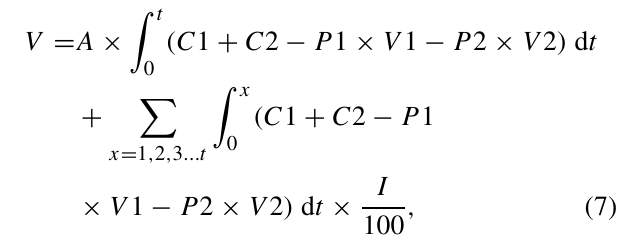
where A=total area (ha) C1=cost of planting (US$/ha), C2=cost of production (US$/ha), P1 is the production of saleable biomass (t/ha), V 1 is the value of the biomass (US$/t), P2 is the production of bio-ore (t/ha) and V 2 is the value of the bio-ore (US$/t) and I=interest rate (%).
式中,A为总面积(ha),C1为种植成本(US$/ha),C2为生产成本(US$/ha),P1为可出售生物量的产量(t/ha),V 1为生物量的价值(US$/t),P2为生物矿石的产量(t/ha),V 2为生物矿石的价值(US$/t),I为利率(%)。
The cost of phytoextraction can be compared with the cost of the best alternative technology over the same period of time. If the alternative technology results in the land being remediated in a shorter period of time, then the cost of this technology (Va) will be offset by the now-enhanced earnings off the land.
可将植物提取的成本与同期最佳替代技术的成本进行比较。如果替代技术能在更短时间内完成土地修复,则该技术的成本(Va)将被由此提高的土地收益所抵消。
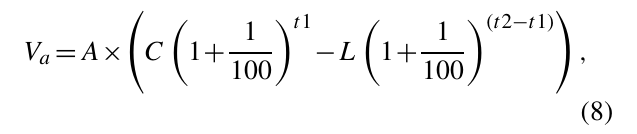
where A=total area (ha), t1=time needed for conventional technology to remediate land (yr), t2=time taken for phytoextraction to remediate land (yr), C=cost of alternative technology (US$/ha), I=interest rate (%) and L=earnings off the land (US$).
式中,A为总面积(ha),t1为常规技术修复土地所需时间(yr),t2为植物提取修复土地所需时间(yr),C为替代技术成本(US$/ha),I为利率(%),L为土地收益(US$)。
The cost of these two technologies must also to be compared with the cost of doing nothing. The cost of inaction is largely due to legislation, however, loss of income off the land, reputation/goodwill, and any future costs will also play a role. The value of reputation/goodwill can be difficult to quantify as it is highly dependent on the stakeholder. Reputation/goodwill may include anything from the political cost of inaction through to loss of earnings due to the refusal of other countries to import produce. Future costs may also be significant if the contaminant is mobile and has the potential to eventually affect groundwater, or other land areas. The cost of inaction (V i) compared to phytoextraction may be determined by:
这两种技术的成本还必须与不采取任何行动的代价进行比较。不采取行动的代价主要源于法规,但土地收入损失、声誉/商誉以及任何未来成本也会产生影响。声誉/商誉的价值可能难以量化,因为它在很大程度上取决于利益相关方。声誉/商誉可涵盖从不采取行动的政治代价到因其他国家拒绝进口农产品而造成的收入损失等各个方面。如果污染物具有迁移性并有可能最终影响地下水或其他土地区域,则未来成本也可能相当可观。与植物提取相比,不采取行动的代价(V i)可由下式确定:
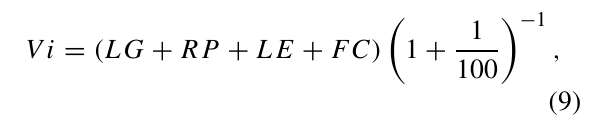
where LG=cost of legislation (US$), RP=the cost of loss of reputation/goodwill ($US), LE=loss of earnings off the land (US$/yr), FC=future costs (US$), I=interest rate (%) and t=the time taken for phytoextraction.
式中,LG为法规成本(US$),RP为声誉/商誉损失的成本($US),LE为土地收益损失(US$/yr),FC为未来成本(US$),I为利率(%),t为植物提取所需时间。
with a profit making operation. The productivity from land remediated using conventional techniques often falls well below any interest accrued on the capital outlay of the operation. If the cost of phytoextraction falls within this margin of the interest, or even turns a profit, then the time needed for the operation becomes less important.
与盈利性经营相结合的情况下。采用常规技术修复后的土地,其生产收益往往远低于该作业资本支出所产生的利息。如果植物提取的成本处于这一利息差额之内,甚至能够盈利,那么作业所需的时间就变得不那么重要了。
Here, we use the DSS to assess the viability of using forestry for the remediation of lands contaminated by the 1998 Aznalcóllar mine tailings-dam disaster in Southern Spain (for an overview of the environmental impact caused, see papers in Grimalt and Macpherson, 1999). Tree species that could be used for silviculture such as Pinus pinaster and Populus alba are able to thrive on the contaminated soils (Consejería de Medio Ambiente, 1999). Our calculations using our DSS indicate that the time needed to phytoextract the heavy-metal contamination down to acceptable levels using forestry in 30-year rotations, is in the order of hundreds of years. The best alternative technology, the physical removal and storage of the contaminated soil, would take around 2 years. The cost of the soil removal (top 0.3 m) is estimated at US$ 500 million for the approximately 4300 hectares affected (Consejería de Medio Ambiente, 1999). This equates to $US 116 000 per hectare. The cost of inaction is estimated at around US$ 10 000 per hectare, largely due to a damaged reputation as a food producer and the potential loss of tourism from the nearby Doñana World Heritage Park. Phytoextraction using forestry for wood production would produce a small profit, currently estimated at $US 2000 per hectare, every 30 years. The elevated heavy-metal concentration contained within the wood is unimportant for human health. Wood is often tannilised with high concentrations of heavy-metals to prevent rotting. Figure 3 shows the estimated cost of the three operations over the next 60-years. The calculations used an interest rate of 4% p.a. Clearly phytoextraction using forestry is predicted to be a financially attractive option. It should be noted that the accuracy of these predictions will be affected by variables such as fluctuating interest rates and land value.
本文利用DSS评估了采用林业对1998年西班牙南部Aznalcóllar尾矿坝溃坝灾害所污染土地进行修复的可行性(有关所造成环境影响的概述,参见Grimalt and Macpherson, 1999中的论文)。Pinus pinaster和Populus alba等可用于营林的树种能够在污染土壤上旺盛生长(Consejería de Medio Ambiente, 1999)。我们利用DSS进行的计算表明,采用30年轮伐期的林业将重金属污染植物提取至可接受水平所需的时间约为数百年。最佳替代技术,即污染土壤的物理移除与贮存,约需2年。对受影响的约4300公顷土地进行土壤移除(表层0.3 m)的费用估计为5亿美元(Consejería de Medio Ambiente, 1999),相当于每公顷116 000美元。不采取行动的代价估计约为每公顷10 000美元,主要源于作为食品产地的声誉受损,以及附近Doñana世界遗产公园旅游业的潜在损失。利用林业生产木材进行植物提取,每30年可产生少量利润,目前估计为每公顷2000美元。木材中所含的较高重金属浓度对人体健康并不重要。木材通常会用高浓度重金属进行防腐处理以防止腐烂。图3显示了未来60年内三种方案的估算成本。计算采用的年利率为4%。显然,预测表明利用林业进行植物提取是一种具有财务吸引力的方案。需要指出的是,这些预测的准确性会受到利率波动和土地价值等变量的影响。
The unimportance of time in the economic viability of phytoextraction时间对植物提取经济可行性的非重要性
6Conclusions结论
The importance of the time needed for effective remediation, long hailed as the Achilles heel of phytoextraction, may not decrease its attractiveness as a land treatment option, especially if the cost of the operation is sufficiently low, or phytoextraction is combined
有效修复所需的时间长期被视为植物提取的“阿喀琉斯之踵”,但其重要性未必会降低植物提取作为土地治理方案的吸引力,特别是在作业成本足够低,或植物提取
At present, commercial applications of phytoextraction are being hindered by the legal acceptance of this technology as an effective land treatment option. This is due to the perception that it may require an excessive amount of time for phytoextraction to be effective. This legal constraint may be circumvented if it can be demonstrated that the risk to the environment is minimal during the phytoextraction operation because of the stabilising action of plants on soil. The use of chelators significantly increases the risk of contaminant leaching and will do little to enhance the ability of phytoextraction to meet the demands of current environmental legislation.
目前,植物提取的商业应用正受到该技术作为有效土地治理方案能否获得法律认可的制约。这是由于人们认为植物提取可能需要过长的时间才能见效。如果能够证明,由于植物对土壤的稳定作用,在植物提取作业期间对环境的风险极小,则或可绕开这一法律限制。使用螯合剂会显著增加污染物淋溶的风险,对于增强植物提取满足现行环境法规要求的能力几乎无济于事。
Figure 3. Predicted costs in US$ per hectare, of phytoextraction, soil removal (the best alternative) and no action over 60 years for cleanup of soils contaminated following the mine tailings collapse at Aznalc´ollar, Southern Spain.图3. 西班牙南部Aznalcóllar尾矿坝溃坝后污染土壤的清理:未来60年内植物提取、土壤移除(最佳替代方案)和不采取行动的预测成本(美元/公顷)。
The route to market for phytoextraction may be shortened if this technology is combined with a profit making operation that is unaffected by any elevated plant-metal loadings. Such operations may include forestry and bio-energy production. Bio-energy is taking on increasing importance due to the increasing global concern on carbon dioxide emissions and could be a profitable way to use contaminated lands.
如果将植物提取与不受植物金属负荷升高影响的盈利性经营相结合,则可缩短该技术走向市场的路径。此类经营可包括林业和生物能源生产。由于全球对二氧化碳排放的关注日益增加,生物能源正变得日益重要,并可能成为利用污染土地的一种盈利途径。
A full validation of the DSS tool will be considered, and the tool will be further improved. Future work that is critical will involve developing easy methods for the quantification of variables affecting the root absorption factor.
我们将考虑对DSS工具进行全面验证,并对其作进一步改进。今后的关键工作将包括开发简便的方法,以定量影响根系吸收系数的各变量。
7Acknowledgements致谢
The senior author gratefully acknowledges the receipt of an OECD fellowship for the duration of this work. P.M., T.M. and J.M.M. were supported by the PICOVER program from the Consejería de Medio Ambiente, Sevilla, Spain.
第一作者衷心感谢在本研究期间获得的OECD奖学金资助。P.M.、T.M.和J.M.M.获得西班牙塞维利亚Consejería de Medio Ambiente的PICOVER项目资助。
8References参考文献
Anderson C W N, Brooks, R R, Stewart R B and Simcock R 1998 Induced hyperaccumulation of gold in plants. Nature 395, 553– 554.
Baker A J M 1981 Accumulators and excluders – strategies in the response of plants to heavy metals. J. Plant Nutr. 3, 643–654.
Baker A J M, McGrath S P, Sidoli C M D and Reeves R D 1994 The possibility of in situ metal decontamination of polluted soils using crops of metal-accumulating plants – a feasibility study. Res. Conser. Recyc. 11, 41–49.
Blaylock M J 2000 Field demonstrations of phytoremediation of lead contaminated soils. In Phytoremediation of Contaminated Soil and Water. Eds. N. Terry and G. Bañuelos. pp. 1–12. Lewis Publishers, Boca Raton.
Brooks R R, Lee J, Reeves R D and Jaffré T 1977 Detection of nickeliferous rocks by analysis of herbarium specimens of indicator plants. J. Geochem. Explor. 7, 49–77.
Bundt M, Albrecht A, Froidevaux P, Blaser P and Fluhler H 2000 Impact of preferential flow on radionuclide distribution in soil. Environ. Sci. Technol. 34, 3895–3899.
Clothier B E and Green S R 1997 Roots: the big movers of water and chemical in soil. Soil Sci. 162(8), 534–543.
Consejería de Medio Ambiente 1999 La estrategia del Corredor Verde del Guadiamar. Fundamentos de la estrategia. Conclusiones del Seminario Internacional sobre Corredores Ecológicos. 64 pp.
Echevarria G, Morel J L, Fardeau J C and Leclerc-Cessac E 1998 Assessment of phytoavailability of nickel in soils. J. Environ. Qual. 27, 1064–1070.
Ernst W H O 1996 Bioavailability of heavy metals and decontamination of soils by plants. Appl. Geochem. 11, 163–167.
Gérard E, Echevarria G, Sterckeman T and Morel J L 2000 Cadmium availability to three plant species varying in cadmium accumulation pattern. J. Environ. Qual. 29, 1117–1123.
Grimalt J O and Macpherson E 1999 The environmental impact of the mine tailing accident in Aznalcóllar (south-west Spain). Sci. Total Environ. 242(1–3), 1–332 (special issue).
Hinchman R R, Negri C M and Gatliff E G 1996 Phytoremediation: using green plants to clean up contaminated soil, groundwater and wastewater. Proc. International Topical Meeting on Nuclear and Hazardous Waste Management, Spectrum 96. Seattle WA.
Jaffré T, Brooks R R, Lee J and Reeves R D 1976 Sebertia acuminata: A hyperaccumulator of nickel from New Caledonia. Sci. 193, 579–580.
Marschner H 1995 Mineral Nutrition of Higher Plants. Academic Press, London, UK. 65 pp.
McGrath S P, Sidoli C M D, Baker A J M and Reeves R D 1993 The potential for the use of metal-accumulating plants for the in situ decontamination of metal-polluted soils. In Integrated Soil and Sediment Research: A Basis for Proper Protection. Eds. H. J. P Eijsackers and T. Hamers. pp. 673–676. Kluwer Academic Publishers, Dordrecht.
Nicks L and Chambers M F 1994 Nickel farm. Discover. September. 19 p.
Ow D W, Shewry P R, Napier J A and Davis P J 1998 Prospects of engineering heavy metal detoxification genes in plants. In Engineering Crop Plants for Industrial End Uses. Proceedings of the Symposium of the Industrial Biochemistry and Biotechnology Group of the Biochemical Society, IACR-Long Ashton Research Station, Long Ashton, Bristol, UK, September. pp. 111–124.
Perronnet K, Schwartz C, Gérard E and Morel J L 2000 Availability of cadmium and zinc accumulated in the leaves of Thlaspi caerulescens incorporated into the soil. Plant and Soil 227, 257–263.
Robinson B H, Chiarucci A, Brooks R R, Petit D, Kirkman J H, Gregg P E H and De Dominicis V 1997a The nickel hyperaccumulator plant Alyssum bertolonii as a potential agent for phytoremediation and the phytomining of nickel. J. Geochem. Explor. 59, 75–86.
Robinson B H, Brooks R R, Howes A W, Kirkman J H and Gregg P E H 1997b The potential of the high-biomass nickel hyperaccumulator Berkheya coddii for phytoremediation and phytomining. J. Geochem. Explor. 60, 115–126.
Robinson B H, Leblanc M, Petit D, Brooks R R, Kirkman J H and Gregg P E H 1998 The potential of Thlaspi caerulescens for phytoremediation of contaminated soils. Plant and Soil 203, 47–56.
Robinson B H, Brooks R R, Gregg P E H and Kirkman J H 1999 The nickel phytoextraction potential of some ultramafic soils as determined by sequential extraction. Geoderma 87, 293–304.
Robinson B H, Mills T M, Petit D, Fung L E, Green S R and Clothier B E 2000 Natural and induced cadmium-accumulation in poplar and willow: Implications for phytoremediation. Plant Soil 227, 301–306.
Rugh C L, Senecoff J F, Meagher R B and Merkle S A 1998 Development of transgenic yellow poplar for mercury phytoremediation. Nature Biotechnology 16(10), 925–928.
Stephan U W and Scholz G 1993 Nicotianamine: Mediator of Transport of Iron and Heavy Metals in the Phloem? Physiol. Plant. 88, 522–529.
Salt D E, Blaylock M, Kumar N P B A, Dushenkov V, Ensley B, Chet I and Raskin I 1995a Phytoremediation: a novel strategy for the removal of toxic metals from the environment using plants. Bio/Technol. 13, 468–474.
Salt D E, Prince R C Pickering I J and Raskin I 1995b Mechanisms for cadmium mobility and accumulation in Indian mustard. Plant Physiol. 109, 1427–1433.
Zhao F J, Lombi E, Breedon T and McGrath S P 2000 Zinc hyperaccumulation and cellular distribution in Arabidopsis halleri. Plant Cell Environ. 23, 507–514.