BRETT ROBINSON1,2 TESSA MILLS1 STEVE GREEN1 BENOIT CHANCEREL1 BRENT CLOTHIER1 LINDSAY FUNG3 SARAH HURST1 IAN MCIVOR1 1HortResearch Private Bag 11 030 Palmerston North, New Zealand brett.robinson@env.ethz.ch 2Institut für Terrestrische Ökologie Universitätstrasse 16, ETH Zentrum CHN F 29.1 CH-8092 Zürich, Switzerland 3Horizons Manawatu Private Bag 11 025 Palmerston North, New Zealand
Abstract Poplars and willows can accumulate high concentrations of some trace elements. We investigated the extent and nature of B, Cd, Co, Cu, Fe, Mn, and Zn accumulation in some commercial poplar and willow clones by using a lysimeter experiment and field collection of data. Trace element accumulation was a function of leaf age and the variety or species of tree. Leaf B, Cd, Mn, and Zn concentrations increased throughout the season, while Cu decreased and Fe remained unchanged. Poplars and willows accumulated high concentrations of the trace elements tested, relative to pasture. The accumulation of Cd is of concern, especially in willows. Stock exposure to Cd can be managed by judicious clone selection, harvesting young shoots, or harvesting early in the season. Poplars and willows may be used as feed supplements to increase
摘要 杨树和柳树可富集高浓度的某些微量元素。本研究通过渗漏计试验和野外数据采集,考察了若干商业杨树和柳树无性系对B、Cd、Co、Cu、Fe、Mn和Zn的富集程度及特征。微量元素的富集与叶龄以及树木的品种或种类有关。叶片中B、Cd、Mn和Zn浓度在整个生长季内持续升高,而Cu浓度下降,Fe浓度则保持不变。与牧场植物相比,杨树和柳树富集了较高浓度的所测微量元素。Cd的富集值得关注,尤其是在柳树中。可通过审慎选择无性系、采收幼嫩枝条或在生长季早期采收来控制家畜的Cd暴露。杨树和柳树可用作饲料补充,以提高
A05008; Online publication date 12 October 2005 Received 11 March 2005; accepted 24 August 2005
Co and Zn intake by livestock. The varieties ‘Yeogi’ and ‘Crow’s Nest’ accumulated the highest concentrations of Co, yet their Cd concentrations were not significantly higher than pasture.
Keywords heavy metal; nutrition; toxicity; clonal variation; cadmium
关键词 重金属;营养;毒性;无性系变异;镉
1INTRODUCTION引言
As certain areas in New Zealand become consistently drier under a prevailing El Niño weather pattern (Plummer et al. 1999), deep-rooting tree species that can avoid periods of drought will take on increasing importance as stock fodder. Poplars and willows are used extensively in New Zealand for soil conservation and supplementary stock fodder during times of drought (Wilkinson et al. 1999). Both foliage and small twigs can be browsed by sheep and cattle (Hathaway 1986; Douglas et al. 1996).
在盛行的厄尔尼诺天气格局下,新西兰部分地区持续变得更加干旱(Plummer et al. 1999),能够躲避干旱期的深根性树种作为家畜饲料将日益重要。在新西兰,杨树和柳树被广泛用于水土保持,并在干旱期间作为家畜补充饲料(Wilkinson et al. 1999)。其叶片和细枝均可被绵羊和牛采食(Hathaway 1986; Douglas et al. 1996)。
In addition to providing an emergency food source, poplars and willows as stock feed have proven health benefits including an improvement in fecundity (Barry & Kemp 2001). These benefits may be derived from high protein, tannin or trace element concentrations.
杨树和柳树作为家畜饲料,除可提供应急食物来源外,还被证实具有促进健康的作用,包括提高繁殖力(Barry & Kemp 2001)。这些益处可能源于其较高的蛋白质、单宁或微量元素含量。
In some areas, New Zealand pasture lands are deficient in essential trace elements, including Co, Zn, and Cu (Lee et al. 1999). Poplars and willows have been shown to accumulate large amounts of Zn relative to pasture species (Hinchman et al. 1996). The possibility exists, therefore, that poplars and willows could be used to provide trace element supplements in areas where the soils are deficient.
新西兰部分地区的牧场土地缺乏必需微量元素,包括Co、Zn和Cu(Lee et al. 1999)。研究表明,与牧草物种相比,杨树和柳树可富集大量Zn(Hinchman et al. 1996)。因此,在土壤缺乏微量元素的地区,杨树和柳树有可能被用于提供微量元素补充。
Trees used for stock fodder may also accumulate a range of toxic elements. Feeding such fodder to livestock may elevate levels of contaminants, such as Cd, in meat products. This could have deleterious effects on humans and may be used as a non-tariff trade barrier.
用作家畜饲料的树木也可能富集多种有毒元素。以此类饲料饲喂家畜可能导致肉类产品中Cd等污染物含量升高。这可能对人类产生有害影响,并可能被用作非关税贸易壁垒。
Most New Zealand pasture lands have elevated Cd concentrations due to repeated applications of Cd-rich superphosphate fertiliser (Bramley 1990).
由于长期反复施用富含Cd的过磷酸钙肥料,新西兰大多数牧场土地的Cd浓度偏高(Bramley 1990)。
The average concentration of Cd in dry topsoil of New Zealand pasture lands is 0.44 μg g–1 (Roberts et al. 1994).
新西兰牧场土地干表土中Cd的平均浓度为0.44 μg g–1(Roberts et al. 1994)。
Robinson et al. (2000) showed that the commonly used New Zealand varieties of poplar, ‘Kawa’ (Populus deltoides × P. yunnanensis), and willow, ‘Tangoio’ (Salix matsudana × S. alba), accumulated Cd at levels of up to 14 μg g–1in the dry leaves when grown in a soil containing just 0.6 μg g–1 of this element. This concentration is above levels (1–5 μg g–1) that adversely affect livestock (Underwood & Suttle 1999). Thus, Cd accumulation by poplar and willows that might be used for fodder is of concern.
Robinson et al. (2000)的研究表明,新西兰常用的杨树品种‘Kawa’(Populus deltoides × P. yunnanensis)和柳树品种‘Tangoio’(Salix matsudana × S. alba)在Cd含量仅为0.6 μg g–1的土壤中生长时,其干叶中Cd含量可高达14 μg g–1。该浓度高于对家畜产生不利影响的水平(1–5 μg g–1)(Underwood & Suttle 1999)。因此,可能用作饲料的杨树和柳树对Cd的富集值得关注。
Riddell-Black et al. (1997) and Laureysens et al. (2004) demonstrated that there is a wide variation in the ability of different willow clones to accumulate heavy metals in bark and wood. By using hydroponic experiments, Punshon & Dickinson (1999) showed interclonal variation in tolerance to Cu, Cd, Ni, and Zn, as well as in the uptake of Cu. Granel et al. (2002) demonstrated large genetic differences in the uptake of trace elements by willow clones. In the case of Cd, there was a 12-fold difference between the lowest and highest leaf Cd concentrations for sibling plants growing in identical environments.
Riddell-Black et al. (1997)和Laureysens et al. (2004)证明,不同柳树无性系在树皮和木材中富集重金属的能力存在很大差异。Punshon & Dickinson (1999)通过水培试验发现,不同无性系对Cu、Cd、Ni和Zn的耐受性以及对Cu的吸收均存在差异。Granel et al. (2002)证明,柳树无性系对微量元素的吸收存在较大的遗传差异。就Cd而言,在相同环境中生长的同胞植株,其叶片Cd浓度最低值与最高值相差12倍。
Inter-clone differences in trace element accumulation could be exploited by breeding clones that have a high uptake of essential elements such as Co and Zn, and minimal uptake of any toxic heavy metals, such as Cd, that may be present. The trees may also be managed so that leaf material is harvested at a time when it has the best trace element balance for stock. Laureysens et al. (2004) showed that for some elements, there were significant differences between young, mature, and senescing leaves.
可利用无性系间微量元素富集的差异,培育对Co和Zn等必需元素吸收量高、而对可能存在的Cd等有毒重金属吸收量最低的无性系。还可对树木进行管理,使叶片材料在其微量元素组成对家畜最为适宜时采收。Laureysens et al. (2004)表明,对于某些元素,幼叶、成熟叶和衰老叶之间存在显著差异。
The aim of this study was to determine the extent and nature of the uptake of B, Cd, Co, Cu, Fe, and Mn by commonly used New Zealand poplar and willow clones.
本研究旨在确定新西兰常用杨树和柳树无性系对B、Cd、Co、Cu、Fe和Mn的吸收程度及特征。
2MATERIALS AND METHODS材料与方法
Greenhouse experiment温室试验
A greenhouse experiment was set up in order to determine the accumulation of trace elements as a function of time. Sawdust was used inter alia in the lysimeters because it provides a homogeneous plant-growth medium and provides near-constant level of available trace elements over the time of the experiment.
开展温室试验以确定微量元素富集随时间的变化。渗漏计中inter alia(特别地)采用锯末作为基质,因为锯末可提供均质的植物生长介质,并在试验期间提供近乎恒定的有效微量元素水平。
Seven thousand litres of sawdust were obtained from a wood-waste pile and homogenised using a digger. The bulk density of the sawdust was 0.23, with a water holding capacity of 420 ml kg–1. The total and soluble trace element concentrations in the sawdust are given in Table 1. In October 2000, eight 800 litre weighing lysimeters were filled with the sawdust, and a 1 m long poplar pole of the clone ‘Toa’ (Populus euramericana × P. yunnanensis) planted in each. The lysimeters were fertilised with Hoagland’s solution (Hoagland & Arnon 1950) at three concentrations: low (2 lysimeters), medium (3 lysimeters), and high (3 lysimeters). Fertilisation occurred from March to September. The total amounts of N, P, and K applied to each lysimeter were (in grams): low 10 N, 1.5 P, 11 K, medium 20 N, 3 P, 22 K, and high 30 N, 4.5 P, 33 K. Table 1 shows the amounts of B, Cu, Fe, Mn, and Zn that were added in the Hoagland’s solution. In all cases, the amount of trace element added was less than 1% of the total trace element content of the lysimeter. These plant nutrient treatments were used to determine effect of substrate fertility on the foliar trace element concentrations.
从木材废料堆中获取7000 L锯末,并用挖掘机混匀。锯末容重为0.23,持水量为420 ml kg–1。锯末中微量元素的全量和可溶态浓度见表1。2000年10月,将锯末装入8个800 L称重式渗漏计中,每个渗漏计种植1根1 m长的‘Toa’无性系(Populus euramericana × P. yunnanensis)杨树插干。渗漏计以三种浓度的Hoagland营养液(Hoagland & Arnon 1950)施肥:低(2个渗漏计)、中(3个渗漏计)和高(3个渗漏计)。施肥时间为3月至9月。每个渗漏计施用的N、P、K总量(g)分别为:低浓度10 N、1.5 P、11 K;中浓度20 N、3 P、22 K;高浓度30 N、4.5 P、33 K。表1列出了随Hoagland营养液添加的B、Cu、Fe、Mn和Zn量。在所有情况下,添加的微量元素量均不足渗漏计微量元素总含量的1%。设置这些植物养分处理旨在确定基质肥力对叶片微量元素浓度的影响。
| Element元素 | B | Cd | Co | Cu | Fe | Mn | Zn |
|---|---|---|---|---|---|---|---|
| Total concentration (μg g–1) | 44.5 | 8.1 | 31.9 | 140 | 4620 | 144 | 63.1 |
| Average amount per lysimeter (g) | 7.12 | 1.3 | 5.1 | 22.4 | 739 | 23 | 10.1 |
| Total added (low, medium, high) in | 0.024 | – | – | 0.001 | 0.024 | 0.024 | 0.002 |
| Hoaglands’ solution (g) | 0.048 | 0.002 | 0.048 | 0.048 | 0.005 | ||
| 0.071 | 0.003 | 0.071 | 0.071 | 0.007 | |||
| Concentration in drainage water | 2.47 | 0.21 | <0.01 | 0.43 | 17.8 | 1.3 | 0.9 |
| (μg ml–1) | (0.09) | (0.01) | (0.07) | (1.0) | (0.1) | (0.2) | |
| Average amount (g) lost through | 0.59 | 0.05 | – | 0.1 | 4.24 | 0.31 | 0.21 |
| leaching per lysimeter |
The lysimeters were given a measured amount of water daily to maintain their volumetric water content between 0.50 and 0.60. Drainage was collected weekly, weighed, and stored for analysis. Every 2 weeks 10% of the leaves were removed. The leaves were then dried, ground, and stored for analysis. In mid April 2001, leaves of the trees were removed and the total dry biomass determined.
每天向渗漏计定量浇水,使其体积含水量保持在0.50–0.60之间。每周收集排水,称重后保存待分析。每2周摘除10%的叶片,烘干、粉碎后保存待分析。2001年4月中旬,摘除树木全部叶片并测定总干生物量。
Survey of clones at the Aokautere Nursery, Palmerston NorthPalmerston North市Aokautere苗圃无性系调查
In mid April 2003 at the Aokautere Nursery, leaves were harvested from the stool beds of seven poplar clones and two willow clones, as well as from nearby pasture. All samples were taken within a 150 m radius. For each tree, approximately 100 g of fresh leaf material was taken from 1-year-old growth, with leaves being removed from the apex to the base of each shoot. For each poplar and willow clone, five trees were sampled. Five pasture samples were also taken. Table 2 shows a list of the species taken with their common and scientific names.
2003年4月中旬,在Aokautere苗圃从7个杨树无性系和2个柳树无性系的采穗圃以及附近牧场采集叶片。所有样品均在半径150 m范围内采集。每株树从1年生枝条上采集约100 g新鲜叶片,叶片自每根枝条的顶端至基部摘取。每个杨树和柳树无性系采样5株,另采集牧场样品5个。表2列出了所采集物种的俗名和学名。
Soil was taken from the root zone of each tree or pasture plant that was sampled. Where sampled rows were adjacent, one soil sample was taken from an intermediate position. The soil at the Aokautere Nursery is a fine sandy loam (Manawatu series) with pH = 5.4, cation exchange capacity (CEC) = 13.4 cmolc kg–1, organic carbon content of 63 g kg–1, and a resident Cd concentration of 0.3 μg g–1.
从每株采样树木或牧场植物的根区采集土壤。若采样行相邻,则在其中间位置采集一个土壤样品。Aokautere苗圃的土壤为细砂壤土(Manawatu土系),pH = 5.4,阳离子交换量(CEC)= 13.4 cmolc kg–1,有机碳含量为63 g kg–1,本底Cd浓度为0.3 μg g–1。
Survey of ‘Kawa’ and ‘Veronese’ from locations around the North Island北岛各地‘Kawa’和‘Veronese’调查
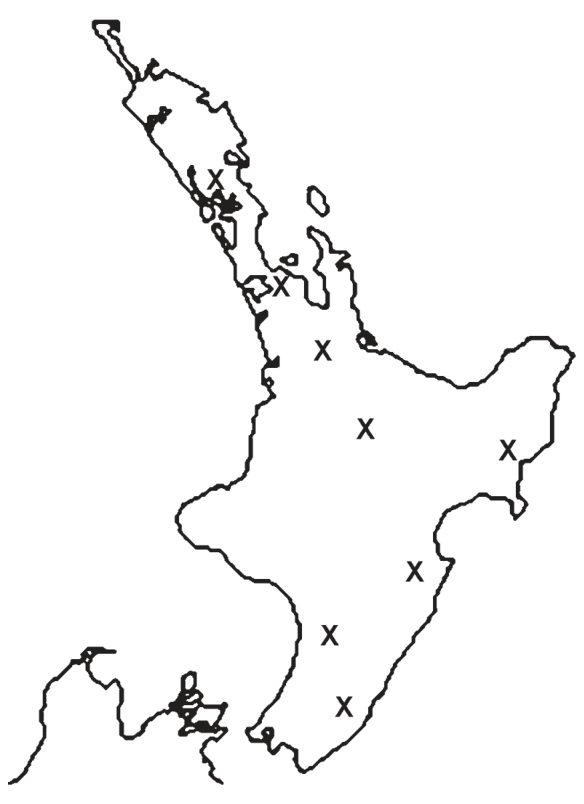
Eight landowners from around the North Island (Fig. 1) sent in plant samples from hybrid poplars, as well as their associated soils from various locations around their properties. We were unable to identify all the clones from the leaves that were sent, however, the majority were ‘Kawa’ (Populus deltoides × P. yunnanensis) and ‘Veronese’ (Populus deltoides × nigra). Plant ages ranged from 4 to 20 years. The soil types were not determined.
北岛各地(图1)的8位土地所有者寄送了杂交杨树的植物样品,以及其土地内不同位置的相应土壤样品。我们无法根据所寄叶片鉴定出全部无性系,但其中大多数为‘Kawa’(Populus deltoides × P. yunnanensis)和‘Veronese’(Populus deltoides × nigra)。植株树龄为4–20年。未测定土壤类型。
| Number编号 | Common name俗名 | Scientific name学名 | |
|---|---|---|---|
| Pasture | 1 | Agrostis tenuis | |
| Poplar | 2 3 | ‘Yeogi’ ‘Kawa’ | Populus alba×glandulosa Populus deltoides×yunnanensis |
| 4 5 | ‘Veronese’ ‘Shinsei’ | Populus deltoides×nigra Populus nigra×maximowiczii | |
| 6 7 | ‘Crow’s Nest’ Chinese poplar | Populus euramericana × nigra Populus yunnanensis | |
| 8 | ‘Toa’ | Populus euramericana × yunnanensis | |
| Willow | 9 | ‘Booth’ | Salix purpurea |
| 10 | ‘Kinuyanagi’ | Salix schwerinii |
Sample preparation and elemental determination样品制备与元素测定
The concentrations of trace elements in the soil solution from the Aokautere Nursery survey were determined as follows. Soils were dried and sieved to <0.5 mm, then 4 g portions were weighed into 50 ml centrifuge tubes, and 40 ml of 0.5 M CaCl2 solution added. After agitation overnight, the samples were filtered and the solutions stored for analyses.
Aokautere苗圃调查中土壤溶液微量元素浓度的测定方法如下:土壤经风干并过<0.5 mm筛后,称取4 g置于50 ml离心管中,加入40 ml 0.5 M CaCl2溶液。振荡过夜后过滤,滤液保存待分析。
For the total trace element concentrations, approximately 0.2 g portions of dried, ground sawdust, soil, leaf, and stem samples were accurately weighed into 50 ml Erlenmeyer flasks. Concentrated nitric acid (10 ml) was added to each tube and the mixtures heated on a heating block until a final volume of about 3 ml was reached. The samples were then diluted to 10 ml using deionised water and stored in polyethylene containers. Elemental determinations for the lysimeter experiment were made using Inductively Coupled Plasma Emission Spectroscopy (ICPES). Elemental determinations for the survey of poplar and willow clones at Aokautere were made using Flame Atomic Absorption Spectroscopy (FAAS) for Cu, Fe, Mn, and Zn. Graphite Furnace Atomic Absorption Spectroscopy (GFAAS) was used for Co and Cd, and ICPES for B.
测定微量元素全量时,准确称取约0.2 g经烘干、粉碎的锯末、土壤、叶片和茎样品,置于50 ml锥形瓶中。每管加入浓硝酸(10 ml),在加热块上加热至终体积约3 ml。随后用去离子水将样品定容至10 ml,并保存于聚乙烯容器中。渗漏计试验的元素测定采用电感耦合等离子体发射光谱法(ICPES)。Aokautere杨树和柳树无性系调查中,Cu、Fe、Mn和Zn采用火焰原子吸收光谱法(FAAS)测定,Co和Cd采用石墨炉原子吸收光谱法(GFAAS)测定,B采用ICPES测定。
Data analysis数据分析
Data from the trace element concentration measurements were analysed using MINITAB. Fisher’s least significant difference method was used to indicate significant difference between the trace element concentrations of different clones.
微量元素浓度测定数据采用MINITAB进行分析。采用Fisher最小显著差数法检验不同无性系间微量元素浓度的显著性差异。
3RESULTS AND DISCUSSION结果与讨论
Trace element accumulation by ‘Toa’ growing in lysimeters渗漏计中生长的‘Toa’对微量元素的富集
The average leaf biomass production of the trees was 104, 183, and 329 g of dry leaves per tree for the low, medium, and high fertilisation treatments, respectively. The trees grown in the “low” fertilisation treatment showed visible signs of nutrient deficiency such as stunting and chlorosis. However, there were no significant differences in the leaf trace element concentrations between the different fertilisation regimes. This indicates that, at least for the trace elements tested, the macronutrient status of the tree has not affected the leaf trace element concentration. Nevertheless, the amount of trace element extracted per tree increased with increasing biomass production. Table 1 shows the average amounts of trace elements that leached from each lysimeter. The amount leached was 8–60 times more than the amount added with the Hoagland’s solution in the “high” treatment. This indicates that the sawdust trace element concentrations decreased during the experiment.
低、中、高施肥处理下树木的平均叶片生物量分别为每株104、183和329 g干叶。“低”施肥处理的树木表现出明显的养分缺乏症状,如生长矮化和失绿。然而,不同施肥方式间叶片微量元素浓度无显著差异。这表明,至少就所测微量元素而言,树木的大量营养元素状况并未影响叶片微量元素浓度。尽管如此,单株树木提取的微量元素量随生物量的增加而增加。表1列出了各渗漏计微量元素的平均淋溶量。淋溶量是“高”处理中随Hoagland营养液添加量的8–60倍。这表明试验期间锯末中微量元素浓度有所下降。
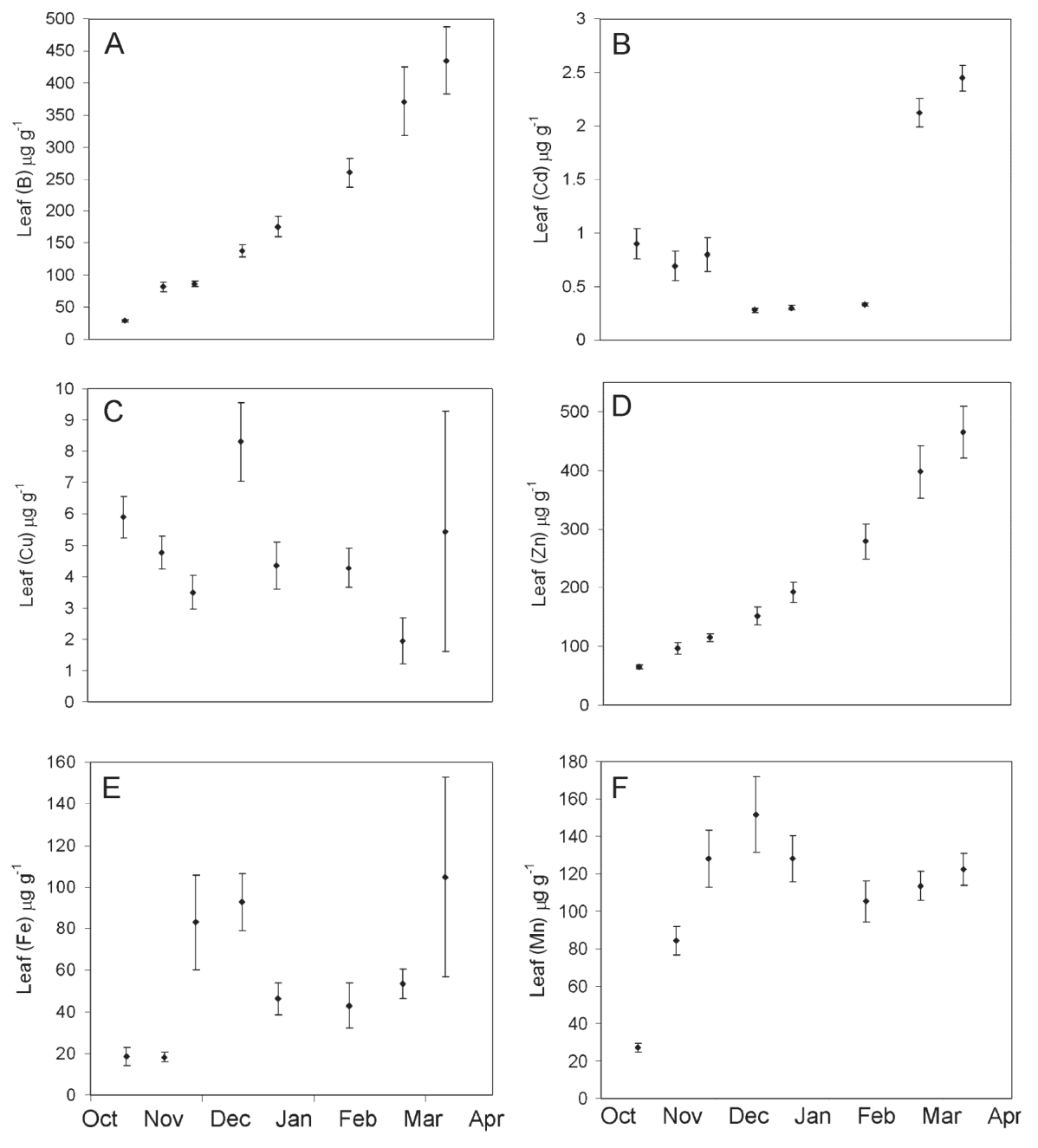
Figure 2A–F shows the average leaf trace element concentrations for all the poplars in the greenhouse experiment. The concentration of Co in the leaves was below detection limits in all the trees and is not shown.图2A–F给出了温室试验中所有杨树叶片微量元素的平均浓度。所有树木叶片中Co浓度均低于检出限,故未列出。
At the end of the season, leaves of the poplar ‘Toa’ clone had high concentrations of B, Cd, and Zn relative to values reported for pasture species (Underwood & Suttle 1999). Values of Cu, Fe, and Mn fell within the normal range for plants (Salisbury & Ross 1992). No conclusions regarding nutritional value can be drawn, however, from the total trace element concentrations of poplars grown in sawdust because the chemical composition of this material differs greatly from soil. Nevertheless, this experiment elucidated the change in leaf trace element concentration over time.
生长季末,与牧草物种的报道值相比(Underwood & Suttle 1999),杨树‘Toa’无性系叶片中B、Cd和Zn浓度较高。Cu、Fe和Mn含量处于植物的正常范围内(Salisbury & Ross 1992)。然而,由于锯末的化学组成与土壤差异很大,无法根据锯末中生长的杨树的微量元素全量得出其营养价值方面的结论。尽管如此,本试验揭示了叶片微量元素浓度随时间的变化。
Except for Fe, there were significant changes for all elements with respect to time. Boron, Cd, Zn, and Mn were highly significantly or very highly significantly and positively correlated with time. Conversely, Cu was highly significantly and negatively correlated with time. Thus for B, Cd, Zn, and Mn, using tree material for fodder at the end of the growing season is likely to result in higher foliar concentrations. The converse is true for Cu. A possible explanation for the increases in foliar concentration for the trace elements studied is that they are transported in the xylem and thus accumulate in the leaves, which are a major water sink. The patterns observed here are similar to those observed by Laureysens et al. (2004) for European poplar varieties.
除Fe外,所有元素均随时间发生显著变化。B、Cd、Zn和Mn与时间呈极显著或非常极显著正相关;相反,Cu与时间呈极显著负相关。因此,对于B、Cd、Zn和Mn,在生长季末将树木材料用作饲料可能导致叶片浓度较高;Cu则相反。所研究微量元素叶片浓度升高的一种可能解释是,这些元素经木质部运输,从而在作为主要水分汇的叶片中积累。本研究观察到的规律与Laureysens et al. (2004)在欧洲杨树品种中观察到的相似。
Trace element accumulation by poplars, willows and pasture from the Aokautere nursery and around New ZealandAokautere苗圃及新西兰各地杨树、柳树和牧场植物对微量元素的富集
Figure 3 illustrates the ability of some poplars and willows to take up significant amounts of Cd from soil compared to pasture. Willows, in particular, had图3表明,与牧场植物相比,部分杨树和柳树能够从土壤中吸收大量Cd。尤其是柳树,其
a leaf Cd concentration that was many times greater than pasture growing on the same soil.
叶片Cd浓度比生长于同一土壤的牧场植物高出许多倍。
Chemical analyses of the soils revealed no significant differences in the soil properties sampled between clones, indicating that differences in plant uptake of trace elements are due to factors other than soil. Table 3 shows the average values for the total and soluble trace elements measured in this study.
土壤化学分析表明,不同无性系间所采土壤的性质无显著差异,说明植物对微量元素吸收的差异是由土壤以外的因素造成的。表3列出了本研究所测微量元素全量和可溶态的平均值。
Given that the Cd concentration in the soils of the Aokautere Nursery (0.1 μg g–1) is lower than the national average (0.44 μg g–1), the Cd concentrations in poplar and willow trees used for soil conservation and fodder purposes may well exceed the values shown in Fig. 3. Our North Island survey of poplars (‘Kawa’ + ‘Veronese’) confirmed this (Table 4). The average leaf Cd concentration was 1.8 μg g–1 from the sites around the North Island, compared to <0.5 μg g–1 at Aokautere. The average Cd concentration in leaves from the North Island survey is greater than the concentration (1 μg g–1) that has been shown to adversely affect livestock (Underwood & Suttle 1999). It is unclear, however, what adverse effect (if any) poplar and willow leaves may have if they only form a small part of the animal’s diet.
鉴于Aokautere苗圃土壤中Cd浓度(0.1 μg g–1)低于全国平均值(0.44 μg g–1),用于水土保持和饲料用途的杨树和柳树中Cd浓度很可能超过图3所示数值。我们对北岛杨树(‘Kawa’ + ‘Veronese’)的调查证实了这一点(表4)。北岛各地点叶片Cd平均浓度为1.8 μg g–1,而Aokautere为<0.5 μg g–1。北岛调查中叶片Cd平均浓度高于已证实对家畜产生不利影响的浓度(1 μg g–1)(Underwood & Suttle 1999)。然而,若杨树和柳树叶片仅占动物日粮的一小部分,其可能产生何种不利影响(如有)尚不清楚。
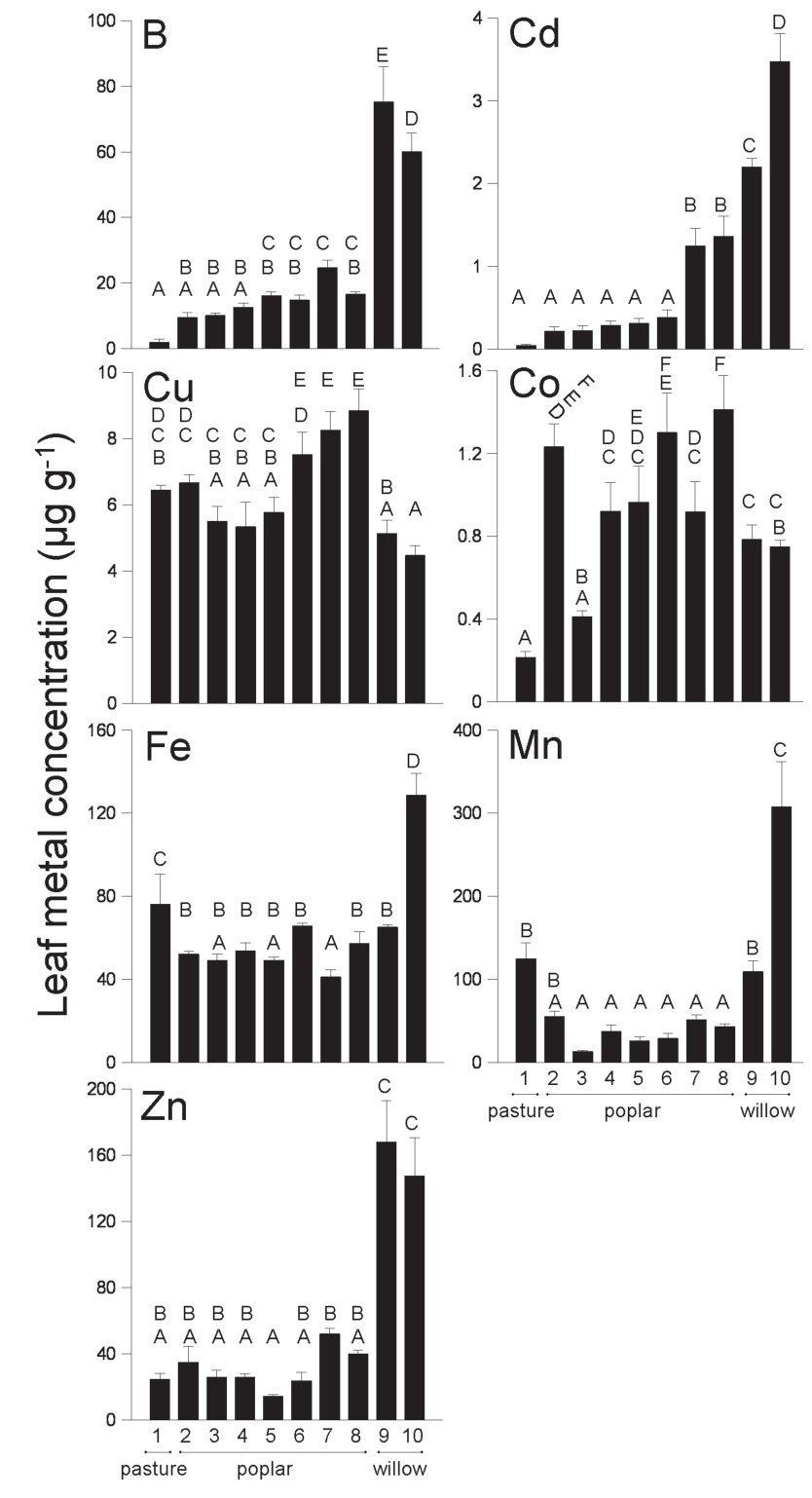
The exposure of stock to Cd can be managed by planting fodder clones that take up lesser amounts. There is a clear demarcation between the willows, ‘Toa’, ‘Chinese poplar’, and the other varieties of poplar (Fig. 3). The aforementioned species should be avoided if the soil contains elevated levels of
可通过种植吸收量较低的饲料无性系来控制家畜的Cd暴露。柳树、‘Toa’、‘Chinese poplar’与其他杨树品种之间存在明显界限(图3)。若土壤中
Cd, such as in pasture land that has been intensely fertilised with superphosphate over a long period.
Cd含量偏高,例如长期大量施用过磷酸钙的牧场土地,则应避免使用上述物种。
Younger leaves had lower Cd concentrations than older leaves (Fig. 2). Therefore, leaves harvested later in the season (i.e., older) will contain higher amounts of Cd. Unfortunately, this is the time when poplars and willows are most valuable as fodder because they are often used to alleviate the effects of late summer droughts. Nevertheless, feeding out poplars before hay is required may lessen the stock’s intake of Cd. Taking leaves towards the tips of the branches would also result in lower Cd exposure, although this may not be practical.
幼叶的Cd浓度低于老叶(图2)。因此,生长季后期采收的叶片(即较老叶片)Cd含量较高。遗憾的是,此时恰恰是杨树和柳树作为饲料最有价值的时期,因为它们常被用于缓解夏末干旱的影响。尽管如此,在需要补饲干草之前饲喂杨树可减少家畜的Cd摄入量。采摘靠近枝条顶端的叶片也可降低Cd暴露,但这在实践中可能难以实施。
Leaf concentrations of B, Co, Cu, Fe, Mn, and Zn provided additional information about the potential fodder value of different poplar and willow clones (Fig. 3). Significant variation between species was found for all trace elements. These elements were concentrated mostly in the leaves (Table 4). The leaf concentrations of B, Co, and to a lesser extent Zn, were much greater in the poplar and willow clones than in the pasture.
叶片中B、Co、Cu、Fe、Mn和Zn的浓度为评价不同杨树和柳树无性系的潜在饲料价值提供了更多信息(图3)。所有微量元素在物种间均存在显著差异。这些元素主要集中于叶片中(表4)。杨树和柳树无性系叶片中B、Co以及在较小程度上Zn的浓度远高于牧场植物。
| Element元素 | Total concentration in soil (μg g–1)土壤中全量 (μg g–1) | Concentration in soil solution (μg ml–1)土壤溶液中浓度 (μg ml–1) |
|---|---|---|
| B | <0.5 | <0.5 |
| Cd | 0.1 (0.0) | <0.05 |
| Co | 2.1 (0.1) | <0.05 |
| Cu | 5.6 (0.2) | 0.14 (0.01) |
| Fe | 12644.(253) | 0.95 (0.17) |
| Mn | 199.2 (4.3) | 15.0 (0.9) |
| Zn | 36.4 (0.6) | 0.6 (0.1) |
| Cd | Cu | Zn | Co | Fe | Mn | |
|---|---|---|---|---|---|---|
| Soils (n= 35) | ||||||
| Average | 1.3 | 7.9 | 35 | 5.5 | n.d. | 292 |
| SE | 0.1 | 0.7 | 2.5 | 0.3 | n.d. | 36 |
| Min. | 0.1 | 0.6 | 14 | 2.4 | n.d. | 90.2 |
| Max. | 3.1 | 19.1 | 77 | 9.2 | n.d. | 856 |
| Stems (n= 13) | ||||||
| Average | 1.4 | 6.5 | 43 | 0.5 | 42 | 66 |
| SE | 0.1 | 1.1 | 5.3 | 0.1 | 7.8 | 15.5 |
| Min. | 0.4 | 2.0 | 15 | 0.1 | 4 | 12 |
| Max. | 1.9 | 15.8 | 68 | 1.1 | 92 | 252 |
| Leaves (n= 37) | ||||||
| Average | 1.8 | 8.3 | 165 | 4.6 | 132 | 195 |
| SE | 0.2 | 0.9 | 17.6 | 0.6 | 20.3 | 47.1 |
| Min. | 0.1 | 0.1 | 29 | 0.5 | 18 | 12 |
| Max. | 4.8 | 30.3 | 431 | 15.9 | 546 | 1539 |
| Sheep绵羊 | Cattle牛 | |
|---|---|---|
| Dry matter intake (kg yr–1) | 700 | 3000 |
| Co intake (g yr–1) on normal (0.15 μg g–1) pasture | 0.105 | 0.45 |
| Co intake (g yr–1) on impoverished (0.06 μg g–1) pasture | 0.042 | 0.18 |
| Poplar leaves (kg) required (@ 2 μg g-1Co) to make up shortfall | 33 | 114 |
Boron is a non-essential element for animals. The leaf concentrations reported here (Fig. 3) are well below the value (800 μg g–1) that has been shown to be toxic to livestock (Underwood & Suttle 1999). However, the results of the lysimeter experiment (Fig. 2A) showed that when B is a contaminant in the substrate, poplars and willows can accumulate high concentrations.
B对动物而言是非必需元素。本文报道的叶片浓度(图3)远低于已证实对家畜有毒的值(800 μg g–1)(Underwood & Suttle 1999)。然而,渗漏计试验结果(图2A)表明,当基质受到B污染时,杨树和柳树可富集高浓度的B。
Cadmium toxicity affects both Mn and Zn metabolism in calves and sheep. Zinc consumption may alleviate Cd toxicity in animals (van Bruwaene et al. 1986). Therefore, poplars and willows with a high Zn concentration could be selected for fodder use to reduce Cd toxicity to stock. In addition, supplemental feeding of poplar and willow leaves to stock may alleviate Zn deficiency in areas with a low soil Zn concentration. Clark & Millar (1983) reported a Zn concentration of less than 5 μg g–1 in New Zealand pasture species, compared with the mean Zn concentration of 140 μg g–1, found in willow leaves (Fig. 3).
Cd毒性会影响犊牛和绵羊的Mn和Zn代谢。摄入Zn可减轻动物的Cd毒性(van Bruwaene et al. 1986)。因此,可选择Zn浓度高的杨树和柳树作为饲料,以降低Cd对家畜的毒性。此外,在土壤Zn浓度低的地区,以杨树和柳树叶片补饲家畜可缓解Zn缺乏。Clark & Millar (1983)报道新西兰牧草物种中Zn浓度低于5 μg g–1,而柳树叶片中Zn平均浓度为140 μg g–1(图3)。
The Co concentrations (Fig. 3) of all clones except ‘Kawa’ were significantly greater than in pasture. Our survey of poplars in the North Island revealed even higher concentrations (Table 4). Poplar fodder may thus be used to alleviate Co deficiency, or so-called “bush sickness”, on farms deficient in this element.
除‘Kawa’外,所有无性系的Co浓度(图3)均显著高于牧场植物。我们对北岛杨树的调查显示其浓度更高(表4)。因此,在缺Co的农场,杨树饲料可用于缓解Co缺乏症,即所谓的“丛林病”(bush sickness)。
Pasture has an average Co concentration of about 0.15 μg g–1. Pasture on Co-deficient soil can have concentrations as low as 0.06 μg g–1 (Andrews 1966). To avoid deficiency, sheep and cattle require a pasture with dry matter Co concentrations of 0.11 and 0.08 μg g–1, respectively (Andrews et al. 1958; Clark & Millar 1983). Assuming Co concentrations in dry poplar leaves to be at least 2 μg g–1, which is half the value found in our North Island survey, then Co deficiency on impoverished soils could be alleviated by feeding just 33 and 114 kg of poplar leaves (dry weight) to sheep and cattle (Table 5). This Co balance is summarised in Table 5. Our calculations assume that all the Co that the animal ingests is bioavailable.
牧场植物Co平均浓度约为0.15 μg g–1。缺Co土壤上牧场植物的Co浓度可低至0.06 μg g–1(Andrews 1966)。为避免缺乏,绵羊和牛分别需要干物质Co浓度为0.11和0.08 μg g–1的牧草(Andrews et al. 1958; Clark & Millar 1983)。假设干杨树叶中Co浓度至少为2 μg g–1(即北岛调查所得值的一半),则在贫瘠土壤上,仅需分别给绵羊和牛饲喂33 kg和114 kg杨树叶(干重)即可缓解Co缺乏(表5)。该Co平衡汇总于表5。计算中假设动物摄入的Co全部具有生物有效性。
Clone selection for optimal trace element nutrition面向最佳微量元素营养的无性系选择
The results of these experiments indicate that willows should be avoided as stock fodder in areas known to have a high soil Cd concentration. However, willows provide high concentrations of the essential trace nutrients Mn and Zn. ‘Yeogi’ and ‘Crow’s Nest’ poplars provide high amounts of Zn, Cu, and Co, with minimal Cd uptake. These appear the best varieties to plant on the basis of trace element nutrition.
上述试验结果表明,在已知土壤Cd浓度较高的地区,应避免将柳树用作家畜饲料。然而,柳树可提供高浓度的必需微量营养元素Mn和Zn。‘Yeogi’和‘Crow’s Nest’杨树可提供大量Zn、Cu和Co,且Cd吸收量极低。从微量元素营养角度看,这两个品种似乎是最佳种植选择。
4CONCLUSIONS结论
Compared to pasture, poplars and willows accumulate high concentrations of some trace elements in their leaves. With the exception of Cd, this accumulation is beneficial to stock health. Poplar and willow leaves may be used as a Co or Zn supplement in areas that are deficient in these elements. Poplars and willows could be managed by clone selection and time of harvest so that stock are exposed to minimum amounts of Cd while still benefiting from high concentrations of essential trace elements in the leaves.
与牧场植物相比,杨树和柳树叶片中可富集高浓度的某些微量元素。除Cd外,这种富集对家畜健康有益。在缺乏Co或Zn的地区,杨树和柳树叶片可用作Co或Zn补充。可通过无性系选择和采收时间对杨树和柳树进行管理,使家畜在从叶片中高浓度必需微量元素获益的同时,将Cd暴露量降至最低。
Further work is needed to determine the effect of soil type and metal concentration on trace element uptake by poplars. This could elucidate ways of reducing or promoting trace element uptake by using appropriate soil conditioners. For example, adding lime to fodder trees growing on Cd-contaminated soils would raise the soil pH, thus reducing the solubility and consequent plant uptake of this toxic element.
今后需进一步研究土壤类型和金属浓度对杨树吸收微量元素的影响,从而阐明利用适当土壤调理剂降低或促进微量元素吸收的途径。例如,对生长在Cd污染土壤上的饲料树施用石灰可提高土壤pH,从而降低这一有毒元素的溶解度及其植物吸收。
5ACKNOWLEDGMENTS致谢
We are most grateful for financial support from the Willow and Poplar Research Collective (WPRC). Part of this work was carried out under a FRST grant “Knowledge Tools for Environmental Action”.
衷心感谢柳树与杨树研究联合体(WPRC)的资助。本研究部分工作由FRST项目“环境行动知识工具”(Knowledge Tools for Environmental Action)资助完成。
6REFERENCES参考文献
Andrews ED 1966. Cobalt concentrations in some New Zealand fodder plants grown in cobalt-sufficient and cobalt-deficient soils. New Zealand Journal of Agricultural Research 9: 29–38.
Andrews ED, Stephenson BJ, Anderson J, Faithful WC 1958. The effect of length of pastures on cobalt deficiency disease in lambs. New Zealand Journal of Agricultural Research 31: 125–139.
Barry T, Kemp P 2001. Ewes respond to poplar feed. Tree Feed 1: 2–3.
Bramley RGV 1990. Cadmium in New Zealand agriculture. New Zealand Journal of Agricultural Research 33: 505–519.
Clark RG, Millar KR 1983. Cobalt. In: Grace ND ed. The mineral requirements of grazing ruminants. Hamilton, New Zealand Society of Animal Production. Pp. 27–38.
Douglas GB, Bulloch BT, Foote AG 1996. Cutting management of willows (Salix spp.) and leguminous shrubs for forage during summer. New Zealand Journal of Agricultural Research 39: 175–184.
Granel T, Robinson BH, Mills TM, Clothier BE, Green SR, Fung L 2002. Cadmium accumulation by willow clones used for soil conservation, stock fodder, and phytoremediation. Australian Journal of Soil Research 40: 1331–1337.
Hathaway RL 1986. Short-rotation coppiced willows for sheep fodder in New Zealand. New Zealand Agriculture Science 20(3): 140–142.
Hinchman RR, Negri MC, Gatliff EG 1996. Phytoremediation: using green plants to clean up contaminated soil, groundwater and wastewater. Proceedings of the International Topical Meeting on Nuclear and Hazardous Waste Management, Spectrum 96. Seattle, WA.
Hoagland DR, Arnon DI 1950. The water culture method of growing plants without soil. California Agricultural Research Station. Circular 347. Cited from Salisbury FB, Ross CW 1992. Plant physiology. 4th ed. Belmont, CA, Wadsworth. P. 119.
Laureysens I, Blust R, de Temmerman L, Lemmens C, Ceulemans R 2004. Clonal variation in heavy metal accumulation and biomass production in a poplar coppice culture: I. Seasonal variation in leaf, wood and bark concentrations. Environmental Pollution 131(3): 485–494.
Lee J, Masters DG, White CL, Grace ND, Judson GJ 1999. Current issues in trace element nutrition of grazing livestock in Australia and New Zealand. Australian Journal of Agricultural Research 50: 1341–1364.
Plummer N, Salinger MJ, Nicholls N, Suppiah R, Hennessy KJ, Leighton RM, Trewin B, Page CM, Lough JM 1999. Changes in climate extremes over the Australian region and New Zealand during the twentieth century. Climate Change 42(1): 183–292.
Punshon T, Dickinson N 1999. Heavy metal resistance and accumulation characteristics in willows. International Journal of Phytoremediation 1(4): 361–385.
Riddell-Black D, Pulford ID, Stewart C 1997. Clonal variation in heavy metal uptake by willow. Aspects of Applied Biology 49: 327–334.
Roberts AHC, Longhurst RD, Brown MW 1994. Cadmium status of soils, plants and grazing animals in New Zealand. New Zealand Journal of Agricultural Research 37: 119–129.
Robinson BH, Mills TM, Petit D, Fung LE, Green SR, Clothier BE 2000. Natural and induced Cdaccumulation in poplar and willow: implications for phytoremediation. Plant and Soil 227: 301–306.
Salisbury FB, Ross CW 1992. Plant physiology. 4th ed. Belmont, CA, Wadsworth. P. 120.
Underwood EJ, Suttle NF 1999. The mineral nutrition of livestock. 3rd ed. Wallingford, UK, CAB International. Pp. 531–533.
van Bruwaene R, Kirchmann R, Impens R 1986. Cd contamination in agricultural and zootechnology. In: Mislin H, Ravera O. Cd in the environment. Experientia Supplementum 50: 87–96.
Wilkinson AG, Zsuffa L, Verwijst T 1999. Poplars and willows for soil erosion control in New Zealand. Biomass and Bioenergy 16(4): 263–274.