Fabio N. Moreno1,5, Christopher W.N. Anderson1, Robert B. Stewart1, Brett H. Robinson2, Roberto Nomura3, Mory Ghomshei4 & John A. Meech4 1Soil and Earth Sciences, Institute of Natural Resources, Massey University, Palmerston North, New Zealand. 2The Horticultural and Food Research Institute of New Zealand, Palmerston North, New Zealand. 3Companhia Vale do Rio Doce (CVRD), Parauapebas, State of Para´, Brazil. 4The Centre for Environmental Research in Minerals, Metals and Materials, University of British Columbia, Mineral Engineering, Vancouver BC, Canada. 5Corresponding author
Fabio N. Moreno1,5, Christopher W.N. Anderson1, Robert B. Stewart1, Brett H. Robinson2, Roberto Nomura3, Mory Ghomshei4 & John A. Meech4 1梅西大学(Massey University)自然资源研究所土壤与地球科学系,新西兰Palmerston North。2新西兰园艺与食品研究所(The Horticultural and Food Research Institute of New Zealand),新西兰Palmerston North。3淡水河谷公司(Companhia Vale do Rio Doce, CVRD),巴西帕拉州Parauapebas。4不列颠哥伦比亚大学矿物工程系矿物、金属与材料环境研究中心,加拿大不列颠哥伦比亚省温哥华。5通讯作者
Received 2 September 2004. Accepted in revised form 3 February 2005
Key words: mercury, mine tailings, phytoextraction, plant-Hg accumulation, thioligands, volatilisation.
关键词:汞;尾矿;植物提取;植物汞积累;硫配体;挥发。
1Abstract摘要
This study investigated the effect of thioligands on mercury (Hg) volatilisation and plant accumulation for Brassica juncea plants grown in mine tailings collected from artisanal gold mines in Brazil (the Serra Pelada mine) and China (the Gold Mountain mine). Plants were treated with either (NH4)2S2O3 or NH4SCN and enclosed in gas-tight volatilisation chambers. Elemental Hg released from substrates was captured in a two-trap system containing 5% KMnO4 dissolved in 2N H2SO4. Mercury accumulation was enhanced in the presence of (NH4)2S2O3 for plants grown in GM tailings. There was no significant increase in the plant-Hg accumulation after application of NH4SCN to the SP tailings. Volatilisation from planted substrates was not affected by the application of thioligands to either GM or SP mine tailings. Mercury volatilisation from planted substrates was significantly higher than from control substrates. Abiotic (photoreduction) and biotic (microbial interactions) factors might be linked to the enhanced plant effect on Hg volatilisation. There was no significant correlation for the Hg mass released from substrates and the amount of Hg uptake by roots and translocated to shoots. Our results indicate that volatilisation and plant-Hg accumulation are two independent processes. Thiosulphate-induced plant-Hg accumulation may be a potential tool for the phytoextraction of Hg contaminated soils but there are risks of groundwater contamination by Hg-containing leachates.
本研究考察了硫配体对生长于巴西(Serra Pelada矿)和中国(Gold Mountain矿)手工金矿尾矿中的Brassica juncea植株汞(Hg)挥发与植物积累的影响。植株分别以(NH4)2S2O3或NH4SCN处理,并封闭于气密性挥发室中。基质释放的元素态Hg由含5% KMnO4(溶于2N H2SO4)的双级吸收系统捕集。对于生长在GM尾矿中的植株,(NH4)2S2O3的存在增强了其汞积累。SP尾矿施用NH4SCN后,植物汞积累量无显著增加。无论GM还是SP尾矿,施用硫配体均未影响种植基质的汞挥发。种植基质的汞挥发量显著高于对照基质。非生物(光还原)和生物(微生物相互作用)因素可能与植物对汞挥发的促进作用有关。基质释放的汞质量与根系吸收并转运至地上部的汞量之间无显著相关性。结果表明,挥发与植物汞积累是两个相互独立的过程。硫代硫酸盐诱导的植物汞积累可能成为汞污染土壤植物提取的潜在手段,但存在含汞淋溶液污染地下水的风险。
Abbreviations: (NH4)2S2O3 – ammonium thiosulphate; NH4SCN – ammonium thiocyanate; H2O2 – hydrogen peroxide; KMnO4 – potassium permanganate; H2SO4 – sulphuric acid
缩写:(NH4)2S2O3 – 硫代硫酸铵;NH4SCN – 硫氰酸铵;H2O2 – 过氧化氢;KMnO4 – 高锰酸钾;H2SO4 – 硫酸
2Introduction引言
Artisanal and small-scale mining (ASM) is characterised by limited planning and the use of simple techniques to extract metals from primary and secondary ore bodies (Hinton et al., 2003). Artisanal mining is a livelihood adopted by rural communities because it represents the most promising source of income. It is, therefore, a central activity to at least 10 million people from the developing world, including emerging economies such as China and Brazil. In general, these small-scale mines have a negative effect on the
手工及小规模采矿(ASM)的特点是缺乏规划,并采用简单技术从原生和次生矿体中提取金属(Hinton et al., 2003)。手工采矿是农村社区所采取的一种谋生方式,因为它是最有前景的收入来源。因此,它是发展中国家(包括中国和巴西等新兴经济体)至少1000万人的核心生计活动。总体而言,这些小规模矿山对
environment, causing deforestation, soil erosion, river diversion and river silting. (Hinton et al., 2003). However, the most profound impact of ASM is the pollution of the environment with metallic Hg (Veiga and Hinton, 2002). It has been estimated that between 450 and 800 tonnes of metallic Hg (i.e., around 20% of total anthropogenic Hg emissions) are released annually into the worldwide environment as a result of artisanal and small-scale gold mining operations. Brazil and China contribute with around 40% of this total (Lacerda, 2003; Veiga, 2004).
环境产生负面影响,导致森林砍伐、土壤侵蚀、河流改道和河道淤积(Hinton et al., 2003)。然而,ASM最深远的影响是金属汞对环境的污染(Veiga and Hinton, 2002)。据估计,全球每年因手工及小规模金矿开采活动向环境释放450~800 t金属汞(约占人为汞排放总量的20%),其中巴西和中国约占40%(Lacerda, 2003; Veiga, 2004)。
Small-scale gold miners are driven by survival and a need to support their family. Consequently, little consideration is paid to the toxic effects of Hg or to the dangerous consequences of Hg release into the environment. Metallic Hg is freely discharged in soils and water in the form of amalgamation tailings that contain up to 500 mg/kg residual Hg (Veiga and Hinton, 2002).
小规模金矿矿工受生存和养家需求的驱使,因而很少考虑汞的毒性效应或汞释放到环境中的危险后果。金属汞以汞齐化尾矿的形式随意排放到土壤和水体中,这些尾矿中的残留汞含量高达500 mg/kg(Veiga and Hinton, 2002)。
Most Hg that is released into soil is adsorbed onto the solid-phase of organic matter and onto soil minerals, such as sulphides and oxy-hydroxides of iron and aluminium (Evans, 1989). A substantial fraction, however, undergoes physical (leaching, erosion, and volatilisation) and biochemical transformations (methylation, photochemical and biological reduction) (Morel et al., 1998). Mobilisation of Hg can occur through exchange reactions with sulphur-containing ligands and chloride ions, leading to enhanced Hg solubility in soil solution (Schuster, 1991). In weathered tropical soils, Hg bound to iron and aluminium oxy-hydroxides can be mobilised from the surface horizon through the erosion of deforested soils (Roulet et al., 2000). The removal of plant cover allows increased oblique run off on slopes and subsequent depletion of iron oxy-hydroxides and Hg in the upper centimetres of the soil (Roulet et al., 1999). The mobilised Hg eventually forms complexes to dissolved organic constituents and reaches aquatic systems, where it can be exported to areas away from the pollution source (Lacerda and Solomons, 1992; Oliveira et al., 2001; Veiga, 1994). The transformation of inorganic Hg into toxic methyl Hg can occur through the action of methylating bacteria on soluble Hg species (i.e., free Hg ions or Hg complexed to organic acids) under anoxic conditions. Once formed, methyl Hg is biomagnified and, in top predators such as fish, it can exceed safe levels for human consumption (Southworth et al., 2004).
释放到土壤中的汞大部分吸附于有机质固相以及硫化物、铁铝氢氧化物等土壤矿物上(Evans, 1989)。然而,相当一部分汞会经历物理转化(淋溶、侵蚀和挥发)和生物化学转化(甲基化、光化学还原和生物还原)(Morel et al., 1998)。汞可通过与含硫配体及氯离子的交换反应而活化,从而提高其在土壤溶液中的溶解度(Schuster, 1991)。在风化的热带土壤中,与铁铝氢氧化物结合的汞可因毁林土壤的侵蚀而从表层迁出(Roulet et al., 2000)。植被移除使坡面斜向径流增加,进而导致土壤表层数厘米内铁氢氧化物和汞的损耗(Roulet et al., 1999)。被活化的汞最终与溶解性有机组分形成络合物并进入水生系统,在那里可被输送至远离污染源的区域(Lacerda and Solomons, 1992; Oliveira et al., 2001; Veiga, 1994)。在缺氧条件下,甲基化细菌作用于可溶态汞(即游离汞离子或与有机酸络合的汞),可使无机汞转化为有毒的甲基汞。甲基汞一旦形成便会发生生物放大,在鱼类等顶级捕食者体内其含量可超过人类食用的安全水平(Southworth et al., 2004)。
In some scenarios, phytoremediation is a low-cost technology for the remediation of metal-contaminated sites. Plant roots can stabilise a substrate, reduce leaching, and contribute to the build up of organic carbon in soils, thereby rehabilitating degraded land (Robinson et al., 1998). Plants can extract nutrients, accumulate heavy metals and radionuclides, and transform or degrade some organic contaminants (Schnoor et al., 1995). It is, therefore, logical to propose a plant-based system for the remediation of Hg-polluted soils. It has been suggested that terrestrial plants can function both as a source and sink of atmospheric Hg (Leonard et al., 1998a and b; Lindberg et al., 1998, 2002). Further, Hg-phytovolatilisation promoted by Hg-resistant transgenic plants is a promising tool for the removal of inorganic and organic Hg forms from contaminated soils and sediments (Meagher et al., 2000, Heaton et al., 2001, 2003). As an alternative, phytoextraction of Hg from contaminated soils is proposed based on evidence for enhanced Hg accumulation in harvestable plant tissues following substrate treatment with (NH4)2S2O3 (Moreno et al., 2004a). A strategy for Hg removal from low to moderately contaminated soils would involve periodic removal and safe storage of Hg-containing plant biomass after soil treatment with non-toxic chemical solutions. In this work, we aim to investigate the effects of thioligands on plant-Hg accumulation and volatilisation for B. juncea plants grown in Hg-contaminated mine tailings. The purpose of this study is focused on the potential use of these plants for the remediation of artisanal gold mine sites in Brazil and China.
在某些情形下,植物修复是一种低成本的金属污染场地修复技术。植物根系可稳定基质、减少淋溶,并促进土壤有机碳的积累,从而使退化土地得到恢复(Robinson et al., 1998)。植物能够吸收养分、积累重金属和放射性核素,并转化或降解某些有机污染物(Schnoor et al., 1995)。因此,提出以植物为基础的系统修复汞污染土壤是合乎逻辑的。已有研究认为,陆生植物既可作为大气汞的源,也可作为其汇(Leonard et al., 1998a and b; Lindberg et al., 1998, 2002)。此外,利用抗汞转基因植物进行汞的植物挥发,是去除污染土壤和沉积物中无机汞和有机汞的有前景的手段(Meagher et al., 2000, Heaton et al., 2001, 2003)。作为替代方案,基于以(NH4)2S2O3处理基质后可收获植物组织中汞积累增强的证据,有研究提出了污染土壤汞的植物提取(Moreno et al., 2004a)。针对低至中度污染土壤的汞去除策略,可在以无毒化学溶液处理土壤后,定期收获含汞植物生物量并加以安全贮存。本研究旨在考察硫配体对生长于汞污染尾矿中的B. juncea植株汞积累和挥发的影响,重点探讨该植物用于巴西和中国手工金矿场地修复的潜力。
3Methods and materials材料与方法
4Substrate type基质类型
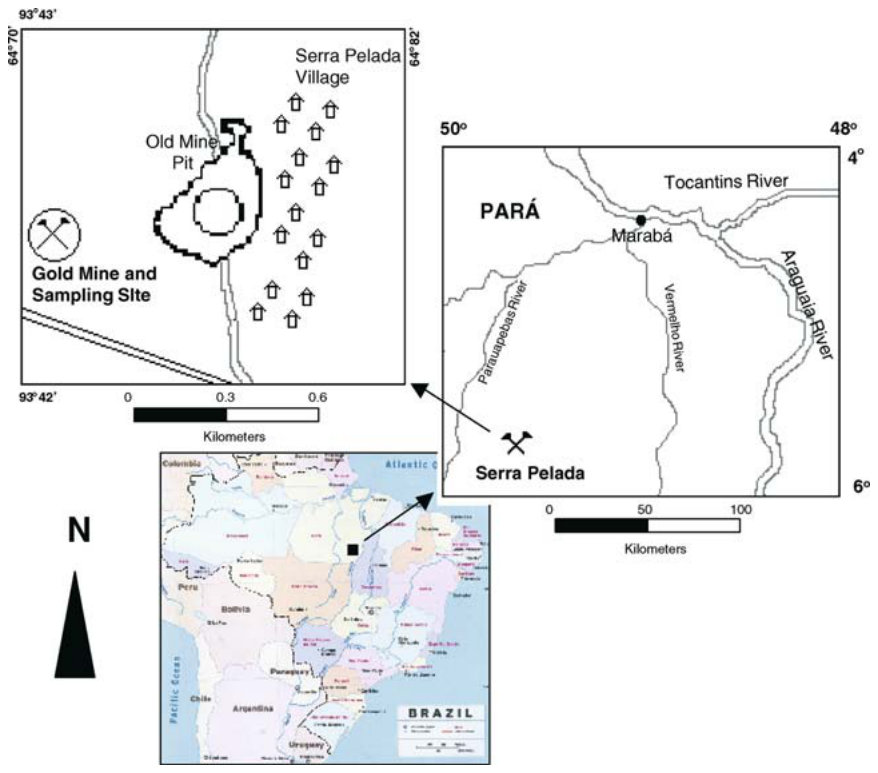
Mercury-contaminated substrates from two locations were investigated in this work: 1) mill tailings collected from the processing centre of the Gold Mountain (GM) mine, North-Central China, and 2) mine tailings collected from the Serra Pelada (SP) artisanal gold mine site, State of Para´ , Brazil (Figure 1). It was requested that the exact location of the GM mine be omitted to protect the local mining community (A.J. Gunson, personal communication). Selected geochemical characteristics of SP and GM substrates are presented in Table 1.
本研究考察了来自两个地点的汞污染基质:1)采自中国中北部Gold Mountain(GM)矿选矿中心的选矿尾矿;2)采自巴西帕拉州Serra Pelada(SP)手工金矿场地的尾矿(图1)。应要求,GM矿的确切位置未予公开,以保护当地采矿社区(A.J. Gunson,个人通讯)。SP和GM基质的部分地球化学特征见表1。
5Sample collection样品采集
Mine tailings from the SP mine were collected by the first author during a field survey of the mine during June 2003. Tailings from the GM mine were provided by the Department of Mining and Mineral Processing Engineering at the University of British Columbia (UBC), Vancouver, BC, Canada.
SP矿尾矿由第一作者于2003年6月对该矿进行野外调查时采集。GM矿尾矿由加拿大不列颠哥伦比亚省温哥华市不列颠哥伦比亚大学(UBC)采矿与矿物加工工程系提供。
6Plant growth conditions植物生长条件
Due to the phytotoxic Hg concentration of the original GM mine tailings (Table 1), the plant experiments were carried out in a modified GM substrate. The modified substrate was prepared through dilution of the original GM mine tailings (average concentration of 67 mg/kg, Table 1)
由于原始GM尾矿的汞浓度具有植物毒性(表1),植物试验在改性GM基质中进行。改性基质通过稀释原始GM尾矿(平均浓度67 mg/kg,表1)制备,
with a 1:1 mixture of coarse and fine silica sand (fine fraction <1000 lm) to give a final Hg concentration of 2.5 mg/kg (Table 1). The levels of Hg found in the collected SP samples were unexpectedly low (average concentration of 0.27 mg/ kg, Table 1). Consequently, the plant experiments for this substrate were carried out without dilution. Both substrates were supplemented with Osmocote (slow release NPK fertiliser) at 5 g/kg and left to equilibrate for 1 week prior to seeding. The SP substrate was amended with lime to adjust the pH to 6. No lime was added to the GM substrate as the pH of substrate (around 8) was suitable for plant growth. Plastic pots (7 · 7 cm) were filled with each substrate and sown with seeds of B. juncea at a rate of �20 seeds per pot (n ¼ 20 for each substrate type). Two weeks after germination, each pot was thinned to leave one individual plant. Hoagland’s nutrient solution (5 mL of 1=4 strength) (Hoagland and Arnon, 1950) was irrigated onto the pots every second day to supplement the plant’s nutritional requirements. Plants were kept in a greenhouse with ambient temperature set to vary
即与粗、细石英砂的1:1混合物(细组分<1000 μm)混合,使最终汞浓度为2.5 mg/kg(表1)。所采集SP样品中的汞含量出乎意料地低(平均浓度0.27 mg/kg,表1),因此该基质的植物试验未经稀释直接进行。两种基质均按5 g/kg添加Osmocote(缓释NPK肥料),并在播种前平衡1周。SP基质添加石灰以将pH调至6。GM基质的pH(约为8)适宜植物生长,故未加石灰。塑料盆(7 × 7 cm)分别装填各基质,每盆播种约20粒B. juncea种子(每种基质n = 20)。萌发两周后间苗,每盆保留1株。每隔一天向盆中浇灌Hoagland营养液(1/4强度,5 mL)(Hoagland and Arnon, 1950),以补充植物营养需求。植株置于温室中,环境温度设定为
| Tailings type尾矿类型 | |||
|---|---|---|---|
| Original GMb | Modified GM | Serra Peladac | |
| Total concentration | |||
| Hg (mg/kg)d | 67.4 (±11) | 2.4 (±0.07) | 0.27 (±0.06) |
| Au (mg/kg) | 1.58 | na | 0.09 |
| Cu (mg/kg) | 9356 | na | 1338 |
| Mn (mg/kg) | na | na | 188.4 |
| Fe (%) | 4.48 | na | 1.30 |
| Other characteristics | |||
| pHe | 9.4 | 8.2 | 5.4 |
| Eh (mV)e | )137 | )63 | 93 |
| Total Carbon (%)f | 0.7 | 0.3 | 0.1 |
| Total Nitrogen (%)f | 0.07 | <0.01 | 0.02 |
| OM (%)f | 1.3 | 0.5 | 0.3 |
| C:N | 10 | > 30 | 5 |
| Soil Volume (g/ml)f | 1.42 | 1.55 | 1.30 |
aThe modified substrate was prepared through dilution of the original GM mine tailings with a 1:1 mixture of coarse and fine silica sand. bAnalysis of total Au, Cu, Mn and Fe for the original mine tailings were carried out by ACME Labs, Vancouver, BC, Canada. cSource: Cabral et al., 2002. dTotal Hg concentrations in the samples were determined through aqua-regia digestions; values are the mean of three replicates ±1 standard deviation. eThe pH and Eh values are the mean of three measurements. fAnalyses of total nitrogen and carbon, organic matter content and soil volume were carried out by Fertilizer and Lime Research Centre, Palmerston North, NZ. na = not analysed.
a改性基质通过将原始GM尾矿与粗、细石英砂的1:1混合物混合稀释制备。b原始尾矿中Au、Cu、Mn和Fe全量由ACME Labs(加拿大不列颠哥伦比亚省温哥华)分析。c数据来源:Cabral et al., 2002。d样品总汞浓度采用王水消解测定;数值为3次重复的平均值±1个标准差。epH和Eh值为3次测定的平均值。f全氮、全碳、有机质含量及土壤容积由Fertilizer and Lime Research Centre(新西兰Palmerston North)分析。na = 未分析。
diurnally from 15–25 �C without humidity control. Unplanted substrates for each type of mine tailing were used as controls and were treated in the same way. Pot positions were randomly changed on a periodic basis to equalise light exposure. Daily watering was carried out everyday to field capacity. All the plants were treated before the outset of flowering.
昼夜在15–25 °C之间变化,不控制湿度。每种尾矿均设未种植基质作为对照,并进行相同处理。定期随机调换盆位,以使光照均匀。每天浇水至田间持水量。所有植株均在开花前进行处理。
(RPM) and the supernatant separated after centrifugation at 3000 RPM for 3 min. The pH and Eh of the extractant solutions were measured using a pH and Eh meter (Copenhagen Radiometer, PHM 83 Autocal pH meter).
(RPM),并于3000 RPM离心3 min后分离上清液。采用pH与Eh计(Copenhagen Radiometer, PHM 83 Autocal pH meter)测定提取液的pH和Eh。
7Volatilisation and plant-Hg accumulation experiments挥发与植物汞积累试验
8Extractable Hg可提取态汞
Extractable Hg concentrations were determined for the SP and both the modified and original GM tailings substrates. The extractants investigated were ammonium thiosulphate ([NH4]2S2O3) and ammonium thiocyanate supplemented with hydrogen peroxide (NH4SCN + H2O2). One gram of substrate was weighed into 50 mL polypropylene centrifuge tubes in triplicate. After addition of extractant solutions (20 mL at 2 g/L, unless otherwise stated), the tubes were rotated in a shaker overnight at 45 rotations per minute
测定了SP基质以及改性和原始GM尾矿基质的可提取汞浓度。所研究的提取剂为硫代硫酸铵([NH4]2S2O3)和添加过氧化氢的硫氰酸铵(NH4SCN + H2O2)。称取1 g基质于50 mL聚丙烯离心管中,设3次重复。加入提取液(20 mL,浓度2 g/L,另有说明者除外)后,离心管在振荡器上以每分钟45转过夜旋转
Brassica juncea plants growing on each growth substrate were treated either with (NH4)2S2O3 or NH4SCN at a rate of 2 g of chemical per kg of substrate. After 5 weeks of growth, the effect of plants, thioligands and substrate type on volatile Hg emissions was assessed. Water was used as a comparison to the thioligand treatments. Pots without plants (unplanted pots) were used as controls. Immediately after treatment, both pots and plants were individually enclosed within a gas-tight acrylic volatilisation chamber (3.6 L volume). Volatile Hg released from the soil–plant system was captured in two successive trap solutions containing 5% KMnO4 dissolved in 2 N H2SO4. The efficiency of this trap solution to quantitatively capture Hg has been shown to range from 95% to 99% (Kimura and Miller, 1960). A continuous airflow was supplied to the volatilisation chamber using a small air pump. Mercury vapour released by the plants was driven together with the incoming air into two Erlenmeyer flasks, each containing 70 mL of the acid trap solution. The flow rate of the incoming air was monitored using an air flow meter (J&W, model AMD 1000, California, USA) and was constantly held to 100 mL/min using small clamps attached to the air outlets. The outlet of the second acid trap was open to the atmosphere to maintain pressure equilibrium within the trap system. A 10 mL syringe attached to the volatilisation chamber was used to water the plants during the period of volatile Hg collection. Watering was carefully performed to avoid any possible loss of Hg through leaching. Volatilisation was measured over a 3 days period inside a plant growth chamber with photoperiod set for 14 h and temperature kept constantly at 22 �C. Collection of volatile Hg was done in triplicate for thioligand-treated plants, plants irrigated with water and control pots. The plant growth chamber has a capacity for three individual volatilisation chambers and, therefore, the experiment was repeated three times for each type of mine tailings. At the end of the three-day period, the acid trap solutions were transferred to 100 mL airtight plastic containers and stored at 4 �C until analysis. The precipitated fraction of the acid traps was redissolved using 50 mL of concentrated hydrochloric acid, and the resulting solution was stored using the same procedure. The mass of volatile-Hg collected for each replicate was, therefore, the sum of the Hg readings in the soluble and precipitated fractions of both acid traps. The use of this experimental apparatus has allowed an average Hg recovery of 90% for B. juncea plants cultured in Hg-spiked solutions (Moreno et al., 2004b).
分别以(NH4)2S2O3或NH4SCN按每kg基质2 g化学试剂的用量处理生长于各基质上的Brassica juncea植株。生长5周后,评估植物、硫配体和基质类型对挥发性汞排放的影响。以水作为硫配体处理的比较,以不种植物的盆(未种植盆)作为对照。处理后立即将盆和植株分别单独封闭于气密性丙烯酸挥发室(容积3.6 L)中。土壤–植物系统释放的挥发性汞由两级串联吸收液捕集,吸收液为溶于2 N H2SO4的5% KMnO4。已有研究表明,该吸收液对汞的定量捕集效率为95%~99%(Kimura and Miller, 1960)。以小型气泵向挥发室连续供气。植物释放的汞蒸气随进气被导入两个锥形瓶,每瓶装有70 mL酸性吸收液。进气流量用空气流量计(J&W, model AMD 1000, California, USA)监测,并通过出气口上的小夹子恒定保持在100 mL/min。第二级酸性吸收瓶的出口与大气相通,以维持吸收系统内的压力平衡。在挥发性汞收集期间,通过连接于挥发室的10 mL注射器给植物浇水。浇水时十分小心,以避免汞因淋溶而损失。挥发量在植物生长箱内测定3 d,光周期设为14 h,温度恒定保持在22 °C。硫配体处理植株、浇水植株及对照盆的挥发性汞收集均设3次重复。植物生长箱可容纳3个独立挥发室,因此每种尾矿的试验重复进行3次。3 d结束后,将酸性吸收液转移至100 mL密闭塑料容器中,于4 °C保存待测。酸性吸收液中的沉淀部分用50 mL浓盐酸重新溶解,所得溶液按相同方法保存。因此,每个重复收集的挥发性汞质量为两级酸性吸收液中可溶部分和沉淀部分汞读数之和。采用该试验装置,在加汞溶液中培养的B. juncea植株汞平均回收率达90%(Moreno et al., 2004b)。
9Plant harvest植物收获
At the end of the experiments, plants were harvested and washed in tap water. Shoots were excised from roots by using a steel blade. The intact root system could be harvested from the pots by soaking the bulk roots with the adhering substrate in a bucket filled with water. The buckets were acid washed and the water was fully replaced after each soaking period. The roots were further washed several times with tap water to remove residual substrate particles. The soaking process was carried out for 1 h and was done separately for each type of substrate and chemical treatment. Plant tissues were placed into individual paper bags and dried at 70 �C. After drying, all plant samples were sealed in plastic bags until Hg analysis.
试验结束时收获植株,并用自来水清洗。用钢刀片将地上部与根系分离。将根系连同附着基质浸泡于盛水的桶中,即可从盆中收获完整根系。桶经酸洗,每次浸泡后更换全部用水。根系再用自来水反复清洗数次,以去除残留基质颗粒。浸泡过程持续1 h,且按基质类型和化学处理分别进行。植物组织装入单独纸袋,于70 °C烘干。烘干后,所有植物样品密封于塑料袋中待测汞。
10Plant digestion植物消解
Ground shoots and roots were accurately weighed (0.1 g) into 50 mL plastic pots. Concentrated HNO3 (15 mL) was then added. The digest samples were left overnight and, in the following day, (RO) were heated in a water bath at 100 �C for 1 h. Digest solutions were transferred to 10 mL polythene tubes and diluted with reverse osmosis (RO) water to make a final volume of 10 mL. A blank reagent was used with all digestions.
准确称取磨碎的地上部和根系样品(0.1 g)于50 mL塑料容器中,加入浓HNO3(15 mL)。消解样品静置过夜,次日于100 °C水浴加热1 h。消解液转移至10 mL聚乙烯管中,用反渗透(RO)水定容至10 mL。所有消解均设试剂空白。
11Substrate digestion基质消解
The total mercury concentration was determined through aqua regia digestion of dried and sieved (<1000 lm) SP and GM substrates (original and modified). One gram of substrate was weighed into 50 mL polypropylene pots in triplicate and a 15 mL solution of HNO3 and HCl at 1:3 ratio was added. The samples were digested in a water bath at 100 �C for 1 h and the filtrates diluted to a final volume of 50 mL using RO water.
采用王水消解干燥过筛(<1000 μm)的SP和GM基质(原始和改性)测定总汞浓度。称取1 g基质于50 mL聚丙烯容器中,设3次重复,加入15 mL HNO3与HCl体积比为1:3的混合溶液。样品于100 °C水浴消解1 h,滤液用RO水定容至50 mL。
12Mercury analysis汞分析
Total Hg concentrations in plant, substrate digests and in extractant and trap solutions were analysed through the hydride-generation atomic absorption spectrometry technique (Moreno et al., 2004c). The analysis was performed using a GBC 909A atomic absorption spectrophotometer (AAS, Victoria, Australia) operating in the flame mode. A sodium borohydride solution (5% NaBH4 + 1% KOH) in combination with 10 mL of 0.5 M of HCl was used to generate the Hg vapour. The limit of detection (LOD) for
植物和基质消解液以及提取液和吸收液中的总汞浓度采用氢化物发生–原子吸收光谱法测定(Moreno et al., 2004c)。分析使用GBC 909A原子吸收分光光度计(AAS, Victoria, Australia),以火焰模式运行。采用硼氢化钠溶液(5% NaBH4 + 1% KOH)与10 mL 0.5 M HCl联合生成汞蒸气。溶液中汞的检出限(LOD)
mercury in solution was 5 ng/mL. Reagent blanks were below detection limits in the solution. Linear calibration curves were obtained over the range of 125–1000 ng/mL of Hg using four standards prepared from a 10 mg/L mercuric nitrate (HgNO3) spectrosol solution (May & Baker, AAS standard reagent solution, England). Solutions with Hg concentration over the 1000 ng/ mL range were diluted with RO water. The Hg readings obtained from the replicate analysis (n ¼ 10) of a standard solution containing 1 mg/L of Hg could be reproduced with less than 5% of variation. The analytical method was assessed for quality control by an external certified laboratory and the maximum discrepancy was 15%.
为5 ng/mL。试剂空白均低于检出限。以10 mg/L硝酸汞(HgNO3)标准溶液(May & Baker, AAS standard reagent solution, England)配制4个标准溶液,在125–1000 ng/mL Hg范围内获得线性校准曲线。汞浓度超过1000 ng/mL的溶液用RO水稀释。对含1 mg/L Hg的标准溶液进行重复分析(n = 10),所得汞读数的变异小于5%。该分析方法经外部认证实验室进行质量控制评估,最大偏差为15%。
13Statistical analyses统计分析
In order to study changes in Hg volatilisation as a function of sulphur-containing solutions (NH4SCN + H2O2 and [NH4]2S2O3), substrate type (SP · GM) and plants (planted · unplanted substrates), a randomised experimental design was used. The analyses of variance (ANOVA) were performed in single treatments with the following one-way structure: planted/water/SP, planted/NH4SCN + H2O2/SP, planted/water/ GM, planted/(NH4)2S2O3/GM, unplanted/SP, unplanted/GM. Linear contrasts were then performed for the following comparisons:
为研究汞挥发随含硫溶液(NH4SCN + H2O2和[NH4]2S2O3)、基质类型(SP × GM)和植物(种植 × 未种植基质)的变化,采用随机试验设计。方差分析(ANOVA)在单一处理中进行,采用如下单因素结构:种植/水/SP、种植/NH4SCN + H2O2/SP、种植/水/GM、种植/(NH4)2S2O3/GM、未种植/SP、未种植/GM。随后对以下比较进行线性对比:
(a) Unplanted · Planted (ignoring substrate type and thioligands);
(a)未种植 × 种植(不考虑基质类型和硫配体);
(b) Planted/SP · Planted/GM (ignoring thioligands);
(b)种植/SP × 种植/GM(不考虑硫配体);
(c) Unplanted/SP · Planted/SP (ignoring NH4SCN+H2O2);
(c)未种植/SP × 种植/SP(不考虑NH4SCN+H2O2);
(d) Unplanted/GM · Planted/GM (ignoring [NH4]2S2O3);
(d)未种植/GM × 种植/GM(不考虑[NH4]2S2O3);
(e) Planted/NH4SCN + H2O2/SP · Planted/ water/SP; and
(e)种植/NH4SCN + H2O2/SP × 种植/水/SP;以及
(f) Planted/(NH4)2S2O3/GM · Planted/water/GM. A copy of SAS PC version 8e was used for statistical analyses (SAS Inst, 1988). Differences between three or more treatment means in the remaining experiments were performed through one-way analysis of variance (ANOVA). Tukey’s test was used for pairwise comparison of means at 0.05 and 0.01 significance levels. The t-test was performed for comparing two treatment means, assuming equality of variances. Correlation analysis was used to assess the positive and negative dependence between two variables. The normality of the data was assessed through the Shapiro– Wilk test. The ANOVA for testing the effects of plants, thioligands, and substrate type on Hg volatilisation was carried out in log- transformed data.
(f)种植/(NH4)2S2O3/GM × 种植/水/GM。统计分析采用SAS PC 8e版(SAS Inst, 1988)。其余试验中三个或以上处理均值间的差异采用单因素方差分析(ANOVA)检验。采用Tukey检验在0.05和0.01显著性水平下进行均值两两比较。两个处理均值的比较采用t检验,并假定方差齐性。采用相关分析评价两变量间的正、负相关关系。数据正态性采用Shapiro–Wilk检验评估。检验植物、硫配体和基质类型对汞挥发影响的ANOVA基于对数转换数据进行。
14Results结果
15Total and extractable Hg in substrates基质中的总汞与可提取汞
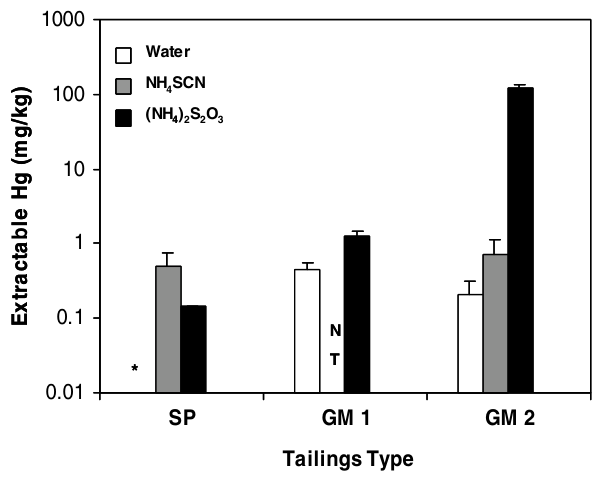
Of the chemical extractants used, NH4SCN released the highest concentration of Hg from SP tailings (Figure 2). The extracted Hg concentration was not significantly different from the soluble Hg concentration after aqua regia digestion (Table 1, P > 0.05). Ammonium thiosulphate released the highest concentration of Hg from both the original and modified GM substrate when compared to controls (P < 0.0001, Figure 2). The concentration of Hg extracted using (NH4)2S2O3 was greater than that made soluble after aqua regia digests for the original samples (P < 0.01) but not for the modified substrate (P > 0.05, Table 1, Figure 2).
在所用化学提取剂中,NH4SCN从SP尾矿中释放的汞浓度最高(图2)。其提取的汞浓度与王水消解后的可溶汞浓度无显著差异(表1,P > 0.05)。与对照相比,硫代硫酸铵从原始和改性GM基质中释放的汞浓度均最高(P < 0.0001,图2)。对于原始样品,(NH4)2S2O3提取的汞浓度高于王水消解溶出的汞浓度(P < 0.01),但改性基质则不然(P > 0.05,表1,图2)。
Effect of plants, substrate type and thioligands on plant-Hg accumulation and volatilisation
植物、基质类型和硫配体对植物汞积累与挥发的影响
Table 2 shows the dry weights, plant Hg concentration and the bioconcentration factor for B. juncea plants after substrate treatment with either thiosulphate or thiocyanate solutions. The root and shoot biomass was not significantly different between water and thioligand-treated plants for each type of mine tailings. The low levels of soluble Hg in the SP substrate (Figure 2) limited the effect of NH4SCN on plant-Hg accumulation and no significant differences in Hg values were found between the two treatments (P > 0.05, Table 2). However, there was a tendency for increased Hg uptake in the presence of NH4SCN. This trend was more pronounced for shoot tissues, which concentrated around 2.3 times more Hg than water-treated plants (Table 2). The application of (NH4)2S2O3 to GM substrates increased significantly the Hg accumulation in roots and shoots relative to the water treatment (P < 0.05, Table 2). The bioconcentration factor (BF, concentration in plant tissues/concentration in substrates) indicated the superior ability of root tissues to concentrate Hg from both types of mine tailings (Table 2). In the presence of (NH4)2S2O3, this ability was greatly enhanced for roots and shoot tissues, which were able to concentrate between 32 and 17 times the Hg value found in the substrates.
表2列出了以硫代硫酸盐或硫氰酸盐溶液处理基质后B. juncea植株的干重、植物汞浓度及生物富集系数。各尾矿中,浇水处理与硫配体处理植株的根系和地上部生物量均无显著差异。SP基质中可溶汞含量较低(图2),限制了NH4SCN对植物汞积累的作用,两处理间汞含量无显著差异(P > 0.05,表2)。但NH4SCN存在时汞吸收有增加趋势。这一趋势在地上部组织中更为明显,其汞浓度约为浇水处理植株的2.3倍(表2)。向GM基质施用(NH4)2S2O3后,根系和地上部汞积累量较浇水处理显著增加(P < 0.05,表2)。生物富集系数(BF,植物组织浓度/基质浓度)表明,根系组织从两种尾矿中富集汞的能力更强(表2)。在(NH4)2S2O3存在下,根系和地上部组织的这一能力大幅提高,其汞浓度分别可达基质汞含量的32倍和17倍。
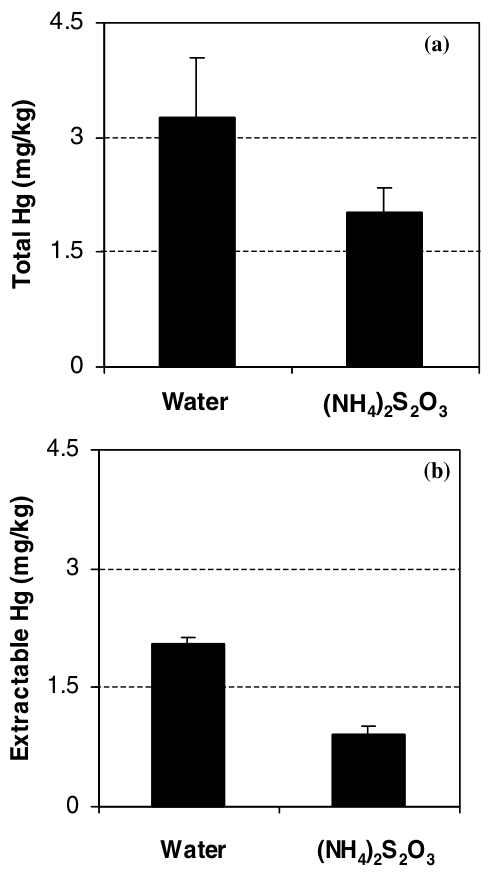
Figure 3 shows the total (a) and extractable (b) Hg concentrations (mg/kg) for the GM substrates at the end of the experiment. Total Hg concentrations in the (NH4)2S2O3-treated substrates were significantly lower than the Hg concentration in the water-treated substrates (P < 0.05, Figure 3a). This difference was most pronounced with respect to extractable Hg concentrations (P < 0.0001, Figure 3b). This concentration discrepancy is possibly related to the plant uptake of insoluble Hg fraction dissolved after application of (NH4)2S2O3 to the substrates. As there was limited plant Hg uptake from the SP tailings, no significant difference in the total and extractable Hg fractions was observed between water and NH4SCN-treated substrates (P > 0.05) (data not shown).图3显示了试验结束时GM基质的总汞(a)和可提取汞(b)浓度(mg/kg)。(NH4)2S2O3处理基质中的总汞浓度显著低于浇水处理基质(P < 0.05,图3a)。这一差异在可提取汞浓度上最为显著(P < 0.0001,图3b)。该浓度差异可能与施用(NH4)2S2O3后原本不溶的汞组分被溶解并被植物吸收有关。由于植物从SP尾矿中吸收的汞有限,浇水与NH4SCN处理基质之间的总汞和可提取汞组分均无显著差异(P > 0.05)(数据未列出)。
Table 3 shows the volatile Hg mass captured in the acid permanganate traps for planted (water and thioligand-treated) and unplanted (controls) SP and GM substrates after the end of the experiment. The associated contrasts and their F-ratio and P-values for these treatments are shown sequentially in Table 4. The presence of B. juncea plants significantly enhanced Hg volatilisation relative to controls (unplanted tailings) (P < 0.0001, Tables 3 and 4). The mass of volatile Hg released from planted GM substrates was increased by a factor of 12 when compared to unplanted GM substrates (P < 0.0001, Tables 3 and 4). In contrast, the mass of Hg emitted from planted SP substrates was not significantly表3列出了试验结束后种植(浇水及硫配体处理)和未种植(对照)SP与GM基质在酸性高锰酸钾吸收液中捕集的挥发性汞质量。相应的对比及其F值和P值依次列于表4。B. juncea植株的存在使汞挥发较对照(未种植尾矿)显著增强(P < 0.0001,表3和表4)。种植GM基质释放的挥发性汞质量为未种植GM基质的12倍(P < 0.0001,表3和表4)。相比之下,种植SP基质排放的汞质量与
| Tailings Type/Treatment尾矿类型/处理 | Dry We | ight (mg)重(mg) | Plant Hg (植物汞( | mg/kg DW) | B | Fa |
|---|---|---|---|---|---|---|
| Root | Shoot | Root | Shoot | Root | Shoot | |
| SP/Water | 48 ± 21 a | 171 ± 43 a | 0.64 ± 0.3 a | 0.08 ± .007 a | 2.3 | 0.29 |
| SP/NH4SCNb | 49 ± 15 a | 185 ± 37 a | 0.74 ± 0.1 a | 0.18 ± 0.17 a | 2.7 | 0.66 |
| GM/Water | 97 ± 33 a | 484 ± 134 a | 6.1 ± 3.7 a | BDL | 2.5 | NA |
| GM/(NH4)2S2O3 b | 60 ± 14 a | 412 ± 143 a | 77.6 ± 35 b | 41.5 ± 2.7 | 32 | 17 |
aThe bioconcentration factor was calculated according to the equation: total Hg concentration in plant tissues (mg/kg DW)/total Hg concentration in substrates (mg/kg). bThioligands were applied at rate of 2 g per kg of substrate; ammonium thiocyanate was supplemented with hydrogen peroxide at 0.3 %. NH4SCN = Ammonium thiocyanate; (NH4)2S2O3 = ammonium thiosulphate; BDL = below detection limits; NA = not applicable.
a生物富集系数按下式计算:植物组织总汞浓度(mg/kg DW)/基质总汞浓度(mg/kg)。b硫配体施用量为每kg基质2 g;硫氰酸铵添加0.3%过氧化氢。NH4SCN = 硫氰酸铵;(NH4)2S2O3 = 硫代硫酸铵;BDL = 低于检出限;NA = 不适用。
different to the Hg mass emitted from unplanted SP substrates (P > 0.05, Tables 3 and 4). However, we found a significant plant effect for the Hg mass emitted when water-treated substrates were compared to controls (unplanted) (P < 0.05, Tables 3 and 4). In this case, Hg emissions from planted substrates were increased 2.5 times relative to emissions from unplanted SP substrates (Table 3). The Hg mass emitted from planted SP substrates was significantly lower than the Hg mass released from planted GM substrates, suggesting a substrate Hg concentration effect in the volatilisation process (P < 0.0001, Tables 3 and 4). The addition of thioligands did not affect significantly Hg emissions from either SP or GM planted substrates (P > 0.05, Tables 3 and 4).
未种植SP基质相比无显著差异(P > 0.05,表3和表4)。但将浇水处理基质与对照(未种植)比较时,发现植物对汞排放质量具有显著影响(P < 0.05,表3和表4)。在此情况下,种植基质的汞排放量为未种植SP基质的2.5倍(表3)。种植SP基质排放的汞质量显著低于种植GM基质,表明基质汞浓度对挥发过程有影响(P < 0.0001,表3和表4)。添加硫配体对SP和GM种植基质的汞排放均无显著影响(P > 0.05,表3和表4)。
The effect of thioligands on Hg mobilisation, volatilisation, shoot accumulation and translocation for B. juncea plants grown in SP and modified GM substrates is shown in Table 5. The application of thioligands increased the soluble Hg mass in substrates by a factor of 0.5 to 1.8 without the generation of leachates. The increased soluble Hg fraction induced enhanced root uptake and translocation to shoot tissues (Table 5). This pattern was more evident for plants grown in the GM tailings, where the Hg mass translocated to shoots corresponded to almost 80% of the total Hg mass taken up by the plants (Table 5). By contrast, the application of thioligands did not cause any increase in the Hg volatilisation from substrates. For instance, the Hg mass volatilised from GM substrates was virtually the same for both water and (NH2)4S2O3-treated plants and corresponded to around 1.7% of the total Hg mass in the substrate. For the SP tailings, there was a reverse trend in the Hg volatilisation, which was evidenced by a lower average value for the Hg mass released from NH4SCN-treated substrates when compared to the water treatment (Table 5). Furthermore, there was no significant correlation between the volatile Hg mass released from planted SP and GM substrates and the soluble Hg mass taken up by roots and translocated to shoots (Table 6).
表5列出了硫配体对生长于SP和改性GM基质中的B. juncea植株汞活化、挥发、地上部积累及转运的影响。施用硫配体使基质中可溶汞质量增加0.5~1.8倍,且未产生淋溶液。可溶汞组分的增加促进了根系吸收及向地上部组织的转运(表5)。这一规律在GM尾矿中生长的植株中更为明显,其转运至地上部的汞质量约占植株吸收汞总质量的80%(表5)。相反,施用硫配体并未使基质汞挥发增加。例如,浇水处理与(NH4)2S2O3处理植株的GM基质汞挥发质量几乎相同,均约占基质总汞质量的1.7%。SP尾矿的汞挥发则呈相反趋势,NH4SCN处理基质释放汞质量的平均值低于浇水处理(表5)。此外,种植SP和GM基质释放的挥发性汞质量与根系吸收并转运至地上部的可溶汞质量之间无显著相关性(表6)。
| Tailings Type尾矿类型 | Treatment处理 | Nd | Hg Ma | ss (lg)a | Tota总 | l Hg Mass (lg)b汞质量(μg)b |
|---|---|---|---|---|---|---|
| Trap 1 | Trap 2 | |||||
| Unplanted | 6 | 0.58 (1/3) | 0.10 (1/3) | 0.68 | ||
| SP | Planted/Water | 6 | 1.16 ± 0.87 (3/3) | 0.52 ± 0.23 (3/3) | 1.68 | ± 1.07 |
| Planted/NH4SCNc | 6 | 0.38 ± 0.17 (2/3) | 0.67 (1/3) | 0.71 | ± 0.65 | |
| Unplanted | 6 | 0.165 (1/3) | BDL | 0.16 | ||
| GM | Planted/Water | 6 | 3.78 ± 2.25 (3/3) | 2.86 ± 1.46 (3/3) | 6.65 | ± 3.67 |
| Planted/(NH4)2S2O3 | 6 | 4.85 ± 1.01(3/3) | 1.90 ± 0.57 (3/3) | 6.75 | ± 0.68 |
aIn between brackets are shown the frequency for the detectable Hg mass per number of analysed replicates. bTotal Hg mass is the arithmetic mean of three replicates for the Hg mass collected in two acid traps. cNH4SCN treatment was supplemented with hydrogen peroxide at 0.3%. dN = 3 for each of the traps. BDL = Hg below detection limits.
a括号内为检测到汞质量的次数与分析重复数之比。b总汞质量为3次重复中两级酸性吸收液收集汞质量的算术平均值。cNH4SCN处理添加了0.3%过氧化氢。d每级吸收液N = 3。BDL = 汞低于检出限。
| Contrastsa对比a | DFb | F- ratioF值 | Pr > Fb |
|---|---|---|---|
| Unplanted · Planted | 1 | 38.92 | < 0.0001 |
| Planted/SP · Planted/GM | 1 | 34.77 | < 0.0001 |
| Unplanted/SP · Planted/SP | 1 | 2.57 | 0.1257 |
| Unplanted/SP · Planted/Water/SP | 1 | 5.64 | 0.0336 |
| Unplanted/GM · Planted/GM | 1 | 53.60 | < 0.0001 |
| Planted/NH4SCN/SP · Planted/Water/SPc | 1 | 0.95 | 0.3417 |
| Planted/(NH4)2S2O3/GM · Planted/Water/GM | 1 | 0.00 | 0.9846 |
aThe associated hypothesis for each contrast tested possible differences between the means of single treatments; comparisons were not orthogonal. bDF = degrees of freedom; Pr >F = probability level for rejecting or accepting the hypothesis associated with each linear contrast at the a = 0.05 level. cAmmonium thiocyanate (NH4SCN) was supplemented with hydrogen peroxide at 0.3%.
a各对比的相应假设检验单一处理均值间可能存在的差异;各比较非正交。bDF = 自由度;Pr >F = 在α = 0.05水平下拒绝或接受各线性对比相应假设的概率水平。c硫氰酸铵(NH4SCN)添加了0.3%过氧化氢。
| Tailings type/Treatment尾矿类型/处理 | Mobilisation活化 | Volatilisation挥发 | Root Accumulation根系积累 | Shoot Accumulation地上部积累 | Translocation转运 |
|---|---|---|---|---|---|
| (%)a | (%)b | (%)b | (%)b | (%)c | |
| SP/water | BDL | 3.10 a | 0.046 a | 0.012 a | 21.21 a |
| SP/NH4SCNd | 180 | 1.31 a | 0.064 a | 0.032 a | 29.37 a |
| GM/water | 18.44 a | 1.71 a | 0.13 a | NA | NA |
| GM/(NH4)2S2O3 d | 52.76 b | 1.73 a | 1.21 b | 4.38 | 78.31 |
aMobilisation was calculated according to the equation: Extractable Hg (mg/kg)/Total Hg (mg/kg) · 100. bVolatilisation, root and shoot accumulation values were calculated according to the equation: Total Hg mass in traps (lg), roots or shoots (lg)/Total Hg mass (lg) in mine tailings at the beginning of the experiment · 100. c Translocation was calculated according to the equation: Total Hg mass in shoots (lg)/Total Hg mass in plants (lg) · 100. dThioligands were applied at rate of 2 g per kg of substrate; ammonium thiocyanate was supplemented with hydrogen peroxide at 0.3%. NH4SCN = Ammonium thiocyanate; (NH4)2S2O3 = ammonium thiosulphate; NA = not applicable due to shoot Hg values below detection limits.
a活化率按下式计算:可提取汞(mg/kg)/总汞(mg/kg)× 100。b挥发率及根系和地上部积累率按下式计算:吸收液、根系或地上部中的总汞质量(μg)/试验开始时尾矿中的总汞质量(μg)× 100。c转运率按下式计算:地上部总汞质量(μg)/植株总汞质量(μg)× 100。d硫配体施用量为每kg基质2 g;硫氰酸铵添加0.3%过氧化氢。NH4SCN = 硫氰酸铵;(NH4)2S2O3 = 硫代硫酸铵;NA = 因地上部汞含量低于检出限而不适用。
16Discussion讨论
17Speciation and solution geochemistry of Hg complexes in the mine tailings尾矿中汞络合物的形态与溶液地球化学
Schuster (1991) uses an Eh–pH diagram for Hg to indicate that the free metal Hg(0) is a potentially stable form of Hg at pH >5 under reducing to moderately oxidizing conditions. Table 1 shows that SP mine tailings exhibits moderately oxidising conditions and pH 5.4 whereas GM tailings has a slightly alkaline pH (8.2–9.4) and mild reducing conditions. Mercury dispersed in each of these substrates during artisanal gold mining was likely to be stable in the elemental Hg(0) form. As the vapour pressure of Hg in the elemental
Schuster(1991)利用汞的Eh–pH图指出,在pH >5、还原至中等氧化条件下,游离金属Hg(0)是汞的潜在稳定形态。表1显示,SP尾矿呈中等氧化条件,pH为5.4;而GM尾矿呈弱碱性(pH 8.2–9.4),并处于弱还原条件。手工金矿开采过程中分散于这两种基质中的汞很可能以元素态Hg(0)形式稳定存在。由于元素态
| Mine tailings/Parameter尾矿/参数 | Root Hg mass (lg)根系汞质量(μg) | Shoot Hg mass (lg)地上部汞质量(μg) | Plant Hg mass (lg)植株汞质量(μg) |
|---|---|---|---|
| SP/Volatile Hg (lg) | )0.24 NS | )0.55 NS | )0.23 NS |
| GM/Volatile Hg (lg) | )0.22 NS | 0.12 NSa | )0.12 NS |
NS = not significant (P > 0.05). aRepresents the mean of three replicates state is high, some Hg fraction might have escaped from the system in the gaseous form. However, given that goethite and manganese oxides are abundant in SP tailings (Cabral et al., 2002) and that Fe accounts for 4.8% of total weight of the GM talings (Table 1), it is likely that another Hg fraction was bound to the solid phase of Fe and Mn oxide minerals. The extraction of Hg from the solid phase of these minerals to the substrate solution might have been, therefore, the result of exchange reactions involving the added sulphur-containing ligands (Figure 2).
NS = 不显著(P > 0.05)。a为3次重复的平均值。汞的蒸气压较高,部分汞可能以气态形式逸出系统。然而,鉴于SP尾矿中富含针铁矿和锰氧化物(Cabral et al., 2002),且Fe占GM尾矿总重的4.8%(表1),另一部分汞很可能结合于Fe、Mn氧化物矿物的固相上。因此,汞从这些矿物固相中被提取至基质溶液,可能是所添加含硫配体参与交换反应的结果(图2)。
Mercury is described as a ‘soft metal’ and has a tendency to form strong complexes with sulphur-containing ligands (Wallschla¨ ger, 1998), including the SCN) and S2O3) anions. The solution geochemistry of metal–thiocyanate complexes favours stable complex formation under moderately acidic and oxidizing conditions (Bowell et al., 1993). Conversely, stable Hg–thiosulphate complexes are likely to form in neutral to alkaline pH conditions (Wilkinson et al., 1987). The geochemistry of the tested mine tailings (Table 1) suggests, therefore, that Hg will form stable complexes with SCN) and S2O3) anions present in the soil solution of the SP and GM substrates, respectively.
汞被称为“软金属”,易与含硫配体形成稳定络合物(Wallschläger, 1998),包括SCN−和S2O3²⁻阴离子。金属–硫氰酸根络合物的溶液地球化学特征有利于在中等酸性和氧化条件下形成稳定络合物(Bowell et al., 1993)。相反,汞–硫代硫酸根稳定络合物可能在中性至碱性pH条件下形成(Wilkinson et al., 1987)。因此,所测尾矿的地球化学特征(表1)表明,汞将分别与SP和GM基质土壤溶液中的SCN−和S2O3²⁻阴离子形成稳定络合物。
18Origin of plant-Hg emissions from contaminated substrates污染基质中植物相关汞排放的来源
The quantitative capture of volatile Hg in the potassium permanganate solution under acid conditions can be written by the following equation:
酸性条件下高锰酸钾溶液对挥发性Hg的定量捕集可用下式表示:
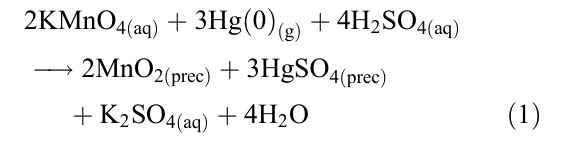
Since elemental Hg(0) is oxidised by potassium permanganate, then we would presume that the predominant Hg form released from unplanted and planted substrates was the elemental Hg(0) vapour.
由于元素态Hg(0)可被高锰酸钾氧化,因此可推测未种植和种植基质释放的主要汞形态为元素态Hg(0)蒸气。
The flux of Hg(0) from the foliage as a result of transpiration has been considered as a substantial source of elemental Hg to the atmosphere (Lindberg et al., 1998, 2002). The leaf-toatmosphere path for Hg(0) has been reported for a number of plant species grown in Hg-contaminated soil including the Brassicas Lepidium latifolium and Caulanthus sp. (Leonard et al., 1998a, b). However, recent data have shown that Hg(0) fluxes from contaminated soils to the atmosphere are not related to the movement of Hg(0) in the transpiration stream (Greger et al., 2005), but rather to processes happening on the soil surface such as incident light, watering, and surface soil temperature and moisture content (Gustin et al., 2004). Comparison of the Hg(0) flux from unplanted and planted substrates using gasexchange mesocosmos have indicated reduced Hg(0) emissions from planted substrates in the presence of incident light (Gustin et al., 2004). The authors attributed this reduced effect to soil shading of the leaf canopy. However, our results demonstrated that Hg(0) emissions from planted substrates were significantly superior to the unplanted substrates, thus suggesting a plantmediated factor in the Hg volatilisation process. We, therefore, propose three main factors for explaining the enhanced Hg (0) emissions from SP and GM planted substrates: (1) watering of planted substrates, (2) variations in soil moisture due to air-H2O emissions from plants and, (3) bacterial interactions in the rhizosphere of plants.
蒸腾作用导致的叶片Hg(0)通量被认为是大气元素汞的重要来源(Lindberg et al., 1998, 2002)。已有报道表明,多种生长于汞污染土壤中的植物存在Hg(0)的叶片–大气迁移途径,包括十字花科的Lepidium latifolium和Caulanthus sp.(Leonard et al., 1998a, b)。然而,最新数据表明,污染土壤向大气的Hg(0)通量与蒸腾流中Hg(0)的迁移无关(Greger et al., 2005),而与土壤表面发生的过程有关,如入射光、浇水以及表层土壤温度和含水量(Gustin et al., 2004)。利用气体交换中宇宙系统比较未种植与种植基质的Hg(0)通量发现,在有入射光时种植基质的Hg(0)排放减少(Gustin et al., 2004)。作者将这种减少效应归因于叶冠对土壤的遮荫。然而,本研究结果表明,种植基质的Hg(0)排放显著高于未种植基质,提示汞挥发过程中存在植物介导的因素。因此,我们提出解释SP和GM种植基质Hg(0)排放增强的三个主要因素:(1)种植基质的浇水;(2)植物向空气释放H2O导致的土壤含水量变化;(3)植物根际的细菌相互作用。
Pulses of Hg(0) emitted to the atmosphere have been associated with watering events over planted substrates (Gustin et al., 2004). Addition of water to dry soils can enhance Hg(0) emissions from substrates through desorption of Hg(0) from adhering soil particles and replacement by the H2O molecule. Soil moisture is another factor implicated in the emissions of Hg(0) from Hg-contaminated soils (Lindberg et al., 1999). The fact that planted substrates received more water than controls (unplanted pots) could, therefore, explain the superior Hg(0) mass emissions recorded from planted SP and GM substrates. The same effect could have been promoted by increased levels of moisture content in planted substrates as a consequence of higher air-H2O vapour concentrations inside the volatilisation chamber.
Hg(0)向大气排放的脉冲与种植基质的浇水事件有关(Gustin et al., 2004)。向干燥土壤加水可使Hg(0)从附着的土壤颗粒上解吸并被H2O分子取代,从而增强基质的Hg(0)排放。土壤含水量是影响汞污染土壤Hg(0)排放的另一因素(Lindberg et al., 1999)。种植基质比对照(未种植盆)接受了更多水分,这可以解释种植SP和GM基质记录到更高的Hg(0)排放质量。挥发室内空气中H2O蒸气浓度较高,导致种植基质含水量升高,也可能产生同样的效应。
Caution should be exercised in neglecting the effect of bacteria on Hg volatilisation from contaminated media. A great percentage of bacteria living in Hg-contaminated environments have Hg-resistant systems, and thus are able to catalyse the enzymatic reduction of Hg(II) to Hg(0) (Barkay et al., 1992; Meagher et al., 2000). Rhizosphere bacteria have been demonstrated to enhance root and shoot accumulation of Hg and Se for the wetland plants saltmarsh (Scirpus robustus Pursh) and rabbit-foot grass (Polypogon monspelienses [L.] Desf.) (De Souza et al., 1999a). Zayed et al. (2000) and De Souza et al. (1999b) reported that bacteria in the rhizosphere of Indian mustard (B. juncea) and broccoli (B. oleraceae) can account for between 35% and 95% of plant Se volatilisation, respectively. Additional data supporting the effect of rhizosphere bacteria on Hg volatilisation comes from hydroponics experiments with Hg-exposed plant species enclosed in gastight root and shoot volatilisation compartments (Moreno et al., 2004b; Greger et al., 2005). Quantification of the Hg mass volatilised from both compartments revealed that 95% of the total plant-Hg emissions from a B. juncea plant originated from the root system (Moreno et al., 2004b). Further experiments with the addition of antibiotics to Hg-contaminated substrates are needed to confirm this hypothesis.
忽视细菌对污染介质汞挥发的影响须持谨慎态度。生活在汞污染环境中的细菌很大比例具有抗汞系统,因而能够催化Hg(II)酶促还原为Hg(0)(Barkay et al., 1992; Meagher et al., 2000)。已证实根际细菌可增强湿地植物盐沼藨草(Scirpus robustus Pursh)和棒头草(Polypogon monspelienses [L.] Desf.)根系和地上部对Hg和Se的积累(De Souza et al., 1999a)。Zayed et al.(2000)和De Souza et al.(1999b)报道,印度芥菜(B. juncea)和西兰花(B. oleraceae)根际细菌分别可贡献35%和95%的植物Se挥发。支持根际细菌影响汞挥发的其他数据来自水培试验,试验中将暴露于汞的植物封闭于气密的根系和地上部挥发隔室中(Moreno et al., 2004b; Greger et al., 2005)。对两个隔室挥发汞质量的定量结果显示,B. juncea植株95%的汞排放来自根系(Moreno et al., 2004b)。尚需开展向汞污染基质添加抗生素的进一步试验以验证这一假设。
Effect of thioligands on Hg volatilisation and plant accumulation
硫配体对汞挥发与植物积累的影响
In this work, we have showed that addition of (NH4)2S2O3 to GM substrates mobilised nonsoluble Hg forms in substrates and caused a substantial increase in the Hg content of shoots when compared to water-treated plants (Table 5). There was marginal evidence for an induced plant-Hg accumulation effect after addition of NH4SCN to SP substrates (P ¼ 0.059, Table 3). Yet, no significant differences were found between water and thioligand-treated plants regarding the amount of Hg mass volatilised from both types of mine tailings (Table 5). The enhanced levels of Hg in shoot tissues in the presence of (NH4)2S2O3 were not significantly correlated to the volatile Hg mass emitted from planted substrates (Table 6). These results, therefore, indicate that Hg volatilisation and plant accumulation are independent processes. Greger et al., (2005) have shown that Hg in contaminated media can be transformed to Hg(0) and released to the atmosphere without passing through the transpiration stream of plants. Our results indicated, therefore, that volatile Hg was emitted from substrates in the elemental Hg(0) form. However, Hg mobilised by (NH4)2S2O3 and accumulated into shoots tissues might be in the form of a Hg–thiol complex.
本研究表明,向GM基质添加(NH4)2S2O3可活化基质中的非可溶态汞,并使地上部汞含量较浇水处理植株大幅增加(表5)。有微弱证据表明,向SP基质添加NH4SCN可诱导植物汞积累(P = 0.059,表3)。然而,就两种尾矿的汞挥发质量而言,浇水与硫配体处理植株之间并无显著差异(表5)。(NH4)2S2O3存在下地上部组织汞含量的增加与种植基质排放的挥发性汞质量无显著相关(表6)。因此,这些结果表明汞挥发与植物积累是相互独立的过程。Greger et al.,(2005)指出,污染介质中的汞可转化为Hg(0)并释放至大气,而无需经过植物蒸腾流。因此,本研究结果表明挥发性汞是以元素态Hg(0)形式从基质中排放的。然而,经(NH4)2S2O3活化并积累于地上部组织中的汞可能以汞–巯基络合物形式存在。
19Implications for the phytoremediation of Hg-contaminated land对汞污染土地植物修复的启示
In the present study, B. juncea plants grown in modified GM substrates were able to concentrate around 17 times the average level of Hg in substrates (2.42 mg/kg) following treatment with (NH4)2S2O3 (Table 2). We have previously reported a bioconcetration factor of around 15 in shoot tissues of (NH4)2S2O3-treated B. juncea plants grown in a mine tailings located in the North Island of New Zealand (Moreno et al., 2004a). Also, a bioconcentration factor of 25 was found in shoots of (NH4)2S2O3-treated B. juncea plants grown in modified GM substrates contaminated with 3.4 mg/kg of Hg (Moreno et al., 2004d). Hence, thiosulphate-induced plant-Hg accumulation in two distinct types of mine tailings have reported average levels of Hg in shoot tissues of B. juncea plants in the range of 40– 85 mg/kg. These values correspond to around 400–850 times the average background levels of Hg in plants (0.1 mg/kg) (Kabata-Pendias and Pendias, 2000). The levels of Hg accumulated
本研究中,改性GM基质中生长的B. juncea植株经(NH4)2S2O3处理后,可富集约17倍于基质平均汞含量(2.42 mg/kg)的汞(表2)。我们此前报道,生长于新西兰北岛某尾矿中、经(NH4)2S2O3处理的B. juncea植株地上部组织生物富集系数约为15(Moreno et al., 2004a)。此外,在汞含量为3.4 mg/kg的改性GM基质中生长、经(NH4)2S2O3处理的B. juncea植株地上部生物富集系数为25(Moreno et al., 2004d)。因此,在两种不同类型尾矿中,硫代硫酸盐诱导的植物汞积累使B. juncea植株地上部组织平均汞含量达40–85 mg/kg。这些数值约为植物汞平均背景水平(0.1 mg/kg)的400–850倍(Kabata-Pendias and Pendias, 2000)。
into shoot tissues of B. juncea plants suggest, therefore, that (NH4)2S2O3 could be used to promote the phytoextraction of Hg from contaminated soils. However, there are risks for groundwater contamination of thiosulphatemobilised Hg. The Hg concentration in leachates has been shown to rise up to four fold after (NH4)2S2O3 amendment to planted Tui mine tailings (Moreno et al., 2004a). The migration of metal contaminants in the unsaturated zone can be controlled by planting deep-rooted phreatophytic trees in metal contaminated sites, as has been proposed by Robinson et al. (2003). In some scenarios, these high water-use trees can eliminate leaching, thus mitigating the risk of groundwater contamination.
B. juncea植株地上部组织积累的汞水平因此表明,(NH4)2S2O3可用于促进污染土壤中汞的植物提取。然而,硫代硫酸盐活化的汞存在污染地下水的风险。已有研究表明,向种植的Tui尾矿添加(NH4)2S2O3后,淋溶液中的汞浓度可升高至原来的4倍(Moreno et al., 2004a)。如Robinson et al.(2003)所提出,可在金属污染场地种植深根性潜水植物树种,以控制金属污染物在非饱和带中的迁移。在某些情形下,这些高耗水树种可消除淋溶,从而减轻地下水污染风险。
20Conclusions结论
Our research has demonstrated that addition of thioligands to mine tailings can enhance plant-Hg accumulation but not volatilisation. Mercury accumulation in plant tissues was significantly increased through (NH4)2S2O4 treatment of the GM substrate. The plant-Hg accumulation effect after addition of NH4SCN to SP tailings was not significant, possibly because of the low total Hg concentration in the SP substrate. The volatile Hg mass was significantly higher for planted substrates when compared to the controls (unplanted). This discrepancy could be explained as a result of abiotic and biotic factors. Watering and increased levels of soil moisture might have enhanced photoreduction of Hg(II) to Hg(0) in planted substrates. However, there is the possibility of enhanced Hg(0) volatilisation due to microbial interactions in the rhizosphere of plants. In spite of enhancing Hg translocation to shoot tissues, application of (NH4)2S2O4 did not increase the Hg(0) mass released from to GM substrates. This result indicates that Hg volatilisation and plant accumulation are independent processes. Thiosulphate-treated plants were able to concentrate up to 17 times the total Hg concentration in shoot tissues. Thiosulphate-induced plant-Hg accumulation holds potential for the phytoextraction of Hg contaminated soils. Given the potential for leachate generation, thiosulphate-induced Hg phytoextraction may pose a risk to the environment unless the link to receiving waters can be broken. Additionally, the release of elemental Hg(0) gas is likely to occur under field conditions and strategies for the revegetation of Hg-contaminated mine sites should take into consideration Hg losses from the system through volatilisation.
本研究表明,向尾矿中添加硫配体可提高植物对Hg的积累,但不能促进Hg的挥发。对GM基质进行(NH4)2S2O4处理后,植物组织中的Hg积累量显著增加。向SP尾矿中添加NH4SCN后,植物Hg积累效应不显著,这可能是由于SP基质中总Hg浓度较低所致。与对照(未种植植物)相比,种植植物基质的Hg挥发量显著更高。这一差异可由非生物和生物因素加以解释。浇水及土壤含水量的提高可能增强了种植植物基质中Hg(II)向Hg(0)的光还原作用。此外,植物根际中的微生物相互作用也可能促进了Hg(0)的挥发。尽管施用(NH4)2S2O4促进了Hg向地上部组织的转运,但并未增加GM基质中Hg(0)的释放量。这一结果表明,Hg挥发与植物积累是相互独立的过程。经硫代硫酸盐处理的植物,其地上部组织中的Hg浓度可达基质总Hg浓度的17倍。硫代硫酸盐诱导的植物Hg积累在Hg污染土壤的植物提取方面具有应用潜力。鉴于可能产生渗滤液,除非能够切断其与受纳水体之间的联系,否则硫代硫酸盐诱导的Hg植物提取可能对环境构成风险。此外,在田间条件下很可能发生单质Hg(0)气体的释放,因此Hg污染矿区的植被恢复策略应考虑Hg通过挥发从系统中损失的问题。
21Acknowledgements致谢
We gratefully acknowledge the National Council for Scientific and Technological Development (CNPq/Brazil) for providing a scholarship to the first author. Special thanks to Mr. A. J. Gunson from The Centre for Responsible Mining (CRM), University of British Columbia, B.C., Vancouver, Canada, who kindly provided the original Gold Mountain mine tailings.
感谢巴西国家科学技术发展委员会(CNPq/Brazil)为第一作者提供奖学金。特别感谢加拿大不列颠哥伦比亚省温哥华市不列颠哥伦比亚大学负责任采矿中心(The Centre for Responsible Mining, CRM)的A. J. Gunson先生,他慷慨提供了Gold Mountain矿原始尾矿样品。
22References参考文献
Barkay T, Turner R, Saouter E and Horn J 1992 Mercury biotransformations and their potential for remediation of mercury contamination. Biodegradation 3, 147–159.
Bowell R J, Foster R P and Gize A P 1993 The mobility of gold in tropical rain forest soils. Econ. Geol. 88, 999–1016.
Brookins D G 1987 Eh-pH Diagrams for Geochemistry. Springer-Verlag, USA. 58 pp.
Cabral, A R, Lehmann B, Kwitko R and Cravo Costa C H 2002 The Serra Pelada Au-Pd-Pt deposit, Caraja´ s mineral province, Northern Brazil: Reconnaissance, mineralogy and chemistry of very high grade palladian gold mineralization. Econ. Geol. 97, 1127–1138.
De Souza M P, Huang C P A, Chee N and Terry N 1999a Rhizosphere bacteria enhance the accumulation of selenium and mercury in wetland plants. Planta 209, 259–263.
De Souza M P, Chu D, Zhao M, Zayed A M, Ruzin S E, Schichnes D and Terry N 1999b Rhizosphere bacteria enhance selenium accumulation and volatilisation by Indian mustard. Plant Physiol. 119, 565–573. Evans L J 1989 Chemistry of metal retention by soils. Environ. Sci. Technol. 23(9), 1046–1056.
Greger, M, Wang Y and Neuschu¨ tz 2005 Absence of Hg transpiration by shoot after Hg uptake by roots of six terrestrial plant species. Environ. Pollut. 134, 201–208.
Gustin M S, Coolbaugh M F, Engle M A, Fitzgerald B C, Keislar R E, Lindberg S E, Nacht D M, Quashnick J, Rytuba J J, Sladek C, Zhang H and Zehner R E 2003 Atmospheric mercury emissions from mine wastes and surrounding geologically enriched terrains. Environ. Geol. 43(3), 339–351.
Gustin M S, Ericksen J A, Schorran D E, Johnson D W, Lindberg S E and Coleman J S 2004 Application of controlled mesocosms for understanding mercury air-soil-plant exchange. Environ. Sci. Technol. 38, 6044–6050.
Heaton A C P, Rugh C L, Wang N J and Meagher R B 2001 Phytoremediation of mercury and methylmercury-polluted soils using genetically engineered plants. J. Soil Contam. 7(4), 497–509.
Heaton A C P, Rugh C L, Kim T, Wang N J and Meagher R B 2003. Toward detoxifying mercury-polluted aquatic sediments with rice genetically engineered for mercury resistance. Environ. Toxicol. Chem. 22(12), 2940–2947.
Hinton J J, Veiga M M and Veiga A T C 2003 Clean artisanal mining: an utopian approach? J. Clean. Prod. 11, 99–115.
Hoagland D R and Arnon D I 1950 The water culture method of growing plants without soil. California Agric. Exp. Stat., Circular 347.
Johnson D W, Benesch J A, Gustin M S, Schorran D S, Lindberg S E and Coleman J S 2003 Experimental evidence against diffusion control of Hg evasion from soils. Sci. Total Environ. 304, 175–184.
Kabata-Pendias A and Pendias H 2000. Trace Elements in Soils and Plants. CRC Press, Florida, USA, 413 pp.
Kimura Y and Miller V L 1960 Vapor-phase separation of methyl-or ethylmercury compounds and metallic mercury. Anal. Chem. 32, 420–424.
Lacerda L D and Solomons W 1992 Mercu´ rio na Amazoˆ nia: Uma Bomba Relo´ gio Quı´mica. Se´ rie Tecnologia Ambiental-STA, No 3, CETEM/CNPq, Rio de Janeiro, Brazil, 78 pp (in Portuguese).
Lacerda L D 2003. Updating global Hg emissions from small-scale gold mining and assessing its environmental impacts. Environ. Geol. 43(3), 308–314.
Leonard T L, Taylor G E, Gustin M S and Fernandez G C J 1998a Mercury and plants in contaminated soils:1. uptake, partitioning, and emission to the atmosphere. Environ. Toxicol. Chem. 17(10), 2063–2071.
Leonard T L, Taylor G E, Gustin M S and Fernandez G C J 1998b Mercury and plants in contaminated soils: 2. environmental and physiological factors governing mercury flux to the atmosphere. Environ. Toxicol. Chem. 17(10), 2072–2079.
Lindberg S E, Hanson P J, Meyers T P and Kim K H 1998 Air/surface exchange of mercury vapour over forests- the need for a reassessment of continent biogenic emissions. Atmos. Environ. 32(5), 895–908.
Lindberg S E, Zhang H, Gustin M S, Casimir A, Ebinghaus R, Edwards G, Fitzgerald C, Kemp J, Kock H, Leonard T, Majewski M, Marsik F, Owens J, Poissant L, Rasmussen P, Schaedlich F, Schneeberger D, Sommar J, Turner R, Vette A, Wallschlaeger D and Xiao Z J 1999 The role of rainfall and soil moisture on mercury emissions fro mercuriferous desert soils. Geophys. Res. 104 (D17), 21, 879–888.
Lindberg S E, Dong W J and Meyer T P 2002 Transpiration of gaseous elemental mercury through vegetation in a subtropical wetland in Florida. Atmos. Environ. 36(33), 5207–5219.
Meagher R B, Rugh C L, Kandasamy M K, Gragson G and Wang N J 2000 Engineering phytoremediation of mercury pollution in soil and water using bacterial genes. In Phytoremediation of Contaminated Soil and Water. Eds. N Terry and G Ban˜ uelos. pp. 201–219. Lewis Publishers, USA.
Morel F M M, Kraepiel A M L and Amyot M 1998 The chemical cycle and bioaccumulation of mercury. Ann. Rev. Ecol. Syst. 29, 543–566.
Moreno F N, Anderson C W N, Stewart R B and Robinson B H 2004a Phytoremediation of mercury-contaminated mine tailings by induced plant-mercury accumulation. Environ. Practice 6(2), 165–175.
Moreno F N, Anderson C W N, Robinson B H and Stewart R B 2004b Measuring volatile Hg released from plants. In Tools for Nutrient and Pollutant Management. Occasional Report No.17. Eds. L D Currie and J A Hanly. pp. 233–240. Fertilizer and Lime Research Centre, Palmerston North, NZ.
Moreno F N, Anderson C W N, Robinson B H and Stewart R B 2004c Mercury analysis of plant and soil samples using the hydride-generation AAS method. In Tools for Nutrient and Pollutant Management. Occasional Report No.17. Eds. L D Currie and J A Hanly. pp. 425–433. Fertilizer and Lime Research Centre, Palmerston North, NZ.
Moreno F N, Anderson C W N, Stewart BR, Robinson B H, Gomshei M and Meech J A 2004d Induced plant uptake and transport of mercury in the presence of sulphur-containing ligands and humic acid. New Phytol. in press.
Oliveira S M B, Melfi A J, Fostier A H, Forti M C, Favaro D I T and Boulet R 2001 Soil as a important sink for mercury in Amazonia. Water Air Soil Pollut. 126, 321–337. Robinson B H, Leblanc M, Petit D, Brooks R R, Kirkman J H and Gregg P E H 1998 The potential of Thlaspi caerulencens for phytoremediation of contaminated soils. Plant Soil 203, 47–56.
Robinson B H, Green S R, Mills T M, Clothier B E, Velde M van der, Laplane R, Fung L, Deurer M, Hurst S, Thayalakumaran T and Dijssel C van der. 2003. Phytoremediation: Using plants as biopumps to improve degraded environments. Aust. J. Soil Res. 41(3), 599–611.
Roulet M, Lucotte M, Farella N, Serique G, Coelho H, Souza Passos C J, De Jesus Silva E, Scavone Andrade P, Mergler D and Amorin M 1999 Effects of recent human colonization on the presence of mercury in Amazonian ecosystems. Water Air Soil Pollut. 112(3–4), 297–313.
Roulet M, Lucotte M, Canvel R, Farella N, Courcelles M, Guimara˜ es J R D, Mergler D and Amorin M 2000 Increase in mercury contamination recorded in lacustrian sediments following deforestation in Central Amazon. Chem. Ecol. 165(3–4), 243–266.
SAS Institute, Inc 1988 SAS/STAT User’s Guide, Release 8e edition, Cary, NC, USA.
Schnoor J L, Licht L A, McCutcheon S C, Wolfe L N and Carreira L H 1995 Phytoremediation of organic and nutrient contaminants. Environ. Sci. Technol. 29(7), 318–323.
Schuster E 1991 The behaviour of mercury in the soil with special emphasis on the complexation and adsorption processes: A review of the literature. Water Air Soil Pollut. 56, 667–680.
Southworth G R, Peterson M J and Bogle M A 2004 Bioaccumulation factors for mercury in stream fish. Environ. Practice 6(2), 135–143.
Veiga M M and Hinton J J 2002 Abandoned artisanal gold mines in the Brazilian Amazon: A legacy of mercury pollution. Nat. Resour. Forum 26, 15–26.
Veiga M M 2004 Mercury pollution: Revealing sources and suggesting solutions. Environ. Practice 6(2), 97–98.
Wallschla¨ ger D, Desai V M M, Spengler M and Wilken R 1998 Mercury speciation in floodplain soils and sediments along a contaminated river transect. J. Environ. Qual. 27, 1034–1044.
Wilkinson G, Gillard R D and McCleverty J.A Eds. 1987 Comprehensive Coordination Chemistry: The synthesis, Reactions, Properties and Applications of Coordination Compounds, Ligands. Vol. 2. Pergamon Press, UK. 1179 pp.
Zayed A, Pilon-Smits E, De Souza M, Lin Z Q and Terry N
phytovolatilisation. In Phytoremediation of Contaminated Soil and Water. Eds. N Terry and G. Ban˜ uelos. pp. 61–78. Lewis Publishers, USA.
Section editor: H. Schat
2000 Remediation of selenium-polluted soils and waters by