Contents lists available at ScienceDirect journal homepage: www.elsevier.com/locate/envpol
Ahmad B. Moradi a,*, He´ctor M. Conesa b, Brett H. Robinson b, Eberhard Lehmann c, Anders Kaestner c, Rainer Schulin b
a Hydrogeology Department, Helmholtz Centre for Environmental Research – UFZ, Permoserstraße 15, 04318 Leipzig, Germany b Institute of Terrestrial Ecosystems, ETH, Zurich, Switzerland c Paul Scherrer Institut, Villigen, Switzerland
Ni heterogeneity in soil affects the morphology and root distribution patterns of Berkheya coddii and Cicer arietinum.
a r t i c l e i n f o
a b s t r a c t
Article history: We compared root responses of the Ni-hyperaccumulator plant Berkheya coddii Rossler with the non- Received 13 March 2009 accumulator plant Cicer arietinum L. to Ni heterogeneity in soil. We grew plants in growth containers Received in revised form filled with control soil, homogeneously spiked, and heterogeneously spiked soil with Ni concentrations 9 April 2009 of 62 and 125 mg kg�1. Neutron radiography (NR) was used to observe the root distribution and the Accepted 9 April 2009 obtained images were analysed to reveal the root volumes in the spiked and unspiked segments of the growth container. There was no significant difference in root distribution pattern of B. coddii among Keywords: different concentrations of Ni. Unlike B. coddii, the roots of C. arietinum initially grew into the spiked Berkheya coddii Cicer arietinum segments. However, the later developing roots did not penetrate the spiked segment suggesting an Neutron radiography avoidance strategy. Our results indicate that, B. coddii does not forage towards the Ni-rich patches, Nickel hyperaccumulator although presence of Ni in soil changes its root morphology. Root growth � 2009 Elsevier Ltd. All rights reserved. Root response
文章历史:本研究比较了Ni超富集植物Berkheya coddii Rossler与非富集植物Cicer arietinum L.对土壤中Ni空间异质性的根系响应。收稿日期2009年3月13日。将植物种植于生长容器中,容器内分别填充对照土壤、均匀添加Ni土壤和非均匀添加Ni土壤,Ni浓度为62和125 mg kg�1。修回日期2009年4月9日。采用中子成像(NR)观测根系分布,并对所得图像进行分析,以获得生长容器中添加Ni与未添加Ni区段内的根系体积。接受日期2009年4月9日。不同Ni浓度处理间B. coddii的根系分布格局无显著差异。关键词:Berkheya coddii;Cicer arietinum;中子成像;镍超富集植物;根系生长;根系响应。与B. coddii不同,C. arietinum的根系最初长入了添加Ni的区段,但后期发育的根系未穿透添加Ni的区段,表明其存在回避策略。结果表明,尽管土壤中Ni的存在改变了B. coddii的根系形态,但其根系并不向富Ni斑块觅食。© 2009 Elsevier Ltd. 版权所有。
1Introduction引言
Hyperaccumulator plants can remove significant amount of metals from soils. Therefore, they may offer a sustainable management option for the remediation of metal-contaminated sites (phytoremediation) and also an opportunity to mine naturally metal-rich soils by phytomining (Baker et al.,1994; Brooks et al.,1998; Angle et al., 2001; Li et al., 2003; Robinson et al., 2003a,b). More than three quarters of known metal hyperaccumulator plants are Ni hyperaccumulators (Brooks, 1998). Berkheya coddii Rossler is a summergreen perennial Ni-hyperaccumulator plant belonging to Asteraceae family that is found on ultramafic (serpentine) soils in southern Africa (Morrey et al., 1992). It is a particularly attractive species for phytoremediation and phytomining of nickel-rich soils because of its rare combination of high Ni accumulation and large biomass production. Robinson et al. (1997) reported an annual biomass production of 22 t ha�1 and up to 1% (w:w) Ni in the dry above-ground biomass.
超富集植物能够从土壤中移除大量金属。因此,超富集植物可为金属污染场地的修复(植物修复)提供一种可持续的管理途径,也为通过植物采矿开采天然富金属土壤提供了可能(Baker et al.,1994; Brooks et al.,1998; Angle et al., 2001; Li et al., 2003; Robinson et al., 2003a,b)。在已知的金属超富集植物中,超过四分之三为Ni超富集植物(Brooks, 1998)。Berkheya coddii Rossler是一种夏绿多年生Ni超富集植物,隶属菊科(Asteraceae),分布于非洲南部的超基性(蛇纹岩)土壤上(Morrey et al., 1992)。由于兼具高Ni富集能力和高生物量这一罕见组合,该物种对于富镍土壤的植物修复和植物采矿尤具吸引力。Robinson et al. (1997) 报道其年生物量可达22 t ha�1,地上部干生物量中Ni含量最高可达1%(w:w)。
The mechanisms that result in hyperaccumulation are not yet fully understood. A number of factors and mechanisms have been identified that could increase metal uptake by hyperaccumulators, including high density of uptake sites in root membranes (Lasat et al., 2000; Ueno et al., 2008), preferential root-foraging (Schwartz et al., 1999; Whiting et al., 2000; Haines, 2002) and rapid translocation mechanisms inside the plants (Pence et al., 2000; Ueno et al., 2008). The spatial distribution of heavy metals in naturally or anthropogenically contaminated soils is usually heterogeneous. Thus, preferential root proliferation into soil patches containing elevated concentrations of the target metal might be an important factor in metal acquisition by hyperaccumulator plants. Roots of the Zn hyperaccumulator Thlaspi caerulescens for example preferentially proliferates in response to substrate patches with high Zn concentrations (Schwartz et al., 1999; Whiting et al., 2000). Some ecotypes of T. caerulescens may discriminate between patches with contrasting Zn concentrations and produce more roots in patches with higher Zn concentrations (Haines, 2002). The same holds true for essential macronutrients in soil. Foraging responses to local nutrient patches have been demonstrated in a range of plant species, and in some species greater growth can be achieved in patchy habitats than in homogeneous habitats containing the same quantity of resources (Wijesinghe et al., 2001; Hutchings and John, 2004). Foraging nutrients may aid the survival of plant in environments with limited resources. Lynch and Brown (2001) showed that root architectural traits that enhance topsoil foraging appear to be particularly important for genotypic adaptation to low phosphorus soils. However, root proliferation in nutrient-rich patches may not be cost-effective if the patch vanishes or if a competitor plant occupies it more rapidly (vanVuuren et al.,1996; Leyser and Fitter, 1998).
导致超富集现象的机制尚未完全阐明。已有研究确定了若干可能提高超富集植物金属吸收的因素和机制,包括根细胞膜上吸收位点密度高(Lasat et al., 2000; Ueno et al., 2008)、优先性根系觅食(Schwartz et al., 1999; Whiting et al., 2000; Haines, 2002)以及植物体内快速的转运机制(Pence et al., 2000; Ueno et al., 2008)。在天然或人为污染的土壤中,重金属的空间分布通常是非均匀的。因此,根系优先向目标金属浓度较高的土壤斑块增殖,可能是超富集植物获取金属的重要因素。例如,Zn超富集植物Thlaspi caerulescens的根系会优先在高Zn浓度的基质斑块中增殖(Schwartz et al., 1999; Whiting et al., 2000)。T. caerulescens的某些生态型能够区分Zn浓度不同的斑块,并在Zn浓度较高的斑块中产生更多根系(Haines, 2002)。土壤中必需大量营养元素的情况亦是如此。在多种植物中均已证实存在对局部养分斑块的觅食响应,且某些物种在斑块状生境中的生长量高于资源总量相同的均质生境(Wijesinghe et al., 2001; Hutchings and John, 2004)。养分觅食有助于植物在资源有限的环境中存活。Lynch and Brown (2001) 表明,增强表土觅食能力的根系构型性状对于基因型适应低磷土壤尤为重要。然而,若养分斑块消失或被竞争植物更快占据,则根系在富养分斑块中的增殖可能并不划算(vanVuuren et al.,1996; Leyser and Fitter, 1998)。
* Corresponding author. Tel.: +49 341 235 1982; fax: +49 341 235 451985. E-mail address: ahmad.moradi@ufz.de (A.B. Moradi).
0269-7491/$ – see front matter � 2009 Elsevier Ltd. All rights reserved. doi:10.1016/j.envpol.2009.04.015
0269-7491/$ – 见前页 © 2009 Elsevier Ltd. 版权所有。doi:10.1016/j.envpol.2009.04.015
Contrary to positive foraging towards metal-rich patches, some plants might avoid parts of the soil as a mechanism to tolerate the presence of undesired conditions in their environment. Hairiah et al. (1995) reported avoidance of the acidic subsoil by Mucuna pruriens. A similar mechanism was found to be responsible for drought-avoidance of some traits of Cicer arietinum L. (Gaur et al., 2008). Menon et al. (2007) showed that root growth of Lupin was significantly reduced in the contaminated part of the soil with boron and zinc. There is little information on the mechanism of this avoidance and it is not known if any signalling mechanism is involved.
与向富金属斑块的正向觅食相反,某些植物可能会回避部分土壤,以此作为耐受环境中不利条件的一种机制。Hairiah et al. (1995) 报道了Mucuna pruriens对酸性底土的回避。研究发现,类似机制也是Cicer arietinum L.某些性状避旱的原因(Gaur et al., 2008)。Menon et al. (2007) 表明,羽扇豆在受硼和锌污染的土壤部分中根系生长显著降低。关于这种回避的机制目前所知甚少,也尚不清楚是否涉及某种信号机制。
Hitherto, most studies have focused on the root growth and development of hyperaccumulator species in the Brassicaceae family in soil containing metal-contaminated patches (Schwartz et al., 1999; Whiting et al., 2000; Haines, 2002; Podar et al., 2004; Dechamps et al., 2008). The root development of B. coddii in heterogeneously contaminated soil has yet to be investigated. It is unclear whether B. coddii behaves in the same way as the Brassicaceae family.
迄今为止,大多数研究集中于十字花科(Brassicaceae)超富集植物在含金属污染斑块土壤中的根系生长与发育(Schwartz et al., 1999; Whiting et al., 2000; Haines, 2002; Podar et al., 2004; Dechamps et al., 2008)。B. coddii在非均匀污染土壤中的根系发育尚未得到研究,其行为是否与十字花科植物相同仍不清楚。
One barrier in studying root development in soil is the technical difficulties in accessing the roots without disturbance (Hopmans and Bristow, 2002; Pierret et al., 2005). Conventional methods such as transparent rhizotrons or rhizoboxes for studying root systems are destructive, tedious, and difficult to interpret. Among the few available non-destructive methods, neutron radiography (NR) has proved to be an efficient tool to image living roots in situ (Willatt et al., 1978; Furukawa et al., 1999; Menon et al., 2007; Moradi et al., 2009; Oswald et al., 2008; Tumlinson et al., 2008).
研究土壤中根系发育的一大障碍是难以在不扰动的情况下获取根系的技术困难(Hopmans and Bristow, 2002; Pierret et al., 2005)。研究根系的传统方法如透明根箱(rhizotron)或根盒具有破坏性,操作繁琐且结果难以解释。在为数不多的非破坏性方法中,中子成像(NR)已被证明是原位成像活体根系的有效工具(Willatt et al., 1978; Furukawa et al., 1999; Menon et al., 2007; Moradi et al., 2009; Oswald et al., 2008; Tumlinson et al., 2008)。
The goal of this study was to investigate the root growth of the Ni hyperaccumulator B. coddii in response to heterogeneously spiked soil with Ni in two different concentrations in comparison with a non-accumulator plant, C. arietinum L. We used neutron radiography combined with an image analysis tool to monitor root growth and to quantitatively calculate root allocations in various parts of the growth container.
本研究旨在考察Ni超富集植物B. coddii的根系生长对两种Ni浓度非均匀添加土壤的响应,并与非富集植物C. arietinum L.进行比较。采用中子成像结合图像分析工具监测根系生长,并定量计算根系在生长容器各部分中的分配。
2Materials and methods材料与方法
reference plant materials compared to the certified and reported values by the Community Bureau of Reference BCR.
参比植物材料的测定值系与欧洲共同体参比局BCR的认证值和报告值比较得出。
Based on the results obtained from the pot experiment here, we chose the Ni concentrations of 62 and 125 mg kg�1 in soil (relevant to B. coddii) and then grew plants in growth containers made of aluminium for the NR experiment.
根据本研究盆栽试验的结果,选定土壤Ni浓度为62和125 mg kg�1(适用于B. coddii),随后将植物种植于铝制生长容器中进行NR试验。
2.2. Plant growth in growth containers for NR experiment2.2. NR试验生长容器中的植物培养
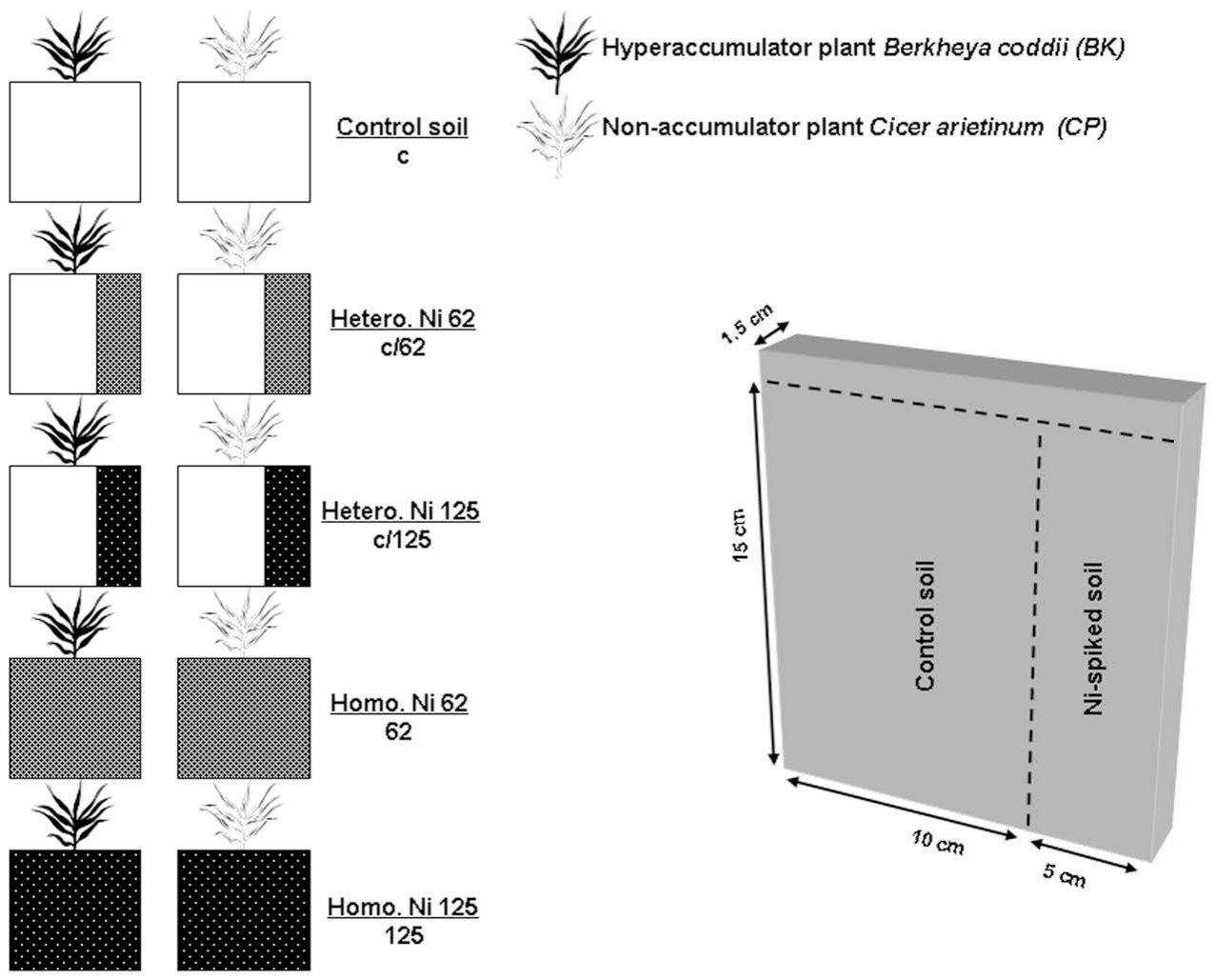
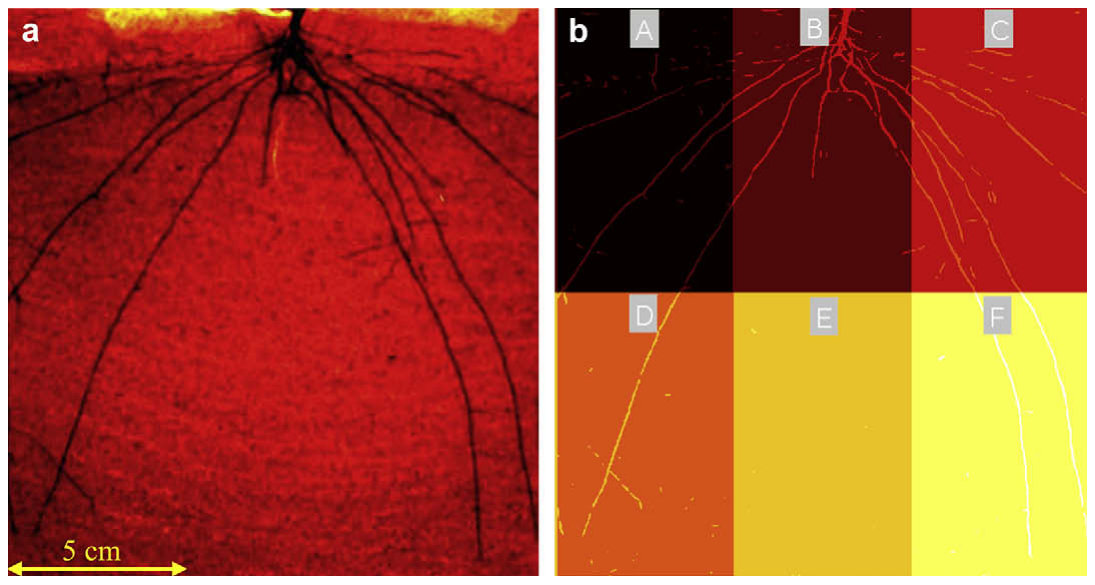
B. coddii (a Ni hyperaccumulator) and chickpea (C. arietinum L., a non-hyperaccumulator) were used; both of these species grow rapidly and have roots that are easy to delineate using neutron radiography. Aluminium containers with inner dimensions of 17 � 15 � 1.5 cm were used. The containers were made of aluminium due to its low neutron attenuation and therefore high transparency. 30 containers were filled with the sandy soil. For each plant species, there were five treatments, each with three replicates: control soil, heterogeneously spiked soil with 62 and 125 mg kg�1 Ni, and homogeneously spiked soil with 62 and 125 mg kg�1 Ni (see Fig.1). The average bulk density of the packed soil was 1.3 g cm�3 and the top 2 cm of the containers were left unfilled to facilitate irrigation. The seeds of C. arietinum were sown directly onto the soil surface at the middle of the containers and oneweek old seedlings of B. coddii were transplanted into the containers. Before imaging, the plants were grown for 5 weeks in a controlled environment chamber at 16–19 �C and a daily photoperiod of 16 h generated by fluorescent lighting (0.4– 0.6 lumen cm�3). Plants were irrigated with half-strength Hoagland’s nutrient solution (Hoagland and Arnon, 1938) and maintained at a soil water content of 20%. Irrigation was stopped 3 days prior to imaging to increase the contrast between soil and roots in the neutron radiographs. Neutron radiographs were taken 3 times over the course of the experiment. After the NR experiment was finished, one side of the containers was opened and the soil subdivided into 6 sections (Fig. 2). Each section was sieved using a 2-mm mesh sieve and the roots were carefully separated from the soil and washed with deionised water. The dry mass of the roots in each section were determined gravimetrically after drying the roots at 65 �C for 48 h.
供试植物为B. coddii(Ni超富集植物)和鹰嘴豆(C. arietinum L.,非超富集植物);两者生长迅速,且其根系易于通过中子成像加以分辨。采用内部尺寸为17 � 15 � 1.5 cm的铝制容器。选用铝材是因为其中子衰减低,因而透射性高。共30个容器装填砂质土壤。每种植物设5个处理,每个处理3次重复:对照土壤,Ni浓度为62和125 mg kg�1的非均匀添加土壤,以及Ni浓度为62和125 mg kg�1的均匀添加土壤(见图1)。装填土壤的平均容重为1.3 g cm�3,容器顶部2 cm未填土以便灌溉。C. arietinum种子直接播于容器中部的土壤表面,B. coddii则以一周龄幼苗移栽入容器。成像前,植物在人工气候室中生长5周,温度16–19 �C,荧光灯照明,每日光照16 h(0.4– 0.6 lumen cm�3)。以半浓度Hoagland营养液(Hoagland and Arnon, 1938)灌溉,土壤含水量保持在20%。成像前3天停止灌溉,以增加中子图像中土壤与根系的对比度。试验期间共拍摄中子图像3次。NR试验结束后,打开容器一侧,将土壤分为6个区段(图2)。各区段土壤过2 mm筛,小心将根系与土壤分离并用去离子水洗净。根系于65 �C烘干48 h后,采用称重法测定各区段根系干重。
2.3. Neutron radiography set up2.3. 中子成像装置
The experiments were performed at the cold neutron radiography facility (ICON) at Paul Scherrer Institut (PSI), Villigen, Switzerland. The neutron radiography set up is explained in detail by Moradi et al. (2009). A CCD camera detector with an array of 1024 � 1024 pixels in conjunction with a neutron-sensitive 6Li based scintillator screen (Applied Scintillation Technologies, UK) was used giving a resolution of 110–170 mm in the digital images.
试验在瑞士Villigen的Paul Scherrer Institut(PSI)冷中子成像装置(ICON)上进行。中子成像装置的详细介绍见Moradi et al. (2009)。采用1024 � 1024像素阵列的CCD相机探测器,配合基于6Li的中子敏感闪烁屏(Applied Scintillation Technologies, UK),数字图像分辨率为110–170 mm。
2.4. Image analysis2.4. 图像分析
Image analysis was carried out using the algorithm of Menon et al. (2007) to correct beam variation, segment the roots from the soil, and compute root volume in each of 6 segments of the growth containers in NR images (Fig. 2). All other calculations above were carried out using Matlab.
采用Menon et al. (2007) 的算法进行图像分析,以校正射束变化、将根系从土壤中分割出来,并计算NR图像中生长容器6个区段各自的根系体积(图2)。上述其他计算均使用Matlab完成。
All statistical analysis were carried out using Matlab (ANOVA). Data that were log-normally distributed and differences at P < 0.05 level were considered significant.
所有统计分析均使用Matlab(ANOVA)进行。数据呈对数正态分布,P < 0.05水平的差异视为显著。
3Results结果
2.1. Pot experiment2.1. 盆栽试验
3.1. Pot experiment with B. coddii3.1. B. coddii盆栽试验
A sandy soil (see Table 1 for selected properties) was used in a pot experiment to determine the suitable Ni concentrations in soil that would result in the greatest growth and Ni uptake by B. coddii Roessl. B. coddii was grown in soil spiked with Ni (as NiCl2) at concentrations of 0, 31, 62, 125, 250, and 500 mg kg�1 soil (900-ml plastic pots, 3 replicates). The pots were irrigated with Hoagland’s nutrient solution (Hoagland and Arnon, 1938) and kept in a climate chamber for 5 weeks with a daily light cycle of 16 h light/8 h darkness, constant humidity (75%) and controlled temperature (16/23 �C night/day). After 5 weeks, the plants were harvested and the shoot biomass dried at 65 �C until a constant weight was obtained, then ground and digested with 15 ml HNO3 (65%) at 150 �C for 1 h in Teflon tubes on a heating block DigiPREP MS (SCP Science, QC, Canada). Samples were analysed for Ni using ICP-OES (Vista-MPX Varian, Australia). For quality assurance, certified reference material from the Community Bureau of Reference BCR (No. 62, Olea europaea) was digested and analysed using ICP-OES. We obtained recovery of 89% for Ni in the certified
采用砂质土壤(部分性质见表1)进行盆栽试验,以确定可使B. coddii Roessl.获得最大生长量和Ni吸收量的适宜土壤Ni浓度。B. coddii种植于添加Ni(以NiCl2形式)的土壤中,Ni浓度为0、31、62、125、250和500 mg kg�1土(900 ml塑料盆,3次重复)。盆栽以Hoagland营养液(Hoagland and Arnon, 1938)灌溉,置于人工气候箱中培养5周,每日光周期为16 h光照/8 h黑暗,湿度恒定(75%),温度受控(夜/昼16/23 �C)。5周后收获植株,地上部生物量于65 �C烘干至恒重,粉碎后在DigiPREP MS加热消解仪(SCP Science, QC, Canada)上以15 ml HNO3(65%)于Teflon管中150 �C消解1 h。样品中Ni采用ICP-OES(Vista-MPX Varian, Australia)测定。为保证质量,对欧洲共同体参比局BCR的有证标准物质(No. 62, Olea europaea)进行消解并用ICP-OES分析。有证标准物质中Ni的回收率为89%,该有证
Selected soil physical and chemical properties.
供试土壤部分理化性质。
| pH | CEC (cmol(þ) kg�1CEC (cmol(þ) kg�1 | ) EC (dS m�1 | ) Texture) 质地 | Bulk density (g cm�3)容重 (g cm�3) | Porosity (% v/v)孔隙度 (% v/v) | Provenience来源 |
|---|---|---|---|---|---|---|
| 6.4 | 12 | 0.12 | Sandy | 1.3 | 36 | Eiken, Switzerland |
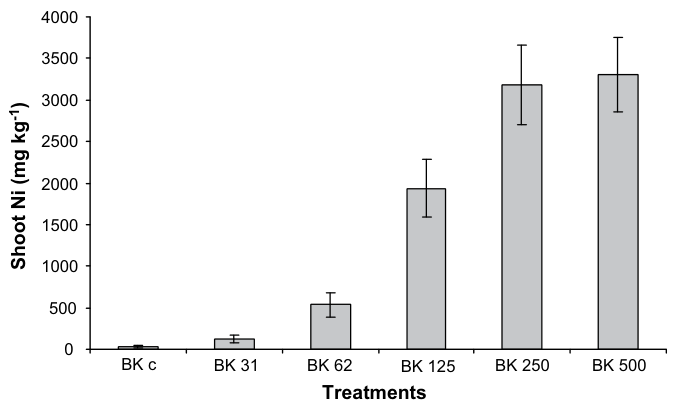
There was no significant difference in the shoot biomass among the treatments. The average shoot biomass was 1.5 � 0.7 g. Fig. 3 shows Ni concentration in dry shoot biomass of B. coddii grown in various treatments. Ni concentrations ranged from 25 �14 mg kg�1 in dry above-ground biomass in the control treatment to 3303 � 443 in BK 500. There was no significant difference between Ni concentrations in shoots of treatments BK 31 and the control. However, a sharp increase in shoot Ni concentration was observed in the soil Ni concentrations ranged from 62 to 250 mg Ni per kg�1 soil which indicated that B. coddii was most effective in extracting Ni in this range of the soil Ni concentrations under our experiment conditions. The highest Ni concentration occurred in the shoots of BK 500 and BK 250 treatments (there was no significant difference between the two). We chose soil Ni concentrations of 62 and 125 mg kg�1 for our experiment in heterogeneously spiked media. The shoot biomass of B. coddii in these concentrations of Ni was not significantly different than the control while there was a sharp response by B. coddii in Ni uptake compared to the control soil.
各处理间地上部生物量无显著差异,平均地上部生物量为1.5 � 0.7 g。图3为不同处理下B. coddii地上部干生物量中的Ni浓度。Ni浓度范围从对照处理地上部干生物量中的25 �14 mg kg�1至BK 500处理中的3303 � 443。BK 31处理与对照的地上部Ni浓度无显著差异。然而,当土壤Ni浓度在62至250 mg Ni per kg�1土范围内时,地上部Ni浓度急剧升高,表明在本试验条件下,B. coddii在该土壤Ni浓度范围内提取Ni的效率最高。地上部Ni浓度最高的是BK 500和BK 250处理(两者间无显著差异)。本研究选定土壤Ni浓度62和125 mg kg�1用于非均匀添加介质试验。在这两个Ni浓度下,B. coddii的地上部生物量与对照无显著差异,而其Ni吸收量相对于对照土壤则有急剧响应。
3.3. Shoot and total root biomass in growth containers3.3. 生长容器中的地上部和总根系生物量
Fig. 6a shows the shoot and root biomass of B. coddii in all the treatments. There was no significant difference in shoot biomass of the treatments except the treatment BK c/125 which was unexpectedly higher than the others. B. coddii had significantly more root biomass in the control soil (BK c), than in the BK 62 and BK 125 treatments. There was no significant difference between BK c/62 and BK c/125. In all the treatments except BK c and BK c/62, the root biomass was significantly lower than the shoot biomass. The highest shoot:root biomass ratio occurred in BK c/125 (1.95) and the lowest in the control (0.49).图6a为各处理B. coddii的地上部和根系生物量。除BK c/125处理的地上部生物量意外高于其他处理外,各处理间地上部生物量无显著差异。B. coddii在对照土壤(BK c)中的根系生物量显著高于BK 62和BK 125处理。BK c/62与BK c/125之间无显著差异。除BK c和BK c/62外,其余各处理的根系生物量均显著低于地上部生物量。地上部/根系生物量比最高出现在BK c/125(1.95),最低出现在对照(0.49)。
Unlike the B. coddii, the shoot biomass of C. arietinum was unaffected by the Ni treatments (Fig. 6b). However, the root biomass was significantly reduced in the Ni treatments. While there was no significant difference between the shoot and root biomass of CP c, all other treatments had significantly higher shoot biomass than root biomass and therefore a higher shoot:root biomass ratio.
与B. coddii不同,C. arietinum的地上部生物量未受Ni处理的影响(图6b),但Ni处理下其根系生物量显著降低。CP c的地上部与根系生物量间无显著差异,而其他所有处理的地上部生物量均显著高于根系生物量,因而地上部/根系生物量比较高。
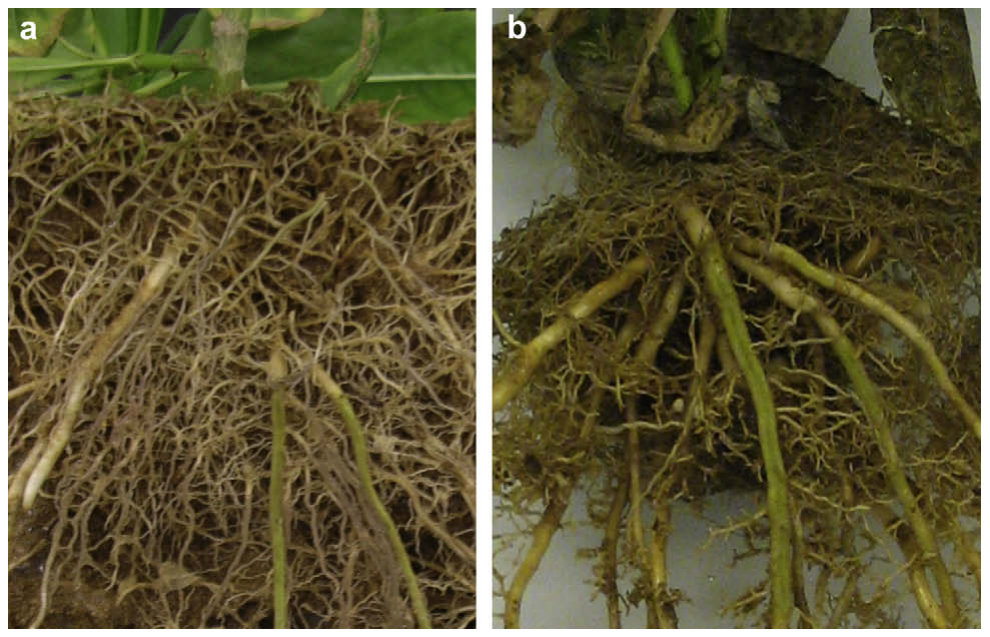
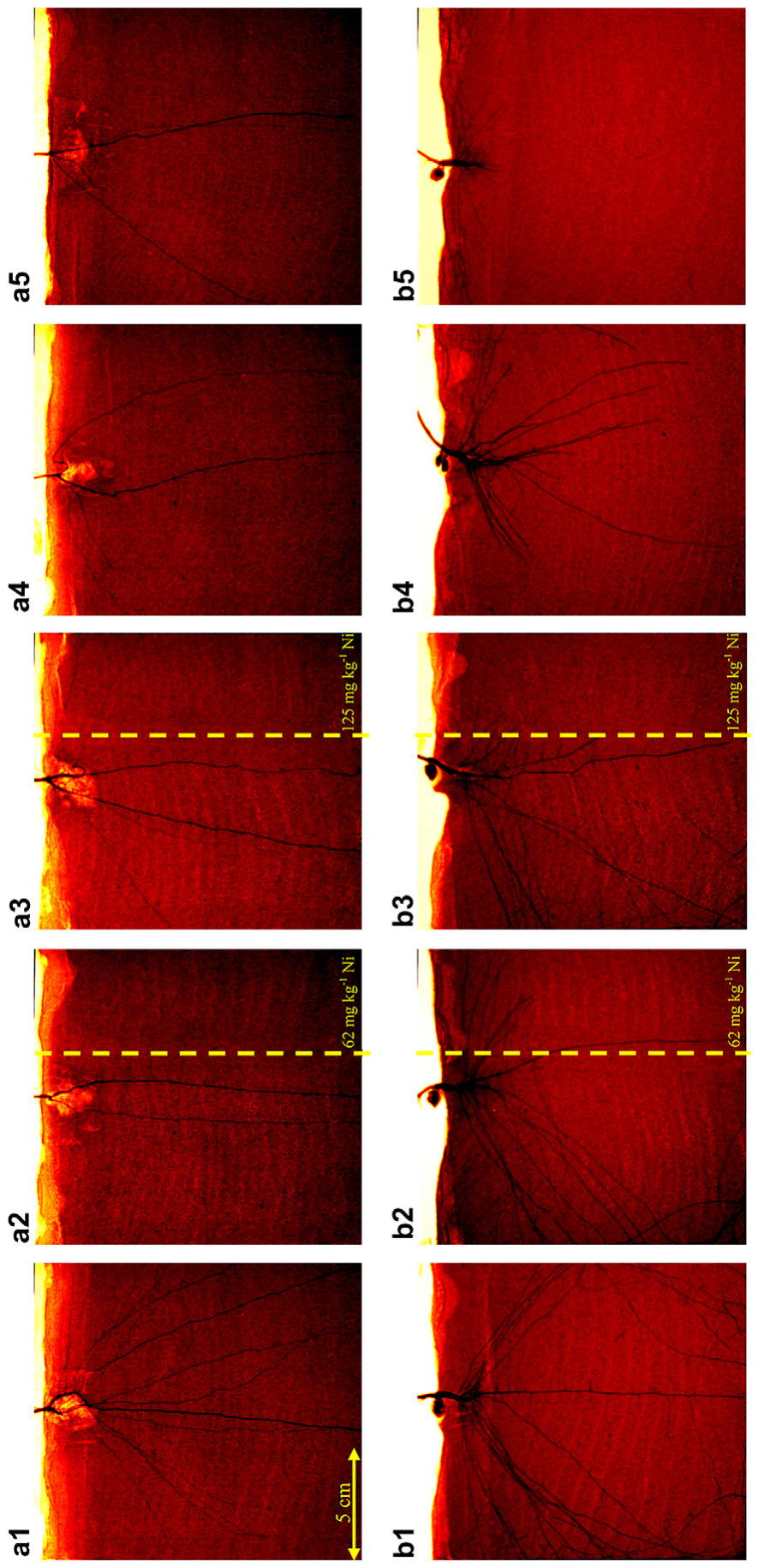
There was evidence of morphological change in the root system and structure of B. coddii grown in the Ni-spiked soils compared to the control soil (Fig. 4). There was lower number of primary roots for each plant in the Ni-spiked soil (7–10 compared to 12–16 in the control soil) and the primary roots grew thicker with considerably less branching.
与对照土壤相比,在添加Ni土壤中生长的B. coddii的根系系统和结构存在形态变化的证据(图4)。在添加Ni土壤中,每株植物的初生根数量较少(7–10条,对照土壤中为12–16条),且初生根更粗、分枝明显减少。
3.2. Root development over time in NR experiments3.2. NR试验中根系随时间的发育
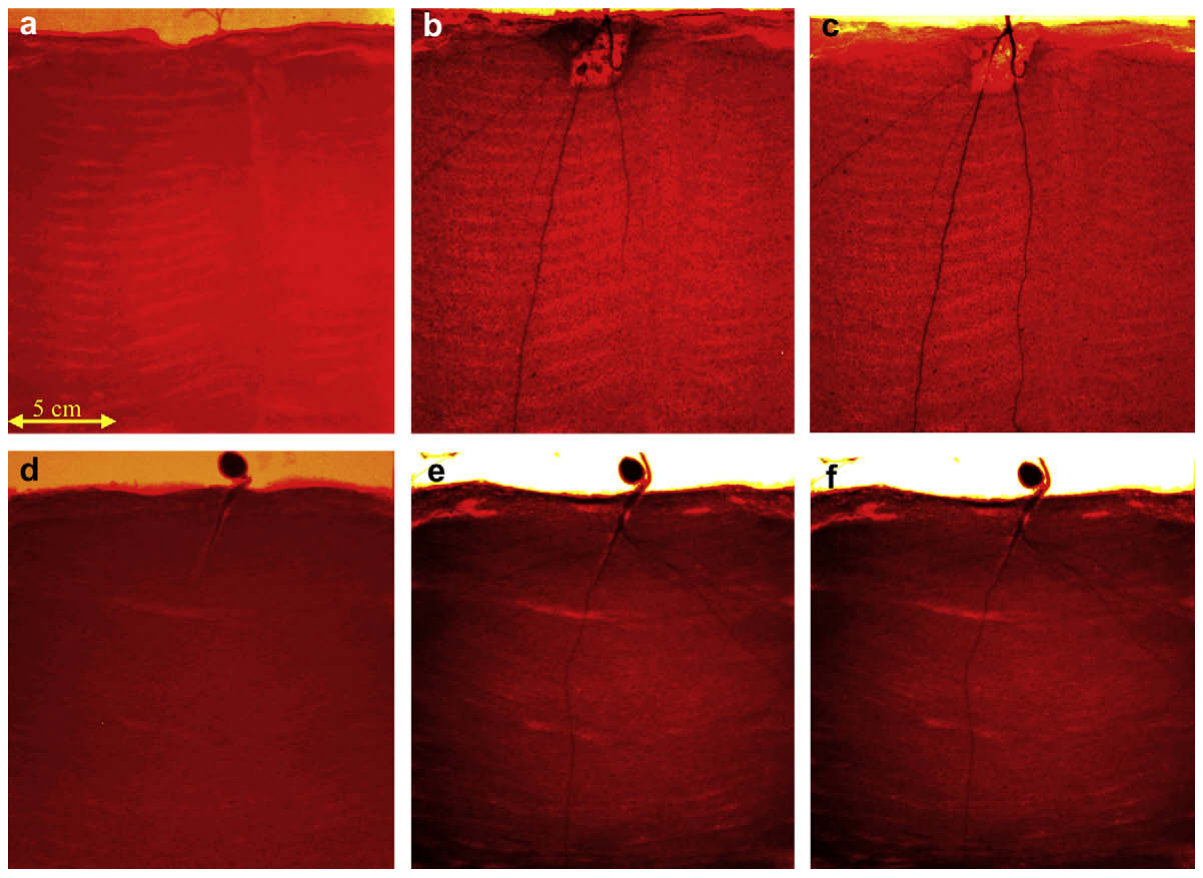
Fig. 5 shows neutron images of the roots of B. coddii (a, b and c) and C. arietinum (d, e and f) over the course of the experiment. The images were taken on the first week (a and d), the third week (b and e) and the fifth week (c and f) after the experiment started. Most of the root growth happened in the second and third weeks. In the third week, roots of both C. arietinum and B. coddii reached the container walls on the left and right side of the container (Fig. 5b and e). Roots of C. arietinum, after reaching the container wall, bounced back inside the container which shows that chickpeas need more space and a bigger container for natural root development.图5为试验期间B. coddii(a、b和c)和C. arietinum(d、e和f)根系的中子图像。图像分别于试验开始后第1周(a和d)、第3周(b和e)和第5周(c和f)拍摄。根系生长主要发生在第2周和第3周。第3周时,C. arietinum和B. coddii的根系均已到达容器左右两侧的容器壁(图5b和e)。C. arietinum的根系到达容器壁后折返向容器内部生长,表明鹰嘴豆需要更大空间和更大容器才能实现根系的自然发育。
3.4. Root growth pattern in growth containers3.4. 生长容器中的根系生长格局
Fig. 7a1–a5 shows the root development of B. coddii after five weeks in the control and Ni treatments. While in the control soil, (a1), roots have developed permeating most sections of the container, their development was perturbed in the Ni containing treatments in both homogenously or heterogeneously spiked soils (a2–a5). In agreement with the pot experiment, roots were thicker, and less laterally branched in all Ni-treated soils (BK c/62, BK c/125, BK 62, and BK 125) compared to BK c. The root growth pattern was similar in all Ni-spiked soils. This indicates there was no root response to Ni heterogeneity in soil.图7a1–a5为对照和Ni处理中B. coddii生长5周后的根系发育情况。在对照土壤中(a1),根系已发育并遍布容器的大部分区段,而在含Ni处理中,无论均匀还是非均匀添加土壤(a2–a5),根系发育均受到干扰。与盆栽试验结果一致,与BK c相比,所有Ni处理土壤(BK c/62、BK c/125、BK 62和BK 125)中的根系更粗,侧向分枝更少。所有添加Ni土壤中的根系生长格局相似,表明根系对土壤Ni异质性未产生响应。
For C. arietinum, root development was perturbed in all Ni treatments (Fig. 7b2–b5). In the treatment CP 125, roots only grew in the top 4 cm of the container. In the heterogeneously spiked soils, root growth was inhibited in the Ni-spiked segments of the containers. There were differences in the root growth of the top and the bottom of the Ni-spiked segments of the container. While the first marginal roots penetrated the top 5 cm of the Ni-spiked segment of the container, no roots grew in the bottom area of the Ni-spiked segment of the containers.
对于C. arietinum,所有Ni处理中的根系发育均受到干扰(图7b2–b5)。在CP 125处理中,根系仅生长于容器顶部4 cm内。在非均匀添加土壤中,容器添加Ni区段内的根系生长受到抑制。容器添加Ni区段的上部与下部根系生长存在差异:最初的边缘根系穿入了容器添加Ni区段的顶部5 cm,而添加Ni区段的下部区域则无根系生长。
3.5. Root allocations in each segment of the growth containers3.5. 生长容器各区段中的根系分配
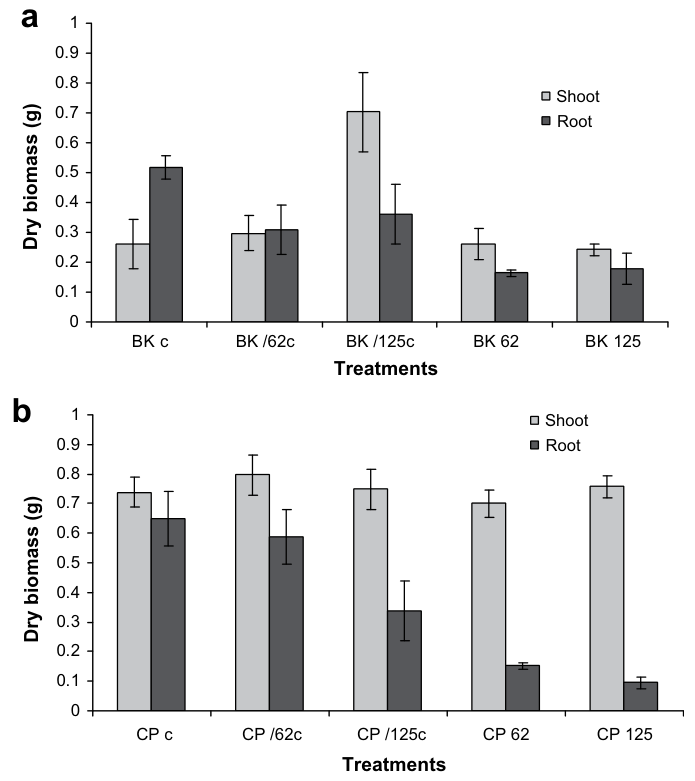
Table 2 shows the mean percentage of root allocation of B. coddii in each segment of the growth containers for each treatment. B. coddii roots in control soil (BK c) were uniformly distributed among the segments of the growth containers except for segment B. This segment contained the thick and bulky apical part of the root (stem base) in all the treatments, therefore the highest percentage of root biomass always occurred in this segment. For the heterogeneously spiked treatments (BK c/62 and BK c/125), there was no preferential growth towards or away from the Ni-spiked segments (C and F). However, the roots in both treatments produced more biomass in the lower half of the container (segments A, B, and C) than the upper half (segments D, E, and F). For the homogeneously spiked treatments, there were no significant differences between the segments except for segment B, which contained the stem base.
表2为各处理中B. coddii根系在生长容器各区段中分配的平均百分比。对照土壤(BK c)中,除B区段外,B. coddii根系在生长容器各区段中均匀分布。在所有处理中,B区段均包含粗大的根顶端部分(茎基部),因此根系生物量百分比最高者总是出现在该区段。对于非均匀添加处理(BK c/62和BK c/125),根系既未优先向添加Ni区段(C和F)生长,也未回避这些区段。然而,两个处理中的根系在容器下半部(A、B和C区段)产生的生物量均多于上半部(D、E和F区段)。对于均匀添加处理,除包含茎基部的B区段外,各区段间无显著差异。
Similar to B. coddii, roots of C. arietinum showed a uniform distribution in all the segments of the control except in the segment B (Table 3). However unlike B. coddii, they showed a significant decrease in root biomass in the Ni-spiked segments (C and F) in both heterogeneously spiked treatments (CP c/62 and CP c/125). While only segment F in the treatment CP c/62 showed a significant reduction in root biomass, both Ni-spiked segments C and F had significantly lower root biomass in treatment CP c/ 125. Furthermore, there was a significant difference in root biomass of segments C and F in treatment CP c/125. While there were no roots in segment F, roots grew in segment C, although significantly less than the unspiked segments. Root growth was hindered in both homogeneously spiked treatments (CP 62 and CP 125) and root biomass decreased considerably in the lower half of the containers.
与B. coddii相似,C. arietinum根系在对照中除B区段外的所有区段均呈均匀分布(表3)。但与B. coddii不同的是,在两个非均匀添加处理(CP c/62和CP c/125)中,其添加Ni区段(C和F)的根系生物量显著下降。在CP c/62处理中仅F区段的根系生物量显著降低,而在CP c/ 125处理中,添加Ni的C和F区段根系生物量均显著降低。此外,CP c/125处理中C和F区段的根系生物量存在显著差异:F区段无根系,而C区段有根系生长,尽管显著少于未添加区段。在两个均匀添加处理(CP 62和CP 125)中根系生长均受到阻碍,容器下半部的根系生物量明显减少。
Average percentage of Berkheya coddii roots in each segment of the growth container.
生长容器各区段中Berkheya coddii根系的平均百分比。
| Segments区段 | BK c | BK c/62 | BK c/125 | BK 62 | BK 125 |
|---|---|---|---|---|---|
| A | 12.5 �2.2ab | 3.3 �2.0a | 5.3 �0.7a | 8.1 �0.7a | 11.4�4.2a |
| B | 27.1 �4.4b | 51.6 �6.2b | 41.5 �6.2b | 51.9 �4.8b | 52.7 �5.4b |
| Ca | 16.7 �4.9a | 7.0 �4.2a | 6.5 �0.8a | 14.0 �1.9a | 5.1 �4.1a |
| D | 14.6 �2.9a | 0.8 �0.1a | 14.1 �0.2c | 5.8 �2.1a | 13.0 �4.8a |
| E | 15.0 �4.7a | 29.4 �2.9c | 13.9 �4.6c | 9.1 �2.8a | 12.1 �4.5a |
| Fa | 14.1 �2.7a | 7.8 �4.5a | 18.6 �2.9c | 11.0 �2.1a | 5.6 �4.5a |
Values are mean � standard deviations, n = 3. a Only segments C and F were spiked in treatments BK c/62 and BK c/125. b Values sharing identical letters are not significantly different (P > 0.05).
数值为平均值 � 标准差,n = 3。a 在BK c/62和BK c/125处理中仅C和F区段添加了Ni。b 标有相同字母的数值间无显著差异(P > 0.05)。
3.6. Ni concentrations in above-ground biomass3.6. 地上部生物量中的Ni浓度
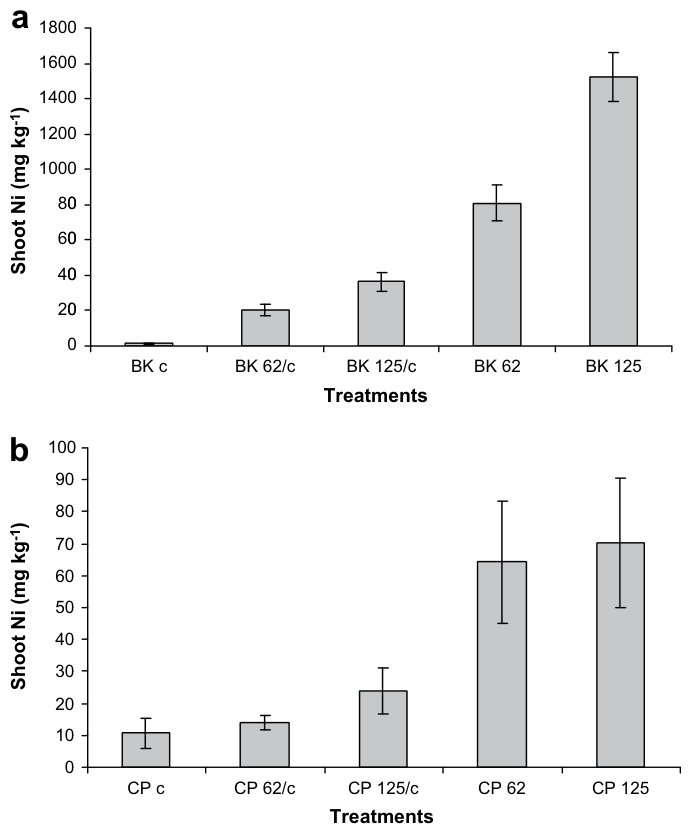
Fig. 8 shows Ni concentration in dry above-ground biomass of B. coddii and C. arietinum grown in different treatments. Ni concentration in the dry above-ground biomass of B. coddii ranged from 13.9 � 4.7 mg kg�1 in control soil to 1524.8 � 137.1 mg kg�1 in BK 125. All the treatments significantly differed in their Ni concentrations. For C. arietinum however, there was no significant difference between CP 62 and CP 125 and between CP c and CP 62/c treatments and the Ni concentrations ranged from 10.6 � 4.9 mg kg�1 in the control soil to 70.3 � 19.1 mg kg�1 in CP 125.图8为不同处理中B. coddii和C. arietinum地上部干生物量中的Ni浓度。B. coddii地上部干生物量中的Ni浓度范围从对照土壤中的13.9 � 4.7 mg kg�1至BK 125中的1524.8 � 137.1 mg kg�1,各处理间Ni浓度均存在显著差异。而对于C. arietinum,CP 62与CP 125之间以及CP c与CP 62/c处理之间均无显著差异,Ni浓度范围从对照土壤中的10.6 � 4.9 mg kg�1至CP 125中的70.3 � 19.1 mg kg�1。
4Discussion讨论
Root architecture of B. coddii changed in presence of Ni in soil compared to the control soil (Fig. 4). Thicker roots with considerably less branching were found in the spiked soil. Similar results for other hyperaccumulator plants have been reported in literature. Schwartz et al. (1999) showed that T. caerulescens developed shorter roots in clusters in the presence of Zn and rather finer and longer roots in unspiked soil. B. coddii produced lower root biomass in spiked soil compared to the control soil. Less branching, fewer fine roots, and lower root biomass means that the root surface area of B. coddii was reduced in the spiked soil. We speculate that this might be a morphological change to tolerate high concentration of Ni in the environment. More research is needed to understand fully the nature and the magnitude of these changes.
与对照土壤相比,土壤中存在Ni时B. coddii的根系构型发生了变化(图4)。在添加Ni的土壤中根系更粗且分枝明显减少。文献中已有关于其他超富集植物的类似报道。Schwartz et al. (1999) 表明,T. caerulescens在有Zn存在时形成较短的簇生根,而在未添加土壤中则形成较细较长的根。与对照土壤相比,B. coddii在添加Ni土壤中的根系生物量较低。分枝减少、细根减少和根系生物量降低意味着B. coddii在添加Ni土壤中的根系表面积减小。我们推测这可能是一种耐受环境中高浓度Ni的形态变化。要全面了解这些变化的性质和程度,尚需进一步研究。
Our results did not show any preferential proliferation of B. coddii towards the Ni-spiked segments of the growth container in any of the heterogeneous treatments. Therefore, unlike what has been observed for some hyperaccumulator plants such as T. caerulescens (Schwartz et al., 1999; Whiting et al., 2000), root-foraging is not a metal-acquisition strategy in B. coddii at these concentrations. We did not observe any significant difference between the root biomass of B. coddii in the spiked segments of the heterogeneously spiked soil with 125 and 62 mg kg�1. Foraging may occur at lower soil Ni concentrations. However, this is unlikely because the Ni concentrations that we used in our experiments are some tenfold lower than those reported by other workers (Robinson et al., 1997; Brooks et al., 2001). Therefore, a foraging strategy would have significantly increased the Ni concentration of the plant.
在所有非均匀处理中,本研究结果均未显示B. coddii向生长容器添加Ni区段的优先增殖。因此,与在T. caerulescens等某些超富集植物中观察到的情况不同(Schwartz et al., 1999; Whiting et al., 2000),在上述浓度下根系觅食并非B. coddii获取金属的策略。在125和62 mg kg�1非均匀添加土壤的添加区段中,B. coddii根系生物量未见任何显著差异。觅食行为可能在较低的土壤Ni浓度下发生,但这种可能性不大,因为本试验所用的Ni浓度比其他研究者报道的浓度低约十倍(Robinson et al., 1997; Brooks et al., 2001)。因此,若存在觅食策略,植物体内的Ni浓度应会显著升高。
Average percentage of Cicer arietinum roots in each segment of the growth container.
生长容器各区段中Cicer arietinum根系的平均百分比。
| Segments区段 | CP c | CP c/62 | CP c/125 | CP 62 | CP 125 |
|---|---|---|---|---|---|
| A | 15.7 �3.0ab | 14.8 �3.0a | 24.9 �6.8a | 21.3�4.2a | 19.9�4.9a |
| B | 37.9 �5.3b | 32.7 �2.8b | 36.1 �11.8a | 46.9 �5.4b | 53.4 �6.2b |
| Ca | 12.0 �4.9a | 10.9 �4.7a | 3.0 �0.9b | 18.8�1.1a | 26.6 �2.8a |
| D | 12.7 �2.7a | 19.9 �4.8c | 26.8 �8.9a | 6.0�1.9c | 0.0�0.0c |
| E | 5.7 �4.6a | 12.9 �0.9a | 9.0 �2.6c | 2.0�4.5c | 0.0�0.0c |
| Fa | 15.8 �3.9a | 8.6 �1.2d | 0.0 �0.0d | 4.9�0.5c | 0.0�0.0c |
Values are mean � standard deviations, n = 3. a Only segments C and F were spiked in treatments CP c/62 and CP c/125. b Values sharing identical letters are not significantly different (P > 0.05).
数值为平均值 � 标准差,n = 3。a 在CP c/62和CP c/125处理中仅C和F区段添加了Ni。b 标有相同字母的数值间无显著差异(P > 0.05)。
B. coddii showed a high shoot:root ratio in the Ni-spiked treatments and disproportionally low shoot:root biomass ratio in the control soil (Fig. 6a). We speculate that this might be explained by the metabolic requirement of B. coddii for Ni. Studies on the possible physiological role of Ni in B. coddii could answer this question.
B. coddii在添加Ni处理中表现出较高的地上部/根系比,而在对照土壤中地上部/根系生物量比则异常偏低(图6a)。我们推测,这可能与B. coddii对Ni的代谢需求有关。针对Ni在B. coddii中可能的生理作用开展研究,有望回答这一问题。
Root growth and biomass of B. coddii was significantly higher in the heterogeneously spiked soils compared to the homogeneous ones with the same concentrations of Ni in soil (Fig. 6a). Similarly, Haines et al. (2002) found greater growth of T. caerulescens in heterogeneous rather than homogeneous Zn treatment (even greater than the control). He associated this increase with stimulations due to higher nutritional requirement for Zn and differences in nutrient acquisitions by metal additions. In some plants greater growth can be achieved in habitats with heterogeneously distributed nutrients than with homogeneous ones (Wijesinghe et al., 2001; Hutchings and John, 2004). But whether soil heterogeneity causes plants to use the supply of resources more efficiently is not yet clear.
在土壤Ni浓度相同的条件下,B. coddii在非均匀添加土壤中的根系生长和生物量显著高于均匀添加土壤(图6a)。类似地,Haines et al. (2002) 发现T. caerulescens在非均匀Zn处理中的生长量高于均匀处理(甚至高于对照)。他将这一增长归因于植物对Zn较高的营养需求所带来的刺激作用,以及金属添加引起的养分获取差异。某些植物在养分非均匀分布的生境中能比在均匀分布的生境中获得更大生长量(Wijesinghe et al., 2001; Hutchings and John, 2004)。但土壤异质性是否会使植物更有效地利用资源供给,目前尚不清楚。
The non-accumulator species C. arietinum, however, showed a linear decrease in root biomass from control to heterogeneously and homogeneously spiked soils (Fig. 6b), which indicates that increasing Ni concentration in soil hindered root development. Interestingly, the shoot biomass did not show any significant change among the treatments despite severe reduction in root biomass. This might be explained by the large nutritional storage in the seeds.
然而,非富集物种C. arietinum的根系生物量从对照到非均匀添加土壤再到均匀添加土壤呈线性下降(图6b),表明土壤Ni浓度升高阻碍了根系发育。有趣的是,尽管根系生物量大幅下降,各处理间地上部生物量并无显著变化,这可能是由于种子中贮藏了大量营养物质。
Root biomass of C. arietinum was higher in the segment C (upper part of the container) of the container than the segment F (lower part of the container) in all the heterogeneously spiked treatments (Table 2). This indicates that there were more roots growing into the spiked segment in the early stage of root growth than the later stages. Whether this could be due to signalling or discrimination of the Ni-spiked segments in the later stage of root growth is yet to be studied. Unlike B. coddii, the root development of C. arietinum was more severely hindered in the heterogeneously spiked soil with 125 mg kg�1 Ni compared to the heterogeneously spiked soil with 62 mg kg�1.
在所有非均匀添加处理中,C. arietinum在容器C区段(容器上部)的根系生物量均高于F区段(容器下部)(表2)。这表明在根系生长早期长入添加区段的根系多于后期。这是否源于根系生长后期的信号传导或对添加Ni区段的辨别,尚待研究。与B. coddii不同,与非均匀添加62 mg kg�1的土壤相比,C. arietinum在非均匀添加125 mg kg�1 Ni土壤中的根系发育受到更严重的阻碍。
Ni concentrations in the above-ground biomass of C. arietinum did not exceed 93 mg kg�1 (Fig. 8b). There was no significant difference in the above-ground biomass of C. arietinum in various treatments. However, C. arietinum grown in the heterogeneously spiked soils showed significantly lower Ni concentrations in the above-ground biomass than the homogeneously spiked treatments. This can be explained by the root biomass reduction of C. arietinum in the Ni-spiked segments of the growth containers.
C. arietinum地上部生物量中的Ni浓度未超过93 mg kg�1(图8b)。不同处理间C. arietinum的地上部生物量无显著差异。然而,与均匀添加处理相比,在非均匀添加土壤中生长的C. arietinum地上部生物量中的Ni浓度显著较低。这可以用C. arietinum在生长容器添加Ni区段中根系生物量的减少来解释。
5Conclusions结论
In summary, this study has demonstrated that unlike some other hyperaccumulator plants such as T. caerulescens, the roots of B. coddii do not proliferate preferentially towards Ni-rich patches in soil. However, its root morphology changes in the Ni-spiked soil. On the other hand, C. arietinum seems to avoid the Ni-spiked patches in soil. We recommend neutron radiography combined with image analysis technique to be used as a fast and quantitative screening method for root response of various plants to physical and chemical heterogeneities in soil.
综上所述,本研究表明,与T. caerulescens等某些其他超富集植物不同,B. coddii的根系并不优先向土壤中的富Ni斑块增殖,但其根系形态在添加Ni的土壤中发生改变。另一方面,C. arietinum似乎会回避土壤中的添加Ni斑块。我们建议将中子成像结合图像分析技术作为一种快速、定量的筛选方法,用于研究各种植物根系对土壤物理和化学异质性的响应。
Acknowledgements致谢
This study was funded by the Swiss National Science Foundation. Dr. He´ctor Conesa had a grant from Fundacio´n Se´neca of Comunidad Auto´noma de Murcia (Spain).
本研究由瑞士国家科学基金会(Swiss National Science Foundation)资助。Héctor Conesa博士获得了西班牙Comunidad Autónoma de Murcia的Fundación Séneca资助。
References参考文献
Angle, J.S., Chaney, R.L., Baker, A.J.M., Li, Y., Reeves, R., Volk, V., Roseberg, R., Brewer, E., Burke, S., Nelkin, J., 2001. Developing commercial phytoextraction technologies: practical considerations. South African Journal of Science 97, 619– 623.
Baker, A.J.M., McGrath, S.P., Sidoli, C.M.D., Reeves, R.D., 1994. The possibility of in-situ heavy-metal decontamination of polluted soils using crops of metalaccumulating plants. Resources Conservation and Recycling 11, 41–49.
Brooks, R.R. (Ed.), 1998. Plants That Hyperaccumulate Heavy Metals. CAB International, Wallingford.
Brooks, R.R., Chambers, M.F., Nicks, L.J., Robinson, B.H., 1998. Phytomining. Trends in Plant Science 3, 359–362.
Brooks, R.R., Robinson, B.H., Howes, A.W., Chiarucci, A., 2001. An evaluation of Berkheya coddii Roessler and Alyssum bertolonii Desv. for phytoremediation and phytomining of nickel. South African Journal of Science 97, 558–560.
Dechamps, C., Noret, N., Mozek, R., Draye, X., Meerts, P., 2008. Root allocation in
metal-rich patch by Thlaspi caerulescens from normal and metalliferous soil - new insights into the rhizobox approach. Plant and Soil 310, 211–224.
Furukawa, J., Nakanishi, T.M., Matsubayashi, H., 1999. Neutron radiography of a root growing in soil with vanadium. Nuclear Instruments & Methods in Physics Research Section A-Accelerators Spectrometers Detectors and Associated Equipment 424, 116–121.
Gaur, P.M., Krishnamurthy, L., Kashiwagi, J., 2008. Improving drought-avoidance root traits in chickpea (Cicer arietinum L.) - current status of research at ICRISAT. Plant Production Science 11, 3–11.
Haines, B.J., 2002. Zincophilic root foraging in Thlaspi caerulescens. New Phytologist 155, 363–372.
Haines, B.J., Hutchings, M.J., John, L.A., 2002. Thlaspi caerulescens root foraging and growth responses to opposite and coincidental nutrient and Zn patches. Ecological Society of America Annual Meeting Abstracts 87, 148.
Hairiah, K., Vannoordwijk, M., Setijono, S., 1995. Tolerance and avoidance of Al toxicity by Mucuna-Pruriens var utilis at different levels of P supply. Plant and Soil 171, 77–81.
Hoagland, D.R., Arnon, D.I., 1938. The water culture method for growing plants without soil. California Agriculture Experimental Station Bulletin 347, 1–39. Hopmans, J.W., Bristow, K.L., 2002. Current capabilities and future needs of root water and nutrient uptake modeling. Advances in Agronomy 77, 103–183. Hutchings, M.J., John, E.A., 2004. The effects of environmental heterogeneity on root growth and root/shoot partitioning. Annals of Botany 94, 1–8.
Lasat, M.M., Pence, N.S., Garvin, D.F., Ebbs, S.D., Kochian, L.V., 2000. Molecular physiology of zinc transport in the Zn hyperaccumulator Thlaspi caerulescens. Journal of Experimental Botany 51, 71–79.
Leyser, O., Fitter, A., 1998. Roots are branching out in patches. Trends in Plant Science 3, 203–204.
Li, Y.M., Chaney, R., Brewer, E., Roseberg, R., Angle, J.S., Baker, A., Reeves, R., Nelkin, J., 2003. Development of a technology for commercial phytoextraction of nickel: economic and technical considerations. Plant and Soil 249, 107–115. Lynch, J.P., Brown, K.M., 2001. Topsoil foraging - an architectural adaptation of plants to low phosphorus availability. Plant and Soil 237, 225–237.
Menon, M., Robinson, B., Oswald, S.E., Kaestner, A., Abbaspour, K.C., Lehmann, E., Schulin, R., 2007. Visualization of root growth in heterogeneously contaminated soil using neutron radiography. European Journal of Soil Science 58, 802–810.
Moradi, A.B., Conesa, H.M., Robinson, B.H., Lehmann, E., Ku¨hne, G., Kaestner, A., Schulin, R. 2009. Neutron radiography as a tool for revealing root development in soil: capabilities and limitations. Plant and Soil 318, 243–255.
Morrey, D.R., Balkwill, K., Balkwill, M.J., Williamson, S.,1992. A review of some studies of the serpentine flora of Southern Africa. Intercept, Andover. In: Baker, A.J.M., Procter, J., Reeves, R.D. (Eds.), The Vegetation of Ultramafic (Serpentine) Soils, pp. 147–158.
Oswald, S.E., Menon, M., Robinson, B., Carminati, A., Vontobel, P., Lehmann, E., Schulin, R., 2008. Quantitative imaging of infiltration, root growth, and root water uptake via neutron radiography. Vadose Zone Journal 7, 1035–1047.
Pence, N.S., Larsen, P.B., Ebbs, S.D., Letham, D.L.D., Lasat, M.M., Garvin, D.F., Eide, D., Kochian, L.V., 2000. The molecular physiology of heavy metal transport in the Zn/Cd hyperaccumulator Thlaspi caerulescens. Proceedings of the National Academy of Sciences of the United States of America 97, 4956–4960.
Pierret, A., Moran, C.J., Doussan, C., 2005. Conventional detection methodology is limiting our ability to understand the roles and functions of fine roots. New Phytologist 166, 967–980.
Podar, D., Ramsey, M.H., Hutchings, M.J., 2004. Effect of cadmium, zinc and substrate heterogeneity on yield, shoot metal concentration and metal uptake by Brassica juncea: implications for human health risk assessment and phytoremediation. New Phytologist 163, 313–324.
Robinson, B.H., Brooks, R.R., Howes, A.W., Kirkman, J.H., Gregg, P.E.H., 1997. The potential of the high-biomass nickel hyperaccumulator Berkheya coddii for phytoremediation and phytomining. Journal of Geochemical Exploration 60,115–126.
Robinson, B., Fernandez, J.E., Madejon, P., Maranon, T., Murillo, J.M., Green, S., Clothier, B., 2003a. Phytoextraction: an assessment of biogeochemical and economic viability. Plant and Soil 249, 117–125.
Robinson, B., Green, S., Mills, T., Clothier, B., van der Velde, M., Laplane, R., Fung, L., Deurer, M., Hurst, S., Thayalakumaran, T., van den Dijssel, C., 2003b. Phytoremediation: using plants as biopumps to improve degraded environments. Australian Journal of Soil Research 41, 599–611.
Schwartz, C., Morel, J.L., Saumier, S., Whiting, S.N., Baker, A.J.M., 1999. Root development of the zinc-hyperaccumulator plant Thlaspi caerulescens as affected by metal origin, content and localization in soil. Plant and Soil 208, 103–115.
Tumlinson, L.G., Liu, H.Y., Silk, W.K., Hopmans, J.W., 2008. Thermal neutron computed tomography of soil water and plant roots. Soil Science Society of America Journal 72, 1234–1242.
Ueno, D., Iwashita, T., Zhao, F.J., Ma, J.F., 2008. Characterization of Cd translocation and identification of the Cd form in xylem sap of the Cd-hyperaccumulator Arabidopsis halleri. Plant and Cell Physiology 49, 540–548.
vanVuuren, M.M.I., Robinson, D., Griffiths, B.S., 1996. Nutrient inflow and root proliferation during the exploitation of a temporally and spatially discrete source of nitrogen in soil. Plant and Soil 178, 185–192.
Whiting, S.N., Leake, J.R., McGrath, S.P., Baker, A.J.M., 2000. Positive responses to Zn and Cd by roots of the Zn and Cd hyperaccumulator Thlaspi caerulescens. New Phytologist 145, 199–210.
Wijesinghe, D.K., John, E.A., Beurskens, S., Hutchings, M.J., 2001. Root system size and precision in nutrient foraging: responses to spatial pattern of nutrient supply in six herbaceous species. Journal of Ecology 89, 972–983.
Willatt, S.T., Struss, R.G., Taylor, H.M., 1978. Insitu root studies using neutron radiography. Agronomy Journal 70, 581–586.