Contents lists available at ScienceDirect journal homepage: www.elsevier.com/locate/envpol
Review
Luke Beesley a,*, Eduardo Moreno-Jiménez b, Jose L. Gomez-Eyles c, Eva Harris d, Brett Robinson d, Tom Sizmur e
a The James Hutton Institute, Craigiebuckler, Aberdeen AB15 8QH, UK b Departamento de Química Agrícola, Universidad Autónoma de Madrid, 28049 Madrid, Spain c Department of Civil and Environmental Engineering, University of Maryland Baltimore County, Baltimore, MD 21250, United States d Department of Soil and Physical Sciences, Lincoln University, Lincoln 7647, New Zealand e Soil Research Centre, Department of Geography and Environmental Science, University of Reading, Whiteknights, Reading RG6 6DW, UK
a 詹姆斯·赫顿研究所(The James Hutton Institute),Craigiebuckler, Aberdeen AB15 8QH,英国 b 马德里自治大学农业化学系(Departamento de Química Agrícola, Universidad Autónoma de Madrid),28049 Madrid,西班牙 c 马里兰大学巴尔的摩县分校土木与环境工程系(Department of Civil and Environmental Engineering, University of Maryland Baltimore County),Baltimore, MD 21250,美国 d 林肯大学土壤与物理科学系(Department of Soil and Physical Sciences, Lincoln University),Lincoln 7647,新西兰 e 雷丁大学地理与环境科学系土壤研究中心(Soil Research Centre, Department of Geography and Environmental Science, University of Reading),Whiteknights, Reading RG6 6DW,英国
1Introduction引言
Soil contamination is an excess of any element or compound, through direct or secondary exposure, which causes a toxic response to biota or humans, resulting in unacceptable environmental risks (Adriano, 2001; Abrahams, 2002; Vangronsveld et al., 2009). Contamination of soils with both organic and inorganic toxins occurs worldwide (Mench et al., 2010) and more environmentally acceptable alternatives to unsustainable waste disposal techniques for dealing with this problem have been sought. As the modern agenda seeks to engineer natural processes to meet remediation needs in the most cost-effective ways possible, the in situ application of amendments to contaminated soils to bind pollutants whilst providing material conditions that promote plant growth and stimulate ecological restoration have become more popular (Adriano et al., 2004; Bernal et al., 2006; Vangronsveld et al., 2009). Regulators are now starting to recognise the influence of contaminant bioavailability and mobility on environmental risk and consequently there is an increasing adoption of a risk-based approach when assessing soil quality (Swartjes, 1999; Fernández et al., 2005). Such risk-based regulatory systems are concerned with the effect of the contaminant, rather than just the total concentration in the soil so measures addressing onward consequences of pollution rather than merely reducing total soil concentrations will be the focus of subsequent remediation strategies.
土壤污染是指任何元素或化合物的过量存在,其通过直接或间接暴露对生物群或人类产生毒性反应,从而导致不可接受的环境风险(Adriano, 2001; Abrahams, 2002; Vangronsveld et al., 2009)。有机与无机毒物造成的土壤污染在世界范围内普遍存在(Mench et al., 2010),人们一直在寻求比不可持续的废弃物处置技术更为环境友好的替代方案来应对这一问题。当前的发展思路力求以最具成本效益的方式调控自然过程以满足修复需求,因此,向污染土壤原位施用改良剂以结合污染物,同时提供促进植物生长和激发生态恢复的物质条件,已日益受到青睐(Adriano et al., 2004; Bernal et al., 2006; Vangronsveld et al., 2009)。监管机构正逐渐认识到污染物的生物有效性和迁移性对环境风险的影响,因此在评价土壤质量时越来越多地采用基于风险的方法(Swartjes, 1999; Fernández et al., 2005)。此类基于风险的监管体系关注的是污染物的效应,而不仅仅是其在土壤中的总浓度,因此,今后修复策略的重点将是应对污染的后续影响,而不仅仅是降低土壤中污染物的总浓度。
* Corresponding author.
E-mail addresses:luke.beesley@hutton.ac.uk,luke_beesley@hotmail.com(L.Beesley).
The amendment of soils for their remediation is a long standing procedure, with the aim of reducing the risk of pollutant transfer to proximal waters or receptor organisms. Organic materials are a popular choice for this as they are derived from biological matter and often require little pre-treatment before they may be directly applied to soils. Additionally the practice of soil amendment may also be a convenient route to the disposal of organic residues surplus to requirement. Carbon rich amendments, such as activated carbons, have been deployed for soil and sediment remediation purposes due to their ability to reduce contaminant bioavailability (Brändli et al., 2008; Cho et al., 2009) and hence risk. Activated carbons are a strongly sorbing carbonaceous charcoal material produced from the incomplete combustion of organic materials (e.g. coal or coconut shells), followed by activation to increase surface area (Brändli et al., 2008). Organic contaminants have been shown to sorb strongly to carbonaceous fractions, which are often present in soils at contaminated sites, such as coal (Cornelissen and Gustafsson, 2005), coke (Ghosh et al., 2003) or soot (Jonker and Koelmans, 2002). The sorption of organic contaminants to soils and sediments can be up to two orders of magnitude higher than expected on the basis of sorption to natural organic matter due to the presence of these additional carbonaceous fractions (Cornelissen et al., 2005). This greater sorption is responsible for the lower accumulation of organic pollutants than otherwise expected in organisms exposed to contaminated soils (Jonker et al., 2007; Kreitinger et al., 2007) and the limited potential for bioremediation of these soils due to the reduced microbial bioavailability (Hawthorne and Grabanski, 2000; Rhodes et al., 2008). The large sorption potential of carbonaceous fractions present in contaminated soils and sediments has led to the deliberate introduction of clean types of these fractions (e.g. activated carbon, biochar) into sediments, to reduce organic contaminant bioavailability (Zimmerman et al., 2004). More recent studies have also explored this possibility in soils (Brändli et al., 2008; Beesley et al., 2010; Fagervold et al., 2010). For inorganic contaminants, which cannot be degraded by microbial action, such as heavy metals, the labile loading in soils are of greatest ecological relevance because they have the greatest immediate environmental impact (Temminghoff et al., 1998; Madejón et al., 2009; Moreno-Jiménez et al., 2009, 2011; Beesley and Dickinson, 2010). In this respect materials for reducing the bioavailability of metals/metalloids can immobilise contaminants within the soil matrix (Bolan et al., 2003; Clemente et al., 2006) and reduce risk. In multi-polluted sites, such as those where organic and inorganic toxins breach safe levels, duality of amendments, that can reduce organic and inorganic contaminant mobility, could offer strategic and cost-effective advantages.
通过施用改良剂修复土壤是一种由来已久的做法,其目的是降低污染物向邻近水体或受体生物转移的风险。有机材料是这方面的常用选择,因为它们来源于生物质,且在直接施入土壤前通常只需很少的预处理。此外,土壤改良也可成为处置过剩有机残余物的便捷途径。富碳改良剂(如活性炭)因能够降低污染物的生物有效性(Brändli et al., 2008; Cho et al., 2009)从而降低风险,已被用于土壤和沉积物修复。活性炭是一种具有强吸附性的含碳木炭材料,由有机材料(如煤或椰壳)经不完全燃烧后再活化以增大比表面积而制得(Brändli et al., 2008)。研究表明,有机污染物可强烈吸附于污染场地土壤中常见的含碳组分,如煤(Cornelissen and Gustafsson, 2005)、焦炭(Ghosh et al., 2003)或烟炱(Jonker and Koelmans, 2002)。由于这些额外含碳组分的存在,有机污染物在土壤和沉积物中的吸附量可比基于天然有机质吸附的预期值高出两个数量级(Cornelissen et al., 2005)。正是这种更强的吸附,导致暴露于污染土壤的生物体内有机污染物的累积低于预期(Jonker et al., 2007; Kreitinger et al., 2007),同时由于微生物可利用性降低,这些土壤的生物修复潜力也受到限制(Hawthorne and Grabanski, 2000; Rhodes et al., 2008)。污染土壤和沉积物中含碳组分巨大的吸附潜力,促使人们有意向沉积物中添加此类组分的洁净形式(如活性炭、生物炭),以降低有机污染物的生物有效性(Zimmerman et al., 2004)。近期研究也在土壤中探讨了这一可能性(Brändli et al., 2008; Beesley et al., 2010; Fagervold et al., 2010)。对于不能被微生物降解的无机污染物(如重金属),土壤中的活性负荷最具生态意义,因为它们具有最大的直接环境影响(Temminghoff et al., 1998; Madejón et al., 2009; Moreno-Jiménez et al., 2009, 2011; Beesley and Dickinson, 2010)。就此而言,降低金属/类金属生物有效性的材料可将污染物固定于土壤基质中(Bolan et al., 2003; Clemente et al., 2006)并降低风险。在复合污染场地(如有机和无机毒物均超过安全水平的场地),能够同时降低有机和无机污染物迁移性的双效改良剂可带来战略性和成本效益方面的优势。
0269-7491/$ e see front matter � 2011 Elsevier Ltd. All rights reserved. doi:10.1016/j.envpol.2011.07.023
0269-7491/$ – 见前页 © 2011 Elsevier Ltd. 版权所有。doi:10.1016/j.envpol.2011.07.023
Like activated carbons, biochars are also produced by combustion processes (pyrolysis), but the source materials are generally limited to biological residues (e.g. wood, poultry litter, crop residues etc) and not commonly activated or further treated before application to soils. Some biochars, unlike activated carbons, are not fully carbonised, and are therefore composed of different proportions of carbonised to amorphous organic matter (Chun et al., 2004) and may react to contaminants in soils more like native soil organic matter. Symmetries may be drawn between activated carbons and biochars, with more and more studies being published solely documenting the use of non-activated charcoals, or biochars, to reduce organic contaminant bioavailability in soils with potential added benefits of increasing carbon sequestration and soil fertility (Cao et al., 2009; Spokas et al., 2009; Yu et al., 2009; Beesley et al., 2010; Zhang et al., 2010; Gomez-Eyles et al., 2011). In the recent literature the benefits associated with applying biochars to soils beyond their high C content, such as their soil conditioning properties have been reported (Novak et al., 2009; Yin Chan and Xu, 2009; Blackwell et al., 2009; Atkinson et al., 2010 and Sohi et al., 2010). It has also recently been demonstrated that biochar addition to grass pasture soil can reduce ruminant urine-derived N2O emissions (Taghizadeh-Toosi et al., 2011). However, despite the increasingly diverse documented benefits of biochars to a variety of soil parameters, the implications of interactions between biochars, soils, microbes and plant roots are not well understood (Joseph et al., 2010) nor consistently reported because their application for soil remediation has been studied less than for other organic materials such as composts or manures (Namgay et al., 2010). Therefore, whilst biochars’ properties may be potentially attractive for contaminated soils’ deployment, their ecological efficacy must be determined and their field-based potential explored. Biochars may provide an important sink for dissolved contaminants at sites where leachates and runoff are collected and irrigated onto the soil surface (e.g. Robinson et al., 2007), but the ultimate success of such measures depends on the amount of contaminant that the biochar can retain before saturation, as well as the durability of the biocharecontaminant complex which may be related to the production parameters (for example the source material and temperature; Gell et al., 2011). When mixed with soils the degradation of biochar by the usual soil processes may also adjust the balance of elementorganic matter complexation with time. It is such compounding factors that may render biochars unsuitable for the application to some contaminated soils whilst perfectly suitable in other situations.
与活性炭类似,生物炭也是通过燃烧过程(热解)生产的,但其原料一般仅限于生物残余物(如木材、禽类垫料、作物残茬等),且在施入土壤前通常不经活化或进一步处理。与活性炭不同,部分生物炭并未完全炭化,因而由不同比例的炭化有机质与无定形有机质组成(Chun et al., 2004),其与土壤中污染物的反应可能更类似于土壤原生有机质。活性炭与生物炭之间存在可比之处,越来越多的研究专门报道了利用未活化木炭(即生物炭)降低土壤中有机污染物的生物有效性,并可能兼具增加碳封存和提高土壤肥力的附加效益(Cao et al., 2009; Spokas et al., 2009; Yu et al., 2009; Beesley et al., 2010; Zhang et al., 2010; Gomez-Eyles et al., 2011)。近期文献报道了施用生物炭除其高碳含量之外的其他益处,如其土壤调理性能(Novak et al., 2009; Yin Chan and Xu, 2009; Blackwell et al., 2009; Atkinson et al., 2010 and Sohi et al., 2010)。最近还有研究表明,向草地土壤中添加生物炭可减少反刍动物尿液所致的N2O排放(Taghizadeh-Toosi et al., 2011)。然而,尽管已记录的生物炭对多种土壤参数的益处日益多样,但生物炭、土壤、微生物与植物根系之间相互作用的影响仍未得到充分认识(Joseph et al., 2010),报道结果也不一致,因为与堆肥或粪肥等其他有机材料相比,生物炭用于土壤修复的研究较少(Namgay et al., 2010)。因此,尽管生物炭的特性可能使其对污染土壤的应用颇具吸引力,但仍须确定其生态效能并探索其田间应用潜力。在收集渗滤液和径流并将其灌溉至土壤表面的场地(如Robinson et al., 2007),生物炭可能成为溶解态污染物的重要汇,但此类措施的最终成效取决于生物炭在饱和前可截留的污染物量,以及生物炭–污染物复合体的持久性,而后者可能与生产参数(如原料和温度;Gell et al., 2011)有关。生物炭与土壤混合后,其经常规土壤过程发生的降解也可能随时间改变元素–有机质络合的平衡。正是这些叠加因素,可能使生物炭不适用于某些污染土壤,而在其他情况下却非常适用。
With an increasing amount of literature on both trace element dynamics in the presence of biochars and the effects of biochars on ecological parameters, in this review we aim to:
鉴于关于生物炭存在下微量元素动态以及生物炭对生态参数影响的文献日益增多,本综述旨在:
i) Discuss agreements and conflicts regarding the effects of biochar on the mobility and availability of soil contaminants. ii) Review the existing knowledge on the effects of biochar on plant growth and soil flora and fauna in the context of revegetation and ecological restoration of contaminated soils. iii) Identify immediate research needs arising and suggest future directions for research.
i)探讨生物炭对土壤污染物迁移性和有效性影响方面的一致性结论与矛盾之处;ii)在污染土壤植被重建和生态恢复的背景下,综述生物炭对植物生长及土壤动植物区系影响的现有认识;iii)识别由此产生的紧迫研究需求,并提出今后的研究方向。
2Organic pollutants有机污染物
2.1. Principals and practices affecting sorption2.1. 影响吸附的原理与实践
Many of the initial studies on the use of carbonaceous sorbent amendments to reduce organic contaminant bioavailability focused on the application of activated carbon to sediments. For example, laboratory studies have found significant reductions in polychlorinated biphenyl (PCB) bioaccumulation by clams, polychaete worms and other benthic organisms exposed to sediments amended with activated carbon (Millward et al., 2005; Zimmerman et al., 2005; McLeod et al., 2007, 2008; Sun and Ghosh, 2008). This has led to the in situ field-scale application of activated carbon, with reported 90% reductions in aqueous equilibrium PCB concentrations 18 months after activated carbon application (Cho et al., 2009). These results are particularly encouraging as aqueous equilibrium partitioning concentrations have been shown to give a good indication of organic contaminant bioavailability in sediments (Oen et al., 2006; Van der Heijden and Jonker, 2009). Decreases in aqueous equilibrium concentrations after amending sediments with activated carbon have also been reported for other organic contaminants like dichloro-diphenyl-trichloroethane (DDT) (Tomaszewski et al., 2007) and polycyclic aromatic hydrocarbons (PAHs) (Zimmerman et al., 2004). Such results are encouraging for reducing risk, but whilst studies utilising biochars have found that application rates of �10% have reduced the rapidly desorbing PAH fraction (PPAH; Gomez-Eyles et al., 2011) the increased sorption of, for example diuron, has consequently reduced its microbial degradation (Table 1; Yang et al., 2006). This presents a challenge to managing organic contaminants; in one respect sorption can reduce short term risk but may not always ultimately be remedially beneficial. This depends on the sorption strength and factors inherent to the contaminant, char and soil which can influence retention over time.
早期关于利用含碳吸附改良剂降低有机污染物生物有效性的研究,许多集中于向沉积物中施用活性炭。例如,实验室研究发现,暴露于经活性炭改良沉积物的蛤类、多毛类蠕虫及其他底栖生物对多氯联苯(PCB)的生物累积显著降低(Millward et al., 2005; Zimmerman et al., 2005; McLeod et al., 2007, 2008; Sun and Ghosh, 2008)。这促成了活性炭的原位田间规模应用,据报道施用活性炭18个月后,水相平衡PCB浓度降低了90%(Cho et al., 2009)。这些结果尤其令人鼓舞,因为已有研究表明,水相平衡分配浓度能够较好地指示沉积物中有机污染物的生物有效性(Oen et al., 2006; Van der Heijden and Jonker, 2009)。对于其他有机污染物,如二氯二苯三氯乙烷(DDT)(Tomaszewski et al., 2007)和多环芳烃(PAHs)(Zimmerman et al., 2004),也有报道称沉积物经活性炭改良后水相平衡浓度降低。此类结果对降低风险而言令人鼓舞,但利用生物炭的研究发现,≤10%的施用量虽降低了快速解吸的PAH组分(PPAH;Gomez-Eyles et al., 2011),但对诸如敌草隆等的吸附增强却相应降低了其微生物降解(表1;Yang et al., 2006)。这为有机污染物的管理带来了挑战:一方面,吸附可降低短期风险,但最终未必总能带来修复效益。这取决于吸附强度以及污染物、生物炭和土壤的固有因素,这些因素会影响污染物随时间的截留。
For example, organic contaminant sorption to organic matter is usually described using the dual-mode sorption concept (Pignatello and Xing, 1995; Xing and Pignatello, 1997). Within this concept, organic matter is assumed to be composed of two domains, one displaying linear and non-competitive absorption or partitioning (non-carbonised organic matter) (Chun et al., 2004; Chen et al., 2008; Zhou et al., 2009), and the other showing non-linear, extensive and competitive surface adsorption (carbonised organic matter) (Cornelissen et al., 2005). It is this extensive adsorption that is mainly responsible for the increased sorption capacity of soils containing carbonaceous sorbents, but introducing biochars may adjust the ratio of carbonised to amorphous organic matter.
例如,有机污染物在有机质上的吸附通常采用双模式吸附概念来描述(Pignatello and Xing, 1995; Xing and Pignatello, 1997)。在该概念中,有机质被假定由两个区域组成:一个表现为线性、非竞争性的吸收或分配(非炭化有机质)(Chun et al., 2004; Chen et al., 2008; Zhou et al., 2009),另一个则表现为非线性、广泛且竞争性的表面吸附(炭化有机质)(Cornelissen et al., 2005)。正是这种广泛的吸附作用主要导致了含碳吸附剂土壤吸附容量的提高,但引入生物炭可能改变炭化有机质与无定形有机质的比例。
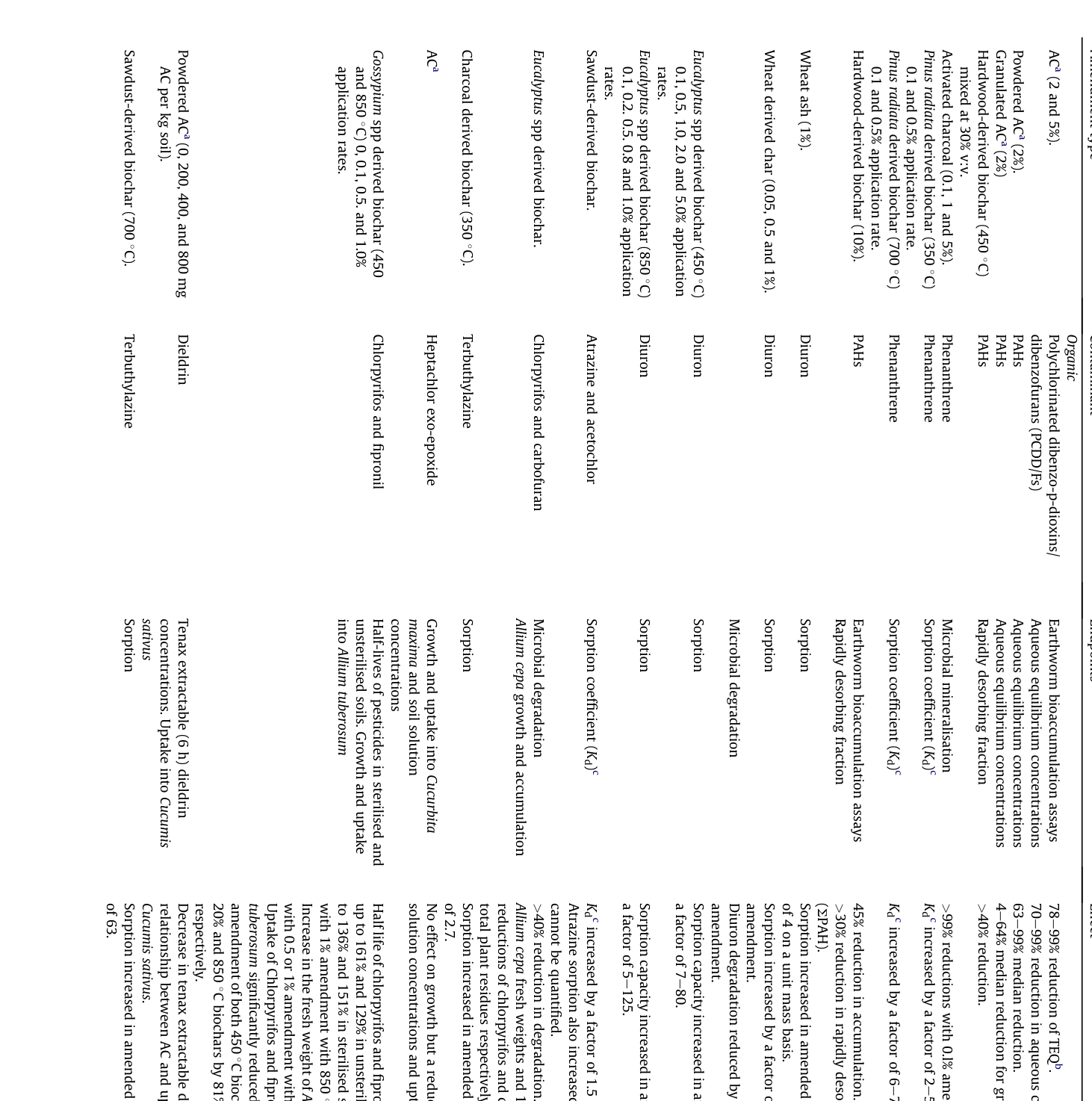
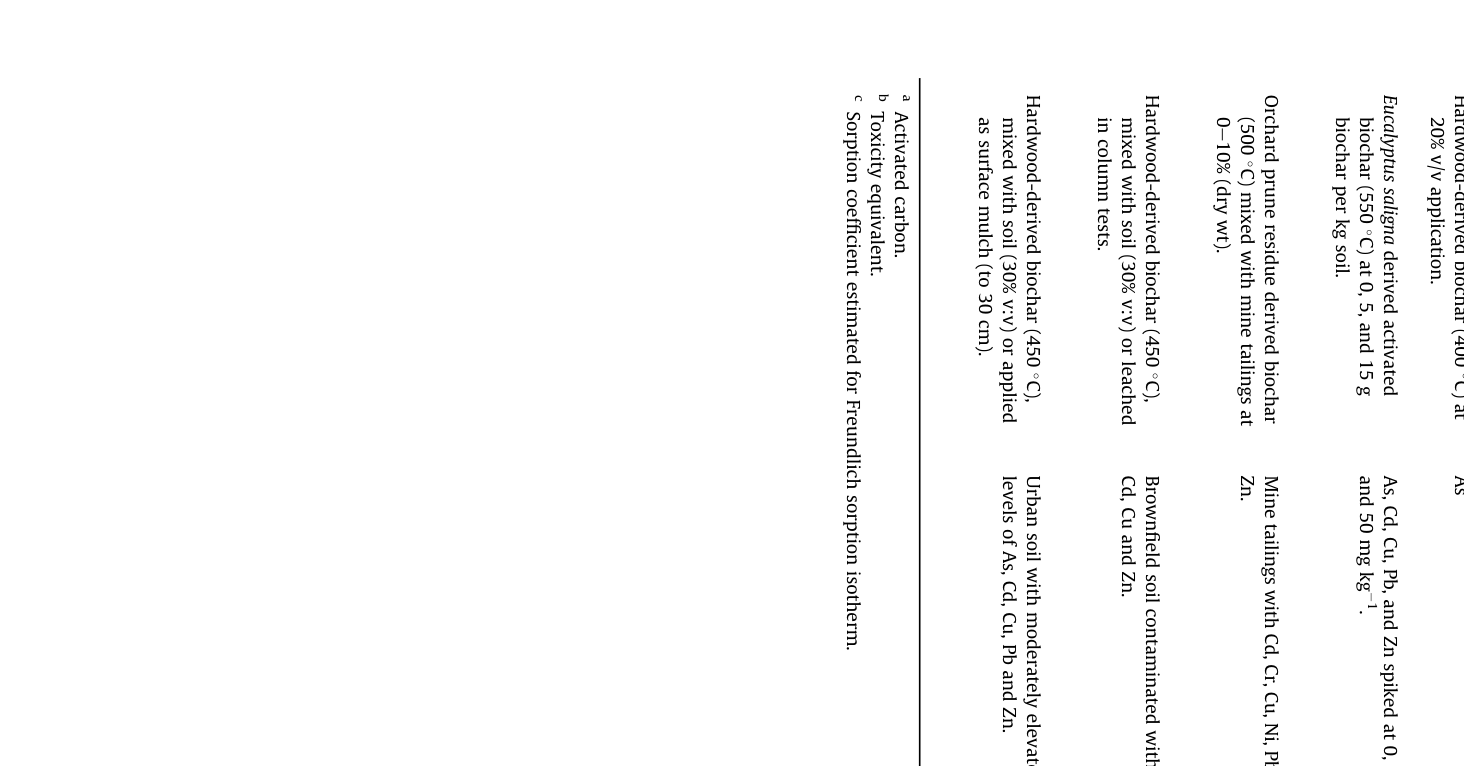
Summary of selected recently reported studies utilising biochars and their influences on organic and inorganic pollutants.
近期报道的利用生物炭的部分研究及其对有机和无机污染物影响的汇总。
L. Beesley et al. / Environmental Pollution 159 (2011) 3269e3282 3272
L. Beesley et al. / Environmental Pollution 159 (2011) 3269e3282 3272
2.2. Material factors affecting biochars’ performance2.2. 影响生物炭性能的材料因素
Increasing the pyrolysis temperature of biochars increases their degree of carbonisation, which increases their surface area (Chen et al., 2008) but reduces the abundance of amorphous organic matter. This has been shown to increase biochars’ capability to adsorb organic contaminants (Yu et al., 2006; Zhou et al., 2009; Kasozi et al., 2010; Wang et al., 2010; Zhang et al., 2010), reducing their uptake into soil organisms (Yu et al., 2009). Chen et al. (2008) measured the surface area of biochars at different pyrolysis temperatures and found biochars pyrolysed at 700 �C had half the surface area of activated carbon. This suggests that activating biochars pyrolysed at high temperatures will have the highest organic contaminant remediation potential, although pyrolysis temperatures of above 400 �C have been shown to decrease surface area in some cases, presumably due to the collapse of micropore walls (Sharma et al., 2004). Given that adsorption to biochars will be predominantly non-linear this suggests that even if biochars with high surface areas are produced sorption sites could become saturated. The blocking of sorption sites in activated carbons by organic matter has been extensively reported (Kilduff and Wigton, 1998; Cornelissen and Gustafsson, 2005; Rhodes et al., 2010), and several studies have hypothesised that this is the likely cause for the diminished capability of aged biochar to adsorb organic contaminants (Yang and Sheng, 2003a; Zhang et al., 2010). Reduced efficiency of carbonaceous sorbents due to competition between contaminants has also been reported (Yang and Sheng, 2003b; Cao et al., 2009). In a study comparing activated carbon to biochars produced at lower temperatures, the biochars were found to absorb atrazine linearly into their non-carbonised organic matter (Cao et al., 2009) suggesting advantages when remediating soils with organic and inorganic contaminants that compete for sorption sites. However, the sorption capacities of the low temperature biochars were an order of magnitude lower than that of the activated carbon for atrazine. It may be the case that the amorphous portion of additive biochars, which depends to an extent on its production, could compete with native organic matter in soils with compounds favouring different fractions of organic matter being preferentially retained by either soil or the additive char. A summary of selected recently reported studies on organics can be found in Table 1; selected studies using activated carbons are included for comparison.
提高热解温度可提高生物炭的炭化程度,从而增大其比表面积(Chen et al., 2008),但会降低无定形有机质的丰度。研究表明,这可增强生物炭对有机污染物的吸附能力(Yu et al., 2006; Zhou et al., 2009; Kasozi et al., 2010; Wang et al., 2010; Zhang et al., 2010),减少土壤生物对其的吸收(Yu et al., 2009)。Chen et al. (2008)测定了不同热解温度下生物炭的比表面积,发现700 °C热解的生物炭的比表面积为活性炭的一半。这表明,对高温热解生物炭进行活化将具有最高的有机污染物修复潜力,但也有研究表明,在某些情况下热解温度高于400 °C会使比表面积降低,推测是由于微孔孔壁坍塌所致(Sharma et al., 2004)。鉴于生物炭的吸附主要为非线性,这意味着即使生产出高比表面积的生物炭,其吸附位点仍可能达到饱和。有机质堵塞活性炭吸附位点的现象已有大量报道(Kilduff and Wigton, 1998; Cornelissen and Gustafsson, 2005; Rhodes et al., 2010),多项研究推测这可能是老化生物炭吸附有机污染物能力下降的原因(Yang and Sheng, 2003a; Zhang et al., 2010)。污染物之间的竞争导致含碳吸附剂效率降低的现象亦有报道(Yang and Sheng, 2003b; Cao et al., 2009)。一项比较活性炭与低温生物炭的研究发现,生物炭以线性方式将阿特拉津吸收至其非炭化有机质中(Cao et al., 2009),这表明在修复存在竞争吸附位点的有机和无机复合污染土壤时具有优势。然而,低温生物炭对阿特拉津的吸附容量比活性炭低一个数量级。添加的生物炭中的无定形部分(在一定程度上取决于其生产过程)可能与土壤原生有机质发生竞争,偏好不同有机质组分的化合物将分别优先被土壤或添加的生物炭截留。近期报道的有机污染物相关研究汇总见表1,并列入了部分使用活性炭的研究以作比较。
2.3. Conflicts and compromises arising2.3. 由此产生的矛盾与权衡
Laboratory studies exploring the potential of various types of carbonaceous sorbents to reduce the bioavailability of polychlorinated dibenzo-p-dioxins/dibenzofurans (PCDD/Fs) (Fagervold et al., 2010), PAHs (Brändli et al., 2008; Yang et al., 2009; Beesley et al., 2010; Rhodes et al., 2010; Zhang et al., 2010; Gomez-Eyles et al., 2011), and organic pesticides (Yang and Sheng, 2003b; Yang et al., 2006; Yu et al., 2006; Cao et al., 2009; Spokas et al., 2009; Yu et al. 2009; Wang et al., 2010) in soils (Table 1) have demonstrated another possible compromise. From an agricultural perspective, the increased sorption of organic pesticides to soil can be beneficial in terms of reducing pesticide residues in crops (Yu et al., 2009), but it can also be detrimental in terms of reducing herbicide efficiency, resulting in the need for higher application rates of these chemicals (Yu et al., 2006; Spokas et al., 2009; Kookana, 2010). It would appear, therefore that there may be a balance to be reached somewhere between the complete immobilisation of organic compounds, in one respect removing risk, and the sorption strength, allowing microbial degradation of some organic contaminants. A compromise between the increased sorption capacities of high pyrolysis temperature activated chars and the benefits provided by low temperature chars in terms of reduced toxicity and linear absorption, is needed depending on contaminant remediation goals and the compound in question.
实验室研究探讨了各类含碳吸附剂降低土壤中多氯二苯并对二噁英/二苯并呋喃(PCDD/Fs)(Fagervold et al., 2010)、PAHs(Brändli et al., 2008; Yang et al., 2009; Beesley et al., 2010; Rhodes et al., 2010; Zhang et al., 2010; Gomez-Eyles et al., 2011)和有机农药(Yang and Sheng, 2003b; Yang et al., 2006; Yu et al., 2006; Cao et al., 2009; Spokas et al., 2009; Yu et al. 2009; Wang et al., 2010)生物有效性的潜力(表1),揭示了另一种可能的权衡。从农业角度看,有机农药在土壤中吸附的增强有利于减少作物中的农药残留(Yu et al., 2009),但也可能降低除草剂药效,从而需要提高这些化学品的施用量,造成不利影响(Yu et al., 2006; Spokas et al., 2009; Kookana, 2010)。因此,似乎需要在有机化合物的完全固定(一方面可消除风险)与允许部分有机污染物被微生物降解的吸附强度之间取得平衡。应根据污染物修复目标和所涉化合物,在高温热解活化炭较高的吸附容量与低温炭在降低毒性和线性吸收方面的优势之间寻求折中。
3Inorganic pollutants无机污染物
3.1. Heavy metal mobility3.1. 重金属迁移性
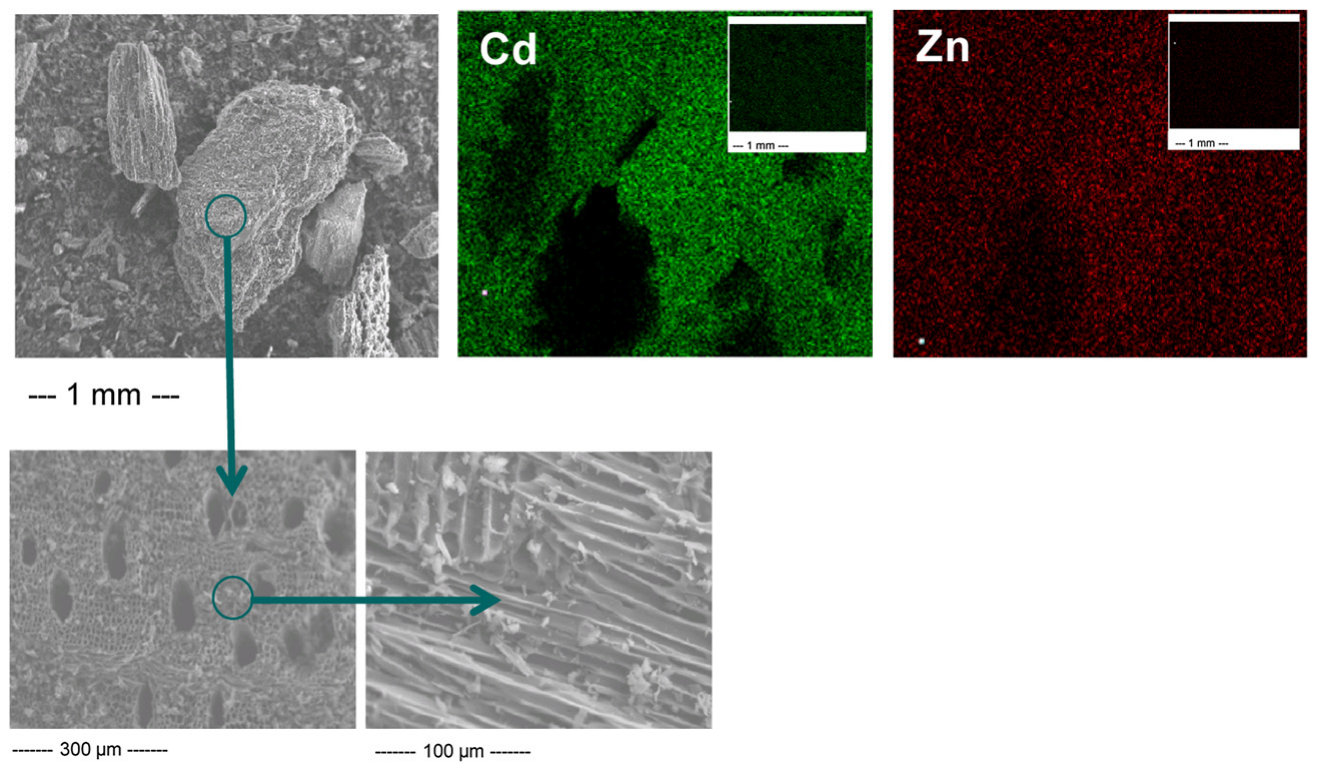
Unlike organic contaminants, whose sorption to biochar may ultimately increase their persistence in the environment because they will be protected from microbial degradation (Table 1), inorganic elements are not degraded. This presents its own challenges to utilising biochars. Biochars are able to complex metal ions on their surfaces and therefore reduce bioavailability (Fig. 1), which renders a reduced risk. However, by this mechanism essential plant nutrients may also be immobilised. If a purely quantitive reduction in heavy metal mobility is sought then the results of Uchimiya et al. (2010) are encouraging. In this study the effects of a broiler litterderived biochar amendment were compared to a pecan shellderived steam-activated carbon in synthetic rainwater leaching experiments to determine both the efficiency of biochar and activated carbon for immobilising Cu, Ni and Cd and the effects of ageing (oxidation) on metal retention. Here biochar was most effective at reducing Cu concentrations in leachate, while the activated carbon reduced Ni and Cd concentrations the furthest. However, in a sandy loam soil, with low intrinsic Cu retention capacity, it was suggested by Uchimiya et al. (2011a) that cation exchange capacity (CEC) was the primary mechanism by which biochar enhanced Cu retention whilst, in a clay-rich, alkaline soil with higher intrinsic Cu retention capability, sorption to mineral (ash) components of the char assisted retention (precipitation). Adding biochar increased the rate at which the soil solution came to equilibrium (sorption-desorption hysteresis) (Uchimiya et al., 2011b) which may increase the rate of sorption of any further contaminants added to the soil matrix. Clearly specific soil parameters influence complexation and competition between elements and consequences of biochar addition to soil chemistry.
有机污染物被生物炭吸附后可免受微生物降解,最终可能增加其在环境中的持久性(表1);与之不同,无机元素不会被降解。这给生物炭的利用带来了特有的挑战。生物炭能够在其表面络合金属离子,从而降低其生物有效性(图1),降低风险。然而,植物必需养分也可能通过这一机制被固定。若仅追求重金属迁移性在数量上的降低,则Uchimiya et al. (2010)的结果令人鼓舞。该研究在模拟雨水淋溶试验中比较了肉鸡垫料生物炭与山核桃壳蒸汽活化炭的改良效果,以确定生物炭和活性炭固定Cu、Ni和Cd的效率以及老化(氧化)对金属截留的影响。结果表明,生物炭降低渗滤液中Cu浓度的效果最好,而活性炭降低Ni和Cd浓度的幅度最大。然而,Uchimiya et al. (2011a)认为,在Cu固有截留能力较低的砂壤土中,阳离子交换量(CEC)是生物炭增强Cu截留的主要机制;而在Cu固有截留能力较高的富黏粒碱性土壤中,生物炭中矿物(灰分)组分的吸附有助于截留(沉淀)。添加生物炭提高了土壤溶液达到平衡的速率(吸附–解吸滞后)(Uchimiya et al., 2011b),这可能提高后续进入土壤基质的其他污染物的吸附速率。显然,特定的土壤参数会影响元素间的络合与竞争,以及添加生物炭对土壤化学性质的影响。
In the case of phyto-toxic concentrations of metals, studies utilising a sediment-derived canal bank soil heavily contaminated with Cd and Zn, amended with a hardwood-derived biochar showed significant reductions in concentrations of both metals in pore water collected during 60 days field exposure (Beesley et al., 2010). In a column tests using the same soil as the field-exposure experiment, biochar similarly reduced concentrations of Cd and Zn in leachate with evidence of surface sorption of both Cd and Zn to biochar (Beesley and Marmiroli, 2011), examined by scanning electron microscopy (SEM). Fig. 1 shows the relative increase in surface concentration of Cd and Zn on a piece of biochar, shown by the image’s brightness, after contaminated leachate from soil was passed over it in that experiment. Notice the network of interior pores in the SEM images which may differentially affect element retention, providing an uncertainly as to the location of the greatest sorption. Novak et al. (2009) also reported a decrease in Zn concentrations in leachate after 0e2% (wt:wt) pecan-shell biochar addition to an acidic agricultural soil, possibly related to an increase in pH whilst Laird et al. (2010) similarly discovered that leachate recovery of Zn, added via dried swine manure to leaching lysimeters with loamy soil and biochar, decreased with increasing biochar application rates (from 0 to 20 g biochar per kg�1 soil). In that particular study Cu, as well as P, K, Mg and also Ca decreased after biochar addition. Fellet et al. (2011) amended mine tailings with 0e10% orchard prune derived biochar, finding that, as well as increasing pH and CEC, biochar reduced bioavailable (DTPA-extractable) concentrations of Cd, Pb and Zn. The results of various studies examining heavy metals and As are summarised in Table 1.
对于达到植物毒性浓度的金属,利用来源于沉积物、受Cd和Zn严重污染的运河堤岸土壤开展的研究表明,施用硬木生物炭后,在60天田间暴露期间收集的孔隙水中两种金属的浓度均显著降低(Beesley et al., 2010)。在采用与田间暴露试验相同土壤开展的柱试验中,生物炭同样降低了渗滤液中Cd和Zn的浓度,且经扫描电子显微镜(SEM)检测,有证据表明Cd和Zn均在生物炭表面发生了吸附(Beesley and Marmiroli, 2011)。图1显示了在该试验中,来自土壤的污染渗滤液流经一块生物炭后,其表面Cd和Zn浓度的相对增加(以图像亮度表示)。值得注意的是,SEM图像中可见的内部孔隙网络可能对元素截留产生不同影响,使最大吸附发生的位置存在不确定性。Novak et al. (2009)也报道,向酸性农业土壤中添加0–2%(wt:wt)山核桃壳生物炭后,渗滤液中Zn浓度降低,这可能与pH升高有关;Laird et al. (2010)同样发现,在装有壤土和生物炭的淋溶渗漏计中,经干猪粪加入的Zn在渗滤液中的回收量随生物炭施用量(0至20 g生物炭 kg−1土壤)的增加而降低。在该研究中,添加生物炭后Cu以及P、K、Mg和Ca均有所降低。Fellet et al. (2011)用0–10%的果园修剪枝条生物炭改良尾矿,发现生物炭除提高pH和CEC外,还降低了Cd、Pb和Zn的生物有效态(DTPA提取态)浓度。有关重金属和As的各项研究结果汇总见表1。
With specific regard to lead, Cao et al. (2009) conducted batch sorption tests on dairy-manure biochars produced at different temperatures compared to a commercially available wood-derived activated carbon. Biochar had a greater capacity for Pb sorption than activated carbon, despite its lower surface area, retaining up to 6 times more Pb. One of the mechanisms suggested by the authors was that the biochar may reduce Pb mobility by the precipitation of insoluble Pb-phosphates. Biochar was found to be rich in P, and unlike C and N, an increase in the temperature at which biochar is produced has been found to increase P, Mg and Ca (Cao and Harris, 2010). Due to the fact that biochars’ properties are more aligned to soils than activated carbons’ are, its mechanisms of chemical rather than solely physical behaviour in soils may be further in focus, which somewhat complicated the interpretation of some results but may allow bespoke biochars to be produced. The study conducted by Cao et al. (2009) revealed that the biochar produced at 200 �C was more effective in sorbing Pb than biochar produced at 350 �C because despite greater total P concentrations, the 200 �C biochar had the greatest soluble P. Karami et al. (2011) added hardwood-derived biochar to a heavily contaminated mine soil, also suggesting that P may influence Pb retention in biochar amended contaminated mine soil (psuedo-total lead; 2%). In that study biochar addition reduced pore water Pb concentrations from w80 mg l�1 to less than half of that value. However, combining biochar with greenwaste compost was found to reduce Pb in soil pore water even further (<5 mg l�1), suggesting combined effects and supporting experimentation not only on physical retention of contaminants but chemical and biological drivers.
针对铅,Cao et al. (2009)对不同温度下制备的奶牛粪生物炭与一种市售木质活性炭进行了批量吸附试验。尽管生物炭的比表面积较低,但其对Pb的吸附容量大于活性炭,截留的Pb最多可达后者的6倍。作者提出的机制之一是,生物炭可能通过形成难溶性磷酸铅沉淀来降低Pb的迁移性。研究发现生物炭富含P,且与C和N不同,提高生物炭的制备温度会使P、Mg和Ca含量增加(Cao and Harris, 2010)。由于生物炭的性质比活性炭更接近土壤,其在土壤中的化学行为机制(而不仅是物理行为)可能会受到更多关注,这在一定程度上使部分结果的解释复杂化,但也可能有助于生产定制化的生物炭。Cao et al. (2009)的研究表明,200 °C制备的生物炭对Pb的吸附效果优于350 °C制备的生物炭,因为尽管后者总P浓度更高,但200 °C生物炭的可溶性P最高。Karami et al. (2011)向重度污染的矿区土壤(准全量铅:2%)中添加硬木生物炭,同样表明P可能影响经生物炭改良的污染矿区土壤中Pb的截留。在该研究中,添加生物炭使孔隙水Pb浓度从约80 mg l−1降至该值的一半以下。然而,研究发现生物炭与园林废弃物堆肥联合施用可使土壤孔隙水中的Pb进一步降低(<5 mg l−1),这表明存在联合效应,并支持不仅针对污染物的物理截留、而且针对化学和生物驱动因素开展试验研究。
3.2. Arsenic behaviour and implication to other elements3.2. 砷的行为及其对其他元素的启示
Arsenic is a common soil contaminant that is given special attention due to its toxicity. Unlike cationic metals (Cu, Zn, Pb, Cd etc), it is present as an oxy-anion in solution and presents some specific challenges to remediation because, unlike metals, arsenic mobility in soil is increased with increasing soil pH and binds to anion exchange sites on soils such as Fe, Al and Mn oxides and oxyhydroxides (Masscheleyn et al., 1991). This may also mean that those material conditions induced by biochar addition to soils, which may not necessarily impact on metal mobility, could control As mobility, regardless of the capacity of biochar as a sorbent. Biochars may have demonstrated effectiveness for As removal from wastewaters (Mohan and Pittman, 2007) but some concerns surround their application to As contaminated soils due to the potential increases in soil pH (Hartley et al., 2009) and soluble C (Beesley et al., 2010). Parameters such as pH and C may need to be controlled for maintenance of soil fertility which may not be conducive to reducing As mobility given that mobilisation and co-mobilisation could be respective consequences of increased pH and soluble C.
砷是一种常见的土壤污染物,因其毒性而受到特别关注。与阳离子金属(Cu、Zn、Pb、Cd等)不同,砷在溶液中以含氧阴离子形式存在,给修复带来了一些特殊挑战,因为与金属不同,土壤中砷的迁移性随土壤pH升高而增加,且砷会结合于土壤中的阴离子交换位点,如Fe、Al和Mn的氧化物及羟基氧化物(Masscheleyn et al., 1991)。这也可能意味着,向土壤中添加生物炭所引起的物质条件变化,即使未必影响金属迁移性,也可能控制As的迁移性,而与生物炭作为吸附剂的能力无关。生物炭可能已被证明能有效去除废水中的As(Mohan and Pittman, 2007),但由于其可能提高土壤pH(Hartley et al., 2009)和可溶性C(Beesley et al., 2010),将其施用于As污染土壤仍存在一些担忧。为维持土壤肥力,可能需要控制pH和C等参数,而这未必有利于降低As的迁移性,因为活化和共活化可能分别是pH升高和可溶性C增加的后果。
In terms of documented studies, increased concentrations of As in the pore water of a moderately contaminated urban soil were recorded after it had been amended with 30% (v:v) hardwood-derived biochar in both surface mulch or mixed application (Beesley and Dickinson, 2011) whilst Beesley and Marmiroli (2011) found that biochar had a negligible influence on As concentrations in contaminated effluent leached from a multi-element polluted soil in column tests, despite some surface sorption. Namgay et al. (2010) noted increases in phosphate-extractable As after biochar addition whilst Hartley et al. (2009) found that an increase in pore water As did not translate to increased foliar concentrations of this metalloid in Miscanthus � giganteus (Table 1). It can reasonably be expected that other anionic elements, such as antimony, chromium, molybdenum, selenium or tungsten, may be influenced similarly to As when biochar is applied to soil.
就已有研究而言,一种中度污染的城市土壤经30%(v:v)硬木生物炭以表层覆盖或混合方式改良后,其孔隙水中As浓度均升高(Beesley and Dickinson, 2011);而Beesley and Marmiroli (2011)在柱试验中发现,尽管存在一定的表面吸附,生物炭对多元素污染土壤淋出的污染出流液中As浓度的影响可忽略不计。Namgay et al. (2010)注意到添加生物炭后磷酸盐提取态As增加,而Hartley et al. (2009)发现孔隙水As的增加并未导致Miscanthus × giganteus叶片中该类金属浓度的升高(表1)。可以合理预期,将生物炭施入土壤时,其他阴离子型元素,如锑、铬、钼、硒或钨,可能受到与As类似的影响。
3.3. Side effects and their mitigation3.3. 副作用及其缓解
To overcome such limitations associated with some biochars relating to mobilisation of arsenic for example, their impregnation with other solid amendments to aid in the immobilisation or degradation of soil contaminants has been tried. The combination of biochar with iron-oxides may be a good option to achieve mutual benefit as iron-oxides can reduce As mobility in soil by anion exchange (Warren et al., 2003; Tighe et al., 2005). Nguyen et al. (2008) found that ageing black carbon, often used as a proxy for biochar, retained Fe on particle surfaces after exposure to soils. Mench et al. (2003) found good synergisms between compost and iron-rich materials to decrease available fractions of metals and As in soils, so biochar in combination with compost and iron-rich amendments may provide As-retention capability, enhanced retention of phyto-toxic metals, enhanced degradation and sorption of organics (compost) and reduced C to N/P/K ratios (compost). Furthermore the preparation of biochars with magnetised Fe3þ/Fe2þ has been demonstrated to enhance organic pollutant and phosphate sorption, compared to non-magnetic char and no competitive effects were observed between organic pollutants and phosphate (Chen et al., 2011). For wastewater applications this is valuable because the sorbent can be removed by a magnet, but the applications to soils have yet to be explored. Although potentially beneficial, such modifications raise the production cost of the biochar, which may place practical limitations on its use in the field.
为克服某些生物炭在砷活化等方面的局限性,人们尝试将其与其他固体改良剂复合,以促进土壤污染物的固定或降解。生物炭与铁氧化物结合可能是实现互利的良好选择,因为铁氧化物可通过阴离子交换降低土壤中As的迁移性(Warren et al., 2003; Tighe et al., 2005)。Nguyen et al. (2008)发现,常被用作生物炭替代物的黑碳在暴露于土壤后发生老化,并在颗粒表面截留Fe。Mench et al. (2003)发现堆肥与富铁材料在降低土壤中金属和As有效态组分方面具有良好的协同作用,因此,生物炭与堆肥及富铁改良剂联合施用可能兼具As截留能力、增强对植物毒性金属的截留、促进有机物的降解和吸附(堆肥)以及降低C与N/P/K之比(堆肥)等作用。此外,研究表明,与非磁性炭相比,负载磁化Fe3+/Fe2+的生物炭可增强对有机污染物和磷酸盐的吸附,且未观察到有机污染物与磷酸盐之间的竞争效应(Chen et al., 2011)。这对废水处理应用很有价值,因为吸附剂可通过磁铁回收,但其在土壤中的应用尚待探索。此类改性虽可能有益,但会提高生物炭的生产成本,这可能在实际田间应用中构成限制。
Adding biochars, which typically have a pH of 7e9, to acidic soils will result in an increase in the soil pH and a concurrent decrease in the mobility of cationic metals in soils due to reduced competition between H+ ions and metal ions for cation exchange sites either directly on the surface of biochar or as a general liming effect on the soil matrix. But, the addition of biochars to neutral or alkaline soils may not result in as dramatic decreases in metal mobility (e.g. Gomez-Eyles et al., 2011), indicating that many of the reductions in metal mobility observed are due to the liming effect of biochar to acidic soils and not necessarily to biochar per se as an immobilising agent.
向酸性土壤中添加生物炭(pH通常为7–9)将导致土壤pH升高,同时由于H+离子与金属离子对阳离子交换位点(无论是直接位于生物炭表面,还是作为对土壤基质的一般石灰效应)的竞争减弱,土壤中阳离子金属的迁移性随之降低。但是,向中性或碱性土壤中添加生物炭未必会使金属迁移性如此显著地降低(如Gomez-Eyles et al., 2011),这表明所观察到的金属迁移性降低在很大程度上源于生物炭对酸性土壤的石灰效应,而未必是生物炭本身作为固定剂的作用。
Yuan and Xu (2011) incubated 9 biochars (pH 6.4e10.4) of leguminous and non-leguminous origins, for 60 days, in an acid soil (pH 4.3). Non-legume biochars raised pH by <0.7 units whereas legume biochars raised pH by >1 unit. In this study the liming effect was positively correlated with the biochar pH, so it was possible to predict the pH increases of adding biochar to the soil and thus consequent likely effects to pollutant mobility. Beesley and Marmiroli (2011) also noted sharp increases of w2 units in solute pH after de-ionised water was passed through columns containing biochar. Karami et al. (2011) measured soil and soil pore water pH after an acid mine soil was amended with a hardwood biochar noting no difference in the pH of the amended soil but significant differences in the pH of the soil pore water of w2 units between different sample collections (1, 2 and 3 months). It may not always translate that soil pH and soil solution pH respond in the same way to biochars and this may mean that, even if biochar were added as a surface mulch without mixing with soils, their liming of percolating waters could mobilise some elements in soils to which there was no physical contact. The same could be true of the effects of soluble C for, whilst the application of organic materials to soils has resulted frequently in an immobilisation of metals in soils (Adriano et al., 2004; Madejón et al., 2009; Mench et al., 2010), they can also enhance solubility by co-mobilisation with dissolved organic carbon (DOC) (Bernal et al., 2006). Considerable differences in concentrations of water soluble carbon (WSC) have been recorded from different biochars with Gell et al. (2011) measuring concentrations of 0.1e109 g kg�1 WSC in biochars with a range of source materials and production temperatures. Beesley and Marmiroli (2011) found that WSC concentrations were reduced rapidly as biochar was leached in a column system, suggesting considerable rapid outputs of C in solution from biochar to amended soil systems upon initial application or environmental exposure. Beesley et al. (2010) found that Cu mobility increased after a hardwood biochar amendment because biochar increased DOC in soil pore water whilst Gomez-Eyles et al. (2011) showed a decrease in water soluble carbon and a concurrent decrease in Cu mobility after amendment of a hardwood-derived biochar, so the linkages are far from straightforward and will depend on local soil conditions.
Yuan and Xu (2011)将9种豆科和非豆科来源的生物炭(pH 6.4–10.4)在一种酸性土壤(pH 4.3)中培养60天。非豆科生物炭使pH升高<0.7个单位,而豆科生物炭使pH升高>1个单位。该研究中,石灰效应与生物炭pH呈正相关,因此可以预测向土壤中添加生物炭后pH的升高幅度,进而预测其对污染物迁移性可能产生的影响。Beesley and Marmiroli (2011)也注意到,去离子水流经装有生物炭的柱后,溶液pH急剧升高约2个单位。Karami et al. (2011)测定了经硬木生物炭改良的酸性矿区土壤的土壤pH和土壤孔隙水pH,发现改良土壤的pH无差异,但不同采样时间(1、2和3个月)之间土壤孔隙水pH存在约2个单位的显著差异。土壤pH与土壤溶液pH对生物炭的响应未必总是一致,这可能意味着,即使生物炭仅作为表层覆盖物施用而不与土壤混合,其对渗流水的石灰效应也可能活化与其无物理接触的土壤中的某些元素。可溶性C的效应可能同样如此:尽管向土壤施用有机材料常导致土壤中金属的固定(Adriano et al., 2004; Madejón et al., 2009; Mench et al., 2010),但有机材料也可能通过与溶解性有机碳(DOC)共活化而提高金属的溶解度(Bernal et al., 2006)。已记录到不同生物炭的水溶性碳(WSC)浓度差异显著,Gell et al. (2011)测得不同原料和制备温度的生物炭中WSC浓度为0.1–109 g kg−1。Beesley and Marmiroli (2011)发现,在柱系统中淋溶生物炭时WSC浓度迅速降低,表明在初次施用或环境暴露时,生物炭会向改良土壤系统快速输出大量溶液态C。Beesley et al. (2010)发现施用硬木生物炭后Cu迁移性增加,原因是生物炭提高了土壤孔隙水中的DOC;而Gomez-Eyles et al. (2011)则表明,施用硬木来源的生物炭后水溶性碳降低,Cu迁移性也随之降低,因此二者之间的联系远非简单明了,将取决于当地土壤条件。
4Ecological and biological remediation生态与生物修复
4.1. Plant-based approaches4.1. 基于植物的方法
We have discussed how biochars may immobilise or mobilise some soil contaminants, and examined evidence of both cases. However, in terms of remediation of soils there are supplementary ecological aspects to consider, which might be borne on greatly by the properties and peculiarities of different biochars. Given that contaminated land often contains young, poorly developed soils with little or no vegetation cover (Bellamy et al., 2005; Mench et al., 2010) the revegetation of contaminated soils is key to its stabilisation (Arienzo et al., 2004; Ruttens et al., 2006) and the presence of a vegetative cover over bare soil reduces the potential for migration of contaminants to watercourses or being inhaled by receptor organisms (Tordoff et al., 2000). The goal of plant-based approaches to minimising the risk posed by contaminated soils (phytomanagement) is to limit the transfer of the contaminants to ecosystems or humans (Robinson et al., 2009). In the case of organics, this is achieved through the degradation of a contaminant or making it inert and environmentally immobile and biochar may achieve the latter but not necessarily via the former mechanism. For inorganic pollutants, degradation does not occur and therefore reducing mobility and bioavailability is desirable. These factors present challenges to multi-contaminant polluted sites.
前文讨论了生物炭如何固定或活化某些土壤污染物,并考察了两方面的证据。然而,就土壤修复而言,还需考虑一些补充性的生态因素,而不同生物炭的特性和特点可能对这些因素产生重大影响。鉴于污染土地通常为发育程度低的年轻土壤,植被覆盖稀少甚至缺失(Bellamy et al., 2005; Mench et al., 2010),污染土壤的植被重建是其稳定的关键(Arienzo et al., 2004; Ruttens et al., 2006),裸露土壤上的植被覆盖可降低污染物迁移至水道或被受体生物吸入的可能性(Tordoff et al., 2000)。以植物为基础降低污染土壤风险的方法(植物管理)的目标,是限制污染物向生态系统或人类的转移(Robinson et al., 2009)。对于有机污染物,这一目标通过降解污染物或使其惰性化、在环境中不可迁移来实现;生物炭可能实现后者,但未必通过前一种机制。对于无机污染物,降解不会发生,因此降低其迁移性和生物有效性是可取的。这些因素给复合污染场地带来了挑战。
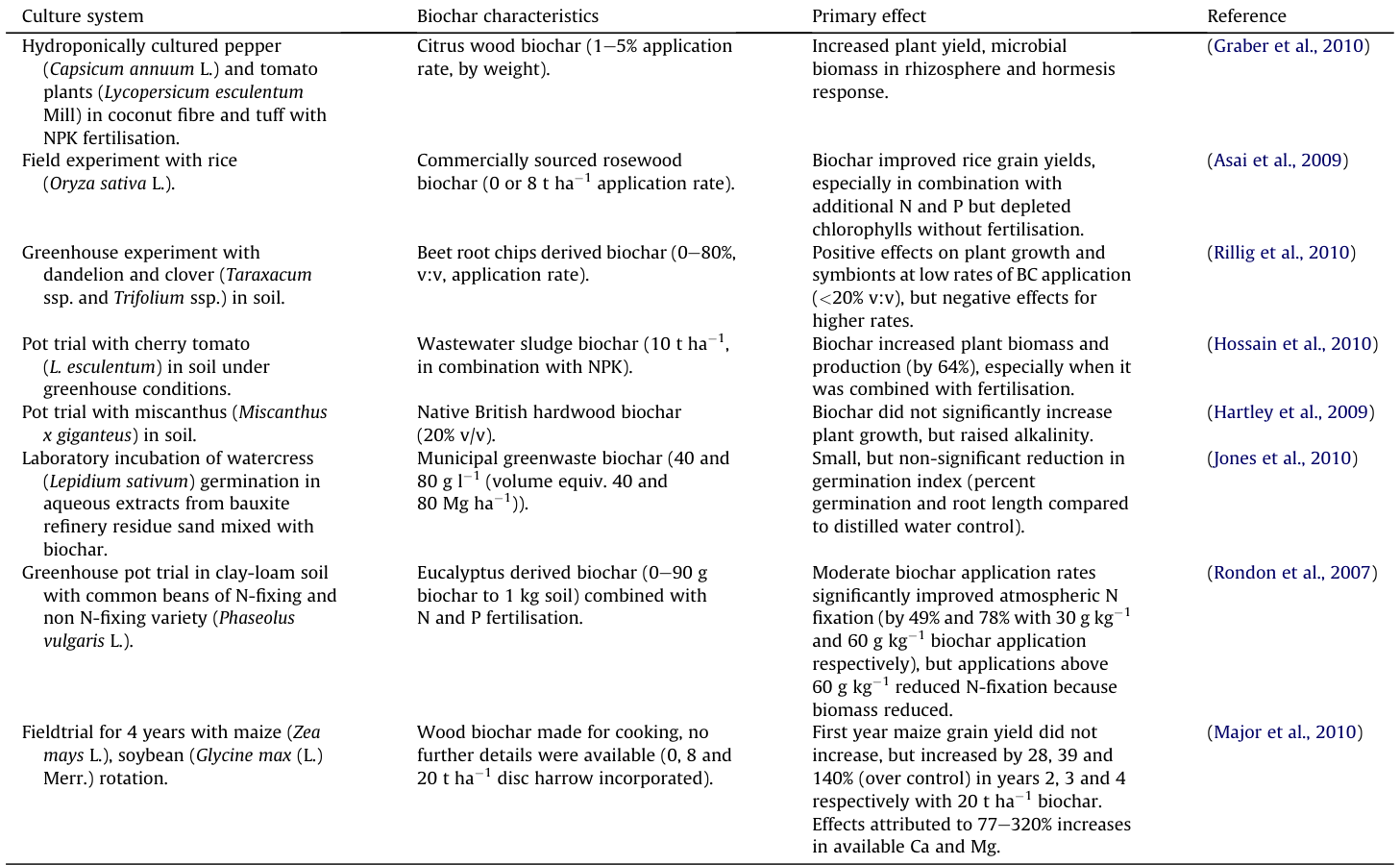
The pure benefits of biochar to plant-based remediation may be related to enhanced plant growth as liming effects, increased water holding capacity and improved soil structure have been reported after the amendment of agricultural soils with biochars (Blackwell et al., 2009; Atkinson et al., 2010; Sohi et al., 2010), all of which are material conditions conducive to plant success. However, many of these benefits are only seen when an organic or inorganic fertiliser is added along with the biochar amendment, suggesting that biochar alone is often unsuitable as a soil amendment to stimulate revegetation (Yamato et al., 2006; Chan et al., 2007; Steiner et al., 2008; Asai et al., 2009; Van Zwieten et al., 2010a). Some studies report a decrease in plant growth after amendment of soils with biochars (Kishimoto and Sugiura, 1985; Mikan and Abrams, 1995), although others report agronomic benefits when biochar is exclusively added to soils (Novak et al., 2009). Table 2 summarises the results of several recent studies utilising plants and measuring plant growth parameters. One reason for the apparent contradictions is that some biochars can increase nutrient retention which may prevent leaching and increase nutrient use efficiency (Major et al., 2009) but may also decrease the availability of nutrients in unfertilised soils. For example, sugar beet tailings biochar has been shown to adsorb phosphate (Yao et al., 2011). Ultimately, adjusting the balance of available nutrients in unfertilised plots could be both beneficial, in nutrient excessive conditions and damaging in nutrient limited soils, causing deficiency. The evidence therefore suggests that the use of biochar in nutrient limiting conditions combined with an organic amendment, such as compost, may be more suitable for the remediation and revegetation of contaminated land (Beesley et al., 2010; Peltz et al., 2010). As biochars have been shown to adjust both nutrient and contaminant availability, retaining the balance between deficiency of nutrients and exclusion or immobilisation of pollutants on contaminated soils requiring vegetation cover could be difficult. The combined application of other organic amendments with biochars could be especially attractive when considering biochars with high cation exchange capacities. Biochars with high cation exchange capacities are the most suited for use in the remediation of metal contaminated soils, but they are also likely to retain more plant nutrients by the same mechanism that they immobilise contaminants.
生物炭对植物修复的直接益处可能与促进植物生长有关,因为已有报道称农业土壤经生物炭改良后出现石灰效应、持水能力提高和土壤结构改善(Blackwell et al., 2009; Atkinson et al., 2010; Sohi et al., 2010),这些都是有利于植物成功生长的物质条件。然而,许多此类益处只有在施用生物炭的同时添加有机或无机肥料时才会显现,这表明单独施用生物炭作为土壤改良剂往往不适于促进植被重建(Yamato et al., 2006; Chan et al., 2007; Steiner et al., 2008; Asai et al., 2009; Van Zwieten et al., 2010a)。一些研究报道土壤经生物炭改良后植物生长下降(Kishimoto and Sugiura, 1985; Mikan and Abrams, 1995),而另一些研究则报道单独向土壤添加生物炭具有农艺效益(Novak et al., 2009)。表2汇总了近期若干利用植物并测定植物生长参数的研究结果。出现明显矛盾的原因之一是,某些生物炭可提高养分保持能力,从而可能防止淋溶并提高养分利用效率(Major et al., 2009),但也可能降低未施肥土壤中养分的有效性。例如,研究表明甜菜尾渣生物炭可吸附磷酸盐(Yao et al., 2011)。归根结底,调整未施肥小区中有效养分的平衡,在养分过剩条件下可能有益,而在养分受限的土壤中则可能有害,导致养分缺乏。因此,现有证据表明,在养分受限条件下将生物炭与堆肥等有机改良剂联合使用,可能更适合污染土地的修复和植被重建(Beesley et al., 2010; Peltz et al., 2010)。由于生物炭已被证明可同时调节养分和污染物的有效性,在需要植被覆盖的污染土壤上,要在避免养分缺乏与排除或固定污染物之间保持平衡可能较为困难。在考虑使用高阳离子交换量的生物炭时,将其他有机改良剂与生物炭联合施用可能尤其具有吸引力。高阳离子交换量的生物炭最适合用于修复金属污染土壤,但它们也可能通过固定污染物的同一机制截留更多的植物养分。
Summary of selected recently reported studies utilising biochars and their influences on plant growth and success.
近期报道的利用生物炭的部分研究及其对植物生长和成活影响的汇总。
4.2. Contaminant transfer4.2. 污染物转移
Notwithstanding the ability of amendments to efficiently retain pollutants, where plant growth is encouraged on contaminated soils, high biomass of the edible parts of plants could increase the risk of transfer of contaminants to higher trophic levels. Biochar may be an effective amendment for reducing plant uptake of pollutants due to its strong capacity to decrease the available fraction of contaminants in the soil and decrease uptake of trace inorganic elements (Namgay et al., 2010) and organic compounds (Yu et al., 2009). If pollutant concentrations in soils and uptake to plants is low then growth of plants yielding a high biomass can be encouraged by the combination of biochar and amendments with high concentrations of available N, P, K. If pollutant concentrations are high, it would be recommended to favour a higher proportion of biochar, with lower concentrations of labile nutrients, for gently encouraging the re-starting of natural processes (Bradshaw, 1997) but discouraging rampant revegetation and high biomass, which could increase transfer of pollutants. In this context, and considering that the growth of short rotation coppice on contaminated land has previously been reported (French et al., 2006), biomass produced on such soils could be pyrolysed to produce energy and the resulting biochar returned to the soil as a beneficial amendment, if the contaminants are demonstrated to be retained by the biochar (Stals et al., 2010), maintaining as closed a system as possible. Hartley et al. (2009) suggested the feasibility of growing Miscanthus on an As-polluted soil because low soil-plant transfer was observed, but the results suggested that biochar alone could not enhance yields on this industrially polluted soil, which suggests a need to combine biochars with other amendments if a certain yield of biomass is required. Karami et al. (2011) found that transfer of Pb and Cu to ryegrass from a soil amended with hardwood-derived biochar, could be differentially interpreted either through transfer co-efficients or bioconcentration factors. Ultimately they concluded that plant biomass and uptake had to be combined to assess risk, and those two factors were opposingly influenced by biochar. In this respect it would depend on the end use of the biomass as to whether, regardless of pollutant uptake, high biomass was encouraged.
尽管改良剂能够有效截留污染物,但在污染土壤上促进植物生长时,植物可食部分的高生物量可能增加污染物向更高营养级转移的风险。生物炭可能是减少植物吸收污染物的有效改良剂,因为它能够显著降低土壤中污染物的有效态组分,并减少对无机微量元素(Namgay et al., 2010)和有机化合物(Yu et al., 2009)的吸收。若土壤中污染物浓度及植物吸收量较低,则可通过生物炭与高有效N、P、K含量改良剂的联合施用来促进高生物量植物的生长。若污染物浓度较高,则建议采用较高比例的生物炭及较低浓度的活性养分,以温和地促进自然过程的重新启动(Bradshaw, 1997),同时抑制可能增加污染物转移的植被过度生长和高生物量。在此背景下,考虑到已有在污染土地上种植短轮伐期矮林的报道(French et al., 2006),若能证明污染物可被生物炭截留(Stals et al., 2010),则此类土壤上产生的生物质可经热解产生能源,所得生物炭作为有益改良剂回施于土壤,从而尽可能维持一个封闭的系统。Hartley et al. (2009)基于观察到的较低土壤–植物转移,认为在As污染土壤上种植芒草(Miscanthus)是可行的,但结果表明,单独施用生物炭并不能提高这一工业污染土壤上的产量,这说明若需要达到一定的生物量产量,须将生物炭与其他改良剂联合使用。Karami et al. (2011)发现,从经硬木生物炭改良的土壤向黑麦草转移的Pb和Cu,采用转移系数或生物富集系数可得出不同的解释。他们最终得出结论,评估风险时必须将植物生物量与吸收量结合起来考虑,而生物炭对这两个因素的影响方向相反。就此而言,无论污染物吸收如何,是否鼓励高生物量将取决于生物质的最终用途。
4.3. Challenges to plant survival and success4.3. 植物成活与生长面临的挑战
Considerations about the long term effectiveness of biochar for promoting plant growth and biomass render several important, more mechanistic questions about biochars’ effects on plant survival and success. Spokas et al. (2010) showed that the biocharderived plant hormone ethylene (C2H4) may be responsible for some of the beneficial effects to plants observed due to biochar amendment. However, there was decreasing ethylene measured with increasing pyrolysis temperature and surface area of biochars. There was also no detectable ethylene in an activated charcoal treatment which had, by an order of magnitude, the greatest surface area. This indicates that either less ethylene is produced during higher pyrolysis temperatures, or that it is sorbed by biochars and activated charcoals with a high surface area. It has also been suggested, due to its ability to sorb organic chemicals in soils, that activated carbon can affect allelopathy and symbiosis. Activated carbon has been used in experiments to study allelopathic interactions between plants as it is able to sorb allelopathic compounds and minimise allelopathy between plants (Lau et al., 2008). However, it has been shown that in addition to this, activated carbon can reduce mycorrhizal root colonisation due to its ability to sorb signalling compounds between plant roots and symbioants (Wurst et al., 2010), despite evidence that in the majority of cases biochar additions increase mycorrhizal root colonisation (Warnock et al., 2007). In addition, compounds such as flavonoids, secreted for the signalling of compatible rhizobia by a legume host, that have been shown to have similar log Koc values to the PAH naphthalene (Shaw and Hooker, 2008), are likely to sorb strongly to biochars that sorb naphthalene rendering them unavailable. Whether this is beneficial or detrimental to plant growth and revegetation essentially depends on whether the sorption of plant signalling compounds to biochar is a temporary process which increases their longevity in the soil (Thies and Rillig, 2009), or a permanent process, as would be desirable for the sorption of organic contaminants, and therefore decreases the overall availability of these compounds (Warnock et al., 2007). The more effective a biochar is at sorbing organic chemicals, the more likely there will be a negative impact on the availability of plant signalling compounds to symbiotic microorganisms, which may have negative impacts on plant growth and the success of revegetation, or to the action of phytoalexins, which may reduce plant resistance to disease. Conversely biochar has been shown to induce systemic resistance to foliar fungal pathogens in tomato or pepper and to broad mite pest on pepper (Elad et al., 2010). In some cases biochar application may reduce the needed dose of biocides in soil to avoid plagues and plant illness. It might be the case that contaminated soils receiving biochar inputs may require less intensive management practices to supply sustainable vegetation cover than where other amendments or no amendments are used.
对生物炭促进植物生长和生物量长期有效性的考量,引出了关于生物炭对植物成活和生长影响的若干重要且更具机理性的问题。Spokas et al. (2010)表明,生物炭释放的植物激素乙烯(C2H4)可能是施用生物炭后观察到的部分植物有益效应的原因。然而,随着生物炭热解温度和比表面积的增加,测得的乙烯量减少。在比表面积高出一个数量级的活性炭处理中也未检测到乙烯。这表明,要么在较高热解温度下产生的乙烯较少,要么乙烯被高比表面积的生物炭和活性炭所吸附。另有观点认为,由于活性炭能够吸附土壤中的有机化学物质,它可能影响化感作用和共生作用。活性炭已被用于研究植物间化感相互作用的试验,因为它能够吸附化感化合物并使植物间的化感作用降至最低(Lau et al., 2008)。然而,研究表明,活性炭还可因吸附植物根系与共生体之间的信号化合物而降低菌根的根系侵染(Wurst et al., 2010),尽管有证据表明,在大多数情况下添加生物炭可提高菌根的根系侵染率(Warnock et al., 2007)。此外,豆科宿主为向相容根瘤菌传递信号而分泌的类黄酮等化合物,已被证明具有与PAH萘相近的log Koc值(Shaw and Hooker, 2008),很可能强烈吸附于能吸附萘的生物炭上,从而变得不可利用。这对植物生长和植被重建是有利还是有害,本质上取决于植物信号化合物在生物炭上的吸附是一个暂时过程,从而延长其在土壤中的存留时间(Thies and Rillig, 2009),还是一个永久过程(正如吸附有机污染物时所期望的那样),从而降低这些化合物的总体有效性(Warnock et al., 2007)。生物炭吸附有机化学物质的效果越好,就越可能对植物信号化合物向共生微生物的有效供给产生负面影响,进而可能对植物生长和植被重建的成功产生不利影响,或影响植物抗毒素的作用,从而可能降低植物的抗病能力。相反,研究表明生物炭可诱导番茄或辣椒对叶部真菌病原体以及辣椒对侧多食跗线螨的系统抗性(Elad et al., 2010)。在某些情况下,施用生物炭可减少为防治病虫害和植物病害所需的土壤杀生物剂用量。与施用其他改良剂或不施改良剂相比,接受生物炭输入的污染土壤可能只需较低强度的管理措施即可提供可持续的植被覆盖。
4.4. Micro-biological communities4.4. 微生物群落
Sustainable remediation of a contaminated soil should be broadly interested in maintaining or ideally enhancing soil quality. This can be achieved by sequestering carbon, reducing soil erosion, preserving the quality of ground and surface water and increasing soil biodiversity. Soil biota are responsible for providing a range of ecosystem services such as the decomposition of organic matter (to which degradation of organic contaminants finds association), cycling of nutrients, bioturbation and suppression of soil-borne disease and pests (Brussaard, 1997). The soil microbial community can also be used as an indicator of the quality of a soil and the extent to which degradation has occurred or restoration has progressed (Harris, 2003). The porous nature of biochars and their ability to sorb soluble organic carbon provides habitats within which microbiota can feed on sorbed organic substrates protected from grazers such as collembola, nematodes or protozoa (Pietikäinen et al., 2000; Hamer et al., 2004; Atkinson et al., 2010). This may be the reason for reported increases in microbial biomass and activities of biochar amended soils (Wardle et al., 1998; Pietikäinen et al., 2000; Chan et al., 2008; Steiner et al., 2008; Kolb et al., 2009; Steinbeiss et al., 2009). Chan et al. (2008) found an increase in microbial biomass C with increasing rates of non-activated (450 �C pyrolysis) biochar amendment but no effect with increasing rates of steam-activated (550 �C pyrolysis) biochar amendment. This may be due to the underestimation of microbial biomass C in activated carbon amended soils using a K2SO4 extraction (Durenkamp et al., 2010), or an indication that activation of charcoal produces a habitat less suitable for microbial colonisation. Pietikäinen et al. (2000) also found that activated carbon did not increase microbial biomass or activity as much as non-activated biochars. In addition, reduced rates of microbial degradation of organic contaminants have been observed in the presence of activated carbon reportedly due to sorption of substrates onto the surface of the activated carbon and the concurrent reduction in bioavailability (Yang et al., 2009; Rhodes et al., 2010); reductions in the biodegradation of organic pesticides due to the presence of biochar have also been reported (Yang et al., 2006), as discussed earlier. The soil biodiversity of contaminated land is usually poor because the contaminants are toxic to soil communities at high concentrations (Zhang et al., 2004; Andreoni et al., 2004; Giller et al., 2009). Since biochar is a potentially diverse niche for microorganisms, the application of biochar to soils may assist the preservation and support of soil biodiversity and biotope for the micro and mesobiota in contaminated soils.
污染土壤的可持续修复应广泛关注维持乃至提升土壤质量。这可通过固碳、减少土壤侵蚀、保护地下水和地表水水质以及增加土壤生物多样性来实现。土壤生物承担着一系列生态系统服务功能,如有机质分解(有机污染物的降解与之相关)、养分循环、生物扰动以及抑制土传病害和虫害(Brussaard, 1997)。土壤微生物群落还可作为指示土壤质量以及土壤退化程度或修复进展的指标(Harris, 2003)。生物炭的多孔性质及其吸附可溶性有机碳的能力为微生物提供了栖息场所,微生物可在其中取食被吸附的有机底物,并免受弹尾虫、线虫或原生动物等捕食者的取食(Pietikäinen et al., 2000; Hamer et al., 2004; Atkinson et al., 2010)。这可能是已有报道中施用生物炭的土壤微生物生物量及活性增加的原因(Wardle et al., 1998; Pietikäinen et al., 2000; Chan et al., 2008; Steiner et al., 2008; Kolb et al., 2009; Steinbeiss et al., 2009)。Chan et al. (2008) 发现,随着未活化(450 °C热解)生物炭施用量的增加,微生物生物量碳随之增加,而随着蒸汽活化(550 °C热解)生物炭施用量的增加则无此效应。这可能是由于采用K2SO4浸提法低估了施用活性炭土壤中的微生物生物量碳(Durenkamp et al., 2010),也可能表明木炭经活化后形成的生境较不适宜微生物定殖。Pietikäinen et al. (2000) 同样发现,活性炭对微生物生物量或活性的提升作用不及未活化生物炭。此外,已观察到活性炭存在时有机污染物的微生物降解速率降低,据报道这是由于底物吸附于活性炭表面并伴随其生物有效性降低所致(Yang et al., 2009; Rhodes et al., 2010);如前所述,亦有报道指出生物炭的存在会降低有机农药的生物降解(Yang et al., 2006)。由于污染物在高浓度下对土壤生物群落具有毒性,污染土地的土壤生物多样性通常较低(Zhang et al., 2004; Andreoni et al., 2004; Giller et al., 2009)。鉴于生物炭可能为微生物提供多样化的生态位,向土壤施用生物炭可能有助于保护和维持污染土壤的生物多样性,并为其中的微型和中型生物提供生境。
4.5. Soil animals4.5. 土壤动物
Earthworms are considered ecosystem engineers owing to the role that they play in organic matter degradation, nutrient cycling and hydrology (Jones et al., 1994), all of which facilitate the revegetation of degraded land after disturbance (Boyer and Wratten, 2010). Studies on the toxicity of biochar to earthworms in the literature are both scarce and contradictory. Most of the experiments that have been performed have utilised Eisenia fetida, commonly used in ecotoxicology for testing the toxicity of chemicals to earthworms. This species is chosen because it is reasonably tolerant to contaminants, widely available and responsive in laboratory assays but it may not be the most suitable because it is a litter dwelling compost species that does not inhabit the mineral soil and is not common in most contaminated or agricultural environments (Lowe and Butt, 2007). Both Fagervold et al. (2010) and Gomez- Eyles et al. (2011) found that addition of activated carbon and hardwood-derived biochar respectively reduced the weight of E. fetida during the remediation of contaminated soils. However, neither study found a reduction in the lipid content of earthworms, which indicates that the earthworms did not starve or completely avoid ingestion during the test period. Soluble organic carbon, from which earthworms derive nutrition, may be sorbed to biochar and made unavailable to the worms, as suggested by Jonker et al. (2009) in a study involving the use of polychaete worms in contaminated sediments. In contrast, no significant difference in the weight of the soil dwelling worm, E. fetida was observed when a 2% amendment of biochar was made to laboratory and field pentachlorophenol (PCP)-contaminated soils (Wen et al., 2009). Liesch et al. (2010) found that whilst pine chip biochar had no effect on mortality or weight of E. fetida, poultry litter biochar caused 100% mortality in treatments above 67.5 Mg ha�1. This was reportedly due to greater pH, salinity and ammonia concentrations in the poultry litter biochar. Elevated concentrations of Na, Mg, Al, Cu, Fe, Zn and As were also observed but these were below those known to cause toxicity. Washing or leaching biochars that have high salinity, ammonia or toxic element contents is suggested as a method to prevent toxicity to plants and animals but this may produce toxic leachate which will require disposal.
蚯蚓因其在有机质降解、养分循环和水文过程中所发挥的作用而被视为生态系统工程师(Jones et al., 1994),这些作用均有助于退化土地在扰动后的植被重建(Boyer and Wratten, 2010)。文献中关于生物炭对蚯蚓毒性的研究既稀少又相互矛盾。已开展的实验大多采用Eisenia fetida,该物种在生态毒理学中常用于测试化学物质对蚯蚓的毒性。选择该物种是因为其对污染物具有较强耐受性、易于获得且在实验室测试中反应灵敏,但它未必是最合适的物种,因为它是栖息于凋落物层的堆肥种,不栖居于矿质土壤中,在大多数污染或农业环境中也不常见(Lowe and Butt, 2007)。Fagervold et al. (2010) 和Gomez- Eyles et al. (2011) 分别发现,在污染土壤修复过程中添加活性炭和硬木源生物炭均降低了E. fetida的体重。然而,两项研究均未发现蚯蚓脂质含量下降,表明试验期间蚯蚓并未饥饿,也未完全停止摄食。正如Jonker et al. (2009) 在一项利用多毛类蠕虫研究污染沉积物的工作中所指出的,蚯蚓赖以获取营养的可溶性有机碳可能被生物炭吸附而无法为蚯蚓所利用。与此相反,在实验室和田间五氯苯酚(PCP)污染土壤中添加2%生物炭后,土栖蚯蚓E. fetida的体重未见显著差异(Wen et al., 2009)。Liesch et al. (2010) 发现,松木屑生物炭对E. fetida的死亡率和体重均无影响,而禽粪生物炭在施用量高于67.5 Mg ha−1的处理中导致100%死亡。据报道,这是由于禽粪生物炭具有较高的pH、盐度和氨浓度。同时还观察到Na、Mg、Al、Cu、Fe、Zn和As浓度升高,但均低于已知的致毒浓度。有研究建议对高盐度、高氨或高有毒元素含量的生物炭进行洗涤或淋溶处理,以防止其对植物和动物产生毒性,但这可能产生需要处置的有毒淋滤液。
The tropical earthworm, Pontoscolex corethrurus, is found in the Amazonian terra preta soils and whilst there is evidence that the earthworm ingests biochar particles (Topoliantz and Ponge, 2005), contributing to the fertility of these soils (Ponge et al., 2006), there is also evidence to suggest that these earthworms push aside the biochar particles to avoid ingesting them (Topoliantz and Ponge, 2003). The avoidance of biochar by earthworms has only been tested in the laboratory on biochar that has been previously sieved to <2 mm, resulting in conclusions that E. fetida do not avoid biochar amended soils compared to unamended controls (Chan et al., 2008) or that they actually favour biochar amended soils (Van Zwieten et al., 2010b). Chan et al. (2008) found that E. fetida preferred non-activated biochar produced at 450 �C to biochar activated with steam produced at 550 �C. However, using <2 mm sieved biochar for field-scale applications is unlikely, as this could generate excess dust, so the impact of larger (unsieved) biochar particles, which may be of an unfavourable texture, on earthworm toxicity needs to be tested. Beesley and Dickinson (2011) also discussed whether Lumbricus terrestris could ingest biochar, or whether their effects on metal mobility and DOC were due to soil disturbance only. In this study, on a moderately contaminated urban soil, earthworms reduced DOC concentrations in pore water, which concomitantly reduced concentrations of As, Cu and Pb. A number of mechanisms were proposed for these effects; biochar’s liming effect on soil, co-mobilisation of metals and As with DOC and the ability, or inability of earthworms to ingest biochar. It was not clear whether their effect was by disturbance or ingestion of biochar and proximal soil. Such fundamental mechanisms require systematic experimentation to determine.
热带蚯蚓Pontoscolex corethrurus见于亚马孙黑土(terra preta),有证据表明该蚯蚓会摄食生物炭颗粒(Topoliantz and Ponge, 2005),从而有助于提高这类土壤的肥力(Ponge et al., 2006),但也有证据表明这些蚯蚓会推开生物炭颗粒以避免摄食(Topoliantz and Ponge, 2003)。蚯蚓对生物炭的回避行为仅在实验室中针对预先过筛至<2 mm的生物炭进行过测试,所得结论为:与未改良对照相比,E. fetida并不回避施用生物炭的土壤(Chan et al., 2008),甚至更偏好施用生物炭的土壤(Van Zwieten et al., 2010b)。Chan et al. (2008) 发现,E. fetida偏好450 °C制备的未活化生物炭,而非550 °C制备的蒸汽活化生物炭。然而,田间规模施用<2 mm过筛生物炭的可能性不大,因为这会产生过多粉尘,因此需要测试质地可能不利的较大(未过筛)生物炭颗粒对蚯蚓毒性的影响。Beesley and Dickinson (2011) 也探讨了Lumbricus terrestris能否摄食生物炭,抑或其对金属迁移性和DOC的影响仅源于土壤扰动。该研究针对中度污染的城市土壤,发现蚯蚓降低了孔隙水中的DOC浓度,并随之降低了As、Cu和Pb的浓度。研究者提出了若干解释机制:生物炭对土壤的石灰效应、金属和As与DOC的共迁移,以及蚯蚓能否摄食生物炭。目前尚不清楚其效应是源于扰动,还是源于对生物炭及其邻近土壤的摄食。此类基本机制有待系统的实验加以确定。
5Conclusions, recommendations and research needs arising结论、建议及研究需求
Biochars have demonstrated clear potential for the reduction of a variety of organic and inorganic contaminants present in soils in their most mobile forms. Since modern environmental clean-up strategies increasingly focus on the effects of the most toxicologically relevant fractions of contaminants, biochars could represent suitable candidates for remediation trials. But pollutant immobilisation represents only one facet of contaminated land remediation. Combined with improvements to some soil physico-chemical limitations, biochars may be seen as highly suitable for the amendment of contaminated soils, but, in some cases this may require their combination with other amendments. For the phyto-toxic elements Cd and Zn, biochars have been found to possess retentive capabilities which may be further enhanced by manufacturing chars to increase CEC, surface area and pH. The same is true of other metals, although reports are contradictory depending on source material and production temperatures and those individual metals concerned. Reductions in organic pollutant mobility allow, theoretically, the same amendment to be deployed at multi-element polluted sites. This gives an attractive and cost-effective, versatile appeal to the continued trials of biochars on a wide variety of contaminated soils, keeping mindful of certain key caveats.
生物炭已显示出降低土壤中多种以最易迁移形态存在的有机和无机污染物的明显潜力。由于现代环境治理策略日益关注污染物中毒理学意义最大的组分所产生的效应,生物炭可成为修复试验的合适候选材料。但污染物固定仅是污染土地修复的一个方面。结合其对某些土壤理化限制因素的改善作用,生物炭可被视为非常适合用于污染土壤改良,但在某些情况下可能需要与其他改良剂联合使用。对于具有植物毒性的元素Cd和Zn,已发现生物炭具有保持能力,且可通过调整制炭工艺以提高CEC、比表面积和pH而进一步增强。其他金属亦是如此,但因原料、制备温度及所涉具体金属的不同,相关报道存在矛盾。从理论上讲,有机污染物迁移性的降低使得同一种改良剂可用于多元素复合污染场地。这使得在充分注意某些关键限制条件的前提下,继续在多种污染土壤上开展生物炭试验具有吸引力、成本效益和广泛适用性。
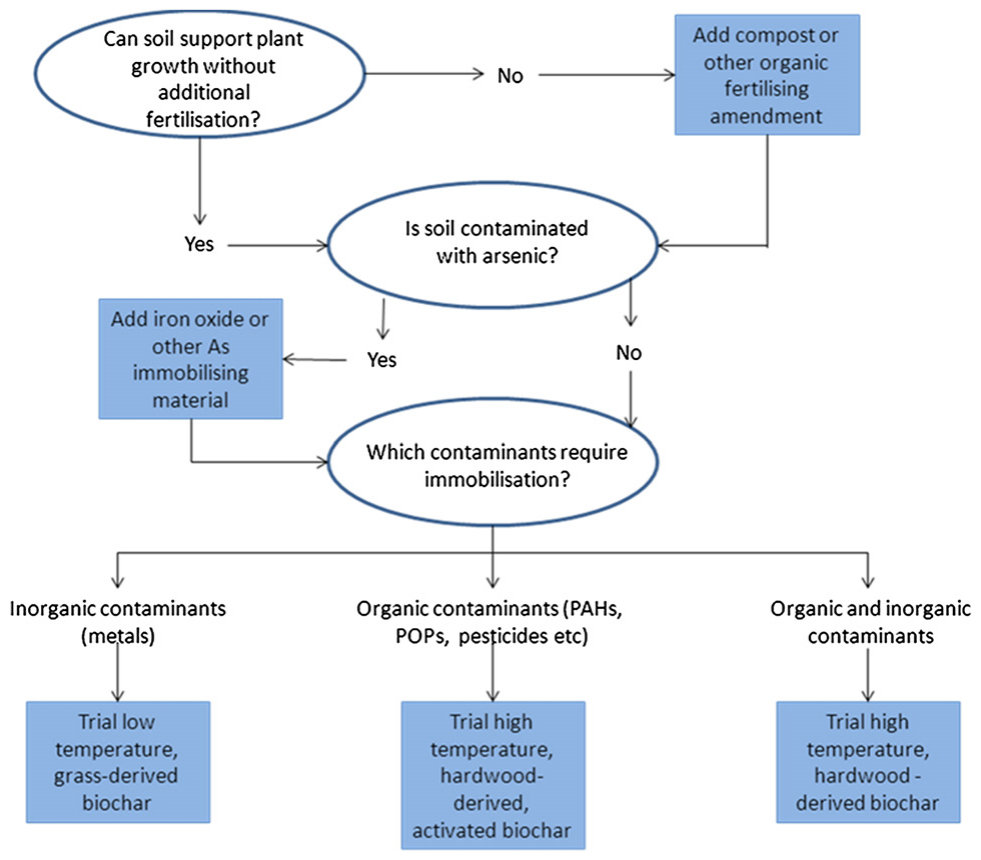
For example, the same virtuous properties that have been demonstrated to, in some cases so effectively reduce heavy metal mobility can immobilise essential macro-nutrients and, since the second facet of remediation requires maintenance of soil quality and ultimately material conditions conducive to plant growth, then biochars alone may be ineffective at sustainable remediation. Combined with wide C:N ratios and often very alkaline pH, the selection of a biochar to meet the needs of managing both gross pollutant mobility as well as net remediation goals could be difficult. Soil microbial communities may find protection within biochars’ structure whilst soil animals might also favour some biochars, providing the material is palatable to them; these are factors to bolster the wider ecological argument for trials involving biochar on denuded soils. However, the long term impact of biochar on soil fauna has to be investigated further, as some negative effects on microorganisms and earthworms have been observed in laboratory studies. These issues are likely to be of greater concern when using high surface area biochars with high affinities for organic contaminants. In this respect a ‘one biochar fits all’ approach may be impossible so some decision criteria, such as those simplified by Fig. 2, could aid the choice of biochar given particular contamination scenarios; these require development based on the results of continued field trials.
例如,在某些情况下已被证明能够非常有效地降低重金属迁移性的那些优良特性,同样可能固定必需的大量营养元素;而修复的第二个方面要求维持土壤质量,并最终形成有利于植物生长的物质条件,因此单独使用生物炭可能难以实现可持续修复。再加上生物炭C:N比宽且pH通常呈强碱性,选择一种既能控制污染物总体迁移性又能满足净修复目标的生物炭可能较为困难。土壤微生物群落可在生物炭结构中获得庇护,而土壤动物也可能偏好某些生物炭,前提是该材料适于其摄食;这些因素为在裸露土壤上开展生物炭试验的更广泛生态学论据提供了支持。然而,生物炭对土壤动物的长期影响仍需进一步研究,因为实验室研究中已观察到其对微生物和蚯蚓的某些负面效应。在使用对有机污染物具有高亲和力的高比表面积生物炭时,这些问题可能更值得关注。就此而言,“一种生物炭通用于所有情况”的做法可能行不通,因此一些决策标准(如图2所简化表示的)可辅助针对特定污染情景选择生物炭;这些标准有待依据持续开展的田间试验结果加以完善。
One thing is certain, before applying biochar in the field, it is important to understand the degree to which the capacity of biochars to immobilise contaminants may be increased, reduced or modified with time as their sorption sites are occupied by native soil organic matter and competing contaminants. As long term field studies are lacking, which would inform our current muses and speculation, then practical considerations to account for several trade-offs should be taken into account before applying biochars to soil, as a cautionary measure. Higher rates of biochar addition will result in greater contaminant sorption and carbon sequestration but will be more expensive and may result in decreased soil fertility (Rondon et al., 2007) due to the sorption of plant nutrients. Toxicity to soil animals at high application rates may result from the abundance of unpalatable substrate, and at high application rates possible contaminants arising from the char itself, such as polycyclic aromatic hydrocarbons (Thies and Rillig, 2009) as well as contaminants present in the original feedstock may present their own introduced toxicity issues. As with any amendment, but especially given biochars’ low density, we must be sure that the effects we observe cannot merely be attributable to dilution of the contaminated substrate. Whatever the application rate, supplementary nutrients, especially nitrogen may need to be added to maintain soil fertility, a factor exacerbated by soil dilution.
有一点是肯定的:在田间施用生物炭之前,必须了解随着其吸附位点被土壤原有有机质和竞争性污染物所占据,生物炭固定污染物的能力会随时间增强、减弱或改变到何种程度。由于目前缺乏可为我们当前的思考和推测提供依据的长期田间研究,作为预防措施,在向土壤施用生物炭之前应考虑兼顾若干权衡取舍的实际因素。较高的生物炭添加量将带来更强的污染物吸附和固碳效果,但成本更高,且可能因吸附植物养分而导致土壤肥力下降(Rondon et al., 2007)。高施用量下对土壤动物的毒性可能源于大量不适口的底物;此外,在高施用量下,炭本身可能产生的污染物,如多环芳烃(Thies and Rillig, 2009),以及原始原料中存在的污染物,均可能带来新的毒性问题。与任何改良剂一样,尤其考虑到生物炭密度较低,我们必须确保所观察到的效应并非仅仅归因于对污染基质的稀释。无论施用量如何,均可能需要补充养分,尤其是氮,以维持土壤肥力,而土壤稀释会加剧这一需求。
To maximise the benefits to soils, adding char to soil as finely divided particles increases the surface area and therefore the char’s capacity for contaminant adsorption (Nocentini et al., 2010). Finely divided chars are denser and can therefore be transported more efficiently, or may be added to other substrates as bulking agents with greater success. The lifetime of small particles in soils is shorter than larger particles, however, it is still in the order of several centuries (Hammes and Schmidt, 2009) so finely divided chars may be added as a slurry, reducing losses by windblow and easing the incorporation of the char into the soil whilst usefully, and with longevity, providing material soil improvements. This type of physical modification may also ensure earthworms are able to palate and work biochars within soils; ecological sustainability will be the remaining question after our endevours have given us the answers to the routine chemical properties of this material. This could further be achieved via modifications to the production process to ensure a capital of amorphous organic matter remains within the end product. Of course, as with any amendment, the cost of biochar addition to contaminated soil will be one of the key determinant factors in its deployment, especially if it must be pretreated in some way. Utilising local waste materials will be less expensive than tailor-made chars but the chars may not be optimised for the particular contaminant reduction required, so there is a trade-off between cost and the effect. Since the incorporation costs of char are not likely to be dissimilar from the addition of other soil amendments, the low density of biochar means that, on a weight basis, greater transportation costs could be a deciding factor in the application of chars to some sites with large areas requiring remediation, regardless of the potential benefits.
为使土壤获益最大化,以细碎颗粒形式向土壤中添加炭可增大其比表面积,从而提高炭对污染物的吸附能力(Nocentini et al., 2010)。细碎的炭密度更大,因而运输效率更高,或可作为膨松剂更成功地添加到其他基质中。小颗粒在土壤中的存留时间短于大颗粒,但仍可达数百年量级(Hammes and Schmidt, 2009),因此细碎的炭可以浆液形式施用,从而减少风蚀损失,便于将炭混入土壤,同时持久而有效地改善土壤物质条件。此类物理改性还可确保蚯蚓能够在土壤中摄食和翻动生物炭;在我们的努力解答了该材料常规化学性质的问题之后,生态可持续性将是尚待解决的问题。这还可通过改进生产工艺,使最终产品中保留一定量的无定形有机质来实现。当然,与任何改良剂一样,向污染土壤添加生物炭的成本将是决定其应用的关键因素之一,尤其是在需要进行某种预处理的情况下。利用当地废弃物制炭比定制炭成本更低,但这些炭可能并非针对所需降低的特定污染物而优化,因此需要在成本与效果之间进行权衡。由于炭的混入成本与施用其他土壤改良剂相差不大,而生物炭密度低意味着按重量计运输成本更高,因此对于某些需修复面积较大的场地,无论其潜在效益如何,运输成本都可能成为决定是否施用炭的因素。
During this review we have aimed to provide an overview into the current knowledge base surrounding the use of biochars for contaminated soil remediation and revegetation, as well as suggest directions for future work. In summary we would encourage the experimentally circumspect application of biochars to contaminated soils but suggest that such trials maintain sufficient ecological grounding in their approach.
在本综述中,我们旨在概述利用生物炭进行污染土壤修复和植被重建的现有知识基础,并提出未来研究方向。总之,我们鼓励在实验上审慎地将生物炭施用于污染土壤,但建议此类试验在方法上保持充分的生态学依据。
Acknowledgements致谢
Tom Sizmur is supported by a BBSRC studentship with CASE support from BUFI-BGS. Eduardo Moreno-Jiménez wishes to thank Universidad Autónoma de Madrid for providing funding to participate in this collaborative work.
Tom Sizmur获得BBSRC研究生奖学金资助,并获得BUFI-BGS的CASE支持。Eduardo Moreno-Jiménez感谢Universidad Autónoma de Madrid资助其参与本合作研究。
References参考文献
Abrahams, P.W., 2002. Soils: their implications to human health. Science of the Total Environment 291, 1e32.
Adriano, D.C., 2001. Trace Elements in Terrestrial Environments. Biogeochemistry, Bioavailability and Risks of Metals. Springer-Verlag, New York. Adriano, D.C., Wenzel, W.W., Vangronsveld, J., Bolan, N.S., 2004. Role of assisted natural remediation in environmental cleanup. Geoderma 122, 121e142.
Andreoni, V., Cavalca, L., Rao, M.A., Nocerino, G., Bernasconi, G.S., Dell’Amico, E., 2004. Bacterial communities and enzyme activities of PAHs polluted soil. Chemosphere 57, 401e412.
Arienzo, M., Adamo, P., Cozzolino, V., 2004. The potential of Lolium perenne for revegetation of contaminated soil from a metallurgical site. Science of the Total Environment 319, 13e25.
Asai, H., Samson, B.K., Stephan, H.M., Songyikhangsuthor, K., Homma, K., Kiyono, Y., Inoue, Y., Shiraiwa, T., Horie, T., 2009. Biochar amendment techniques for upland rice production in Northern Laos: 1. Soil physical properties, leaf SPAD and grain yield. Field Crops Research 111, 81e84.
Atkinson, C., Fitzgerald, J., Hipps, N., 2010. Potential mechanisms for achieving agricultural benefits from biochar application to temperate soils: a review. Plant and Soil 337, 1e18. Beesley, L., Dickinson, N., 2010. Carbon and trace element mobility in an urban soil amended with green waste compost. Journal of Soils and Sediments 10, 215e222. Beesley, L., Moreno-Jiménez, E., Gomez-Eyles, J.L., 2010. Effects of biochar and greenwaste compost amendments on mobility, bioavailability and toxicity of inorganic and organic contaminants in a multi-element polluted soil. Environmental Pollution 158, 2282e2287.
Beesley, L., Dickinson, N., 2011. Carbon and trace element fluxes in the pore water of an urban soil following greenwaste compost, woody and biochar amendments, inoculated with the earthworm Lumbricus terrestris. Soil Biology and Biochemistry 43, 188e196. Beesley, L., Marmiroli, M., 2011. The immobilisation and retention of soluble arsenic, cadmium and zinc by biochar. Environmental Pollution 159, 474e480. Bellamy, P.H., Loveland, P.J., Bradley, R.I., Lark, R.M., Kirk, G.J.D., 2005. Carbon loss from all soils across England and Wales 1978e2003. Nature 437, 245e248. Bernal, M.P., Clemente, R., Walker, D.J., 2006. The role of organic amendment in the bioremediation of heavy metal-polluted soils. In: Gore, R.W. (Ed.), Environmental Research at the Leading Edge. Nova Pub., New York, pp. 2e58.
Blackwell, P., Reithmuller, G., Collins, M., 2009. Biochar application to soil. In: Lehmann, J., Joseph, S. (Eds.), Biochar for Environmental Management: Science and Technology. Earthscan, London. Bolan, N.S., Adriano, D.C., Curtin, D., 2003. Soil acidification and liming interactions with nutrient and heavy metal transformation and bioavailability. Advances in Agronomy 78, 215e272. Boyer, S., Wratten, S.D., 2010. The potential of earthworms to restore ecosystem services after opencast mining - A review. Basic and Applied Ecology 11, 196e203. Bradshaw, A., 1997. Restoration of mined lands-using natural processes. Ecological Engineering 8, 255e269. Brändli, R.C., Hartnik, T., Henriksen, T., Cornelissen, G., 2008. Sorption of native polyaromatic hydrocarbons (PAH) to black carbon and amended activated carbon in soil. Chemosphere 73, 1805e1810. Brussaard, L., 1997. Biodiversity and ecosystem functioning in soil. Ambio 26, 563e570. Cao, X.D., Ma, L.N., Gao, B., Harris, W., 2009. Dairy-manure derived biochar effectively sorbs lead and atrazine. Environmental Science and Technology 43, 3285e3291.
Cao, X., Harris, W., 2010. Properties of dairy-manure-derived biochar pertinent to its potential use in remediation. Bioresource Technology 101, 5222e5228.
Chan, K., Van Zwieten, L., Meszaros, I., Downie, A., Joseph, S., 2007. Agronomic values of greenwaste biochar as a soil amendment. Australian Journal of Soil Research 45, 629e634.
Chan, K.Y., Van Zwieten, L., Meszaros, I., Downie, A., Joseph, S., 2008. Using poultry litter biochars as soil amendments. Australian Journal of Soil Research 46, 437e444.
Chen, B.L., Zhou, D.D., Zhu, L.Z., 2008. Transitional adsorption and partition of nonpolar and polar aromatic contaminants by biochars of pine needles with different pyrolytic temperatures. Environmental Science and Technology 42, 5137e5143.
Chen, B., Chen, Z., Lv, S., 2011. A novel magnetic biochar efficiently sorbs organic pollutants and phosphate. Bioresource Technology 102, 716e723.
Cho, Y.M., Ghosh, U., Kennedy, A.J., Grossman, A., Ray, G., Tomaszewski, J.E., Smithenry, D.W., Bridges, T.S., Luthy, R.G., 2009. Field application of activated carbon amendment for in-situ stabilization of polychlorinated biphenyls in marine sediment. Environmental Science and Technology 43, 3815e3823.
Chun, Y., Sheng, G., Chiou, C.T., Xing, B., 2004. Compositions and Sorptive properties of crop residue-derived chars. Environmental Science and Technology 38, 4649e4655.
Clemente, R., Escolar, A., Bernal, M.P., 2006. Heavy metals fractionation and organic matter mineralisation in contaminated calcareous soil amended with organic materials. Bioresource Technology 97, 1894e1901.
Cornelissen, G., Gustafsson, O., 2005. Importance of unburned coal carbon, black carbon, and amorphous organic carbon to phenanthrene sorption in sediments. Environmental Science and Technology 39, 764e769.
Cornelissen, G., Gustafsson, O., Bucheli, T.D., Jonker, M.T.O., Koelmans, A.A., Van Noort, P.C.M., 2005. Extensive sorption of organic compounds to black carbon, coal, and kerogen in sediments and soils: mechanisms and consequences for distribution, bioaccumulation, and biodegradation. Environmental Science and Technology 39, 6881e6895.
Durenkamp, M., Luo, Y., Brookes, P.C., 2010. Impact of black carbon addition to soil on the determination of soil microbial biomass by fumigation extraction. Soil Biology and Biochemistry 42, 2026e2029.
Elad, Y., David, D.R., Harel, Y.M., Borenshtein, M., Ben Kalifa, H., Silber, A., Graber, E.R., 2010. Induction of systemic resistance in plants by biochar, a soilapplied carbon sequestering agent. Phytopathology 100, 913e921. Fagervold, S.K., Chai, Y., Davis, J.W., Wilken, M., Cornelissen, G., Ghosh, U., 2010. Bioaccumulation of polychlorinated dibenzo-p-dioxins/dibenzofurans in E. fetida from floodplain soils and the effect of activated carbon amendment. Environmental Science and Technology 44, 5546e5552.
Fellet, G., Marchiol, L., Delle Vedove, G., Peressotti, A., 2011. Application of biochar on mine tailings: effects and perspectives for land reclamation. Chemosphere 83, 1262e1297.
Fernández, M.D., Cagigal, E., Vega, M.M., Urzelai, A., Babín, M., Pro, J., Tarazona, J.V., 2005. Ecological risk assessment of contaminated soils through direct toxicity assessment. Ecotoxicologial and Environmental Safety 62, 174e184.
French, C.J., Dickinson, N.M., Putwain, P.D., 2006. Woody biomass phytoremediation of contaminated brownfield land. Environmental Pollution 141, 387e395.
Gell, K., van Groenigen, J.W., Cayuela, M.L., 2011. Residues of bioenergy production chains as soil amendments: immediate and temporal phytotoxicity. Journal of Hazardous Materials 186, 2017e2025.
Ghosh, U., Zimmerman, J.R., Luthy, R.G., 2003. PCB and PAH speciation among particle types in contaminated harbor sediments and effects on PAH bioavailability. Environmental Science and Technology 37, 2209e2217.
Giller, K.E., Witter, E., McGrath, S.P., 2009. Heavy metals and soil microbes. Soil Biology and Biochemistry 41, 2031e2037.
Gomez-Eyles, J.L., Sizmur, T., Collins, C.D., Hodson, M.E., 2011. Effects of biochar and the earthworm Eisenia fetida on the bioavailability of polycyclic aromatic hydrocarbons and potentially toxic elements. Environmental Pollution 159, 616e622.
Graber, E.R., Meller Harel, Y., Kolton, M., Cytryn, E., Silber, A., David, D.R., Tsechansky, L., Borenshtein, M., Elad, Y., 2010. Biochar impact on development and productivity of pepper and tomato grown in fertigated soilless media. Plant and Soil 337, 481e496.
Hamer, U., Marschner, B., Brodowski, S., Amelung, W., 2004. Interactive priming of black carbon and glucose mineralisation. Organic Geochemistry 35, 823e830. Hammes, K., Schmidt, M.W.I., 2009. Changes of biochar in soil. In: Lehmann, J., Joseph, S. (Eds.), Biochar for Environmental Management: Science and Technology. Earthscan, London.
Harris, J.A., 2003. Measurements of the soil microbial community for estimating the success of restoration. European Journal of Soil Science 54, 801e808.
Hartley, W., Dickinson, N.M., Riby, P., Lepp, N.W., 2009. Arsenic mobility in brownfield soils amended with greenwaste compost or biochar and planted with Miscanthus. Environmental Pollution 157, 2654e2662.
Hawthorne, S.B., Grabanski, C.B., 2000. Correlating selective supercritical fluid extraction with bioremediation behavior of PAHs in a field treatment plot. Environmental Science and Technology 34, 4103e4110.
Hilber, I., Bucheli, T.D., Wyss, G.S., Schulin, R., 2009. Assessing the Phytoavailability of Dieldrin residues in charcoal-amended soil using Tenax extraction. Journal of Agricultural and Food Chemistry 57, 4293e4298.
Hossain, M.K., Strezov, V., Yin Chan, K., Nelson, P.F., 2010. Agronomic properties of wastewater sludge biochar and bioavailability of metals in production of cherry tomato (Lycopersicon esculentum). Chemosphere 78, 1167e1171.
Jones, C.G., Lawton, J.H., Shachak, M., 1994. Organisms as ecosystem engineers. Oikos 69, 373e386.
Jones, B.E.H., Haynes, R.J., Phillips, I.R., 2010. Effects of amendment of bauxite processing sand with organic materials on its chemical, physical and microbial properties. Journal of Environmental Management 91, 2281e2288. Jonker, M.T.O., Koelmans, A.A., 2002. Sorption of polycyclic aromatic hydrocarbons and polychlorinated biphenyls to soot and soot-like materials in the aqueous environment: mechanistic considerations. Environmental Science and Technology 36, 3725e3734. Jonker, M.T.O., van der Heijden, S.A., Kreitinger, J.P., Hawthorne, S.B., 2007. Predicting PAH bioaccumulation and toxicity in earthworms exposed to manufactured gas plant soils with solid-phase microextraction. Environmental Science and Technology 41, 7472e7478.
Jonker, M.T.O., Suijkerbuijk, M.P.W., Schmitt, H., Sinnige, T.L., 2009. Ecotoxicological effects of activated carbon addition to sediments. Environmental Science and Technology 43, 5959e5966. Joseph, S.D., Camps-Arbestain, M., Lin, Y., Munroe, P., Chia, C.H., Hook, J., van Zwieten, L., Kimber, S., Cowie, A., Singh, B.P., Lehmann, J., Foidl, N., Smernik, R.J., Amonette, J.E., 2010. An investigation into the reaction of biochar in soil. Australian Journal of Soil Research 48, 501e515.
Karami, N., Clemente, R., Moreno-Jiménez, E., Lepp, N., Beesley, L., 2011. Efficiency of green waste compost and biochar soil amendments for reducing lead and copper mobility and uptake to ryegrass (Lolium perenne). Journal of Hazardous Materials 191, 41e48. Kasozi, G.N., Zimmerman, A.R., Nkedi-Kizza, P., Gao, B., 2010. Catechol and humic acid sorption onto a range of laboratory-produced black carbons (Biochars). Environmental Science and Technology 44, 6189e6195. Kilduff, J.E., Wigton, A., 1998. Sorption of TCE by humic-preloaded activated carbon: incorporating size-exclusion and pore Blockage Phenomena in a competitive adsorption Model. Environmental Science and Technology 33, 250e256. Kishimoto, S., Sugiura, G., 1985. Charcoal as a Soil Conditioner, Symposium on Forest Products Research, International Achievements for the Future, Pretoria, South Africa, 12e23 pp. Kolb, S., Fermanich, K., Dornbush, M., 2009. Effect of charcoal quantity on microbial biomass and activity in temperate soils. Soil Science Society of America Journal 73, 1173e1181.
Kookana, R.S., 2010. The role of biochar in modifying the environmental fate, bioavailability, and efficacy of pesticides in soils: a review. Australian Journal of Soil Research 48, 627e637.
Kreitinger, J.P., Quinones-Rivera, A., Neuhauser, E.F., Alexander, M., Hawthorne, S.B., 2007. Supercritical carbon dioxide extraction as a predictor of polycyclic aromatic hydrocarbon bioaccumulation and toxicity by earthworms in manufactured-gas plant site soils. Environmental Toxicology and Chemistry 26, 1809e1817.
Laird, D., Fleming, P., Wang, B., Horton, R., Karlen, D., 2010. Biochar impact on nutrient leaching from a Midwestern agricultural soil. Geoderma 158, 436e442. Lau, J.A., Puliafico, K.P., Kopshever, J.A., Steltzer, H., Jarvis, E.P., Schwarzländer, M., Strauss, S.Y., Hufbauer, R.A., 2008. Inference of allelopathy is complicated by effects of activated carbon on plant growth. New Phytologist 178, 412e423.
Liesch, A., Weyers, S., Gaskin, J., Das, K., 2010. Impact of two different biochars on earthworm growth and survival. Annals of Environmental Science 4, 1e9. Lowe, C.N., Butt, K.R., 2007. Earthworm culture, maintenance and species selection in chronic ecotoxicological studies: a critical review. European Journal of Soil Biology 43, S281eS288.
Madejón, E., Madejón, P., Burgos, P., Pérez de Mora, A., Cabrera, F., 2009. Trace elements, pH and organic matter evolution in contaminated soils under assisted natural remediation: a 4-year field study. Journal of Hazardous Materials 162, 931e938.
Major, J., Steiner, C., Downie, A., Lehmann, J., 2009. Biochar effects on nutrient leaching. In: Lehmann, J., Joseph, S. (Eds.), Biochar for Environmental Management: Science and Technology. Earthscan, London.
Major, J., Rondon, M., Molina, D., Riba, S.J., Lehmann, J., 2010. Maize yield and nutrition during 4 years after biochar application to a Columbian savanna oxisol. Plant and Soil 333, 117e128.
Masscheleyn, P.H., Delaune, R.D., Patrick, W.H., 1991. Effect of redox potential and pH on arsenic speciation and solubility in a contaminated soil. Environmental Science and Technology 25, 1414e1419.
McLeod, P.B., Luoma, S.N., Luthy, R.G., 2008. Biodynamic modeling of PCB uptake by Macoma balthica and Corbicula fluminea from sediment amended with activated carbon. Environmental Science and Technology 42, 484e490.
McLeod, P.B., Van den Heuvel-Greve, M.J., Luoma, S.N., Luthy, R.G., 2007. Biological uptake of polychlorinated biphenyls by Macoma balthica from sediment amended with activated carbon. Environmental Toxicology and Chemistry 26, 980e987.
Mench, M., Bussiere, S., Vangronsveld, J., Manceau, A., 2003. Progress in remediation and revegetation of the barren Jales gold mine spoil after in-situ treatments. Plant and Soil 249, 187e202.
Mench, M., Lepp, N., Bert, V., Schwitzguébel, J.-P., Gawronski, S.W., Schöder, P., Vangronsveld, J., 2010. Successes and limitations of phytotechnologies at field scale: outcomes, assessment and outlook from COST action 859. Journal of Soils and Sediments 10, 1039e1070.
Mikan, C., Abrams, M., 1995. Altered forest composition and soil properties of historic charcoal hearths in Southeastern Pennsylvania. Canadian Journal of Forest Research 25, 687e696.
Millward, R.N., Bridges, T.S., Ghosh, U., Zimmerman, J.R., Luthy, R.G., 2005. Addition of activated carbon to sediments to reduce PCB bioaccumulation by a polychaete (Neanthes arenaceodentata) and an amphipod (Leptocheirus plumulosus). Environmental Science and Technology 39, 2880e2887.
Mohan, D., Pittman Jr., C.U., 2007. Arsenic removal from water/wastewater using adsorbants e a critical review. Journal of Hazardous Materials 142, 1e53.
Moreno-Jiménez, E., Peñalosa, J.M., Manzano, R., Carpena-Ruiz, R.O., Gamarra, R., Esteban, E., 2009. Heavy metals distribution in soils surrounding an abandoned mine in NW Madrid (Spain) and their transference to wild flora. Journal of Hazardous Materials 162, 854e859.
Moreno-Jiménez, E., Beesley, L., Lepp, N.W., Dickinson, N.M., Hartley, W., Clemente, R., 2011. Field sampling of soil pore water to evaluate trace element mobility and associated environmental risk. Environmental Pollution 159, 3078e3085.
Murano, H., Otani, T., Makino, T., Seike, N., Sakai, M., 2009. Effects of the application of carbonaceous adsorbents on pumpkin (Cucurbita maxima) uptake of heptachlor epoxide in soil. Soil Science and Plant Nutrition 55, 325e332.
Namgay, T., Singh, B., Singh, B.P., 2010. Influence of biochar application to soil on the availability of As, Cd, Cu, Pb, and Zn to maize (Zea mays L.). Australian Journal of Soil Research 48, 638e647.
Nguyen, B.T., Lehmann, J., Kinyangi, J., Smernik, R., Riba, S.J., Engelhard, M.H., 2008. Long-term black carbon dynamics in cultivated soil. Biogeochemistry 89, 295e308.
Nocentini, C., Certini, G., Knicker, H., Francioso, O., Rumpel, C., 2010. Nature and reactivity of charcoal produced and added to soil during wildfire are particlesize dependent. Organic Geochemistry 41, 682e689.
Novak, J.M., Busscher, W.J., Laird, D.L., Ahmedna, M., Watts, D.W., Niandou, M.A.S., 2009. Impact of biochar amendment on fertility of a southeastern coastal plain soil. Soil Science 174, 105e112.
Oen, A.M.P., Schaanning, M., Ruus, A., Cornelissen, G., Källqvist, T., Breedveld, G.D., 2006. Predicting low biota to sediment accumulation factors of PAHs by using infinite-sink and equilibrium extraction methods as well as BC-inclusive modeling. Chemosphere 64, 1412e1420.
Pignatello, J.J., Xing, B., 1995. Mechanisms of slow sorption of organic chemicals to natural particles. Environmental Science and Technology 30, 1e11.
Peltz, C., Nydick, K., Fitzgerald, G., Zillich, C., 2010. Biochar for Soil Remediation on Abandoned Mine Lands. Geological Society of America. Denver Annual Meeting Geological Society of America, Denver, Colorado, USA.
Pietikäinen, J., Kiikkilä, O., Fritze, H., 2000. Charcoal as a habitat for microbes and its effect on the microbial community of the underlying humus. Oikos 89, 231e242.
Ponge, J., Topoliantz, S., Ballof, S., Rossi, J., Lavelle, P., Betsch, J., Gaucher, P., 2006. Ingestion of charcoal by the Amazonian earthworm Pontoscolex corethrurus: a potential for tropical soil fertility. Soil Biology and Biochemistry 38, 2008e2009.
Rhodes, A.H., Carlin, A., Semple, K.T., 2008. Impact of black carbon in the extraction and mineralization of phenanthrene in soil. Environmental Science and Technology 42, 740e745.
Rhodes, A.H., McAllister, L.E., Chen, R., Semple, K.T., 2010. Impact of activated charcoal on the mineralisation of 14C-phenanthrene in soils. Chemosphere 79, 463e469.
Rillig, M.C., Wagner, M., Salem, M., Antunes, P.M., George, C., Ramke, H.-G., Titirici, M.-M., Antonietti, M., 2010. Material derived from hydrothermal carbonization: effects on plant growth and abuscular mycorrhiza. Applied Soil Ecology 45, 238e242.
Robinson, B.H., Green, S.R., Chancerel, B., Mills, T.M., Clothier, B.E., 2007. Poplar for the phytomanagement of boron contaminated sites. Environmental Pollution 150, 225e233.
Robinson, B.H., Bañuelos, G.S., Conesa, H.M., Evangelou, M.W.H., Schulin, R., 2009. The phytomanagement of trace elements in soil. Critical Reviews in Plant Sciences 28, 240e266.
Rondon, M.A., Lehmann, J., Ramirez, J., Hurtado, M., 2007. Biological nitrogen fixation by common beans (Phaseolus vulgaris L.) increases with bio-char additions. Biology and Fertility of Soils 43, 699e708.
Ruttens, A., Mench, M., Colpaert, J.V., Boisson, J., Carleer, R., Vangronsveld, J., 2006. Phytostabilization of a metal contaminated sandy soil. I: influence of compost and/or inorganic metal immobilizing soil amendments on phytotoxicity and plant availability of metals. Environmental Pollution 144, 524e532.
Sharma, R.K., Wooten, J.B., Baliga, V.L., Lin, X., Chan, W.G., Hajaligol, M.R., 2004.
Characterization of chars from pyrolysis of lignin. Fuel 83, 1469e1482.
Shaw, L.J., Hooker, J.E., 2008. The fate and toxicity of the flavonoids naringenin and formononetin in soil. Soil Biology and Biochemistry 40, 528e536.
Sohi, S., Krull, E., Lopez-Capel, E., Bol, R., 2010. A review of biochar and its use and function in soil. Advances in Agronomy 105, 47e82.
Spokas, K.A., Koskinen, W.C., Baker, J.M., Reicosky, D.C., 2009. Impacts of woodchip biochar additions on greenhouse gas production and sorption/degradation of two herbicides in a Minnesota soil. Chemosphere 77, 574e581.
Spokas, K., Baker, J., Reicosky, D., 2010. Ethylene: potential key for biochar amendment impacts. Plant and Soil 333, 443e452.
Stals, M., Thijssen, E., Vangronsveld, J., Carleer, R., Schreurs, S., Yperman, J., 2010. Flash pyrolysis of heavy metal contaminated biomass from phytoremediation: influence of temperature, entrained flow and wood/leaves blended pyrolysis on the behaviour of heavy metals. Journal of Analytical and Applied Pyrolysis 87, 1e7.
Steinbeiss, S., Gleixner, G., Antonietti, M., 2009. Effect of biochar amendment on soil carbon balance and soil microbial activity. Soil Biology and Biochemistry 41, 1301e1310.
Steiner, C., Das, K.C., Garcia, M., Förster, B., Zech, W., 2008. Charcoal and smoke extract stimulate the soil microbial community in a highly weathered xanthic ferralsol. Pedobiologia 51, 359e366.
Sun, X.L., Ghosh, U., 2008. The effect of activated carbon on partitioning, desorption, and biouptake of native polychlorinated biphenyls in four freshwater sediments. Environmental Toxicology and Chemistry 27, 2287e2295.
Swartjes, F.A., 1999. Risk-based assessment of soil and groundwater quality in the Netherlands: standards and remediation urgency. Risk Analysis 19, 1235e1249. Taghizadeh-Toosi, A., Clough, T.J., Condron, L.M., Sherlock, R.R., Anderson, C.R., Craigie, R.A., 2011. Biochar incorporation into pasture soil suppresses in situ nitrous oxide emissions from ruminant urine patches. Journal of Environmental Quality 40, 468e476.
Temminghoff, E.J.M., Van der Zee, S.E.A.T.M., Da Haan, F.A.M., 1998. Effects of dissolved organic matter on the mobility of copper in a contaminated sandy soil. European Journal of Soil Science 49, 617e628.
Thies, J., Rillig, M., 2009. Characteristics of biochar: biological properties. In: Lehmann, J., Joseph, S. (Eds.), Biochar for Environmental Management: Science and Technology. Earthscan, London.
Tighe, M., Lockwood, P., Wilson, S., 2005. Adsorption of antimony(V) by floodplain soils, amorphous iron(III) hydroxide and humic acid. Journal of Environmental Monitoring 7, 1177e1185.
Tomaszewski, J.E., Werner, D., Luthy, R.G., 2007. Activated carbon amendment as a treatment for residual DDT in sediment from a superfund site in San Francisco Bay, Richmond, California, USA. Environmental Toxicology and Chemistry 26, 2143e2150.
Topoliantz, S., Ponge, J.-F., 2003. Burrowing activity of the geophagous earthworm Pontoscolex corethrurus (Oligochaeta: Glossoscolecidae) in the presence of charcoal. Applied Soil Ecology 23, 267e271.
Topoliantz, S., Ponge, J.-F., 2005. Charcoal consumption and casting activity by Pontoscolex corethrurus (Glossoscolecidae). Applied Soil Ecology 28, 217e224. Tordoff, G.M., Baker, A.J.M., Willis, A.J., 2000. Current approaches to the revegetation and reclamation of metalliferous mine wastes. Chemosphere 41, 219e228.
Uchimiya, M., Lima, I.M., Klasson, T., Wartelle, L.H., 2010. Contaminant immobilization and nutrient release by biochar soil amendment: roles of natural organic matter. Chemosphere 80, 935e940.
Uchimiya, M., Klasson, K.T., Wartelle, L.H., Lima, I.M., 2011a. Influence of soil properties on heavy metal sequestration by biochar amendments: 1. Copper sorption isotherms and the release of cations. Chemosphere 82, 1431e1437.
Uchimiya, M., Klasson, K.T., Wartelle, L.H., Lima, I.M., 2011b. Influence of soil properties on heavy metal sequestration by biochar amendments: 2. Copper desorption isotherms. Chemosphere 82, 1438e1447.
Van der Heijden, S.A., Jonker, M.T.O., 2009. PAH bioavailability in field sediments: comparing different methods for predicting in situ bioaccumulation. Environmental Science and Technology 43, 3757e3763.
Van Zwieten, L., Kimber, S., Downie, A., Morris, S., Petty, S., Rust, J., Chan, K.Y., 2010a. A glasshouse study on the interaction of low mineral ash biochar with nitrogen in a sandy soil. Australian Journal of Soil Research 48, 569e576.
Van Zwieten, L., Kimber, S., Morris, S., Chan, K., Downie, A., Rust, J., Joseph, S., Cowie, A., 2010b. Effects of biochar from slow pyrolysis of papermill waste on agronomic performance and soil fertility. Plant and Soil 327, 235e246.
Vangronsveld, J., Herzig, R., Weyens, N., Boulet, J., Adriaensen, K., Ruttens, A., Thewys, T., Vassilev, A., Meers, E., Nehnevajova, E., van der Lie, D., Mench, M., 2009. Phytoremediation of contaminated soils and groundwater: lessons from the field. Environmental Science and Pollution Research 16, 765e794.
Wang, H.L., Lin, K.D., Hou, Z.N., Richardson, B., Gan, J., 2010. Sorption of the herbicide terbuthylazine in two New Zealand forest soils amended with biosolids and biochars. Journal of Soils and Sediments 10, 283e289.
Wardle, D.A., Zackrisson, O., Nilsson, M.C., 1998. The charcoal effect in boreal forests: mechanisms and ecological consequences. Oecologia 115, 419e426. Warnock, D., Lehmann, J., Kuyper, T., Rillig, M., 2007. Mycorrhizal responses to biochar in soil e concepts and mechanisms. Plant and Soil 300, 9e20.
Warren, G.P., Alloway, B.J., Lepp, N.W., Singh, B., Bochereau, F.J.M., Penny, C., 2003. Field trials to assess the uptake of arsenic by vegetables from contaminated soils and soil remediation with iron oxides. Science of the Total Environment 311, 19e33.
Wen, B., Li, R.-j., Zhang, S., Shan, X.-q., Fang, J., Xiao, K., Khan, S.U., 2009. Immobilization of pentachlorophenol in soil using carbonaceous material amendments. Environmental Pollution 157, 968e974.
Wurst, S., Vender, V., Rillig, M., 2010. Testing for allelopathic effects in plant competition: does activated carbon disrupt plant symbioses? Plant Ecology 211, 19e26. Xing, B.S., Pignatello, J.J., 1997. Dual-mode sorption of low-polarity compounds in glassy poly(vinyl chloride) and soil organic matter. Environmental Science and Technology 31, 792e799.
Yamato, M., Okimori, Y., Wibowo, I.F., Anshori, S., Ogawa, M., 2006. Effects of the application of charred bark of Acacia mangium on the yield of maize, cowpea and peanut, and soil chemical properties in South Sumatra, Indonesia. Soil Science and Plant Nutrition 52, 489e495.
Yang, Y., Sheng, G., 2003a. Pesticide adsorptivity of aged particulate matter arising from crop residue burns. Journal of Agricultural and Food Chemistry 51, 5047e5051.
Yang, Y.N., Sheng, G.Y., 2003b. Enhanced pesticide sorption by soils containing particulate matter from crop residue burns. Environmental Science and Technology 37, 3635e3639.
Yang, Y.N., Sheng, G.Y., Huang, M.S., 2006. Bioavailability of diuron in soil containing wheat-straw-derived char. Science of the Total Environment 354, 170e178.
Yang, Y., Hunter, W., Tao, S., Crowley, D., Gan, J., 2009. Effect of activated carbon on microbial bioavailability of phenanthrene in soils. Environmental Toxicology and Chemistry 28, 2283e2288.
Yang, X.-B., Ying, G.-G., Peng, P.-A., Wang, Li., Zhao, J.-L., Zhang, L.-J., Yuan, P., He, H.-P., 2010. Influence of biochars on plant uptake and dissipation of two pesticides in an agricultural soil. Journal of Agricultural Food and Chemistry 58, 7915e7921.
Yao, Y., Gao, B., Inyang, M., Zimmerman, A.R., Cao, X., Pullammanappallil, P., Yang, L., 2011. Biochar derived from anaerobically digested sugar beet tailings: characterizationandphosphateremovalpotential.BioresourceTechnology102,6273e6278.
Yin Chan, K., Xu, Z., 2009. Biochar: nutrient properties and their enhancement. In: Lehmann, J., Joseph, S. (Eds.), Biochar for Environmental Management. Earthscan, London.
Yuan, J.H., Xu, R.K., 2011. The amelioration effects of low temperature biochar generated from nine crop residues on an acidic ultisol. Soil Use and Management 27, 110e115.
Yu, X.Y., Ying, G.G., Kookana, R.S., 2006. Sorption and desorption behaviors of diuron in soils amended with charcoal. Journal of Agricultural and Food Chemistry 54, 8545e8550.
Yu, X.Y., Ying, G.G., Kookana, R.S., 2009. Reduced plant uptake of pesticides with biochar additions to soil. Chemosphere 76, 665e671.
Zhang, H., Lin, K., Wang, H., Gan, J., 2010. Effect of Pinus radiata derived biochars on soil sorption and desorption of phenanthrene. EnvironmentalPollution 158, 2821e2825.
Zhang, W., Song, Y.F., Sun, T.H., Song, X.Y., Zhou, Q.X., 2004. Soil nematode as a bioindicator of environment pollution. Chinese Journal of Applied Ecology 15, 1973e1978.
Zhou, Z.L., Shi, D.J., Qiu, Y.P., Sheng, G.D., 2009. Sorptive domains of pine chars as probed by benzene and nitrobenzene. Environmental Pollution 158, 201e206.
Zimmerman, J.R., Ghosh, U., Millward, R.N., Bridges, T.S., Luthy, R.G., 2004. Addition of carbon sorbents to reduce PCB and PAH bioavailability in marine sediments: physicochemical tests. Environmental Science and Technology 38, 5458e5464.
Zimmerman, J.R., Werner, D., Ghosh, U., Millward, R.N., Bridges, T.S., Luthy, R.G., 2005. Effects of dose and particle size on activated carbon treatment to sequester polychlorinated biphenyls and polycyclic aromatic hydrocarbons in marine sediments. Environmental Toxicology and Chemistry 24, 1594e1601.