Current research
当前研究
1Phytomanagement植物管理
Phytomanagement uses plants and soil conditioners to control the movement of nutrients and contaminants. It stabilises, degrades or removes contaminants, improves soil health, and can produce commercial products, so that the land generates value while it is being managed (Robinson et al. 2009; Evangelou et al. 2015). This is the thread that runs through all of our current projects.
植物管理(phytomanagement)借助植物与土壤改良剂来控制养分和污染物的迁移。它可以稳定、降解或去除污染物,改善土壤健康,并产出具有商业价值的产品,使土地在接受管理的同时继续创造价值(Robinson et al. 2009;Evangelou et al. 2015)。这是贯穿我们当前各个项目的主线。
For most contaminated soils, the cost of cleanup far exceeds the land's value. Instead of returning soil to a pristine state, contaminants are usually managed to minimise the risk to people and ecosystems. Stripping contaminants out of soil with plants (phytoextraction) is rarely feasible within a human timescale, and we have argued for greater scrutiny of claims that it is (Robinson et al. 2015; Neaman et al. 2020; Santa-Cruz et al. 2023). Our work therefore focuses on plants that stabilise contaminants and create value, rather than on plants that remove them.
对大多数污染土壤而言,清理成本远高于土地本身的价值。因此,通常的做法不是把土壤恢复到原始状态,而是对污染物加以管理,把对人和生态系统的风险降到最低。用植物把污染物从土壤中「提取」出来(植物提取)在人类可接受的时间尺度内很少可行,我们也呼吁对相关说法进行更严格的审视(Robinson et al. 2015;Neaman et al. 2020;Santa-Cruz et al. 2023)。因此,我们的工作侧重于能稳定污染物并创造价值的植物,而不是去除污染物的植物。
2Native plants for treated wastewater & biosolids用原生植物处理再生水与生物固体
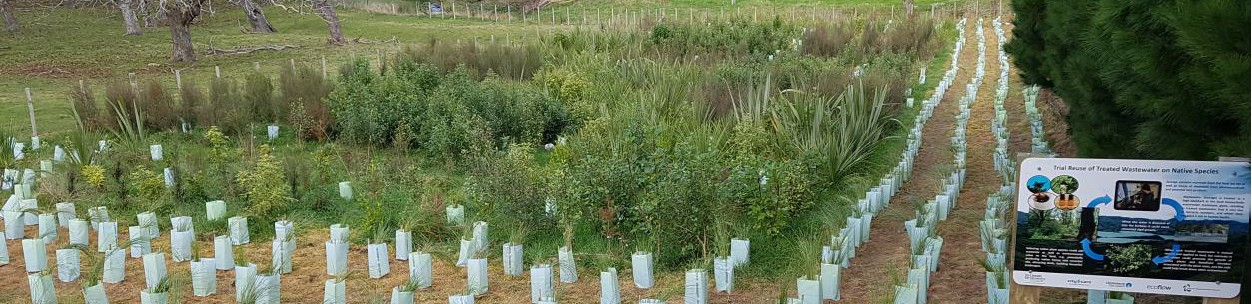
In New Zealand, applying treated municipal wastewater to land is preferred over discharging it into waterways. Plant root zones remove nutrients, mitigate pathogens and immobilise contaminants. Public perception often leads to sewage products being sent to landfill or waterways rather than to agricultural land. Using them to establish native vegetation breaks the direct link to the food chain, while the vegetation creates value through saleable products such as honey and essential oils, or through ecosystem services (Simcock et al. 2019).
在新西兰,把处理后的城市污水施用于土地,比排入水体更受推荐。植物根际能去除养分、抑制病原体并固定污染物。受公众观感影响,污水处理产物往往被填埋或排入水体,而不是施用于农田。用它们来营建原生植被,可以切断与食物链之间的直接联系;同时,这些植被还能通过蜂蜜、精油等可销售产品或生态系统服务创造价值(Simcock et al. 2019)。
Duvauchelle and Banks PeninsulaDuvauchelle 与班克斯半岛
Lysimeter and field trials determined whether soils near Duvauchelle could receive wastewater from the local treatment plant. The wastewater significantly enhanced pasture growth (Gutiérrez-Ginés et al. 2020), and in a field trial of native species, irrigated trees grew as well as or better than unirrigated ones (Meister et al. 2022). Members of the Myrtaceae, such as mānuka and kānuka, are especially promising (Meister et al. 2023). We are measuring how these plants affect nitrogen-cycling microbes (Meister et al. 2023), greenhouse gas emissions and soil invertebrates, and how they reduce microbial contamination in soil (Gutiérrez-Ginés et al. 2021; Prosser et al. 2016). A site that has received wastewater for 30 years shows the long-term changes in soil chemistry and nutrient stocks (Gutiérrez-Ginés et al. 2023).
通过蒸渗仪试验和田间试验,我们评估了 Duvauchelle 附近的土壤能否接纳当地污水处理厂的出水。结果表明,污水显著促进了牧草生长(Gutiérrez-Ginés et al. 2020);在原生物种的田间试验中,灌溉处理的树木长势不亚于、甚至优于未灌溉的树木(Meister et al. 2022)。麦卢卡、卡努卡等桃金娘科植物尤其有潜力(Meister et al. 2023)。我们正在测定这些植物对氮循环微生物(Meister et al. 2023)、温室气体排放和土壤无脊椎动物的影响,以及它们如何减轻土壤中的微生物污染(Gutiérrez-Ginés et al. 2021;Prosser et al. 2016)。一处接纳污水已达 30 年的场地,则揭示了土壤化学性质与养分储量的长期变化(Gutiérrez-Ginés et al. 2023)。
Biosolids to establish native vegetation用生物固体营建原生植被
Biosolids can help native vegetation establish on degraded land (Gutiérrez-Ginés et al. 2017). Mānuka roots actively forage biosolids in low-fertility soil (Reis et al. 2017), and the way biosolids are applied changes their effect on soil quality (Gutiérrez-Ginés et al. 2023). We have tested contrasting biosolids for raising native plants in nurseries (Garcés-Hernández et al. 2024) and are studying the growth and chemistry of native plants grown in biosolids-amended soil. The products matter too: biowastes increased essential oil production on degraded soils (Seyedalikhani et al. 2020), and we have measured the chemical elements that determine the quality of mānuka honey (Meister et al. 2021).
生物固体有助于原生植被在退化土地上定居(Gutiérrez-Ginés et al. 2017)。在低肥力土壤中,麦卢卡的根系会主动向生物固体伸展觅食(Reis et al. 2017),而生物固体的施用方式也会改变它对土壤质量的影响(Gutiérrez-Ginés et al. 2023)。我们比较了不同生物固体在苗圃中培育原生植物的效果(Garcés-Hernández et al. 2024),并正在研究在施用生物固体的土壤中生长的原生植物的生长与化学组成。产品同样重要:生物废弃物提高了退化土壤上的精油产量(Seyedalikhani et al. 2020),我们也测定了决定麦卢卡蜂蜜品质的化学元素(Meister et al. 2021)。
3Biowastes as soil conditioners生物废弃物作土壤改良剂
Biowastes are unwanted materials of biological origin, such as biosolids (sewage sludge), animal effluent, wood waste and green waste. They contain high concentrations of organic matter and plant nutrients, making them valuable soil conditioners, but they can also contain pathogens and contaminants. Incorrect disposal is expensive and harms the environment. Applied correctly to degraded land, biowastes create economic and environmental value, and blending them can reduce nutrient losses (Paramashivam et al. 2017; Paramashivam et al. 2016).
生物废弃物是指生物来源的废弃物料,例如生物固体(污水污泥)、畜禽废水、木材废料和绿化废弃物。它们富含有机质和植物养分,是很有价值的土壤改良剂,但同时也可能含有病原体和污染物。处置不当既费钱又污染环境;而正确地施用到退化土地上,生物废弃物就能创造经济与环境价值,将不同废弃物混合施用还能减少养分流失(Paramashivam et al. 2017;Paramashivam et al. 2016)。
Current projects include converting biosolids into insect protein and fertiliser with black soldier fly larvae (Bohm et al. 2022; Bohm et al. 2023), the effects of winery wastewater on soil minerals and carbon (Nightingale-McMahon et al. 2024), the composition and breakdown of common Canterbury biowastes (Olszewski et al. 2026), biowastes to build soil organic carbon in cropping systems, and the rehabilitation of flood-affected soils. In the Christchurch Red Zone, compost and biochar made from the city's own wastes are being tested on contaminated soil (section 4).
当前项目包括:利用黑水虻幼虫把生物固体转化为昆虫蛋白和肥料(Bohm et al. 2022;Bohm et al. 2023);酿酒废水对土壤矿物和碳的影响(Nightingale-McMahon et al. 2024);坎特伯雷常见生物废弃物的成分与降解(Olszewski et al. 2026);利用生物废弃物提高农田土壤有机碳;以及洪水受灾土壤的修复。在基督城红区,我们正以城市自身废弃物制成的堆肥和生物炭处理受污染土壤(见第 4 节)。


4Urban soils & the Christchurch Red Zone城市土壤与基督城红区
The Canterbury earthquakes led to the demolition of more than 8,000 homes in the Christchurch Residential Red Zone. Suburban garden soils in Christchurch can carry elevated heavy metals, which matters when land use changes after a disaster (Ashrafzadeh et al. 2018). Some Red Zone soils exceed New Zealand guidelines for lead, and excavating or capping 630 hectares is not feasible. A field trial in the Red Zone is testing native plants such as harakeke with compost, biochar and fishery waste to stabilise lead, arsenic and other contaminants while establishing vegetation.
坎特伯雷地震之后,基督城住宅红区内超过 8,000 栋住宅被拆除。基督城郊区花园土壤中的重金属可能偏高,这在灾后土地用途改变时尤其值得关注(Ashrafzadeh et al. 2018)。部分红区土壤的铅含量超过新西兰标准,而对 630 公顷土地进行挖除或覆盖封闭并不可行。红区内的一项田间试验,正在用新西兰麻(harakeke)等原生植物配合堆肥、生物炭和渔业废弃物,在营建植被的同时稳定铅、砷等污染物。
5Cadmium & trace elements in food production食物生产中的镉与微量元素
Trace elements are immutable. Most bind strongly to soil particles, limiting their uptake by plants and their movement downwards, so they accumulate in soil. At high concentrations, all trace elements are toxic, and land-use practices that add them to soil are inherently unsustainable (Robinson 2023). Many contemporary practices, both conventional and organic, use trace elements to control pests and diseases or to supply nutrients. Certified organic systems, for example, permit copper-based fungicides, and copper in orchard soils affects soil biota, an effect that organic matter mitigates (Jeon et al. 2024). A critical question is what level of accumulation we should tolerate.
微量元素不会自行消失。它们大多与土壤颗粒结合得很牢,既限制了植物的吸收,也限制了向下迁移,因而在土壤中不断累积。所有微量元素在浓度足够高时都有毒性,因此任何向土壤添加微量元素的土地利用方式,本质上都是不可持续的(Robinson 2023)。当前许多做法——无论常规农业还是有机农业——都在用微量元素防治病虫害或补充养分。例如,有机认证体系允许使用含铜杀菌剂,而果园土壤中的铜会影响土壤生物,有机质则能减轻这种影响(Jeon et al. 2024)。一个关键问题是:我们究竟应当容忍多大程度的累积?
Cadmium镉
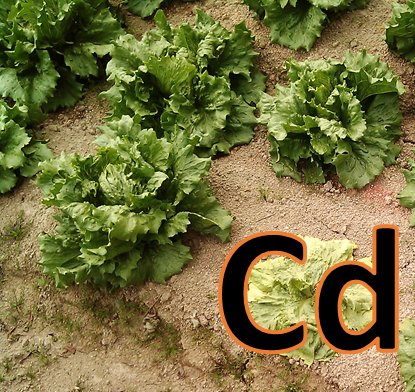
Maintaining soil fertility requires regular phosphate fertiliser. The rock used to make it can contain high concentrations of cadmium, a toxic heavy metal, and repeated applications lead to cadmium accumulating in the topsoil, where plants take it up readily, leafy vegetables especially. Soil and climate govern how much reaches pasture (Reiser et al. 2014). We have measured how soil, climate, crop and cultivar affect cadmium in vegetables and wheat (Cavanagh et al. 2019; Yi et al. 2020; Gray et al. 2019), and how lime and clover change uptake by pasture (Benyas et al. 2018).
维持土壤肥力需要定期施用磷肥。制造磷肥的矿石可能含有高浓度的镉——一种有毒重金属,反复施用会使镉在表土中累积,并很容易被植物吸收,叶菜类尤其明显。土壤与气候决定了有多少镉进入牧草(Reiser et al. 2014)。我们研究了土壤、气候、作物和品种如何影响蔬菜和小麦中的镉(Cavanagh et al. 2019;Yi et al. 2020;Gray et al. 2019),以及石灰和三叶草如何改变牧草对镉的吸收(Benyas et al. 2018)。
Our approach uses low-cost biowastes as soil conditioners to reduce cadmium uptake. Municipal composts reduce the transfer of cadmium from soil to vegetables (Al Mamun et al. 2016), although the effect changes over time (Al Mamun et al. 2023) and dissolved organic matter from some amendments can mobilise cadmium (Welikala et al. 2021). Some biowastes also improve soil fertility, reducing the need for high-cadmium phosphate fertilisers. With partners in China we are studying cadmium hyperaccumulators such as Solanum nigrum and screening crop cultivars that accumulate little cadmium (Zhang et al. 2025a; Zhang et al. 2025b; Wang et al. 2026).
我们的思路是用低成本的生物废弃物作土壤改良剂,减少植物对镉的吸收。城市堆肥能减少镉从土壤向蔬菜的转移(Al Mamun et al. 2016),但这一效果会随时间变化(Al Mamun et al. 2023),某些改良剂释放的溶解性有机质还可能活化镉(Welikala et al. 2021)。有些生物废弃物还能提高土壤肥力,从而减少对高镉磷肥的依赖。我们与中国的合作伙伴一起研究龙葵(Solanum nigrum)等镉超积累植物,并筛选镉积累量低的作物品种(Zhang et al. 2025a;Zhang et al. 2025b;Wang et al. 2026)。
Trace elements in food systems食物系统中的微量元素
We follow trace elements through whole production systems. For palm oil, we measured elements in the soils of Indonesian plantations (Thompson-Morrison et al. 2023), in the fruit and derived oil (2024a), and in palm kernel expeller fed to New Zealand livestock (2022b), and built a mass-balance model of how agrichemicals affect accumulation in plantation soils (2024b; overview in 2022a). With colleagues in Bangladesh we have assessed potentially toxic elements in poultry, feed and plant-based foods (Al Mamun et al. 2024; 2025).
我们追踪微量元素在整个生产系统中的去向。在棕榈油方面,我们测定了印度尼西亚种植园土壤中的元素(Thompson-Morrison et al. 2023)、果实及其所产油脂中的元素(2024a),以及用作新西兰牲畜饲料的棕榈仁粕中的元素(2022b),并建立了一个质量平衡模型,评估农用化学品对种植园土壤中元素累积的影响(2024b;综述见 2022a)。我们还与孟加拉国的同事合作,评估了禽肉、饲料和植物性食品中的潜在有毒元素(Al Mamun et al. 2024;2025)。
6Emerging contaminants新污染物
New technologies and products release contaminants whose behaviour in soil is poorly known (Wu et al. 2025). We have developed methods to extract and quantify microplastics in biosolids, compost and soil destined for land application (Ruffell et al. 2024; 2025), and reviewed the phytomanagement of land contaminated with PFAS (Evangelou & Robinson 2022) and the use of biochar to remediate it (Liang et al. 2024).
新技术和新产品释放出的污染物,在土壤中的行为往往鲜为人知(Wu et al. 2025)。我们建立了提取和定量生物固体、堆肥及土壤中微塑料的方法(Ruffell et al. 2024;2025),并综述了 PFAS 污染土地的植物管理(Evangelou & Robinson 2022)以及用生物炭修复 PFAS 污染的方法(Liang et al. 2024)。
Electronic waste and batteries are adding elements that were once rare in the environment. We have studied the mobility and plant uptake of lithium (Robinson et al. 2018; Bolan et al. 2021), gallium and indium (Jensen et al. 2018), other rarely studied trace elements (Jensen et al. 2023) and silver nanoparticles (Saleeb et al. 2019; 2020). In volcanic areas, we have tested coral sand as a low-cost filter to remove fluoride from drinking water (Lecompte et al. 2024).
电子废弃物和电池正在向环境中加入一些过去罕见的元素。我们研究了锂(Robinson et al. 2018;Bolan et al. 2021)、镓和铟(Jensen et al. 2018)、其他较少研究的微量元素(Jensen et al. 2023)以及纳米银(Saleeb et al. 2019;2020)在土壤—植物系统中的迁移与吸收。在火山地区,我们还测试了用珊瑚砂作为低成本滤料去除饮用水中的氟(Lecompte et al. 2024)。
Earlier projects
早期项目
7Phytoremediation case studies植物修复案例
Before the group's current focus on biowastes and native ecosystems, much of our work tested whether plants could control contaminant fluxes at polluted sites, in New Zealand and overseas (Robinson et al. 2006).
在研究组把重点转向生物废弃物与原生生态系统之前,我们的许多工作是检验植物能否控制新西兰和海外污染场地的污染物通量(Robinson et al. 2006)。
Wood-waste (Kopu)木材废弃物(Kopu)
The Kopu timber-waste pile is a 3.6-hectare site where sawdust was dumped for 30 years, contaminating a local stream. In July 2000, a trial began using poplar and willow clones to phytoremediate the site. Two poplar hybrid clones were chosen for their survival and biomass production. The trees reduce drainage during summer, mitigating contamination, and take up boron from the waste (Robinson et al. 2003; Robinson & Anderson 2007; Robinson et al. 2007). This phytoremediation cost an estimated NZ$200,000, compared with over NZ$1.2M for traditional capping.
Kopu 木材废弃物堆场占地 3.6 公顷,三十年间一直在此倾倒锯末,污染了附近的溪流。2000 年 7 月,一项以杨树和柳树无性系进行植物修复的试验在此展开,最终依据成活率和生物量选定了两个杨树杂交无性系。这些树木减少了夏季的水分下渗,从而减轻了污染,同时还吸收废弃物中的硼(Robinson et al. 2003;Robinson & Anderson 2007;Robinson et al. 2007)。该植物修复方案的成本估计为 20 万新西兰元,而传统的覆盖封闭方案则超过 120 万新西兰元。
The Tui mine tailingsTui 矿尾矿
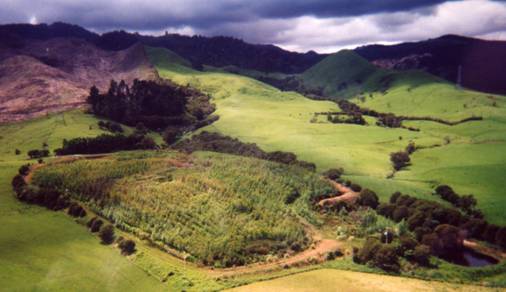
The Tui mine tailings near Te Aroha were considered New Zealand's worst environmental disaster from mining. The site held 100,000 cubic metres of toxic waste with high concentrations of lead, cadmium and mercury, and a surface pH below 3. A 100 m² plot was established in 2001, where biowastes and lime raised the pH and reduced metal availability, allowing native plants to establish quickly (Robinson & Anderson 2007; Bolan et al. 2011). We also tested the extraction and volatilisation of mercury from the tailings by plants (Moreno et al. 2005). In 2012, the site was fully re-engineered: the tailings were stabilised with cement and capped with topsoil.
Te Aroha 附近的 Tui 矿尾矿曾被视为新西兰因采矿造成的最严重环境灾难。场地内堆存着 10 万立方米有毒废料,铅、镉、汞浓度很高,表层 pH 低于 3。2001 年在此建立了一块 100 平方米的试验样地,施加生物废弃物和石灰以提高 pH、降低金属的有效性,使原生植物得以迅速定居(Robinson & Anderson 2007;Bolan et al. 2011)。我们还检验了植物从尾矿中提取汞和使汞挥发的能力(Moreno et al. 2005)。2012 年,该场地进行了彻底的工程改造:尾矿用水泥固化,并覆盖表土封闭。

Tika Tipu includes settings for mine spoil, quarries and landfill, drawing on this kind of work to suggest native species for revegetating such sites.
Tika Tipu 中包含矿山弃土、采石场和垃圾填埋场等场地类型,借鉴这类研究为此类场地的植被恢复推荐原生物种。
Other sites其他场地
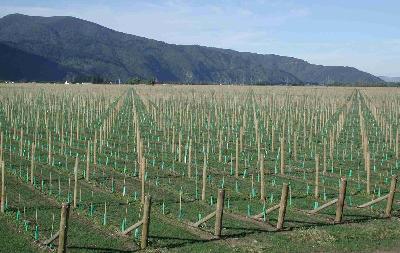
Poplars and willows used for soil conservation were assessed for cadmium and boron accumulation and as stock fodder (Robinson et al. 2000; Granel et al. 2002; Robinson et al. 2005; Rees et al. 2011). Copper, chromium and arsenic leach from treated posts in Marlborough vineyards (Robinson et al. 2006; Greven et al. 2007). In the Taupo Volcanic Zone, aquatic plants hyperaccumulate arsenic (Robinson et al. 2006), and watercress can carry it into the diet (Robinson et al. 2003). Overseas, we studied plants on the acid mine tailings of Cartagena, Spain (Conesa et al. 2007; 2008), the Guadiamar Valley after the Aznalcóllar spill (Domínguez et al. 2008), a Swiss military shooting range (Robinson et al. 2008) and the uptake of antimony (Tschan et al. 2009).
我们评估了用于水土保持的杨树和柳树对镉和硼的积累,以及它们作为牲畜饲料的价值(Robinson et al. 2000;Granel et al. 2002;Robinson et al. 2005;Rees et al. 2011)。马尔堡葡萄园中经防腐处理的木桩会淋出铜、铬和砷(Robinson et al. 2006;Greven et al. 2007)。在陶波火山带,水生植物能超积累砷(Robinson et al. 2006),豆瓣菜则可能把砷带入膳食(Robinson et al. 2003)。在海外,我们研究了西班牙卡塔赫纳酸性矿山尾矿上的植物(Conesa et al. 2007;2008)、Aznalcóllar 尾矿坝泄漏事故后的 Guadiamar 河谷(Domínguez et al. 2008)、瑞士的一处军事射击场(Robinson et al. 2008),以及植物对锑的吸收(Tschan et al. 2009)。

8Biofortification生物强化
Approximately 40% of agricultural soils are deficient in zinc, an essential micronutrient. Zinc deficiency reduces agricultural productivity and affects the health of one-fifth of humanity. Applying biowaste can alleviate zinc deficiency and improve soil fertility (Gartler et al. 2013). In poor countries, applying correctly treated human waste to land both corrects zinc deficiencies and protects waterways.
全球约 40% 的农业土壤缺锌,而锌是一种必需的微量营养素。缺锌既降低农业生产力,也影响着全球五分之一人口的健康。施用生物废弃物可以缓解缺锌并改善土壤肥力(Gartler et al. 2013)。在贫困国家,把经过妥善处理的人类排泄物施用于土地,既能纠正缺锌,又能保护水体。
Biofortification has advantages over adding micronutrients to the final product or using dietary supplements. Physiologically accumulated elements in plants provide a constant dietary source with less risk of toxicity from overdose or deficiency from supply gaps. Zinc-enriched fodder, such as willow, is a possible remedy for zinc deficiency in grazing animals (Anderson et al. 2012).
与在成品中添加微量营养素或服用膳食补充剂相比,生物强化有其优势:经植物生理过程富集的元素能提供稳定的膳食来源,既不易因过量而中毒,也不会因供应中断而缺乏。柳树等富锌饲料,可能是解决放牧动物缺锌问题的一种办法(Anderson et al. 2012)。

9Hyperaccumulators & phytomining超积累植物与植物采矿
Metalliferous soils & hyperaccumulators富金属土壤与超积累植物
Metalliferous soils can occur naturally, as in ultramafic (serpentine) soils, or result from human action. Their trace elements may be undesirable because of their toxicity, or the soil may be a potential source for commercial extraction of these elements. Plants on metalliferous soils have elevated trace element concentrations in their shoots, creating an exposure pathway into the food chain. Our earliest work described how soil chemistry shapes New Zealand's ultramafic flora (Robinson et al. 1996; 1997).
富金属土壤既可能是天然形成的,如超基性岩(蛇纹岩)土壤,也可能是人类活动造成的。其中的微量元素可能因毒性而成为问题,这样的土壤也可能成为商业提取这些元素的潜在来源。生长在富金属土壤上的植物,地上部分的微量元素浓度偏高,从而形成一条进入食物链的暴露途径。我们最早的研究描述了土壤化学如何塑造新西兰的超基性岩植物区系(Robinson et al. 1996;1997)。
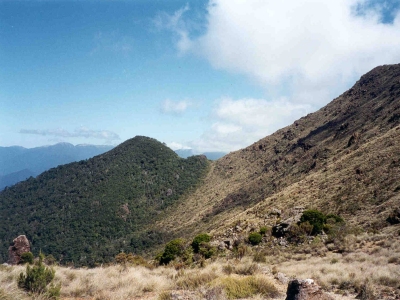
Hyperaccumulator plants gather large amounts of one or more trace elements in their above-ground biomass, often 100 times more than non-hyperaccumulators in the same soil. For most trace elements, the threshold for a hyperaccumulator is 0.1% of dry biomass. For zinc and manganese, it is 1%, and for cadmium, 0.01%. Over 400 hyperaccumulator species are known, many of which grow only on metalliferous soils. We have studied hyperaccumulators of zinc and cadmium, and of thallium (Robinson et al. 1998; Leblanc et al. 1999; LaCoste et al. 1999).
超积累植物能在地上部生物量中富集大量的一种或多种微量元素,浓度往往是同一土壤上非超积累植物的一百倍。对多数微量元素而言,超积累的阈值是干物质的 0.1%;锌和锰为 1%,镉为 0.01%。目前已知的超积累植物超过 400 种,其中许多只生长在富金属土壤上。我们研究过锌、镉以及铊的超积累植物(Robinson et al. 1998;Leblanc et al. 1999;LaCoste et al. 1999)。

Phytomining (agromining)植物采矿(农业采矿)
Phytomining uses plants to exploit sub-economic ore bodies. A crop of a metal-hyperaccumulating plant is grown, harvested and burned to produce a bio-ore (Brooks et al. 1998; Brooks et al. 1999; Anderson et al. 1999). The first experiments were done by the US Bureau of Mines using the nickel hyperaccumulator Streptanthus polygaloides, which yielded 100 kg/ha of sulphur-free nickel.
植物采矿是用植物来开发不具备经济开采价值的矿体:种植一茬金属超积累植物,收获后焚烧,得到「生物矿石」(Brooks et al. 1998;Brooks et al. 1999;Anderson et al. 1999)。最早的试验由美国矿务局完成,所用的是镍超积累植物 Streptanthus polygaloides,每公顷产出 100 公斤不含硫的镍。
The nickel hyperaccumulators Alyssum bertolonii from Italy (Robinson et al. 1997) and Berkheya coddii from South Africa (Robinson et al. 1997) show even greater potential because of their high biomass and nickel content. On many ultramafic soils, Berkheya coddii can yield over 20 tonnes/ha with a 1% nickel concentration in its dry matter, soil amendments affect its uptake of nickel and cobalt (Robinson et al. 1999), and it can extract both metals together (Keeling et al. 2003).
来自意大利的 Alyssum bertolonii(Robinson et al. 1997)和来自南非的 Berkheya coddii(Robinson et al. 1997)这两种镍超积累植物潜力更大,因为它们生物量大、含镍量高。在许多超基性岩土壤上,Berkheya coddii 每公顷可产出 20 吨以上的干物质,其中含镍达 1%;土壤改良剂会影响它对镍和钴的吸收(Robinson et al. 1999),它还能同时提取这两种金属(Keeling et al. 2003)。
Phytomining is not yet applied at a large scale. It requires clearing large areas of native vegetation for a hyperaccumulator crop. After a few crops, the topsoil becomes depleted in the target element and must be removed, and the underlying soil would then need substantial modification for plant growth. However, continual innovation may yet result in profitable operations (Robinson & Anderson 2018).
植物采矿尚未大规模应用。它需要清除大片原生植被来种植超积累作物;种上几茬之后,表土中的目标元素被耗尽,必须移除,而下层土壤又需要大幅改良才能供植物生长。不过,持续的技术创新仍有可能使其成为有利可图的产业(Robinson & Anderson 2018)。